


Buying Guides
Find the robot that fits your pool.
161 guides
By size · surface · debris · budget
Start with your pool, not the robot
One question each. A straight answer.
Every guide here answers one question: which robot for a pool this size, this surface, this shape, or this kind of mess. Each one ranks the robots for that job, says who each pick suits, and says where it stops.
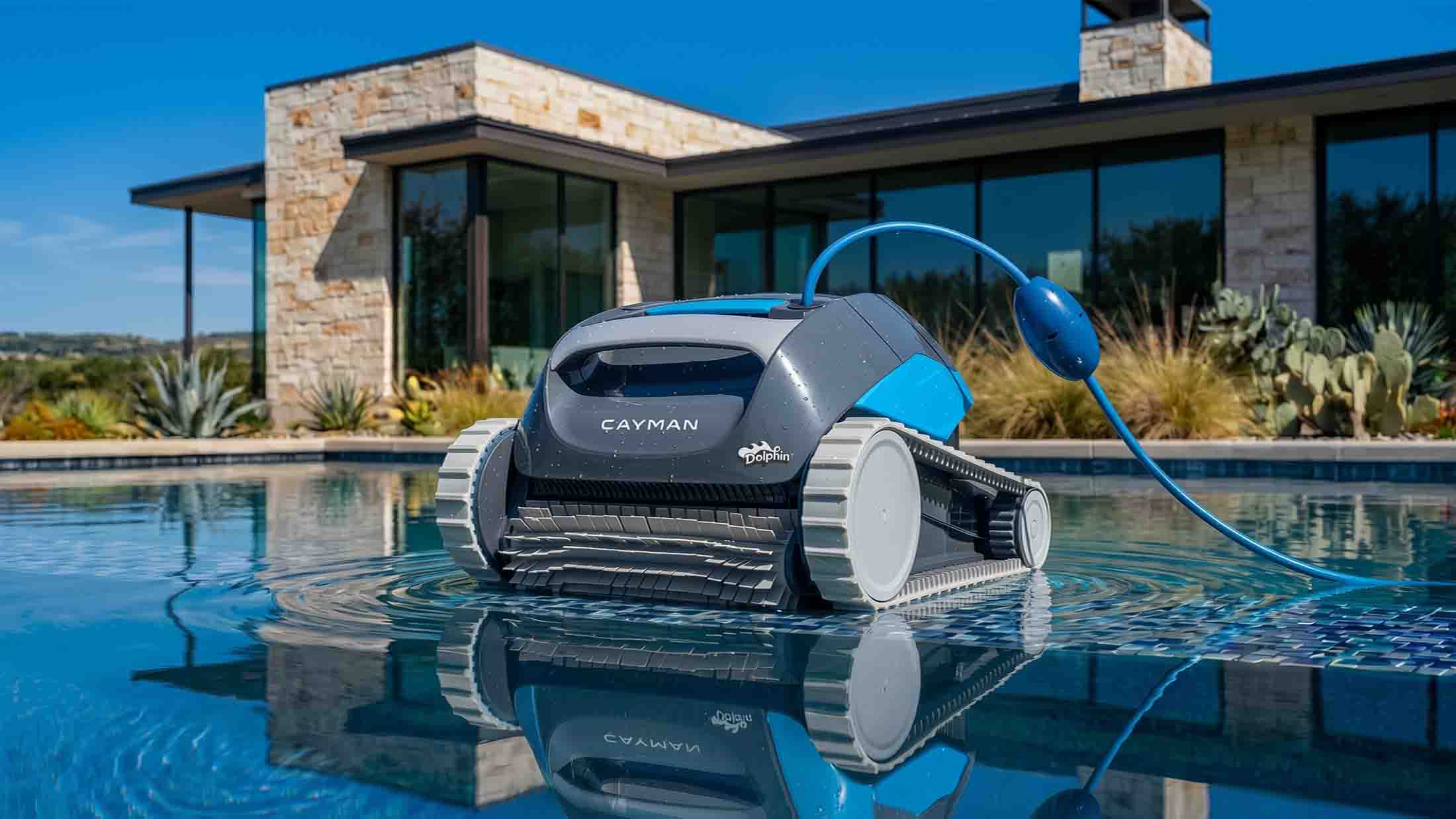
We sell five Dolphin robots and built this site around one of them, the Cayman. Some of these pools are exactly what the Cayman is for. Some are not, and the guide will tell you which robot to buy instead.
By pool size in gallons
- 5,000-gallon poolsEvery robot on this page has more capacity than a 5,000-gallon pool needs, so the right one is decided by pool type, coverage and price.Top pick: Cayman
- 10,000-gallon poolsAt 10,000 gallons the longest run is well under 33 ft, so the lighter, lower-priced robots are fully in range and the 50 ft models are optional upgrades.Top pick: Cayman
- 12,000-gallon poolsEvery pick here covers a 12,000-gallon pool with time to spare. The real choice is whether the robot stops at the walls or scrubs the waterline too.Top pick: Cayman
- 15,000-gallon poolsA 15,000-gallon pool is where two good robots compete. One costs less and cleans floor and walls. The other adds the waterline, steps and an app.Top pick: Cayman
- 18,000-gallon poolsMost 18,000-gallon pools measure 32 ft, which leaves a single foot under the 33 ft rating of the lighter robots. That is why a 50 ft robot leads this page.Top pick: Quantum
- 20,000-gallon poolsMost 20,000-gallon in-ground pools are 36 ft long, past the 33 ft rating of the lighter Dolphins. Here is which 50 ft robot to choose, and the exception.Top pick: Quantum
- 25,000-gallon poolsAt 25,000 gallons there is more floor, taller walls and more debris per cycle. That sorts the three 50 ft Dolphins by cycle length and filter capacity.Top pick: Premier
- 30,000-gallon poolsThe standard 20 x 40 ft pool needs a 50 ft rating, waterline cleaning and a cycle long enough to finish the floor and walls in one run.Top pick: Premier
- 40,000-gallon poolsA 40,000-gallon pool is a 20 x 40 with a diving-depth end, or a pool up to 50 ft long. Both use up cable, so power supply placement matters as much as the robot.Top pick: Premier
- 50,000-gallon poolsA 50,000-gallon pool is at or beyond the limit of every robot in these guides. Measure the longest straight run first; at 50 ft or under, three robots qualify.Top pick: Sigma
By pool length and dimensions
- Small poolsA pool of 30 ft or less does not need a 50 ft robot. It needs the right pool-type match, a short cycle and a machine that is easy to lift.Top pick: Cayman
- Large poolsLarge pools expose an undersized robot quickly. Here is what 40 to 50 ft asks of the rating, the cable, the cycle and the filter, and the three robots that deliver.Top pick: Premier
- 10-foot poolsTen feet of pool is very little floor. The right robot is the lightest one with the least spare cable, and the honest answer includes when a brush is enough.Top pick: Escape
- 15-foot poolsFifteen feet is the most common above-ground round and a popular plunge pool size. Two light robots are rated for it, and your pool type decides between them.Top pick: Cayman
- 20-foot poolsAt 20 ft, every robot in these guides is physically able to do the job. The useful question is which features your pool will use and which you would only be paying for.Top pick: Cayman
- 25-foot poolsTwo pools make up most of the 25 ft class, and they want different things. Here is the robot for each, and the upgrade worth paying for.Top pick: Cayman
- 30-foot poolsThirty feet is inside the Cayman's 33 ft rating but close to its ceiling. Whether it is the right buy depends on where your outlet is and whether the pool is in the ground.Top pick: Cayman
- 35-foot poolsA 35 ft pool sits two feet beyond the 33 ft rating of the Cayman and Escape. The honest answer is to step up to a 50 ft robot, and the least expensive one leads.Top pick: Quantum
- 40-foot poolsA 20 x 40 pool needs a robot rated to 50 ft and a power supply in the right place. Three robots qualify, and the cable math below shows where to plug in.Top pick: Premier
- 50-foot poolsFifty feet is the most any robot here is rated for. That leaves no margin to waste on cable placement, cycle length or how often the robot runs.Top pick: Premier
- 60-foot poolsEvery robot in these guides tops out at 50 ft, so this page gives you the closest fit, the setup owners use, and the point where a commercial-class robot is the right call.Top pick: Premier
- 65-foot poolsAt 65 ft your pool is 15 ft beyond any robot in these guides. We explain the right tool, the two-zone fallback, and which residential robot handles that fallback best.Top pick: Premier
- Olympic-size poolsA true Olympic pool is far beyond any robot in these guides. This page says what it needs, and helps you check whether your long pool is really that size.Top pick: Premier
- Sizing guide by pool dimensionsMatch your pool's dimensions to a robot's rated length in one table, then check cable reach and power-supply placement before you order.Top pick: Cayman
By pool surface
- Vinyl liner poolsA vinyl liner is soft, seamed and slippery. Here is what that asks of a robot, and which four Dolphins we would put on one.Top pick: Cayman
- Fiberglass poolsGelcoat is easy to keep clean and hard to climb. We rank four Dolphins on traction, waterline scrubbing and how they handle a shell's built-in steps and ledges.Top pick: Sigma
- Gunite poolsGunite is a concrete shell under a plaster, pebble or tile finish. What follows is a ranking of four robots by scrubbing, fine filtration, reach and warranty cover.Top pick: Premier
- Concrete poolsPoured, shotcrete, painted or bare, concrete is the roughest surface a pool robot works on. Here are the four Dolphins we would put on it, and why.Top pick: Sigma
- Plaster poolsPlaster is smooth when new and rough when old, and it makes fine dust at every age. Filtration decides this ranking, with waterline scrubbing and brush life close behind.Top pick: Premier
- Pebble Tec and pebble finishesA pebble finish is tough, textured and hard on brushes. These four robots are ordered by how well they scrub into that texture, hold the walls and filter what comes out.Top pick: Sigma
- Tile poolsTile shows film at the waterline and holds dirt in every grout line, so the right robot is the one that scrubs both. Here is how the Dolphins we sell compare.Top pick: Sigma
- Glass tile poolsGlass tile is the slickest surface a pool robot meets and the costliest to repair. This page ranks four Dolphins and says what to watch on the first cycle.Top pick: Premier
- Aggregate finishesAggregate covers everything from rough exposed stone to polished quartz, so the right robot depends on how much texture yours has. Here is how to judge it and what to buy.Top pick: Sigma
- Painted poolsPool paint sheds a fine white powder as it ages, and most filters let it straight back into the water. These picks are ranked by how well they hold it.Top pick: Premier
- Stainless steel poolsStainless steel is not on the published surface list of any robot here, so these are smooth-surface matches, ranked with the checks to make before the first cycle.Top pick: Premier
- Above-ground vinyl poolsA thin liner over a sand base needs a light robot built for above-ground use. Two of the five Dolphins in these guides qualify, and this page explains how to choose between them.Top pick: Cayman
By debris and dirt problem
- LeavesA robot that fills up early spends the remaining cycle pushing leaves around. These four are ranked by how much they hold and how fast they empty.Top pick: Premier
- Heavy leaf loadsWhen trees hang over the water or a pool opens with a carpet on the floor, any filter fills before the cycle ends. Here is what to buy and how to run it.Top pick: Premier
- Large debrisBig debris needs room to enter and room to sit without blocking the flow. These four Dolphins are ranked on that, with a plain list of what you still remove by hand.Top pick: Premier
- Fine debrisSilt, dust, pollen and dead algae are small enough to pass through an ordinary filter and settle again overnight. These picks are ranked by the media that stops them.Top pick: Premier
- DirtEvery robot in this guide picks up dirt. The real choice is brushing, basket size, how fast the filter rinses, and whether the robot fits your pool's length.Top pick: Cayman
- SandSand is heavy, gritty and sinks at once. Here is which robot lifts it, which filter holds it, and how to tell when the sand is coming from your own equipment.Top pick: Quantum
- Fine sandFine sand slips through standard panels and drifts back as a cloud. The fix is ultra-fine media and a patient method, and four robots here can do it.Top pick: Premier
- SiltSilt hangs in the water, settles as a film and lifts again at a touch. Removing it takes ultra-fine filters, still water and more than one cycle.Top pick: Premier
- DustDust is light, fine and never stops arriving. The robots that beat it pair ultra-fine filters with a schedule that runs every day without being asked.Top pick: Premier
- PollenPollen is two problems: a film the skimmer has to catch and a sunken dust only ultra-fine filters hold. Here is the robot for the second part.Top pick: Premier
- AlgaeChlorine kills algae. A robot's job is to scrub the surfaces algae clings to and filter out what brushing and treatment have loosened.Top pick: Sigma
- Dead algaeThe shock worked and the green is gone. What is left is a pale dust that clouds at a touch, and only ultra-fine filters will take it out.Top pick: Premier
- Mustard algaeMustard algae resists chlorine, hides in the shade and rides back in on equipment. A robot cannot cure it, but the right one helps keep it gone.Top pick: Sigma
- AcornsAcorns are heavy, they roll to the deep end, and they stain if they sit. The right robot has a big open container and runs every day.Top pick: Premier
- Pine needlesNeedles are thin, springy and stubborn. These four Dolphin robots hold on to them, and we say plainly which one suits your pool and where each falls short.Top pick: Premier
- TwigsA robot can swallow short twigs and nothing longer. This guide ranks four Dolphin robots by basket room and says what to net before you press start.Top pick: Quantum
- BugsInsects arrive nightly, so this is a scheduling decision as much as a filter one. Here are four Dolphin robots ranked for it, with the limits stated.Top pick: Premier
- Pet hairA swimming dog leaves hair, dander, dirt and oils. These four Dolphin robots are ranked by how well they hold hair and how fast you can clear it.Top pick: Quantum
- Grass clippingsClippings arrive all at once, once a week. This guide ranks four Dolphin robots for that burst and sets out the mowing-day routine that keeps clippings from sitting.Top pick: Premier
- Oak leavesAn oak gives a pool three different messes a year. We rank four Dolphin robots by how well their filters change with the tree, and say where each one stops.Top pick: Premier
- Palm tree debrisPalms drop four kinds of debris, and a robot handles two of them. Here is the honest ranking of four Dolphin robots, and what stays a hand job.Top pick: Quantum
By pool shape and design
- Rectangular poolsEvery robot in this guide handles a rectangle. The real question is how long yours is, and this guide matches four Dolphin robots to the common sizes.Top pick: Cayman
- Round poolsA round pool has no corners to miss, but it twists cables and it is usually above-ground. Here is how four Dolphin robots fit, and where the cable runs out.Top pick: Cayman
- Oval poolsOvals are easy for a robot to clean and easy to mis-size. This guide matches four Dolphin robots to above-ground and in-ground ovals by length and cable reach.Top pick: Cayman
- Kidney-shaped poolsA kidney curves in on one side, so the robot that keeps both lobes clean is the one with the right navigation, the right cable and the right length rating.Top pick: Sigma
- Freeform poolsNo two freeform pools are alike, but the same four questions pick the robot: how it steers, how far it reaches, what the cable does, and what happens at the shelf.Top pick: Sigma
- Irregular-shaped poolsWhen a pool has something in the middle of it, or a part the robot cannot reach from the rest, the right robot and a plan for each zone matter more than raw power.Top pick: Sigma
- L-shaped poolsTwo legs, one inside corner and a cable that has to reach both ends: here is how to size a robot for an L and where to put its power supply.Top pick: Sigma
- Grecian poolsClipped corners make a Grecian pool easier to clean than a square-cornered one, so the real decision is length: 16 x 32 or 18 x 36 changes which robot you can buy.Top pick: Premier
- Lagoon poolsRock edges, a beach entry, a waterfall and a dark pebble floor make a lagoon the hardest backyard pool to automate. Here is what a robot will do in one, and what it will not.Top pick: Sigma
- Infinity and vanishing-edge poolsWith the edge pump off, a robot turns back at the waterline, short of the lip. The limits are the catch basin and the outer wall, which stay hand work.Top pick: Sigma
- Lazy riversNone of the robots in this guide is built for a lazy river. A small backyard one can still be cleaned in sections with the current off, and three Dolphins come closest.Top pick: Premier
- Narrow poolsA pool 6 to 10 ft wide makes a robot turn around more often than any other shape, which is hard on the cable and makes the walls most of the job.Top pick: Premier
- Lap poolsForty feet, fifty feet or twenty-five yards: the length of your lap pool decides which robot can clean it, and whether any robot here can.Top pick: Premier
- Plunge poolsIn a pool 8 to 10 feet wide and up to 7 feet deep, most of the cleaning is wall work, and the right robot is a light one sized for short runs.Top pick: Cayman
- SpoolsA spool has a floor smaller than a parking space and benches most of the way around, so the honest question is how much of it a robot can reach.Top pick: Cayman
By steps, ledges and tricky features
- Stairs and stepsSteps are where a robot's brochure and its physics part company, so this page tells you which treads get cleaned, which do not, and which robot comes closest.Top pick: Quantum
- Tanning ledges, Baja shelves and sun shelvesA tanning ledge holds 6 to 18 inches of water, which is too little for most robots, so only one pick on this page is for the ledge itself.Top pick: Quantum
- Shallow waterShallow water means two different things to pool owners, and the right robot depends on which you have: a pool that is shallow throughout, or a ledge inside a deeper pool.Top pick: Quantum
- Deep poolsIn a pool 8 ft deep or more, the water above the robot costs you cable, adds wall to scrub and sends debris to one spot, and the ranking follows from that.Top pick: Premier
- Sloped floorsTracks get a robot up a normal slope without trouble; what separates robots on a sloped floor is whether they keep their heading or drift back to the deep end.Top pick: Sigma
- Deep endsEverything that falls into a pool finishes around the main drain, so a deep end is a question of how much a robot can carry and whether its cable gets it there.Top pick: Premier
- Uneven floorsFootprints in a sand base, a settled vinyl bottom, a patch that stands proud of the plaster: here is which robot rides over them and where each one stops.Top pick: Cayman
- Main drainsA main drain is the one obstacle nearly every in-ground pool floor has, and debris collects right around it, so a robot must cross the cover cleanly and keep coming back.Top pick: Cayman
- Robots that don't get stuckNo robot is stall-proof, but a swivel cable, navigation that recovers and good track grip remove most hang-ups. Here is what causes them and which Dolphin avoids the most.Top pick: Sigma
- Tight cornersA robot cleans a corner with brush contact and repeated passes from different angles, not by squeezing into it. Here is how four Dolphins compare on exactly that.Top pick: Sigma
- Curved wallsCurves change the angle of every wall climb and keep turning a robot the same way. Pick for the curve you have, in-ground or above-ground.Top pick: Sigma
- BenchesA bench is a narrow shelf halfway up a wall, and most robots drive straight past it. Here is which Dolphin has a chance at the seat, and what to do when it misses.Top pick: Quantum
- Swim-outsSwim-outs sit in a recess where circulation is weak and robots rarely stop. Here is which Dolphin gives the seat a chance and how the others handle the alcove.Top pick: Quantum
- Beach-entry poolsA zero-entry slope runs out of water before a robot runs out of slope. Here is how far each Dolphin can be expected to go, and what to do about the rest.Top pick: Quantum
By pool type and installation
- In-ground poolsInground pools run from 20 ft plunge pools to 50 ft family pools, so no single robot is right for all of them. Split by length first, then by what you want cleaned.Top pick: Premier
- Above-ground poolsTwo of the five Dolphins compared in these guides are rated for above-ground pools. Here is how the Cayman and Escape differ, and how to set either one up on a liner floor.Top pick: Cayman
- Semi-inground poolsA semi-inground pool looks in-ground and is built above-ground. Pick the robot by the construction, not the landscaping, and check the length before anything else.Top pick: Cayman
- Saltwater poolsSalt does not change which robots work. It changes how you look after one, and it makes waterline scrubbing more useful than in a standard chlorine pool.Top pick: Premier
- Chlorine poolsChlorine does not pick the robot. Your pool's size and debris do. Chlorine habits decide how long the robot lasts, so this page covers both.Top pick: Premier
- Natural poolsA robot can keep the lined swimming zone of a natural pool clear of sediment and leaf litter. It cannot go near the plants, and no maker says otherwise.Top pick: Premier
- Indoor poolsNo leaves fall on an indoor pool. What settles is finer and oilier, so the right robot filters small and scrubs the waterline.Top pick: Sigma
- Outdoor poolsAn outdoor pool's mess changes with the weather. The robot to buy is the one that can change with it, and survive a summer on the deck.Top pick: Premier
- Heated poolsHeating a pool does not change which robots fit it. It changes how often the robot must run and how much the waterline needs a brush.Top pick: Premier
- Cold waterCold water does not need a special robot. It needs the right habits: check the manual's minimum, warm the cable, and expect the heaviest debris of the year.Top pick: Cayman
- Soft-sided poolsThin liner, flexible walls, ground you prepared yourself. Two robots suit a soft-sided pool, and some soft-sided pools should not have a robot at all.Top pick: Escape
- Steel-wall poolsSteel wall describes two very different pools. The robot never touches the steel in either, so the choice comes down to liner, length and where the pool sits.Top pick: Cayman
- Intex poolsAn Intex frame pool of 15 ft or more is a good home for a robot. A small Easy Set is not. Here is where the line falls and which robot to buy.Top pick: Escape
- Bestway poolsBestway builds everything from small ring pools to 31 ft ovals. Two robots cover the range, and the shape of your pool tells you which.Top pick: Escape
- Coleman poolsColeman frame pools come in a handful of sizes, and the size, the cable run and a thin liner decide which Dolphin belongs in yours.Top pick: Escape
- Endless PoolsAn Endless Pool is about 8 by 15 ft with a swim current at one end, so the right robot is compact, easy to lift and honest about what it cannot reach.Top pick: Cayman
By feature
- Waterline cleaningThe scum line forms where water meets wall, and three of the five Dolphins compared here climb high enough to scrub it.Top pick: Premier
- Wall climbingAll of these robots climb, so the useful questions are how high each one goes, what keeps it on the wall, and why a good climber sometimes stops.Top pick: Premier
- Weekly timerFour Dolphins start their own cycles, but two repeat on presets, one follows a calendar in an app, and one runs every day and nothing else.Top pick: Premier
- Automatic schedulingSome pools only need a robot that repeats; others need it to run overnight on Thursday, after the service visit, with the pump off.Top pick: Sigma
- Wi-Fi and app controlAn app lets you start, stop and schedule a robot from a phone, but only if the signal reaches the power supply, and it never empties the filter.Top pick: Sigma
- BluetoothBluetooth lets your phone talk to the robot's power supply from the pool deck, with no home Wi-Fi needed, and one Dolphin here has it.Top pick: Sigma
- Ultra-fine filtersFine filters trap what standard screens let through, but they clog sooner, so the right robot is one that makes rinsing and swapping them easy.Top pick: Premier
- NanoFiltersNanoFilters come in the box with three Dolphins and as snap-in panels for two more, and how you look after them matters as much as which robot you buy.Top pick: Premier
- Large filter basketA packed basket turns a working robot into one that only drives around. Here is how much each Dolphin holds, how it opens, and which suits your debris.Top pick: Quantum
- Dual brushesSuction only collects what is already loose. A second brush is what loosens the rest, and three of the Dolphins on this site carry at least two.Top pick: Sigma
- Active brushesAn active brush is driven, not dragged. Here is which Dolphins have one, how many, and where the extra scrubbing shows up in a real pool.Top pick: Quantum
- TracksTracks grip where wheels slip, but all five Dolphins in these guides have them. What separates these robots is coverage, pool size and price.Top pick: Quantum
- Swivel cableA twisted cable drags a robot off course and shortens its reach. Three Dolphins here have a swivel to prevent that, and two, including the Cayman, do not.Top pick: Premier
- Strong suctionRobot suction is water flow through the filter, quoted in gallons per hour. Here are the published figures, and why the biggest number is only part of the answer.Top pick: Premier
- Smart navigationGood navigation shows up as even coverage, not speed. Here is how each Dolphin finds its way, what none of them can do, and which suits your pool's shape.Top pick: Sigma
- GyroscopeA gyroscope tells a robot which way it is pointing and tilting. One Dolphin in these guides has one, and not every pool needs it. Here is how to tell.Top pick: Sigma
- Remote controlNone of these robots comes with a handheld remote. Remote control now lives in a phone app, and two of the five Dolphins in these guides have it.Top pick: Sigma
- Top-load filter accessThe filter is the part of a robot you handle every week. These four open from the top, and the lightest two weigh under 15 lb.Top pick: Cayman
- CaddyNo Dolphin here ships with a caddy, so this guide ranks the robots that gain most from adding one and tells you when to keep your money.Top pick: Premier
- Long warrantyWarranty length runs from two to three years across these Dolphins. This guide ranks them and explains the terms that decide what a warranty is worth.Top pick: Premier
- Automatic waterline parkingNone of these robots parks itself at the waterline, so this guide ranks the ones that are easiest to bring up and lift out by hand.Top pick: Cayman
Corded, cordless and convenience
- Corded robotsAll five Dolphins here plug in, so the real choice is which corded robot matches your pool's length, its type and the way you want to run it.Top pick: Premier
- Cordless and battery robots
- No chargingEvery robot here is corded, which means no charger, no waiting and no battery to replace. Here is which plug-in Dolphin fits your pool.Top pick: Cayman
- Daily cleaningA daily cycle keeps debris from ever settling. These are the robots whose timers run every day, ranked by how little the routine asks of you.Top pick: Cayman
- Automatic cleaningSuction, pressure and robotic cleaners are all sold as automatic. Here is why robots earn the word, and which Dolphin asks the least of its owner.Top pick: Sigma
- Hands-free cleaningHands-free comes down to three things: starting itself, covering the pool without help and not needing emptying mid-week. Here is how four Dolphins score.Top pick: Sigma
- Vacation homesA pool that sits unwatched for weeks needs a robot you can start from afar, and a plan for who puts it in the water.Top pick: Sigma
- Rental propertiesA rental pool has to look clean at every check-in, whoever does the turnover. These robots are ranked for simplicity, speed and the cost of replacing one.Top pick: Cayman
- Easy to use (older owners)Four Dolphin robots ranked by what makes a pool robot easy to own: its weight, how the filter comes out, and how little you have to press.Top pick: Cayman
- Lightweight robotsPublished weights for five Dolphin robots run from 14.2 lb to 24.6 lb, and the lightest two share one trade-off: floor and walls only, in pools up to 33 ft.Top pick: Cayman
- Whole-pool coverageWhole pool has a precise meaning, floor, walls and waterline, and only some robots cover all three; here is which ones do, and what every robot still leaves for you.Top pick: Premier
- Unattended cleaningA robot that cleans while you are at work or asleep needs four things, and having nobody nearby to rescue it is the test of each one.Top pick: Sigma
By budget
- Under $300No robot recommended on this site lists under $300, so this page explains what that money buys elsewhere and the nearest robot worth owning.Top pick: Escape
- Under $500Nothing recommended here is under $500, so we explain the trade-offs at that price and why the Escape is the usual answer for a shopper who can stretch.Top pick: Escape
- Under $600At $600 you are just below where the robots we recommend begin, which turns the question into a three-way choice that we lay out plainly.Top pick: Escape
- Under $700Under $700 the answer is one robot, the Escape in its standard form, and the useful part is knowing exactly what that budget includes and what it leaves out.Top pick: Escape
- Under $800At this budget the Escape comes with the upgrade that matters most, a power supply that starts a cycle every 24, 48 or 72 hours without you.Top pick: Escape
- Under $1,000Under $1,000 one robot fits comfortably, one sits just out of reach, and a pool over 33 ft needs a different conversation; here are all three, plainly.Top pick: Escape
- Under $1,200With $1,200 to spend you can buy a correctly rated floor-and-wall robot for any pool up to 33 feet, and this page shows which one and what stays out of reach.Top pick: Cayman
- Under $1,500At $1,500 the Cayman fits with money left for filters and a caddy, and the next robot up sits just past the line, so the real decision is whether to stretch.Top pick: Cayman
- Budget robotsA budget robot is the least you can spend on a machine that is correctly rated for your pool and built to last, and three Dolphins meet that test.Top pick: Cayman
- Best valueValue is not the lowest price or the longest feature list; it is what arrives in the box, and for how many warranty years, measured against the pool you own.Top pick: Cayman
- Premium robotsThe high-end Dolphins add motors, brushes, navigation and warranty years, and this page says plainly which pools repay that and which do not.Top pick: Sigma
- Professional-grade robotsProfessional-grade on a home robot means commercial-derived motors, serviceable parts and a warranty without fine print, not a machine rated for commercial pools.Top pick: Premier
- Commercial robots
- 3-year warrantyTwo Dolphins here carry three full years of cover that is not prorated or limited by cycle count, and this page explains what that third year is worth.Top pick: Premier
Commercial and specialty pools
- Hotel poolsA hotel pool the size of a home pool can be kept guest-ready by a residential robot run overnight, provided you know the limits before you buy.Top pick: Premier
- Resort poolsA resort has several kinds of pool, and residential robots fit some of them well and others not at all, so this guide takes them one pool at a time.Top pick: Premier
- Apartment poolsAn apartment or condo pool gets a week of use between service visits, and a robot run after hours keeps it presentable in the gap, within clear limits.Top pick: Premier
- HOA poolsWhat a volunteer board needs to settle before it votes: which robot, who runs it, where it lives, and the warranty question to ask first.Top pick: Premier
- Community poolsEvery robot here stops at 50 ft. See which community pools fall inside that line, which do not, and what to buy on each side of it.Top pick: Premier
- Public poolsNo robot on this page is built for a municipal pool. Here is what a commercial unit needs, and the one small-pool case where a home Dolphin works.Top pick: Premier
- School poolsA six-lane school pool needs a commercial-rated robot. This page explains what that means, then covers the teaching pools a residential Dolphin can clean.Top pick: Premier
- Swim clubsA 25-yard club pool is beyond every robot here. A small member club with a pool 50 ft or under has three real options, ranked below.Top pick: Premier
- Competition poolsA 25-yard, 25-meter or 50-meter pool is outside every robot we rank. Here is what a competition pool needs, and what to buy for a home training pool.Top pick: Premier
- Therapy poolsSmall, warm pools with ramps, rails and benches call for a light robot with fine filtration, and one check in the manual before you buy.Top pick: Cayman
- Swim spasA swim spa is a 15 ft acrylic tub with seats at one end. A small robot can keep the swim lane clean, with limits you should hear first.Top pick: Cayman
- Pool service companiesFor a route tech a robot is a second pair of hands. Here is which Dolphin earns a place on the truck, and which accounts each one is for.Top pick: Cayman
NEXT STEPS
Try Cayman in Your Pool for 30 Days
Every pool deserves an intelligent robot.
Take Cayman home and try it in your own pool for 30 days.