


By debris and dirt problem
Best robotic pool cleaner for large debris, and where every robot stops.
Top pick: Dolphin Premier
Live prices · Free shipping · 30 Day Trial
The short answer
Big debris needs room to enter and room to sit without blocking the flow. These four Dolphins are ranked on that, with a plain list of what you still remove by hand.
The Premier is our pick for large debris because an oversized leaf bag comes in its Multi-Media filter set and takes bulky pieces without clogging. The Quantum is a close second: its XXL MaxBin is the largest basket here and opens from the top with one click. For pools up to 33 ft, the Cayman takes ordinary large debris in its MaxBin. Branches and rocks still come out by hand.
Large debris is anything you could pick up between two fingers: a magnolia leaf, a sweetgum ball, a jacaranda flower, a handful of mulch washed in by rain, the stick the dog dropped. It is the opposite problem from dust. Big pieces need a clear path into the robot and a roomy, open filter where they can sit while water keeps flowing past them.
The best robotic pool cleaner for large debris is the one that gives those pieces the most room. The Premier and the Quantum share the lead, the Premier with a leaf bag and the Quantum with an XXL basket, and we put the Premier first for the flexibility of its filter set. The Cayman follows for smaller pools. The Sigma comes last, because cartridges are fine-debris tools. One ceiling applies to all four: whatever is bigger than the intake stays on the floor.
Our picks, in order
Our order for large debris.
- 1
 $1949
$2499Save $550Temporarily out of stock
Leaf bag for pods, petals and whole leaves
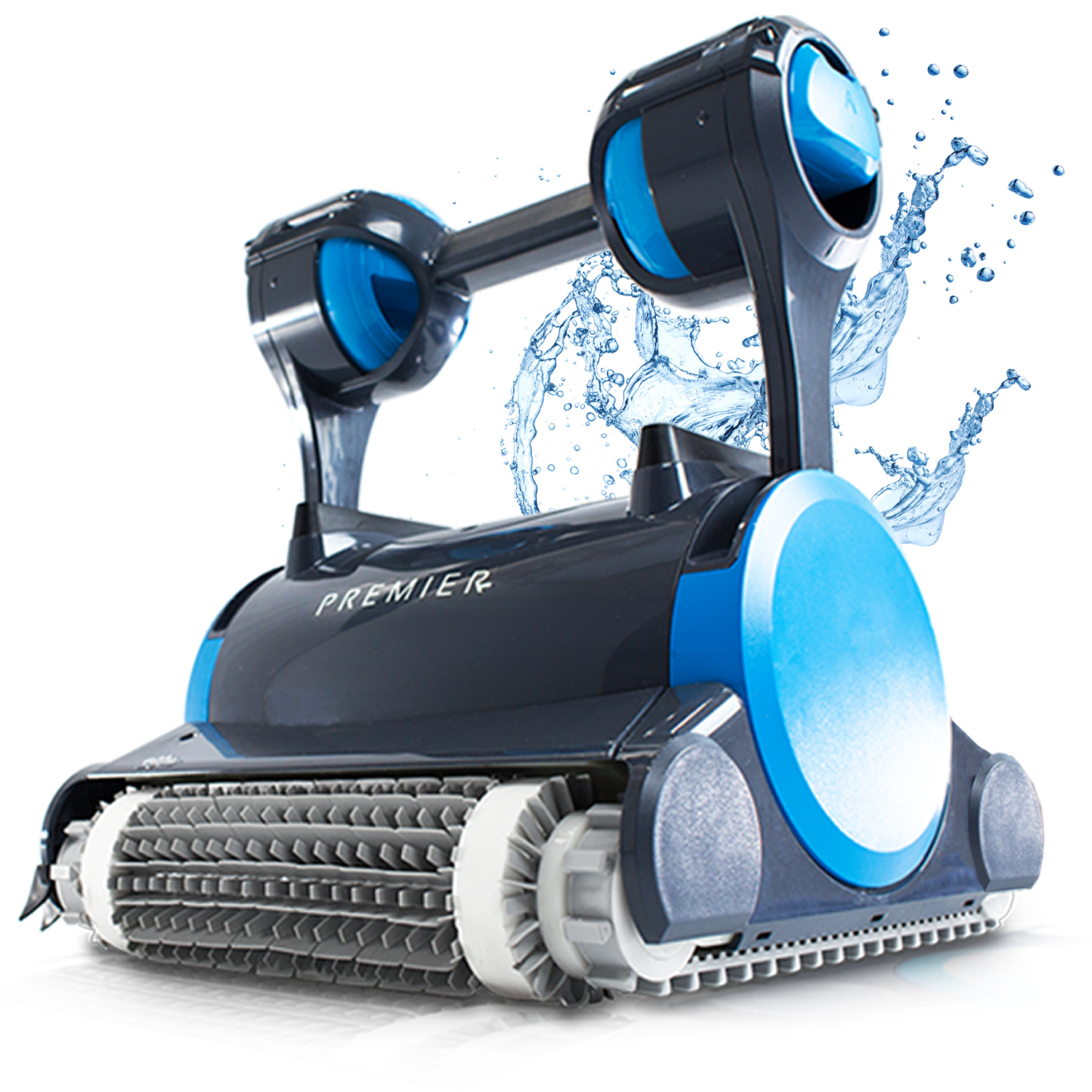
Dolphin Premier
The Premier leads because it gives you a choice of where big debris goes. In the Multi-Media set, the oversized leaf bag is the one for bulky pieces: seed pods, whole leaves, flower heads and mulch pile up in it while 4,500 GPH from the dual ProLine motors keeps moving. When the floor is clear, standard fine filters or NanoFilters go in from the top without tools. Two scrubbing brushes roll debris off the floor toward the intake over a 3-hour cycle, and SmartNav 2.0 scanning covers pools up to 50 ft.
- Best for
- In-ground pools up to 50 ft bordered by flowering or seeding trees, planters or mulched beds.
- Keep in mind
- At 20.3 lb it is the heaviest of the top three picks, and it has no phone alerts. Sticks longer than the intake still need picking out.
- 2
 $1599
$1799Save $200Temporarily out of stock
XXL basket you can lift out, check and dump
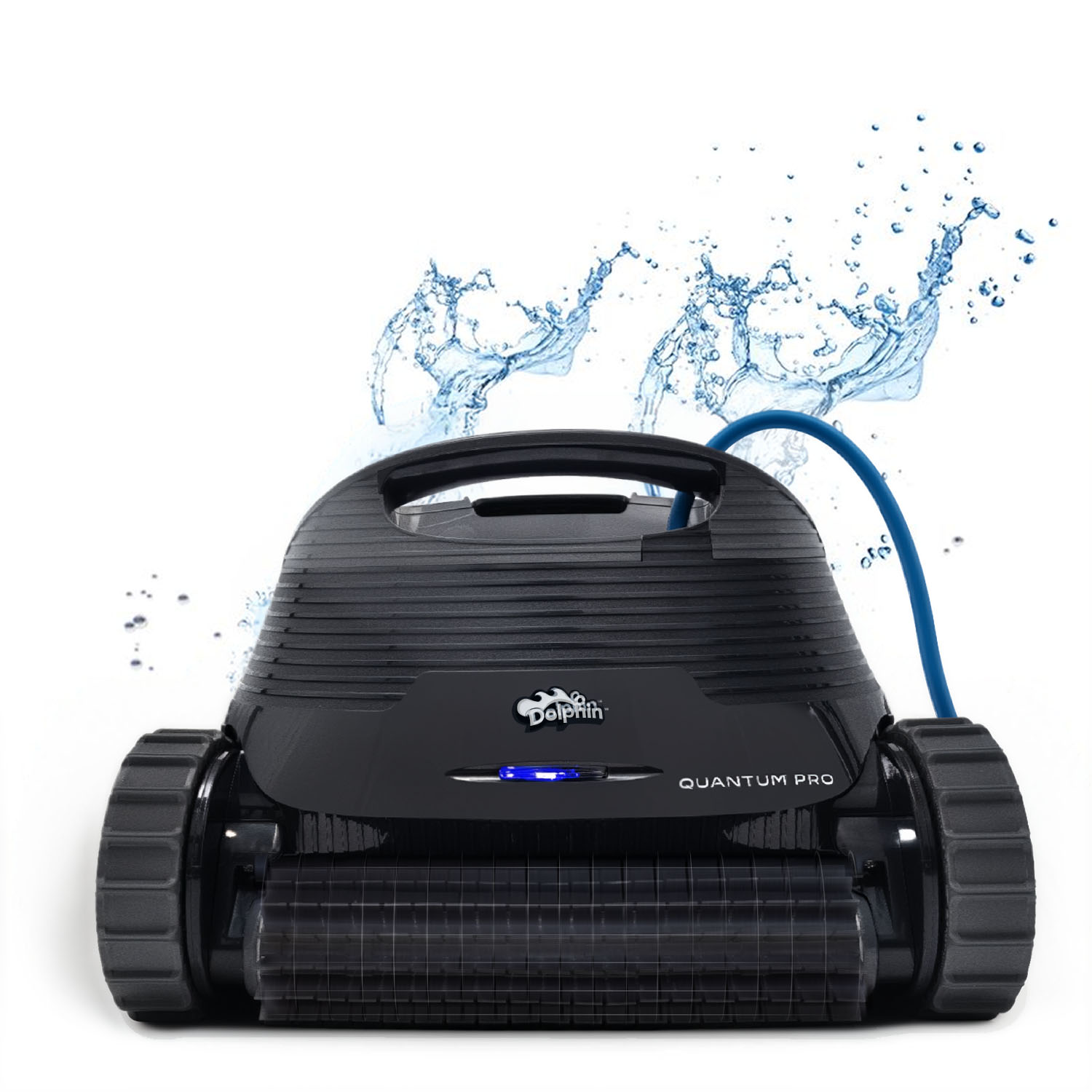
Dolphin Quantum
The Quantum shares the lead on capacity and wins on convenience. Its XXL MaxBin, over 400 square inches of filter area, is a rigid top-load basket with a one-click lid, so you can lift it out, see what it has collected and tip it out in seconds. That is handy with large debris, where you often want to check for a stick or a stone before the next run. Two HyperBrushes flick debris free of the floor, and the robot also covers stairs, sun shelves and Baja ledges, where blossoms and pods collect in shallow water.
- Best for
- Owners who want a big rigid basket and step or shelf cleaning at the lowest 50 ft price.
- Keep in mind
- No leaf bag in its box and a 2-year warranty. Flow is 4,000 GPH against the Premier's 4,500.
- 3
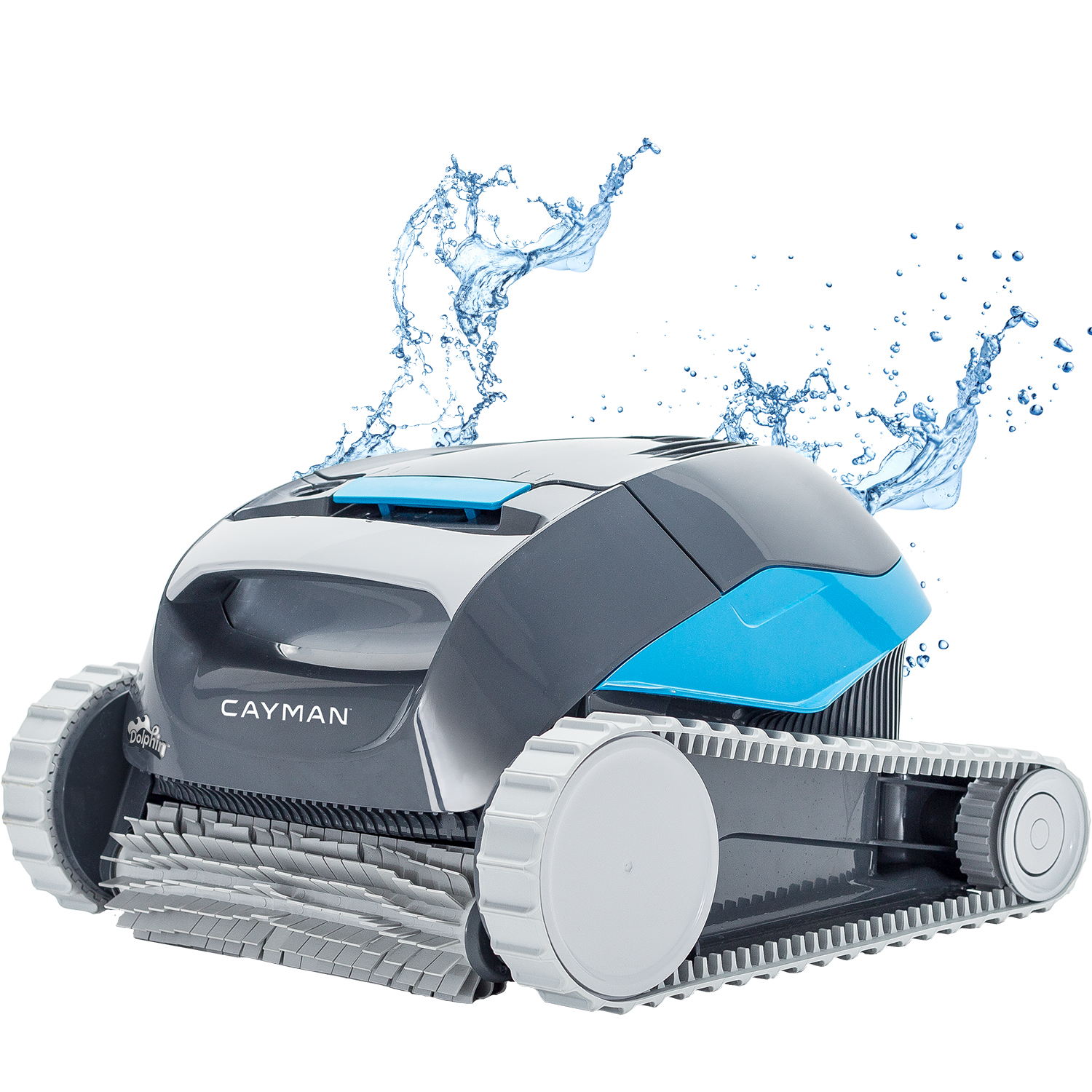 $1049
$1299Save $250Temporarily out of stock
Everyday large debris in pools up to 33 ft
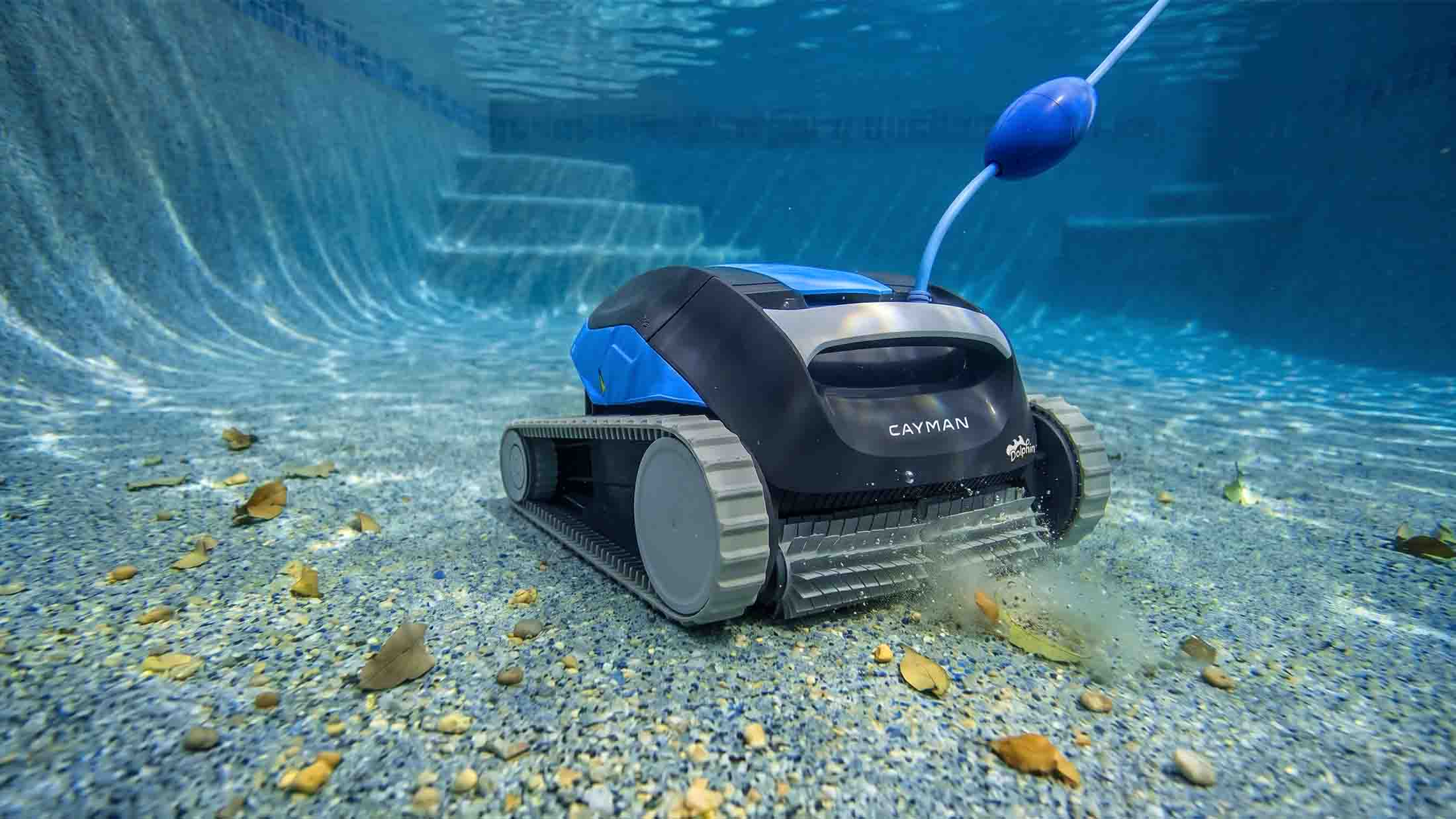
Dolphin Cayman
In a pool of 33 ft or less, the Cayman deals with the usual large debris, whole leaves, blossoms, pods and the odd twig. Its MaxBin basket sits under a top hatch with a single tab, so checking it for a stick takes a moment. One HyperBrush works floor and walls, and the timer runs every day, which matters because big debris is easiest to collect before it gathers into drifts. It is third because the basket is smaller than the Quantum's and there is no bag for bulk.
- Best for
- Smaller pools near shrubs, flower beds or a single tree, cleaned a little every day.
- Keep in mind
- Smaller basket than the two robots above, so empty it after each cycle. Rated to 33 ft, and it does not scrub the waterline.
- 4
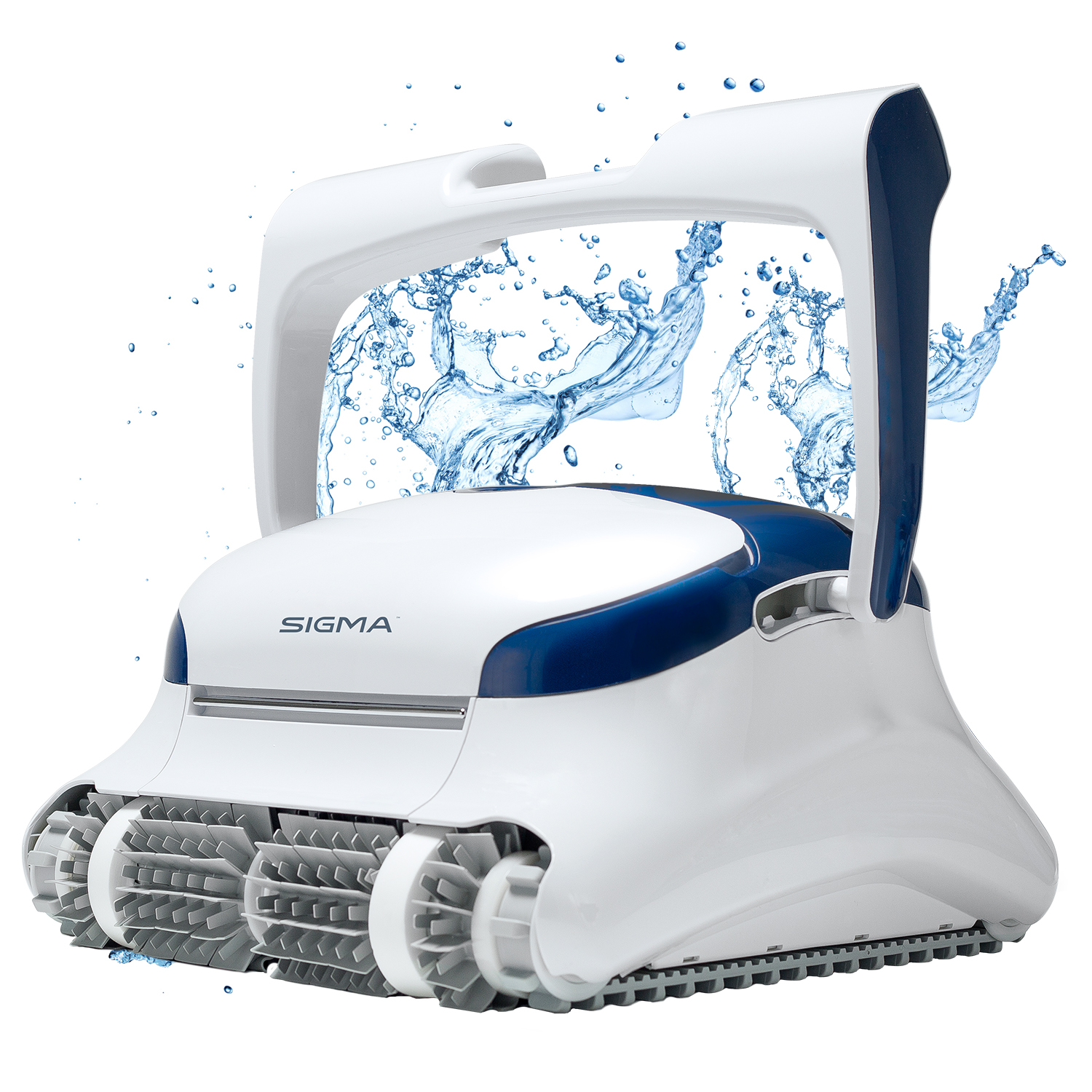 $2349
$2999Save $650Temporarily out of stock
Powerful, but its cartridges prefer small debris
Dolphin Sigma
The Sigma has the flow for large debris, 4,500 GPH from three ProLine motors, and four brushes to move it. What holds it back on this page is the filter format. Debris collects in cartridges, supplied in standard and NanoFilter versions, and cartridges do their best work on sand, grit and dust. Big pieces fill them quickly. If large debris is an occasional storm event at your house and fine dirt is the daily reality, the Sigma is still a strong buy. If pods and leaves arrive daily, pick one of the three above.
- Best for
- Pools that see large debris only after storms and want top-tier brushing and phone scheduling otherwise.
- Keep in mind
- Cartridges, not a basket or bag, and the highest price on this page. The wrong first choice for a pool under seeding trees.


How to judge a robot for this
What to look for when the debris is big.
- 1
An open filter with volume
A bag or a deep basket lets seed pods and whole leaves stack up while water passes around them. The roomiest options are the oversized leaf bag supplied with the Premier and the XXL MaxBin on the Quantum, listed at over 400 square inches of filter area. The Cayman's MaxBin is smaller, though still 50% larger than standard Dolphin filters.
- 2
Coarse media, not fine
Ultra-fine filters are the wrong choice for a floor of pods and petals. Large debris blankets fine media and stops the flow almost at once. Fit standard panels or the leaf bag for this work, and keep NanoFilters for the cycle afterward, when only dust remains.
- 3
Flow to carry heavier pieces
A waterlogged seed pod or wet twig weighs more than a leaf, and it takes flow to lift it into the filter. The Premier and Sigma move 4,500 GPH, the Quantum 4,000 GPH and the Cayman over 4,000 GPH. All are enough for debris that fits the intake.
- 4
Access for clearing a jam
Sooner or later something wedges. Top access lets you lift the filter out and see what is stuck without turning the robot over. The Premier and Quantum are top-load, and the Cayman has a top hatch. Check the intake and impeller whenever a robot stops picking up.
Side by side
Filters, flow and access compared.
| Specification | Dolphin Premier | Dolphin Quantum | Dolphin Cayman | Dolphin Sigma |
|---|---|---|---|---|
| Price today | $1949 | $1599 | $1049 | $2349 |
| Filtration | Multi-Media: NanoFilters, oversized leaf bag and standard fine filters | XXL MaxBin basket with standard and NanoFilter panels | MaxBin basket with fine panels; NanoFilter panels optional | NanoFilters and standard filter cartridges |
| Filter access | Top-load, no tools | Top-load, one-click open | Top hatch, one-tab emptying | Cartridges |
| Brushes | Dual scrubbing brushes | Dual HyperBrush | HyperBrush | Quad scrubbing brushes |
| Flow rate | 4,500 GPH | 4,000 GPH | Over 4,000 GPH | 4,500 GPH |
| Cycle time | 3 hours | 2 hours | 2 hours | 2.5 hours |
| Cleans | Floor, walls and waterline | Floor, walls, waterline, sun shelves and stairs | Floor and walls | Floor, walls and waterline |
| Scheduling | Weekly timer: every day, every 2 days or every 3 days | Weekly timer: every day, every 2 days or every 3 days | Timer: every day | Weekly scheduler by day and time |
| Warranty | 3 years | 2 years | 2 years | 3 years |
What fits, and what comes out by hand.
A robot takes debris in through an opening on its underside. Anything that passes through and tumbles into the filter is fair game. Anything longer or wider than the opening, or too heavy for the water flow to lift, stays where it is. The table sorts the usual suspects.
Pay most attention to the hard objects. Stones do not just fail to be collected. If one reaches the impeller it can stop it, and a robot that hums but does not move water has usually swallowed something rigid. Unplug it, open the top and clear it before running again.
| Debris | Robot or hand? | Notes |
|---|---|---|
| Whole leaves, petals, blossoms | Robot | Use standard panels or the leaf bag |
| Seed pods and sweetgum balls | Robot, if they fit the intake | Check the filter often; they fill it fast |
| Mulch and bark chips | Robot | Skim the floating pieces first |
| Short twigs | Usually robot | Can lodge crosswise; check the intake |
| Branches, palm fronds, long sticks | Hand | Bigger than the intake |
| Stones, gravel, coins, hard toys | Hand | Can jam the impeller |
Set the robot up for big pieces.
Three choices decide how well any of these robots copes. First, media: take out NanoFilters and fit the standard panels, or on the Premier the leaf bag. Second, timing: run the robot after you have skimmed the surface, since most large debris floats before it sinks and a net removes it for free. Third, frequency: a short daily cycle collects pods and petals while they are scattered. Wait a week and they drift into heaps that fill the filter early.
Then look at the source. A mulched bed that washes into the pool in every storm needs an edging strip more than it needs a robot. A robot handles what is left, but it is the last line, not the first.
Before each cycle.
- Walk the edge and pick out anything rigid: sticks, stones, toys, dive rings. It takes a minute and prevents nearly every jam.
- Skim floating pods and petals with a net before they sink.
- Empty the filter after the cycle and look inside for anything wedged in the mesh or the intake.
- If the robot starts leaving debris behind, stop and check the impeller before assuming the filter is full.
Questions, answered
Large debris questions.
What is the biggest thing a pool robot can pick up?
Roughly, anything that fits through the intake on the underside and is light enough for the water flow to lift: whole leaves, blossoms, seed pods, bark chips, short twigs. Branches, long sticks, palm fronds and stones are beyond any robot here.
Can stones or nuts jam a robotic pool cleaner?
Yes. Hard objects are the main cause of jams. A stone, a nut or a broken piece of plastic can wedge in the intake or stop the impeller, and the cleaning stops with it. Unplug the robot, clear the object and it will usually carry on.
Why use standard filters when NanoFilters catch more?
Because fine media and big debris work against each other. NanoFilters are made to stop dust, so their surface blocks quickly under leaves and pods, flow drops and the robot stops picking up. Clear the large debris first, then run a NanoFilter cycle for what remains.
Is the best robotic pool cleaner for large debris also good on stairs and shelves?
Only the Quantum publishes stairs, sun shelves and Baja ledges in its coverage. The Premier and Sigma clean floor, walls and waterline, and the Cayman cleans floor and walls. Petals and pods that settle on a top step or a shallow ledge are, with most robots, a job for a brush or a net.
The verdict
The large-debris rule.
Match the filter to the debris and the robot to the pool. For bulky debris in a pool over 33 ft, choose the Premier for its leaf bag or the Quantum for its XXL basket and lower price. For 33 ft and under, the Cayman's MaxBin handles everyday pods, petals and leaves. Pass on the Sigma unless big debris is rare at your house. And whatever you buy, the stick, the stone and the palm frond are still yours to pick up.
Keep reading