


By debris and dirt problem
Best robotic pool cleaner for fine debris: it comes down to the filter.
Top pick: Dolphin Premier
Live prices · Free shipping · 30 Day Trial
The short answer
Silt, dust, pollen and dead algae are small enough to pass through an ordinary filter and settle again overnight. These picks are ranked by the media that stops them.
The Premier is our first choice for fine debris: NanoFilters are included in its Multi-Media set and swap in from the top in seconds. The Sigma comes second: the same NanoFilters in the box, plus four brushes to lift settled silt. The Quantum includes NanoFilter panels at a lower price. The Cayman takes them as an optional add-on.
You vacuum, the floor looks clean, and by morning a thin gray film is back. Or the robot finishes its cycle and a puff of cloud follows it across the pool. Both are signs of fine debris: particles so small that a standard filter lets them through and they return to the water. Silt after rain, windblown dust, spring pollen and the gray powder left by dead algae all behave this way.
Suction is not the issue. Any robot here lifts fine debris off the floor. The question is whether the filter holds it, and that makes filter fineness the deciding spec for the best robotic pool cleaner for fine debris. Three robots on this site include ultra-fine media as standard: the Premier and the Sigma with NanoFilters, the Quantum with NanoFilter panels for its basket. The Cayman takes NanoFilter panels as an optional add-on, which is why the robot this store is named for sits fourth here.
Our picks, in order
Ranked by what they filter out of the box.
- 1
 $1949
$2499Save $550Temporarily out of stock
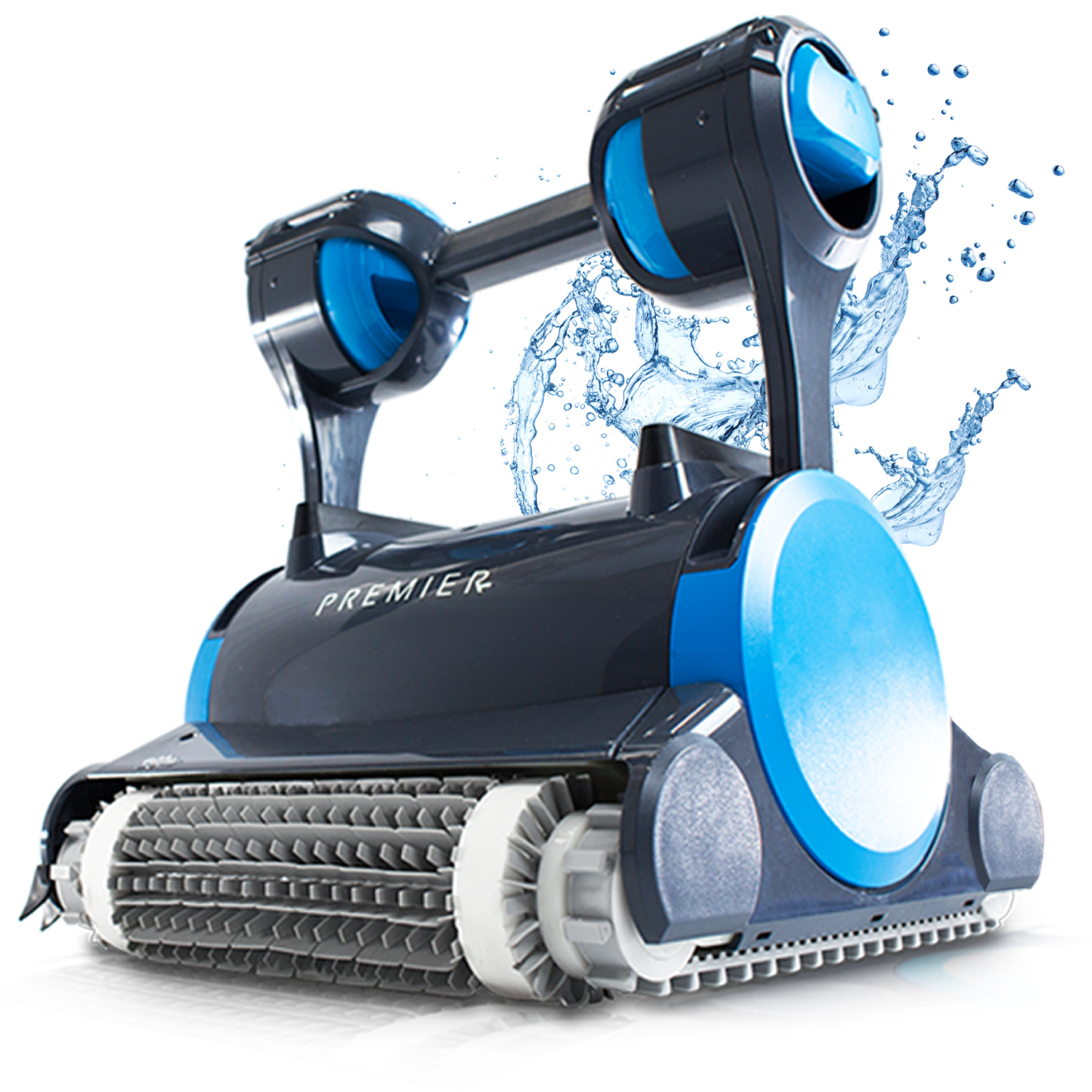
NanoFilters included, swapped in seconds
Dolphin Premier
The Premier leads on fine debris because its Multi-Media system treats filtration as something you change to suit the day. NanoFilters go in when the water is hazy or the floor is dusty. Standard fine filters handle ordinary weeks, and the oversized leaf bag covers fall. All of it is included, and all of it loads from the top without tools. Dual ProLine motors pull 4,500 GPH through whichever media you fit, and the 3-hour cycle, the longest here, gives fine particles time to be brushed up and drawn in from floor, walls and waterline.
- Best for
- Pools up to 50 ft that fight dust, silt or pollen for part of the year and leaves for another.
- Keep in mind
- You check the full-filter light at the power supply, not on a phone. It sits in the upper price tier.
- 2
 $2349
$2999Save $650Temporarily out of stock
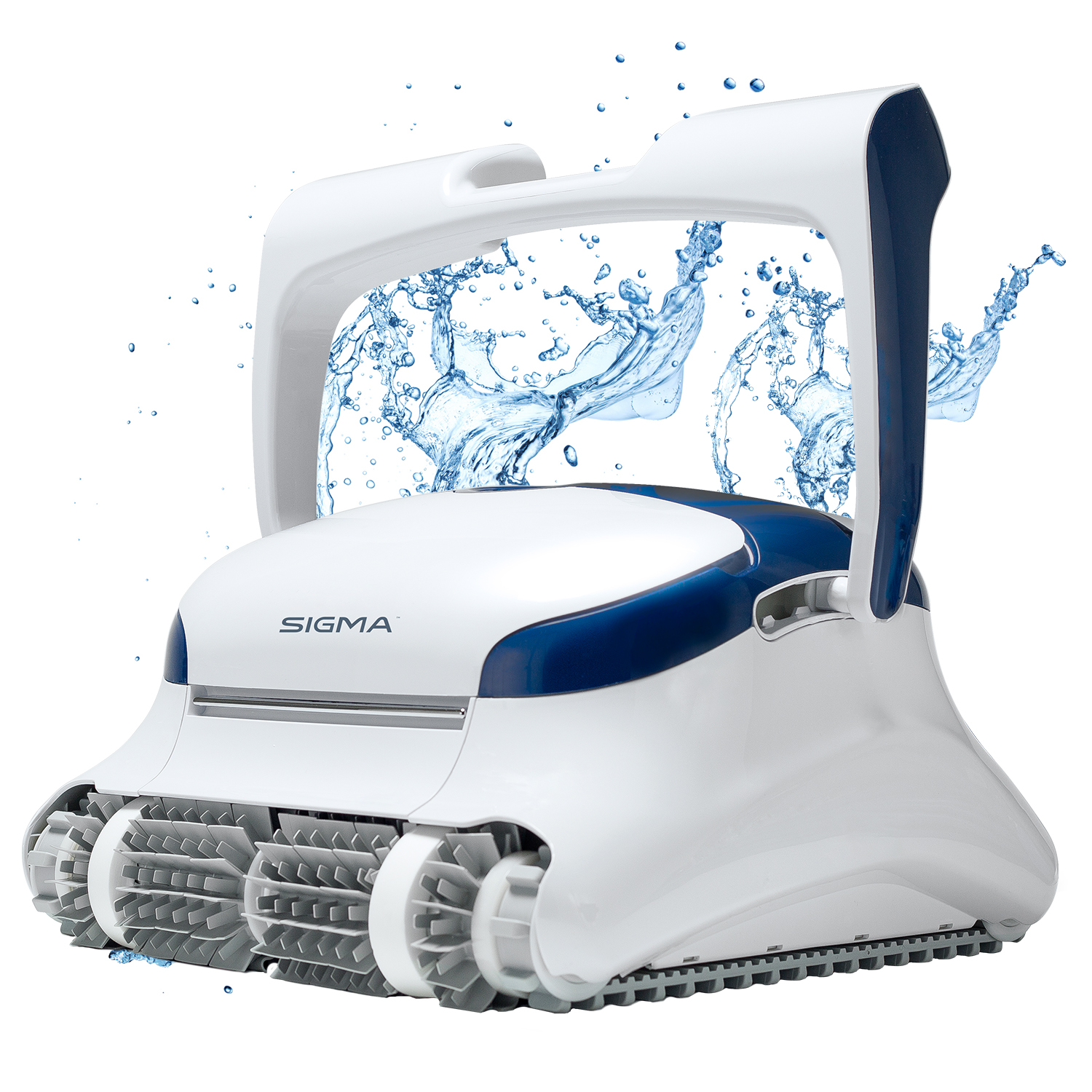
Four brushes to lift what has settled
Dolphin Sigma
The Sigma matches the Premier on media, with NanoFilters and standard cartridges both included, and beats it on agitation. Four scrubbing brushes work settled silt loose from the floor, the base of the walls and the waterline, and three ProLine motors at 4,500 GPH carry it into the filters. Its myDolphin Plus app warns you when the filter is loading, a real help when ultra-fine media can fill in a single run, and schedules cleaning by day and time. Price is the only thing that keeps it out of first place.
- Best for
- Plaster and pebble pools where fine debris settles into texture and needs real scrubbing to lift.
- Keep in mind
- Highest price here and 24.6 lb to lift. Cartridges need a thorough rinse after every fine-filter cycle.
- 3
 $1599
$1799Save $200Temporarily out of stock
Most filter area, NanoFilter panels included
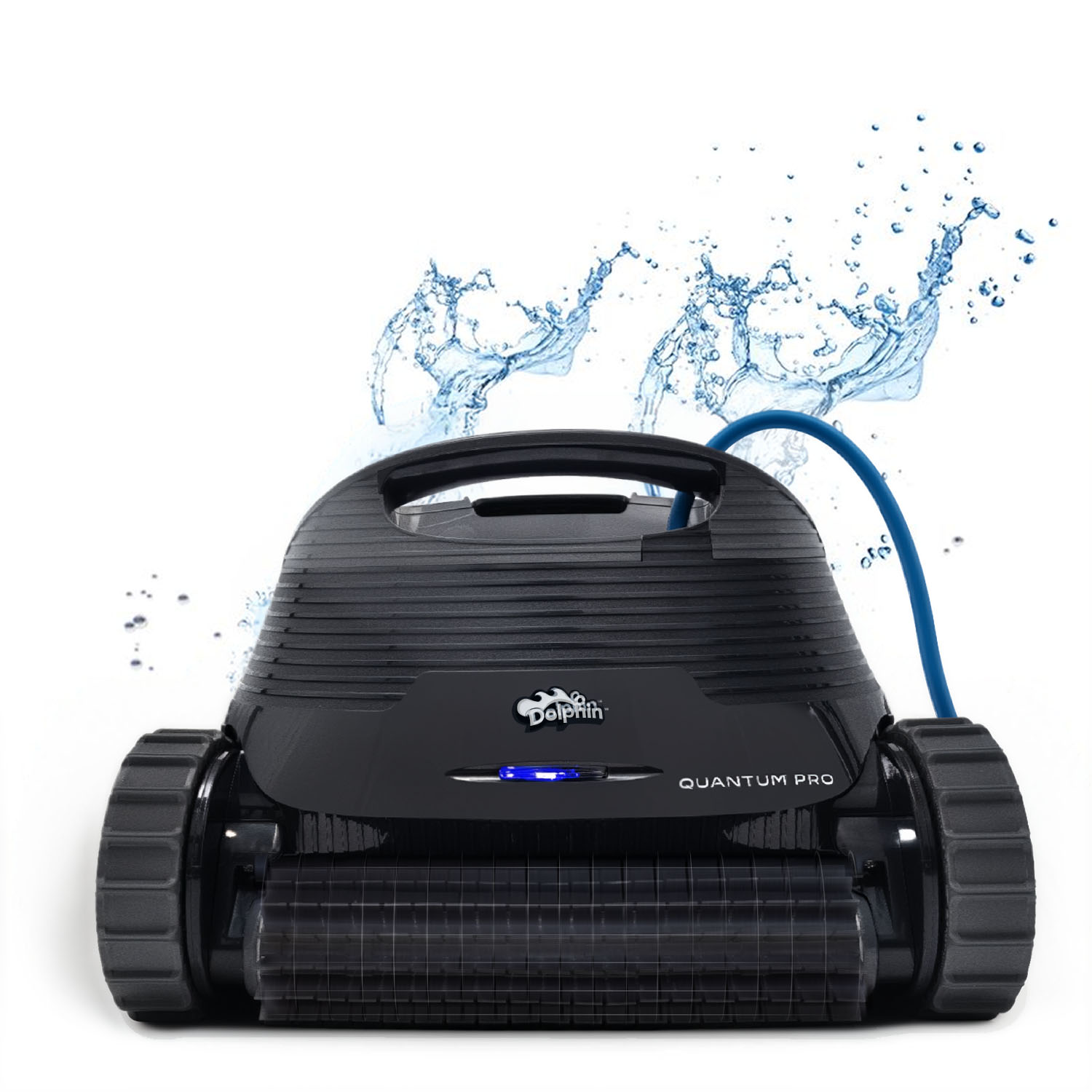
Dolphin Quantum
The Quantum brings ultra-fine filtration to the middle of the price range. Standard panels and a complete NanoFilter set are both supplied for its XXL MaxBin basket, and with over 400 square inches of filter area it can take on a lot of fine material before it needs rinsing. One click opens the lid from above, and the basket hoses clean quickly. Two HyperBrushes spinning at twice the speed of standard brushes stir settled dust, and 4,000 GPH of flow carries it in. A 2-hour cycle on the weekly timer, or scheduled in the app, runs often enough that haze does not build.
- Best for
- Buyers who want included fine filtration and a big basket without paying flagship prices.
- Keep in mind
- Two-year warranty, and a little less flow than the Premier or Sigma.
- 4
 $1049
$1299Save $250Temporarily out of stock
Fine debris in smaller pools, with add-on panels
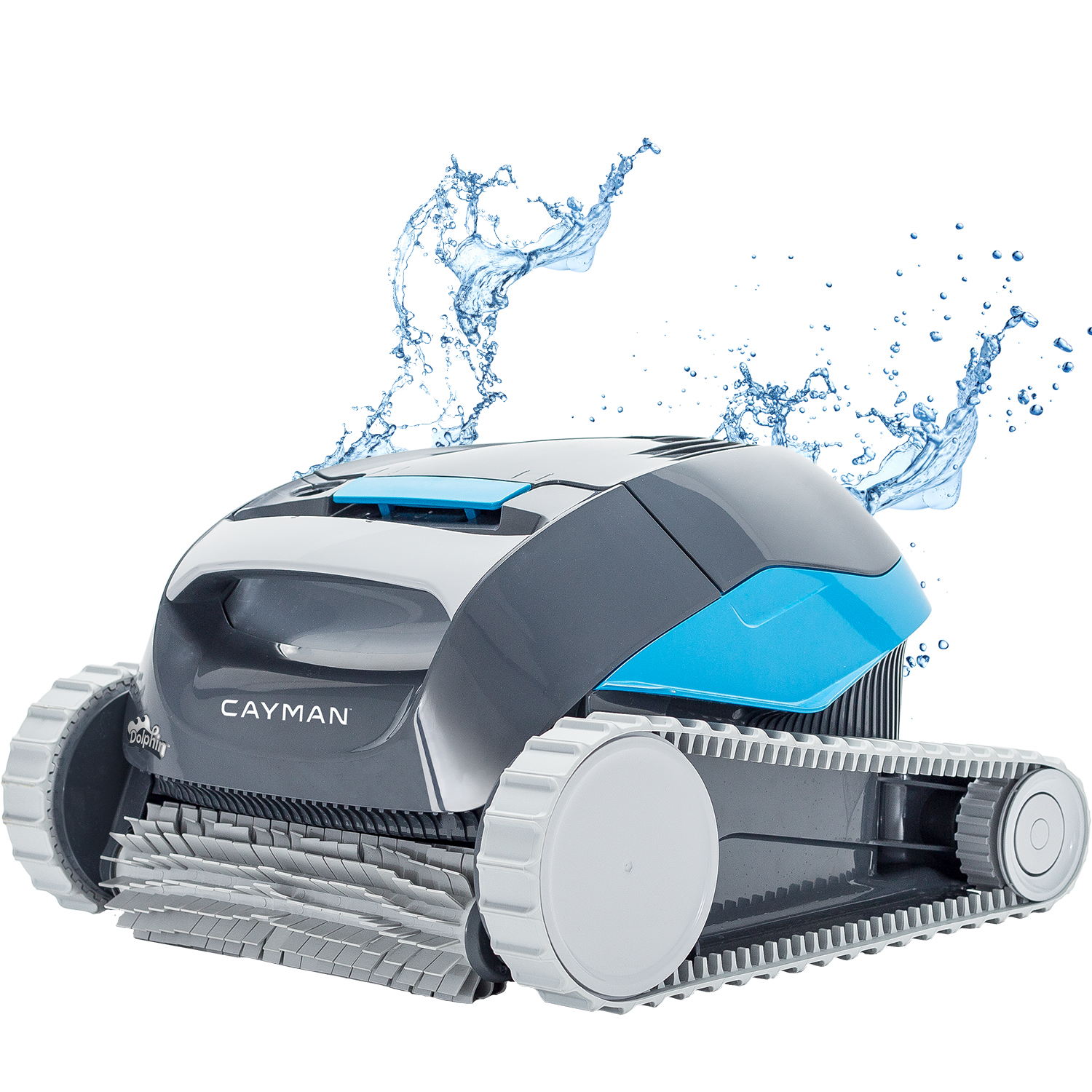
Dolphin Cayman
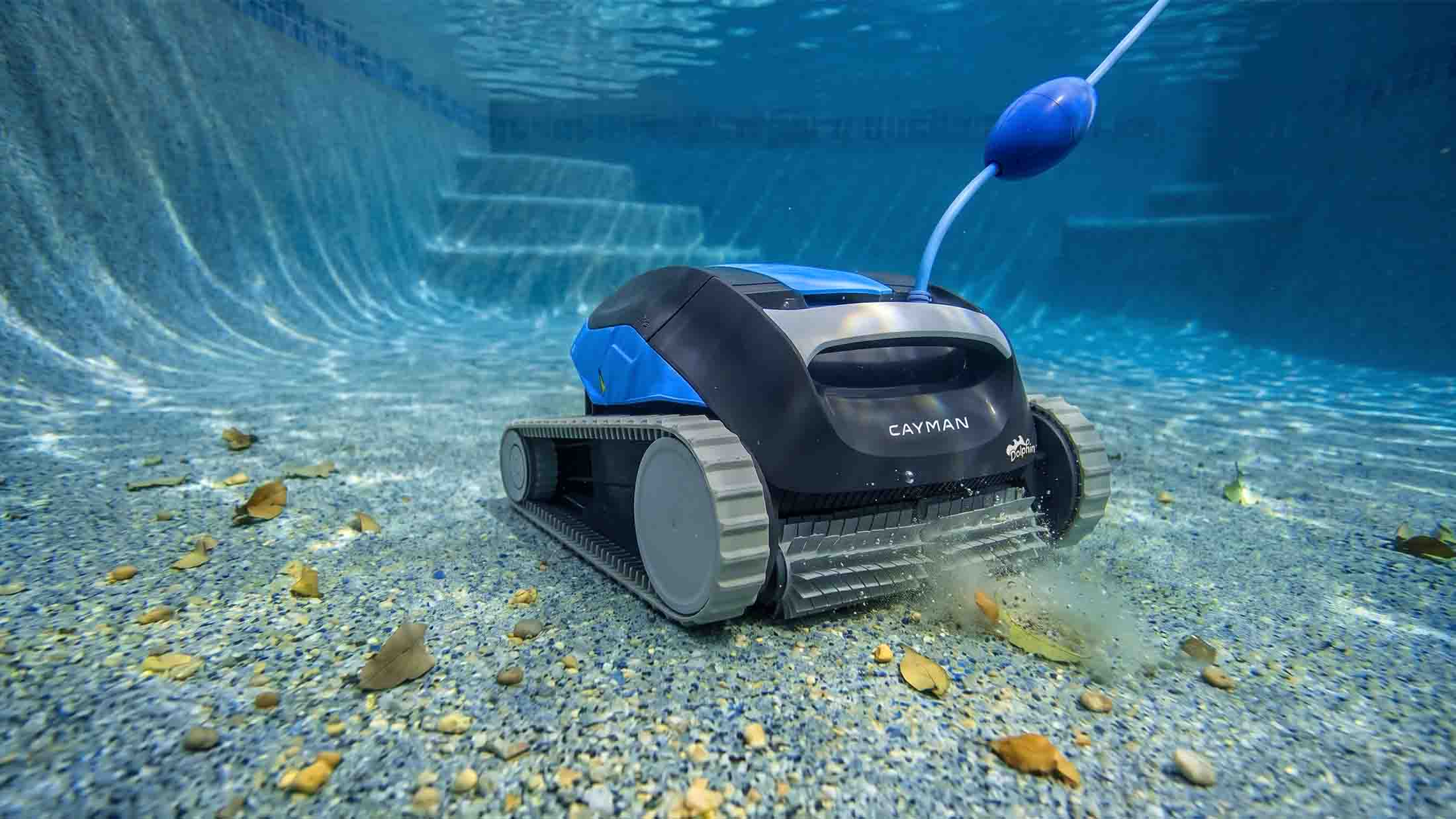
Out of the box the Cayman's MaxBin carries fine panels that deal with sand, grit and everyday dirt. For true fine debris, the silt and pollen that cloud the water, it needs NanoFilter panels, and those are an optional add-on. With them fitted it is a capable fine-debris robot for pools up to 33 ft: dual 24-volt DC motors move over 4,000 GPH, and the top hatch makes the after-cycle rinse quick. The every-day timer helps more than you might expect. Fine debris settles daily, and a daily pass removes it before swimmers stir it up again.
- Best for
- Pools 33 ft and under where the owner will add NanoFilter panels and likes a daily cycle.
- Keep in mind
- NanoFilter panels are not in the box, so budget for them. No waterline scrubbing, where pollen and dust also collect.


How to judge a robot for this
How to judge a robot on fine debris.
- 1
Filter fineness
This is the spec that decides whether silt stays in the robot or goes back into the pool. Standard filters are built for sand, grit and leaves. NanoFilters are the ultra-fine option. Check whether they are in the box or an extra purchase before comparing anything else.
- 2
Filter area
Fine media loads quickly because it stops so much. More filter area means more dust held before flow falls off. The Quantum's XXL MaxBin has over 400 square inches. The Cayman's MaxBin gives 50% more than a standard Dolphin filter.
- 3
Brushing that lifts settled silt
Fine debris clings. It settles into the texture of plaster and along the base of walls, and it has to be brushed into suspension before the intake can take it. Brush count runs from four on the Sigma to two on the Premier and the Quantum and one on the Cayman.
- 4
Knowing when to rinse
A fine filter can go from clean to loaded in one cycle. The Premier has a light on its power supply that comes on when the filter is full. On the Sigma, the alert arrives on your phone. On the Quantum and Cayman, make the rinse a habit after every run.
Side by side
Filtration compared across the four.
| Specification | Dolphin Premier | Dolphin Sigma | Dolphin Quantum | Dolphin Cayman |
|---|---|---|---|---|
| Price today | $1949 | $2349 | $1599 | $1049 |
| Filtration | Multi-Media: NanoFilters, oversized leaf bag and standard fine filters | NanoFilters and standard filter cartridges | XXL MaxBin basket with standard and NanoFilter panels | MaxBin basket with fine panels; NanoFilter panels optional |
| Filter access | Top-load, no tools | Cartridges | Top-load, one-click open | Top hatch, one-tab emptying |
| Brushes | Dual scrubbing brushes | Quad scrubbing brushes | Dual HyperBrush | HyperBrush |
| Flow rate | 4,500 GPH | 4,500 GPH | 4,000 GPH | Over 4,000 GPH |
| Cycle time | 3 hours | 2.5 hours | 2 hours | 2 hours |
| Cleans | Floor, walls and waterline | Floor, walls and waterline | Floor, walls, waterline, sun shelves and stairs | Floor and walls |
| Scheduling | Weekly timer: every day, every 2 days or every 3 days | Weekly scheduler by day and time | Weekly timer: every day, every 2 days or every 3 days | Timer: every day |
| Warranty | 3 years | 3 years | 2 years | 2 years |
Finer filters need more attention.
There is a trade-off built into ultra-fine filtration, and it is better to know it before you buy. A filter that stops smaller particles stops more of everything, so it fills faster. As it fills, water has a harder time passing, flow drops, and the robot picks up less and may stop climbing walls. A NanoFilter rinsed after every cycle works as intended. One left for a week does not.
So build the rinse into the routine. Pull the filter when the cycle ends, hose it until the water runs clear, and put it back. Use NanoFilters when the debris is fine and standard panels when it is not. In leaf season especially, put the standard panels back in, or the Premier's leaf bag: leaves and pods blanket fine media in minutes, and you end up with neither clean water nor a clean floor.
Check that it is fine debris.
Three things look like fine debris and are not. A green or yellow dust that brushes away and returns to the same shaded spot within a day or so is likely live algae, and it needs sanitizer and brushing, not just filtration. A white, gritty deposit that does not brush off is scale. And water that is cloudy all the way through, over a clean floor, usually points to water balance or the pool's own filter.
True fine debris settles. You see it as a film on the floor in the morning, it clouds when disturbed, and it settles again. That is what a robot with NanoFilters removes well, and everything it takes out is something the pool's main filter never has to catch. What a robot does not do is sanitize, clear dissolved cloudiness or replace brushing during an algae treatment.
Getting fine debris out and keeping it out.
- Run the robot in the morning before anyone swims, when the night's dust is lying on the floor instead of hanging in the water.
- Rinse NanoFilters after every cycle. If you can see a gray coating on the mesh, flow is already reduced.
- After a dust storm or a heavy pollen day, run two cycles back to back and rinse between them.
- Keep the standard panels. Fit them when leaves, seed pods or grass show up, and return to NanoFilters afterward.
Questions, answered
Fine debris questions.
Why does my pool robot blow a cloud of dust out the back?
Because the particles are finer than the filter it is wearing. The robot lifts them, the filter lets them through, and the outflow returns them to the pool. Fit ultra-fine media, NanoFilters on the Premier and Sigma or NanoFilter panels on the Quantum, Cayman and Escape, and the same robot will hold what it lifts.
Can I leave NanoFilters in all year?
You can, but it is not ideal. They load quickly, so in leaf season or after a storm they clog on large debris and the robot stops cleaning well. A sensible pattern is to keep them for the dusty and pollen-heavy parts of the year and run standard panels at other times.
Are NanoFilter panels worth adding to the Cayman?
If fine debris is your complaint, yes. They are an optional add-on for the Cayman and they change what it can hold, from sand and everyday dirt to the silt and pollen that cloud water. If your pool mainly collects leaves and grit, the fine panels that come with it are enough.
Is the best robotic pool cleaner for fine debris enough to clear a cloudy pool?
Only if the cloud is suspended particles that settle. A robot with ultra-fine filters removes silt, dust and dead algae from the floor and walls and helps the water stay clear. It does not correct water balance, replace sanitizer or fix a failing pool filter, and those are the usual causes of water that stays cloudy.
The verdict
The fine-debris rule.
Read the filter list before the feature list. If ultra-fine media is in the box, the robot is ready for silt, dust and pollen on day one: the Premier for the most flexible filter set, the Sigma for the most brushing, the Quantum for the most filter area at the lowest price of the three. If your pool is 33 ft or under, the Cayman does the job once you add NanoFilter panels. Whichever you choose, the result depends on a habit: rinse after every cycle.
Keep reading