


By debris and dirt problem
The best robotic pool cleaner for silt, and how to use it without clouding the pool
Top pick: Dolphin Premier
Live prices · Free shipping · 30 Day Trial
The short answer
Silt hangs in the water, settles as a film and lifts again at a touch. Removing it takes ultra-fine filters, still water and more than one cycle.
For silt, choose the Dolphin Premier: its included NanoFilters hold what standard filters pass, and its timer repeats the cycle daily while the pool clears. The Dolphin Sigma filters as finely and can be scheduled for dawn, after a still night. The Dolphin Quantum includes NanoFilter panels for less money. The Dolphin Cayman removes silt only with its optional NanoFilter panels fitted.
Choosing the best robotic pool cleaner for silt starts with knowing what silt is: the finest mineral debris a pool collects. It washes in with runoff after heavy rain, arrives with flood water and dust storms, and turns up when a pool is opened after months under a cover. It hangs in the water for hours, settles as a smooth brown or gray film, and lifts into a cloud the moment anything touches it.
That last habit defeats most cleaning. A standard robot filter lets silt straight through, so the robot stirs the film and leaves the water murky. The right robot is one with ultra-fine media, and even then the job takes still water, rinsed filters and several cycles. We rank four robots for it and explain the method, including the point where a robot is the wrong tool.
Our picks, in order
Four robots ranked for silt.
- 1
 $1949
$2499Save $550Temporarily out of stock
Best for silt: NanoFilters and a daily timer
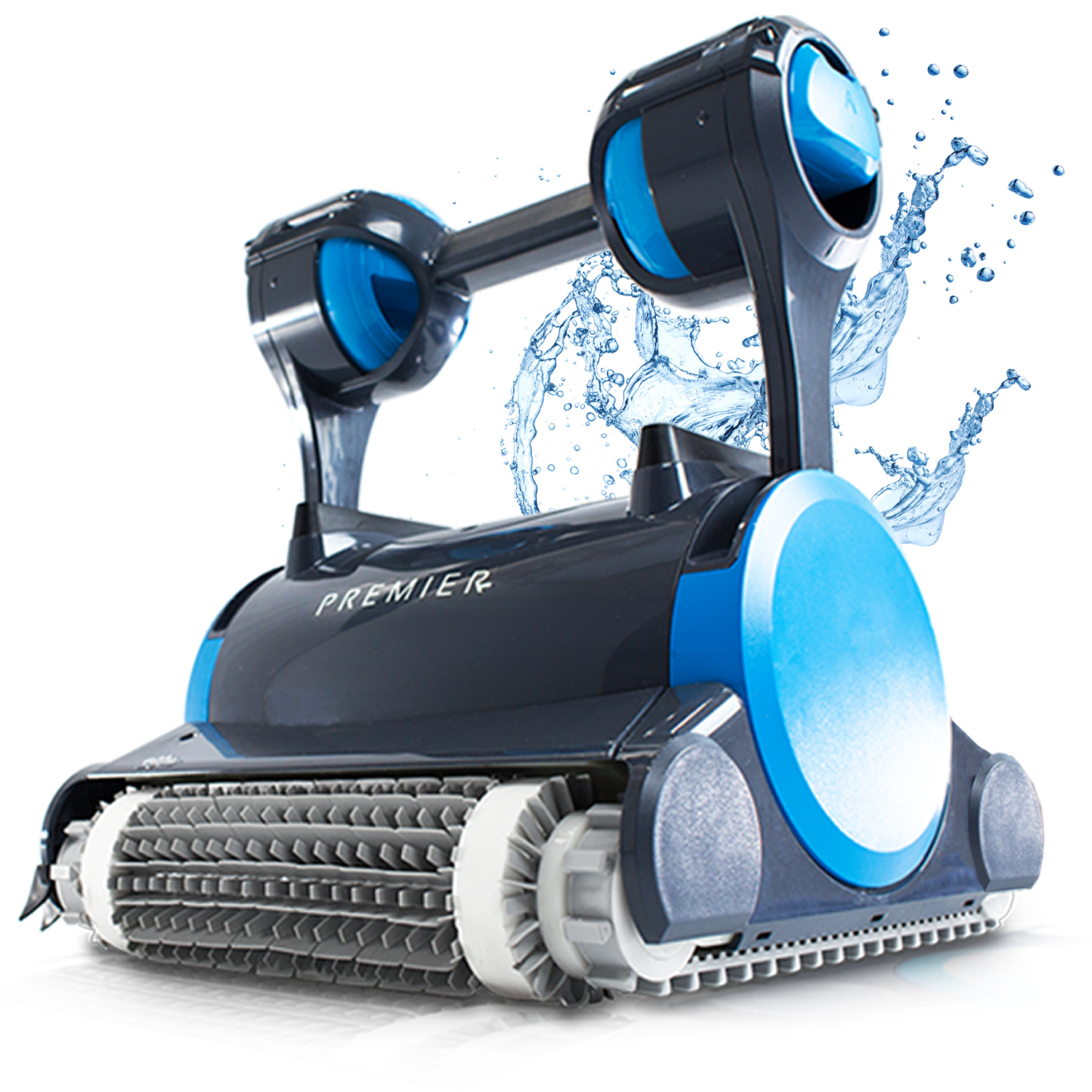
Dolphin Premier
Silt needs two things from a robot, ultra-fine media and repetition, and the Premier supplies both. Its NanoFilters are included and hold the particles that standard filters pass. The timer on the power supply can run a cycle every day, so the pool keeps improving through the week after a storm without you starting anything.
Each cycle lasts 3 hours at 4,500 GPH, which moves a lot of water through fine media and catches some of what is still suspended. When the pool is clear, the standard fine filters go back in.
- Best for
- In-ground pools up to 50 ft that take runoff or dust several times a year.
- Keep in mind
- There is no phone control, so you set the timer and check the full-filter light at the power supply.
- 2
 $2349
$2999Save $650Temporarily out of stock
Fine filtration with a scheduled dawn start
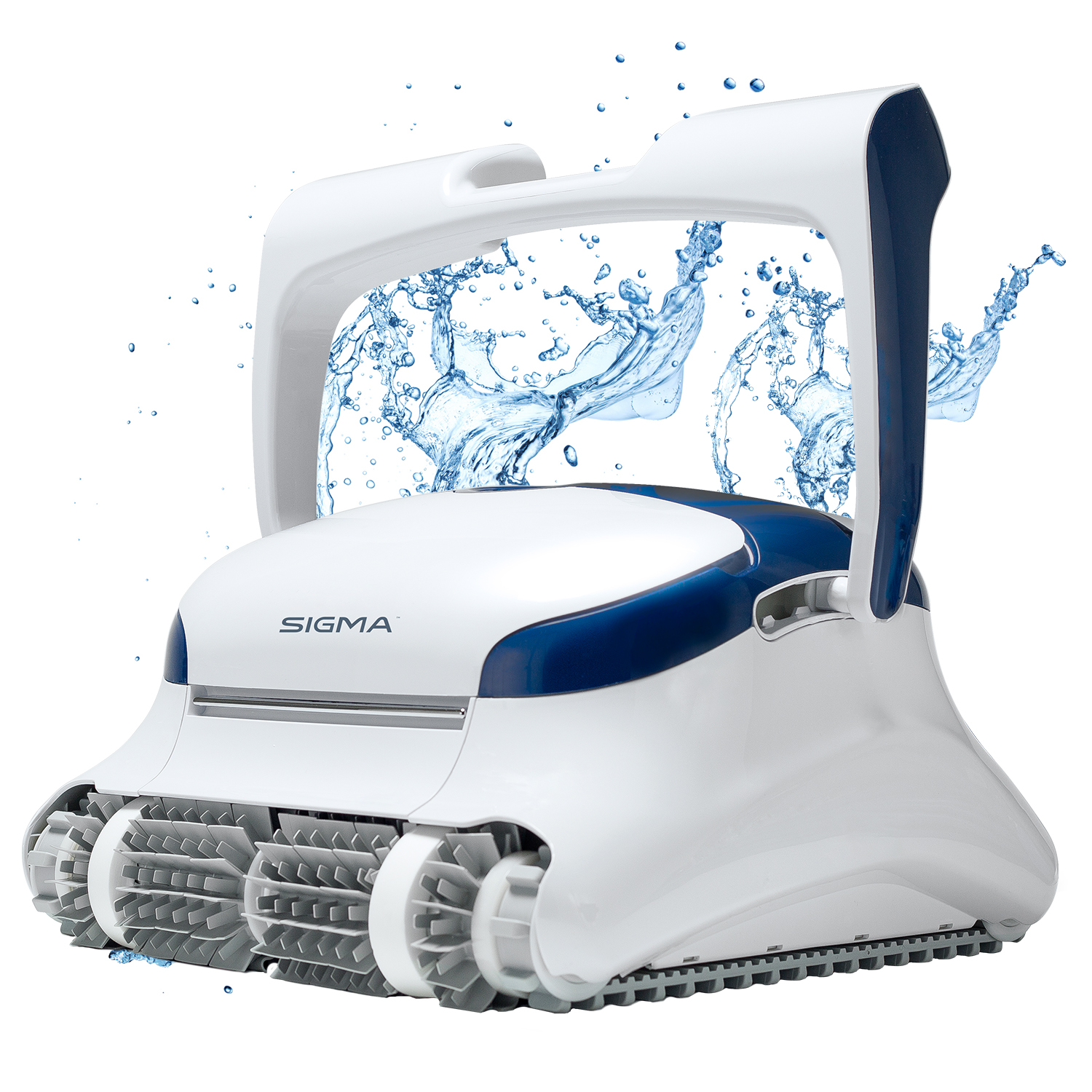
Dolphin Sigma
The Sigma filters as finely as the first pick, with NanoFilters included and three ProLine motors at 4,500 GPH. What it adds for silt is timing. Its scheduler sets the day and the hour, so you can leave the pump off overnight and have the robot start at dawn, when the silt is lying still.
A filter alert in the app tells you when the cartridges have blinded, which with silt can happen well before the 2.5-hour cycle ends. Four scrubbing brushes work the film off walls and waterline. It is second on price, and because cartridges take longer to rinse free of silt.
- Best for
- Owners who want cycles timed for a still pool and a prompt when the filters need rinsing.
- Keep in mind
- Highest price on the page, and its cartridges need a careful rinse after every silt cycle.
- 3
 $1599
$1799Save $200Temporarily out of stock
Largest fine filter, and it cleans the steps
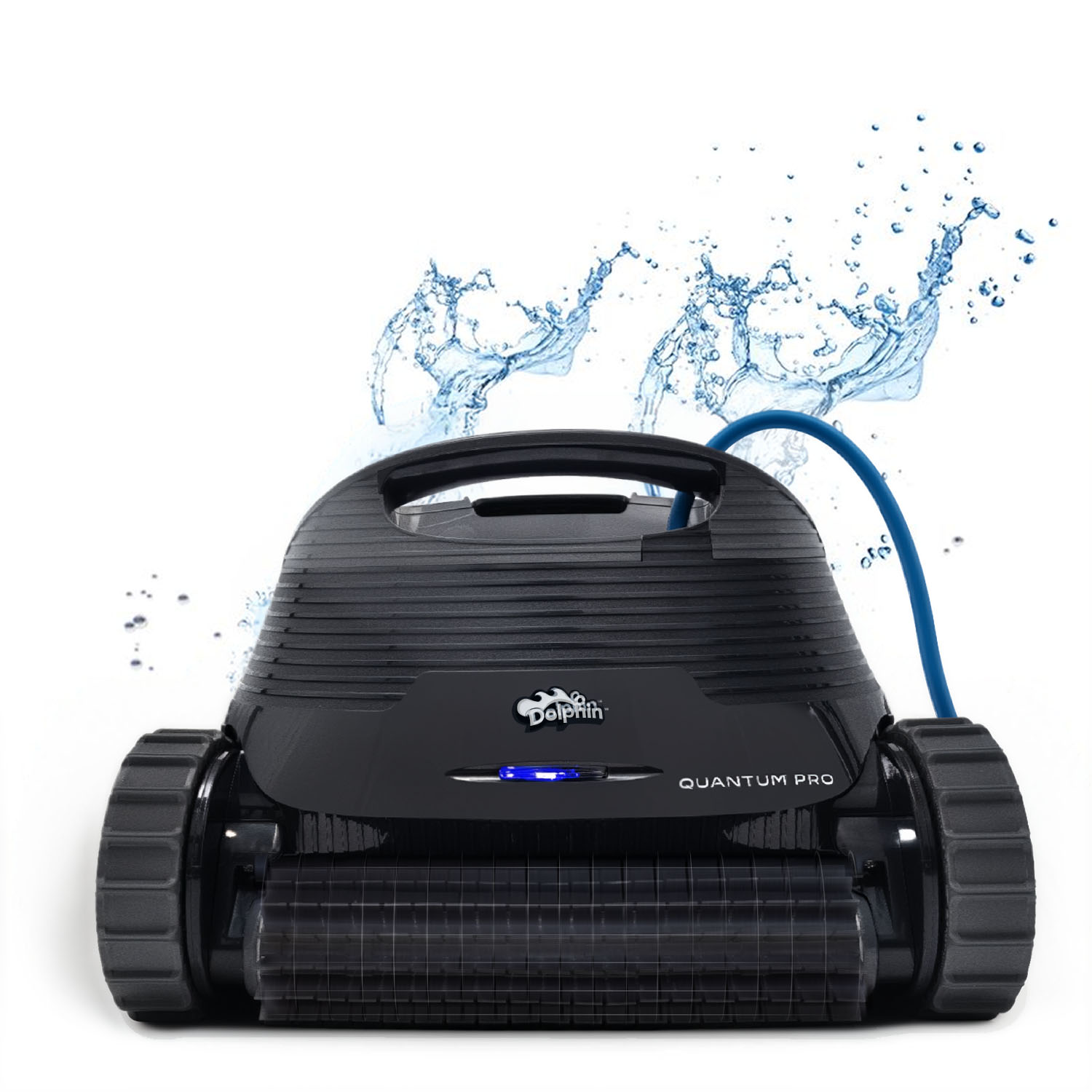
Dolphin Quantum
Silt blinds a filter quickly, so filter area buys working time, and the Quantum has more of it than any robot here: over 400 square inches in its XXL MaxBin basket, with a full set of NanoFilter panels included. Silt also settles on every flat surface, not only the floor, and this is the robot rated to clean steps, sun shelves and Baja ledges as well.
The basket has a one-click top opening for rinsing between cycles, and the 2-hour cycle repeats on its timer or from the myDolphin Plus app. It ranks third because its flow is 4,000 GPH and its warranty is 2 years.
- Best for
- In-ground pools with steps or a sun shelf where silt film settles, on a mid-range budget.
- Keep in mind
- Lower flow than the first two picks and a shorter warranty.
- 4
 $1049
$1299Save $250Temporarily out of stock
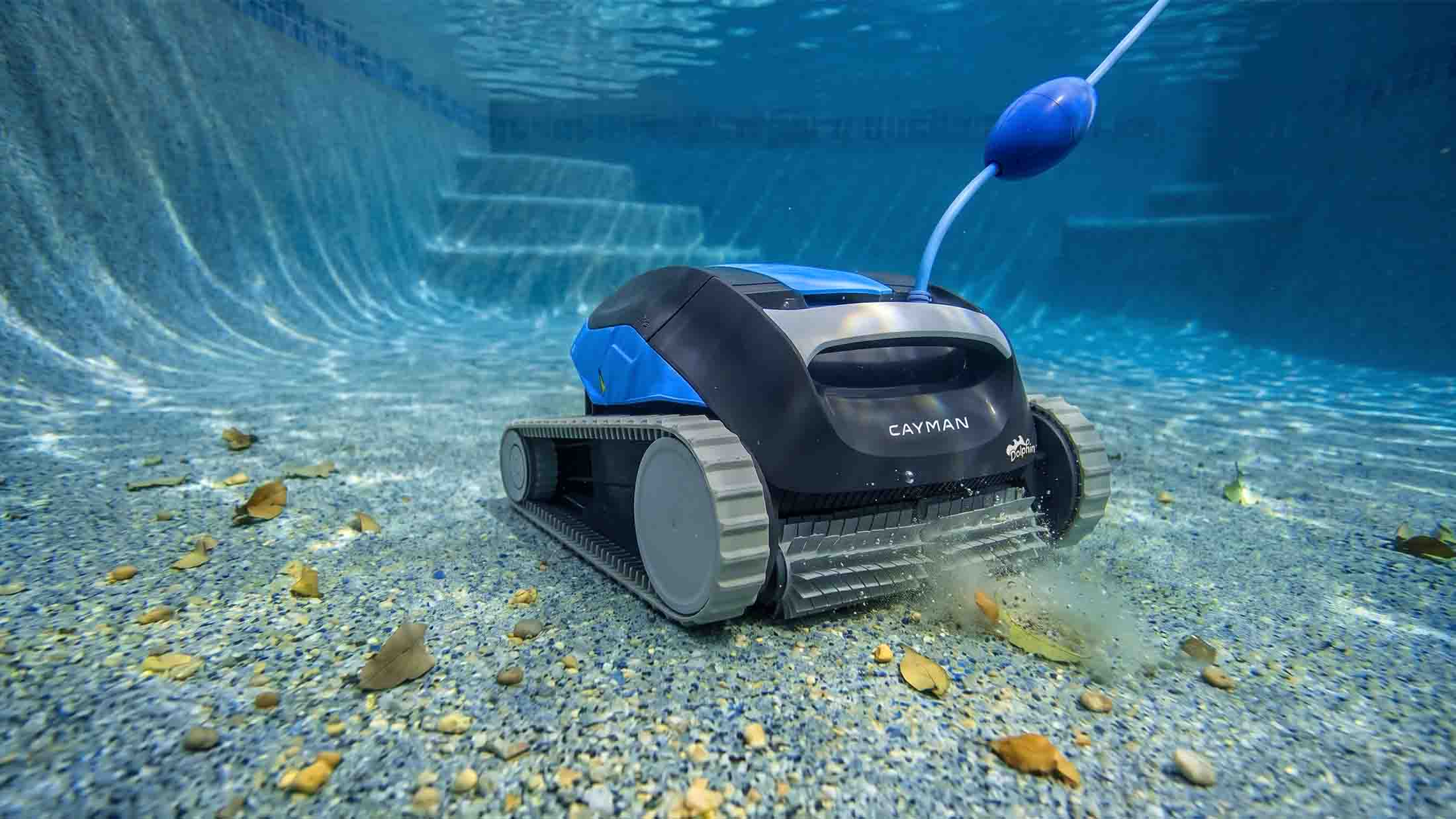
Only with NanoFilter panels, pools up to 33 ft
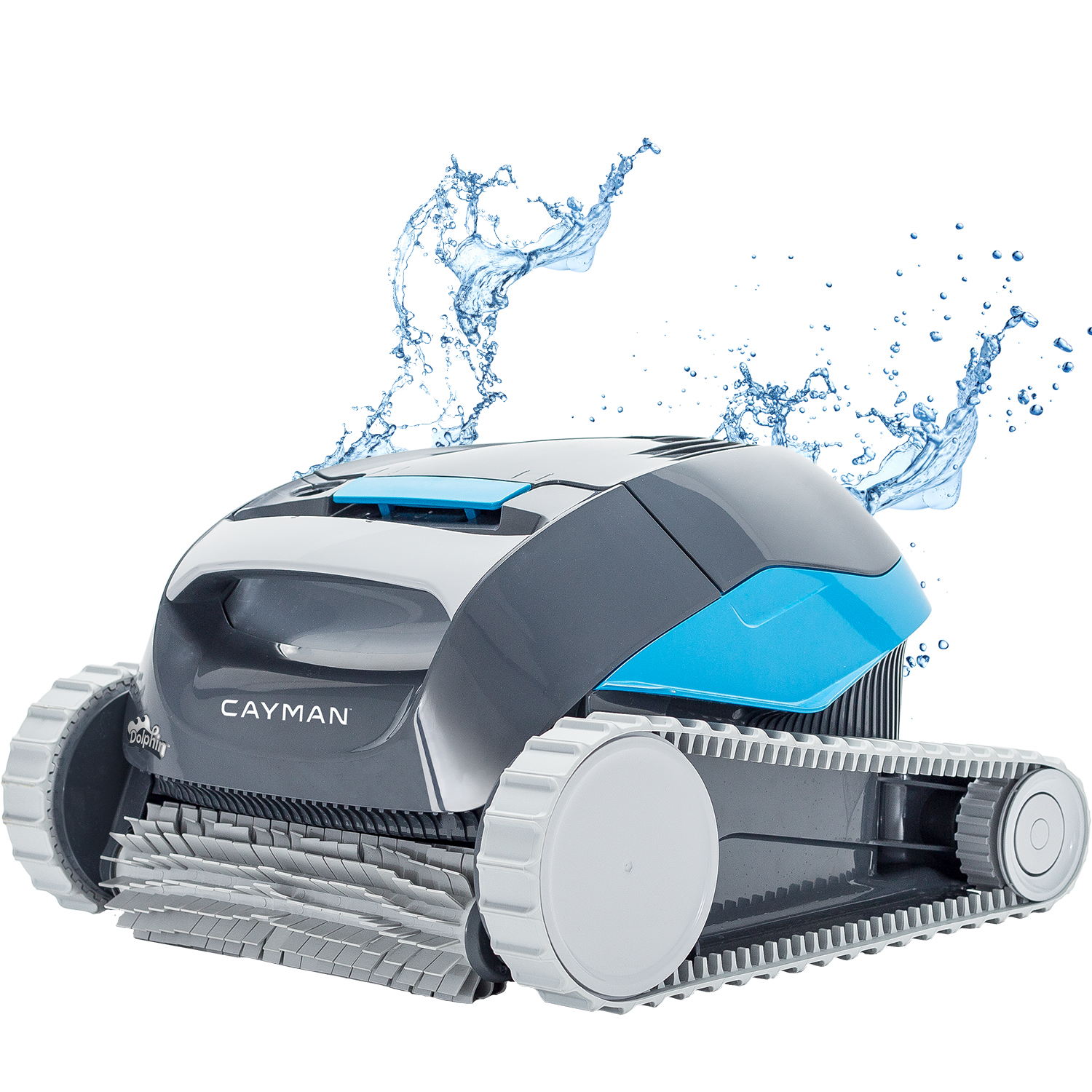
Dolphin Cayman
We list the Cayman fourth with a plain warning: on the fine panels it ships with, it will mostly stir silt. The optional NanoFilter panels change that. Fitted with them, its MaxBin basket holds silt in pools up to 33 ft, and the every-day timer supplies the repeat cycles this job needs without a daily trip to the power supply.
The basket lifts out through the top hatch with one tab, which keeps the rinsing quick, and the robot weighs 14.6 lb.
- Best for
- Pools up to 33 ft with occasional silt, bought together with the NanoFilter panels.
- Keep in mind
- Do not expect silt removal on the standard panels. It covers floor and walls only.


How to judge a robot for this
What counts when the debris is silt.
- 1
Media fine enough for a film
Silt particles are smaller than the openings in a standard panel. Only NanoFilter-class media stops them. Whether that media is in the box or an add-on is the first thing to check on any robot you consider.
- 2
Filter area
Silt blinds a filter fast. It coats the media like paste and the flow falls away. More filter area means the robot keeps collecting for more of its cycle before it needs a rinse.
- 3
Repeat cycles without effort
One cycle never finishes silt, because part of it is still hanging in the water while the robot works. A timer or schedule that repeats the cycle each day lets the pool improve on its own between rinses.
- 4
Coverage beyond the floor
Silt settles on every surface with any slope to hold it: walls, the waterline, steps, shelves. A robot that scrubs more of those surfaces leaves less film for you to brush down by hand.
Side by side
How the four compare for silt.
| Specification | Dolphin Premier | Dolphin Sigma | Dolphin Quantum | Dolphin Cayman |
|---|---|---|---|---|
| Price today | $1949 | $2349 | $1599 | $1049 |
| Filtration | Multi-Media: NanoFilters, oversized leaf bag and standard fine filters | NanoFilters and standard filter cartridges | XXL MaxBin basket with standard and NanoFilter panels | MaxBin basket with fine panels; NanoFilter panels optional |
| Filter access | Top-load, no tools | Cartridges | Top-load, one-click open | Top hatch, one-tab emptying |
| Brushes | Dual scrubbing brushes | Quad scrubbing brushes | Dual HyperBrush | HyperBrush |
| Flow rate | 4,500 GPH | 4,500 GPH | 4,000 GPH | Over 4,000 GPH |
| Cycle time | 3 hours | 2.5 hours | 2 hours | 2 hours |
| Cleans | Floor, walls and waterline | Floor, walls and waterline | Floor, walls, waterline, sun shelves and stairs | Floor and walls |
| Scheduling | Weekly timer: every day, every 2 days or every 3 days | Weekly scheduler by day and time | Weekly timer: every day, every 2 days or every 3 days | Timer: every day |
| Warranty | 3 years | 3 years | 2 years | 2 years |
Make sure it is silt.
Pinch some from the floor. Sand feels gritty and drops straight back. Silt feels smooth, almost slippery, and a pinch released in the water spreads into a cloud that takes hours to clear. On the floor it shows as an even brown, gray or tan film that holds a footprint or a robot track.
If the film is pale and appeared after you shocked the pool, it is more likely dead algae. If it is yellow and arrives in spring, think pollen. The cure for all three runs through the same ultra-fine filter, so a wrong guess costs you little.
The patient method.
Silt punishes hurry. Every step here is about keeping the water still, so the silt is lying on the floor when the robot reaches it.
- If the storm also brought leaves, collect them first on standard media. Then fit the NanoFilters.
- Turn the pump off and leave the pool alone for several hours. Overnight is better.
- Lower the robot in slowly and let the first cycle run with nobody in the water and nothing else moving.
- Lift it out, rinse the filters until the water runs clear, and let the pool settle again.
- Repeat. Several cycles are normal after a flood or a dust event. Then restart the pump and clean the pool's own filter.
When silt is more than a robot's job.
A film is robot work. A layer is not. If flood water has left silt thick enough to form drifts, or the water is so murky you cannot see the floor, the quicker route is chemical and manual. A clarifier gathers fine particles so the pool filter can catch them. A flocculant drops them to the floor as sludge, which you vacuum to waste with a manual vacuum so it leaves the pool without passing through any filter.
Keep the robot out while you do it. That sludge is not something to put through its filter. Afterwards, the robot and its NanoFilters handle the film that remains.
Ways to make a silt cleanup go faster.
- Stay out of the pool until the cleanup is finished. One swim undoes a night of settling.
- The evening before, brush walls, steps and benches gently toward the floor, then leave the pump off so everything settles together.
- Watch the pressure gauge on the pool filter during a silt cleanup. It is catching silt too and will need cleaning sooner than usual.
Questions, answered
What owners ask about silt.
Will a robotic pool cleaner clear water that is cloudy with silt?
Partly. A robot with ultra-fine media filters the water it draws in at the floor and walls, and that removes some suspended silt. It is not a substitute for the pool's own filter or for letting the silt settle. Expect the water to clear in stages over several cycles, and consider a clarifier if it stays hazy.
How long should the pump stay off before I run the robot?
Several hours at least, and overnight if you can. You are waiting for the water to clear from the top down and a film to form on the floor. Do not leave circulation off for days, though. The pool still needs its sanitizer moved around, so settle, clean, then restart.
Can I use flocculant and a robot together?
Use them one after the other. Take the robot out, apply the flocculant as its label directs, and vacuum the settled sludge to waste by hand. Put the robot back once the sludge is gone and the water chemistry has returned to its normal range, and let it collect the film that remains.
Does the best robotic pool cleaner for silt also handle leaves?
Yes, by changing the filter. The Premier carries NanoFilters, standard fine filters and an oversized leaf bag. The Sigma and Quantum include standard media alongside their ultra-fine sets. Use coarse media for leaves and fine media for silt. Ultra-fine filters left in during leaf season fill almost at once.
What about silt in an above-ground pool?
The Cayman is rated for above-ground pools and removes silt once its optional NanoFilter panels are fitted. The Dolphin Escape takes the same optional panels, but it has no timer as standard, so every repeat cycle has to be started by hand. The three robots ranked above them are for in-ground pools only.
The verdict
Film or layer: decide that first.
If the silt is a layer, clear the bulk with flocculant and a vacuum to waste, and keep the robot for afterwards. If it is a film, a robot with ultra-fine media removes it over several patient cycles. Buy the Premier to get that media with a daily timer, the Sigma to schedule by the hour, the Quantum for the biggest fine filter at a lower price. Buy the Cayman for silt only with the NanoFilter panels, and only for a pool up to 33 ft.
Keep reading