


By debris and dirt problem
The best robotic pool cleaner for pollen, from yellow film to sunken dust
Top pick: Dolphin Premier
Live prices · Free shipping · 30 Day Trial
The short answer
Pollen is two problems: a film the skimmer has to catch and a sunken dust only ultra-fine filters hold. Here is the robot for the second part.
For pollen we recommend the Dolphin Premier: its NanoFilters hold sunken pollen, its leaf bag takes catkins, and its timer runs daily through the season. The Dolphin Sigma is the alternative if you want app scheduling and the hardest scrubbing at the waterline. The Dolphin Quantum carries pollen and catkins in one large basket for less. The Dolphin Cayman needs optional NanoFilter panels.
For a few weeks each spring, and again later in the year in some regions, trees and grasses turn the pool yellow. The pollen arrives as a film on the surface. Before long it takes on water and sinks, and what was a film becomes a fine yellow-green dust on the floor, the steps and every still corner. The best robotic pool cleaner for pollen is built for that second stage.
A robot cannot help with the floating stage. That belongs to the skimmer. The sunken stage is where a robot earns its keep, on one condition: its filter has to be fine enough. Sunken pollen passes through a standard panel and drifts back down. We rank four robots for the job, and help you check that what you see is pollen and not mustard algae.
Our picks, in order
Four robots ranked for pollen.
- 1
 $1949
$2499Save $550Temporarily out of stock
Best for pollen: fine filters plus a catkin bag
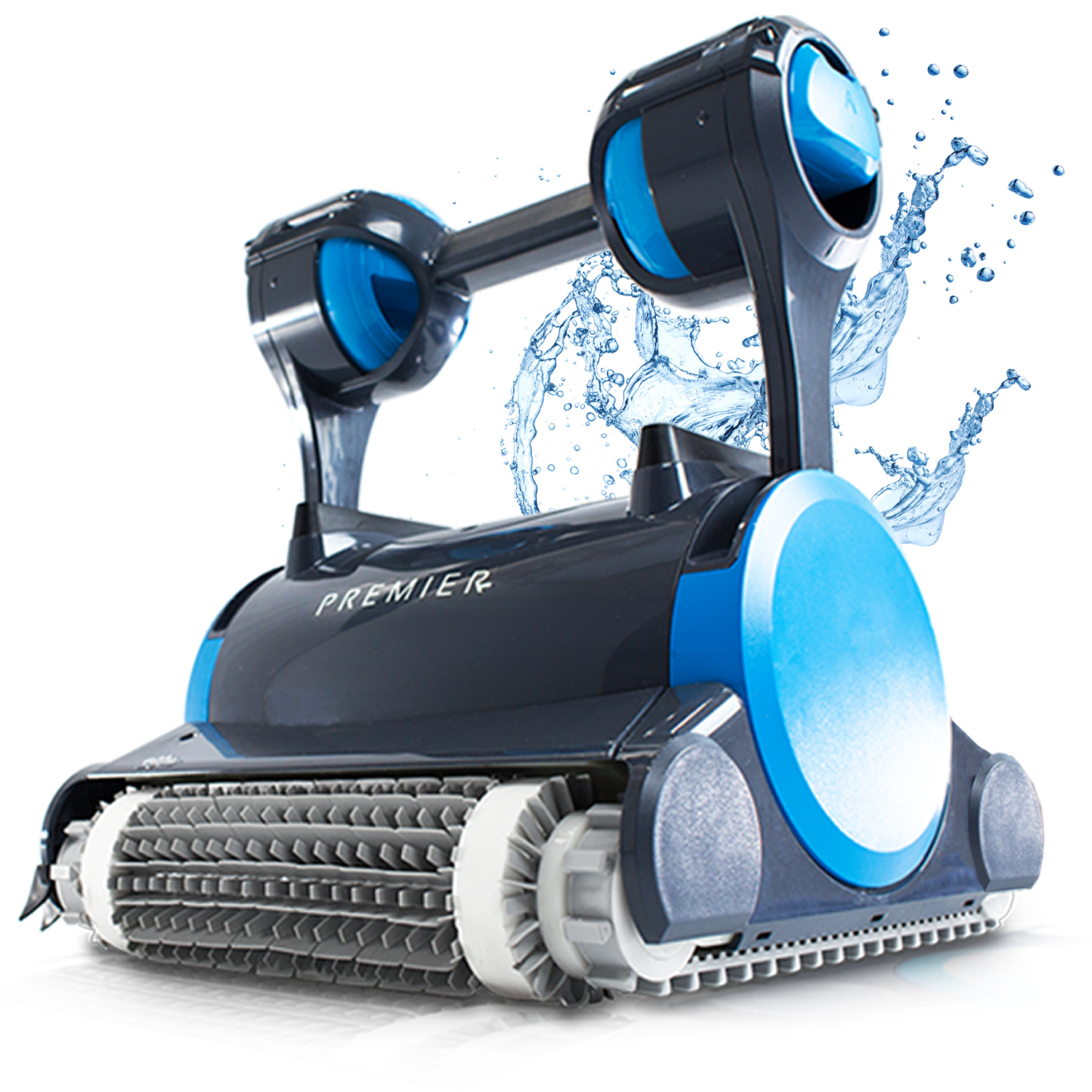
Dolphin Premier
Pollen season brings two kinds of debris, and the Premier has a filter for each. NanoFilters hold the fine sunken pollen. The oversized leaf bag takes the catkins and blossom that fall in the same weeks. Both are included, and you change from one to the other in seconds from the top, with no tools.
Leave its timer on the daily setting and it works through the season unprompted. A full-filter indicator on the power supply shows when pollen has packed the media. It also scrubs the waterline, where the yellow ring forms.
- Best for
- In-ground pools up to 50 ft under oak, pine or other heavy pollen trees.
- Keep in mind
- Catkins fill NanoFilters fast. On heavy days start with the leaf bag, then swap to the fine filters.
- 2
 $2349
$2999Save $650Temporarily out of stock
Hardest scrub for the yellow ring
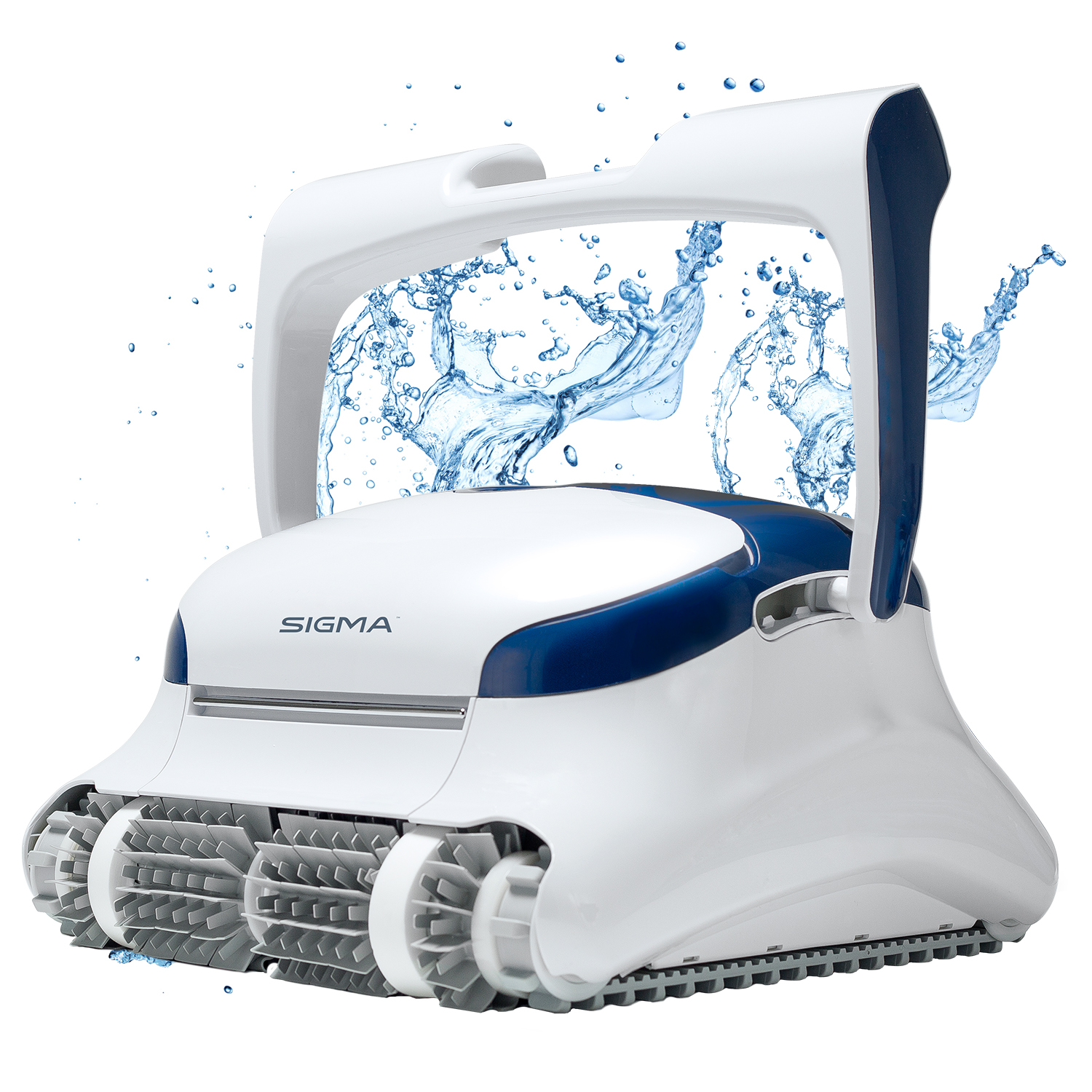
Dolphin Sigma
Pollen sticks. It dries onto tile at the water's edge and settles into the texture of plaster, and the Sigma scrubs harder than any other robot here: four scrubbing brushes, backed by three ProLine motors at 4,500 GPH. NanoFilters are included for the sunken dust.
In the myDolphin Plus app you can schedule a run for every day of the pollen weeks at an hour you choose, and a filter alert tells you when to rinse, which in peak season is after every cycle. It is second because that scrubbing power comes at the highest price on the page.
- Best for
- Tiled or textured pools where pollen leaves a stubborn ring, and owners who like app control.
- Keep in mind
- Cartridge filters take longer to rinse than a basket, and in pollen season you rinse daily.
- 3
 $1599
$1799Save $200Temporarily out of stock
One big basket for pollen and catkins together
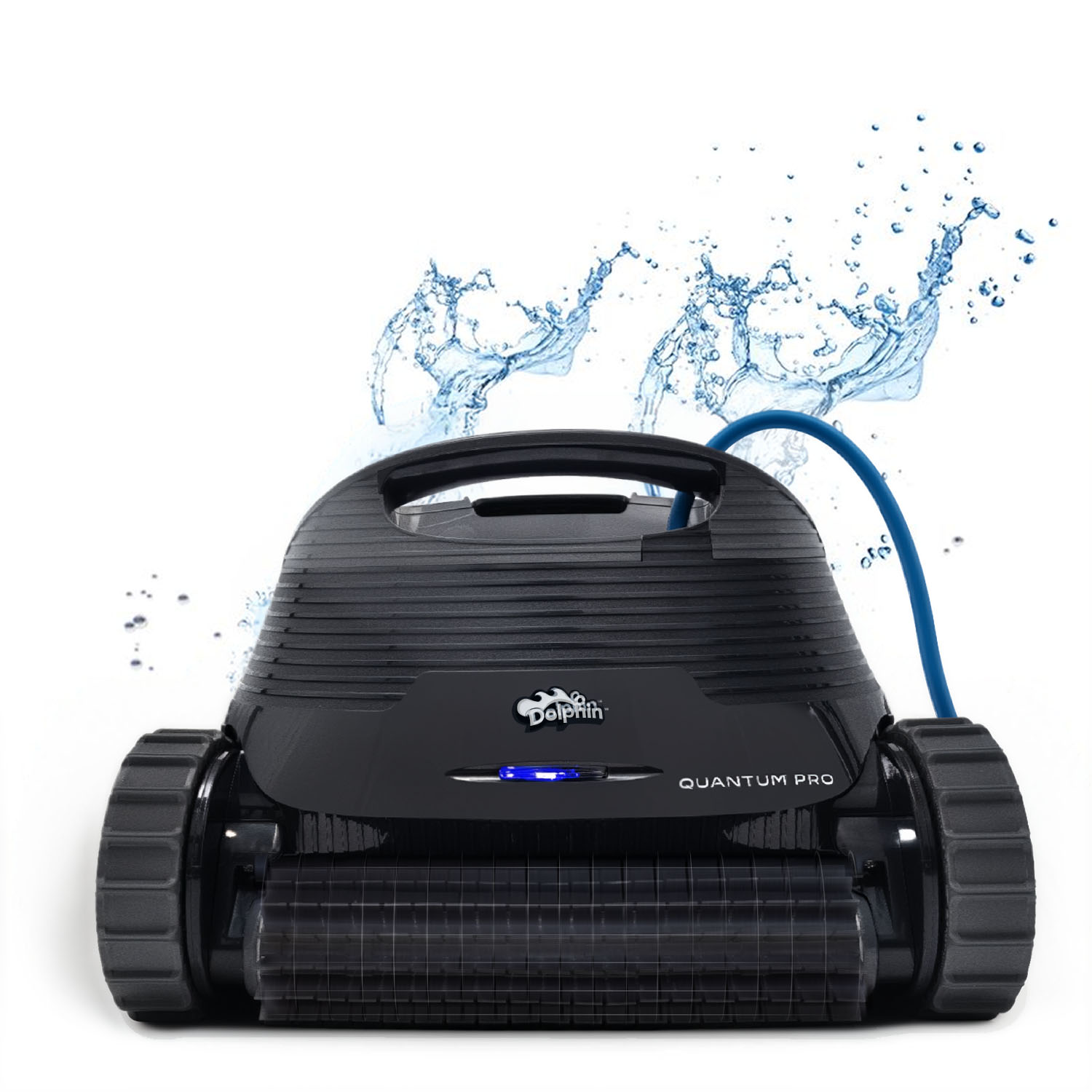
Dolphin Quantum
The Quantum handles both halves of pollen season in one basket. Its XXL MaxBin, with over 400 square inches of filter area, has room for catkins and blossom, and the included NanoFilter panels hold the fine pollen at the same time.
It is rated for stairs, sun shelves and Baja ledges, which matters because sunken pollen shows most on shallow, still surfaces. The 2-hour cycle runs daily from the timer or the app, and the basket's one-click top lid keeps the daily rinse quick. Third place reflects its 4,000 GPH flow and shorter warranty.
- Best for
- In-ground pools with shelves or wide steps, in yards that drop catkins along with pollen.
- Keep in mind
- Catkins on fine panels slow the flow, so empty the basket every day. The warranty is 2 years.
- 4
 $1049
$1299Save $250Temporarily out of stock
Daily pollen runs for pools up to 33 ft, with panels
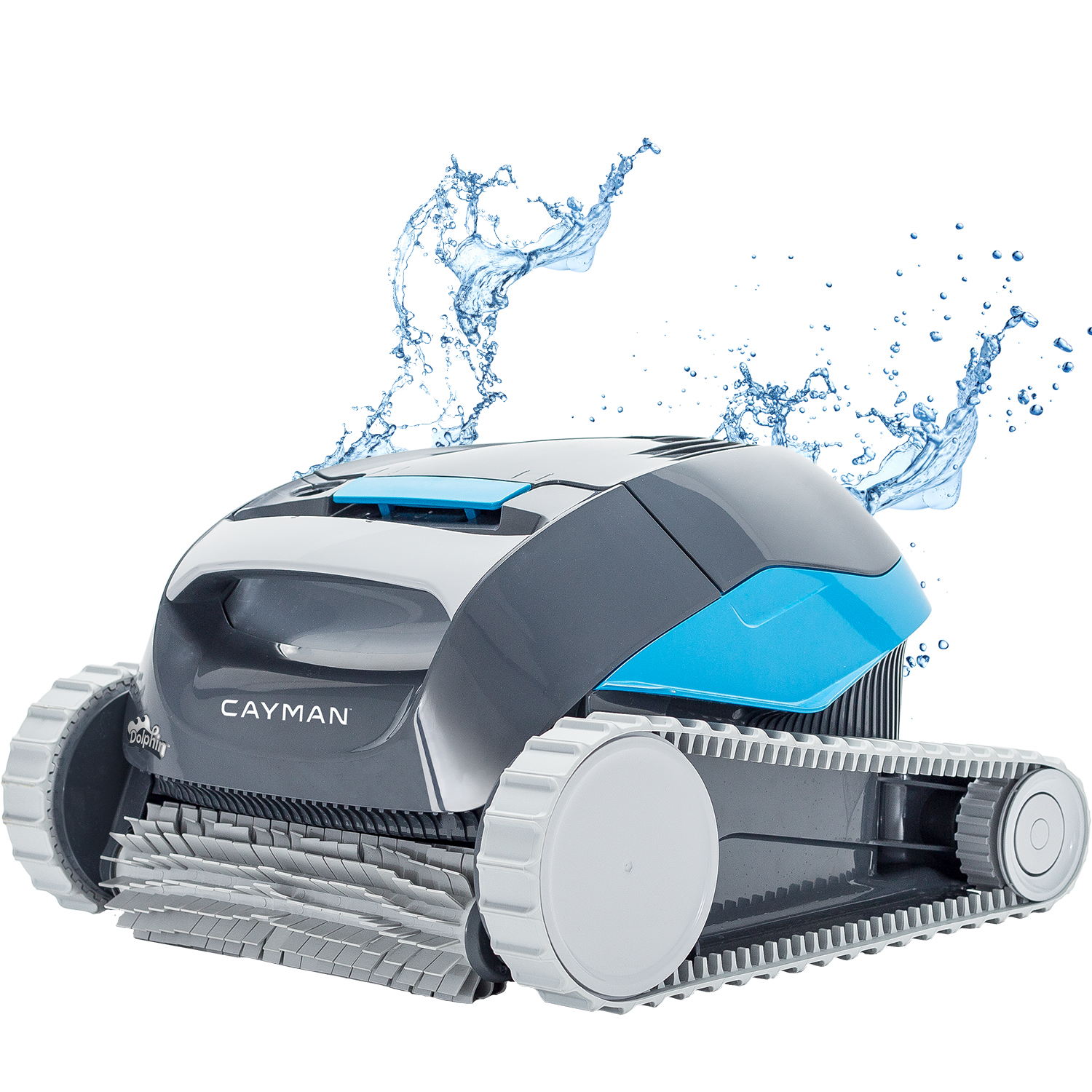
Dolphin Cayman
Pollen season is short and daily, which suits the Cayman's every-day timer. Leave it set and it covers the floor and walls in a 2-hour cycle each day until the trees are done. Its MaxBin basket, 50% larger than standard Dolphin filters, has room for catkins, and one tab on the top hatch releases it for the daily rinse.
What it lacks out of the box is the filter for sunken pollen. The NanoFilter panels are an optional add-on, and without them the fine yellow dust passes through. With them, it does the job in pools up to 33 ft.
- Best for
- Pools up to 33 ft whose owners want an automatic daily run and will add NanoFilter panels.
- Keep in mind
- No NanoFilter panels in the box, and no scrubbing at the tile line where the yellow ring forms.


How to judge a robot for this
What matters in pollen season.
- 1
Ultra-fine media for the sunken share
Once pollen sinks it behaves like a very fine dust. NanoFilter-class media holds it. Standard panels do not. Check whether the fine set is included with the robot or sold as an option.
- 2
A daily run for a few weeks
Trees shed for weeks, not for an afternoon. A robot that runs every day on a timer or schedule keeps up with each day's fall. One that waits for you to start it will fall behind by the first busy weekend.
- 3
Room for catkins
Oaks, pines and other trees drop long strings called catkins along with the dust. They are bulky and mat together. That is a question of basket or bag capacity, and fine filters alone will not answer it.
- 4
A scrub at the water's edge
Floating pollen collects at the edge and dries into a yellow ring. Robots that clean the waterline brush it off during each cycle. With a floor-and-wall robot, the ring is yours to wipe.
Side by side
The pollen picks compared.
| Specification | Dolphin Premier | Dolphin Sigma | Dolphin Quantum | Dolphin Cayman |
|---|---|---|---|---|
| Price today | $1949 | $2349 | $1599 | $1049 |
| Filtration | Multi-Media: NanoFilters, oversized leaf bag and standard fine filters | NanoFilters and standard filter cartridges | XXL MaxBin basket with standard and NanoFilter panels | MaxBin basket with fine panels; NanoFilter panels optional |
| Filter access | Top-load, no tools | Cartridges | Top-load, one-click open | Top hatch, one-tab emptying |
| Brushes | Dual scrubbing brushes | Quad scrubbing brushes | Dual HyperBrush | HyperBrush |
| Flow rate | 4,500 GPH | 4,500 GPH | 4,000 GPH | Over 4,000 GPH |
| Cycle time | 3 hours | 2.5 hours | 2 hours | 2 hours |
| Cleans | Floor, walls and waterline | Floor, walls and waterline | Floor, walls, waterline, sun shelves and stairs | Floor and walls |
| Scheduling | Weekly timer: every day, every 2 days or every 3 days | Weekly scheduler by day and time | Weekly timer: every day, every 2 days or every 3 days | Timer: every day |
| Warranty | 3 years | 3 years | 2 years | 2 years |
Pollen floats first, then sinks.
Fresh pollen is light, so it rides on the surface as a yellow-green film and drifts toward the skimmer. That stage is not robot work. A robot cleans under the water, and the most it can do for the surface is scrub the ring the film leaves at the edge. Keep the skimmer basket clear, and fit a skimmer sock to catch the fine share that would otherwise pass through.
Whatever the skimmer misses eventually takes on water and sinks. It settles as a soft dust wherever the water is still: steps, benches, corners, the deep end. This is the part a robot removes, and only on ultra-fine media.
Pollen or mustard algae? Brush it and see.
Sunken pollen and mustard algae look alike: a yellow dust on the floor and lower walls. The difference is behavior. Pollen brushes away in a puff and does not come back in the same place. It lands wherever the water is still, in sun or shade, and it appears while cars and patio furniture are turning yellow too.
Mustard algae favors shaded walls and steps, brushes off almost as easily, and is back in the same spots within days, whatever the trees are doing. If that is what you see, treat the water. A robot does not kill algae, and no filter fixes a chemistry problem.
Catkins are a capacity problem.
Oaks, pines and several other trees shed catkins, the long soft strings that carry the pollen. They mat together on the floor and in a filter. Catkins are easy to pick up and quick to fill a basket, and on ultra-fine media they block the flow early in a cycle. On a heavy day, skim what floats, run a cycle on coarser media or the Premier's leaf bag, then switch to fine filters for the pollen underneath. Empty the basket after each cycle so the next one starts with full flow.
Getting through pollen season.
- Fit a skimmer sock for the pollen weeks and rinse or replace it daily. A clogged sock starves the pump of water.
- Schedule the robot for every day until the trees finish, and rinse its filters after each cycle. Pollen packs fine media quickly.
- Brush steps, benches and corners toward the open floor before the cycle, since sunken pollen gathers where the water is stillest.
- When the season ends, wash the fine filters thoroughly, let them dry, and return to standard media for summer debris.
Questions, answered
Pollen questions, answered plainly.
Can a robot pick up pollen floating on the surface?
No. Robots clean the floor and walls, and three of the four on this page also scrub the waterline. Floating pollen is the skimmer's job, helped by a skimmer sock. The robot's part begins once the pollen has sunk, which is the share the skimmer never gets a second chance at.
Why does the best robotic pool cleaner for pollen need ultra-fine filters?
Because a standard panel is too coarse for sunken pollen. The robot draws the grains in and the water carries them straight back out, so the yellow dust is on the floor again the next day. NanoFilters, or NanoFilter panels, are fine enough to keep them in the robot.
How long will I need to run the robot daily?
For as long as pollen is falling, which is usually a matter of weeks for any one kind of tree. Some regions get a second wave from grasses or weeds later in the year. A simple guide: while outdoor surfaces around the pool keep turning yellow, keep the daily schedule and the fine filters.
Do floor-and-wall robots work for pollen?
With optional NanoFilter panels, yes, on the floor and walls of pools up to 33 ft. The Cayman's timer runs every day, which suits the season. The Dolphin Escape has no timer as standard, so you start each cycle yourself or add the optional Automation Timer power supply. Neither scrubs the yellow ring at the water's edge.
The verdict
Two tools, a few weeks.
Pollen season needs a skimmer sock for what floats and a robot with ultra-fine filters for what sinks, run every day until the trees finish. Buy the Premier if your trees also drop catkins and you want every filter included. Buy the Sigma for the hardest scrub at the tile line, or the Quantum to carry pollen and catkins in one basket for less. In a pool of 33 ft or less, add NanoFilter panels to the Cayman and it clears the floor and walls daily. All come with free 1-3 day FedEx shipping in the contiguous 48 states.
Keep reading