


By debris and dirt problem
The best robotic pool cleaner for dead algae, the dust a shock leaves behind
Top pick: Dolphin Premier
Live prices · Free shipping · 30 Day Trial
The short answer
The shock worked and the green is gone. What is left is a pale dust that clouds at a touch, and only ultra-fine filters will take it out.
Dead algae needs NanoFilter-class media, and the Dolphin Premier is our pick: NanoFilters are included, lift out from the top for a mid-cycle rinse, and a light on the power supply shows when they are full. The Dolphin Sigma adds a filter alert in its app. The Dolphin Quantum has the largest fine filter for less. The Dolphin Cayman passes much of it unless you add NanoFilter panels.
You shocked the pool, the green faded, and the water is on its way back to blue. On the floor is what the algae left behind: a gray-white or tan dust that lifts into a cloud when a brush, a foot or a robot goes near it. Until it is out, the water will not stay clear, and the best robotic pool cleaner for dead algae is the one whose filter can actually hold it.
Dead algae is among the finest debris a pool ever holds, which is why it defeats ordinary cleaning. Standard robot panels pass much of it straight back into the water. What works is NanoFilter-class media, used after the chlorine has dropped to its normal range and the dust has had a still night to settle. Here is how four robots compare, and how to run the cleanup.
Our picks, in order
Four robots ranked for dead algae.
- 1
 $1949
$2499Save $550Temporarily out of stock
Best for dead algae: fast mid-cycle filter rinses
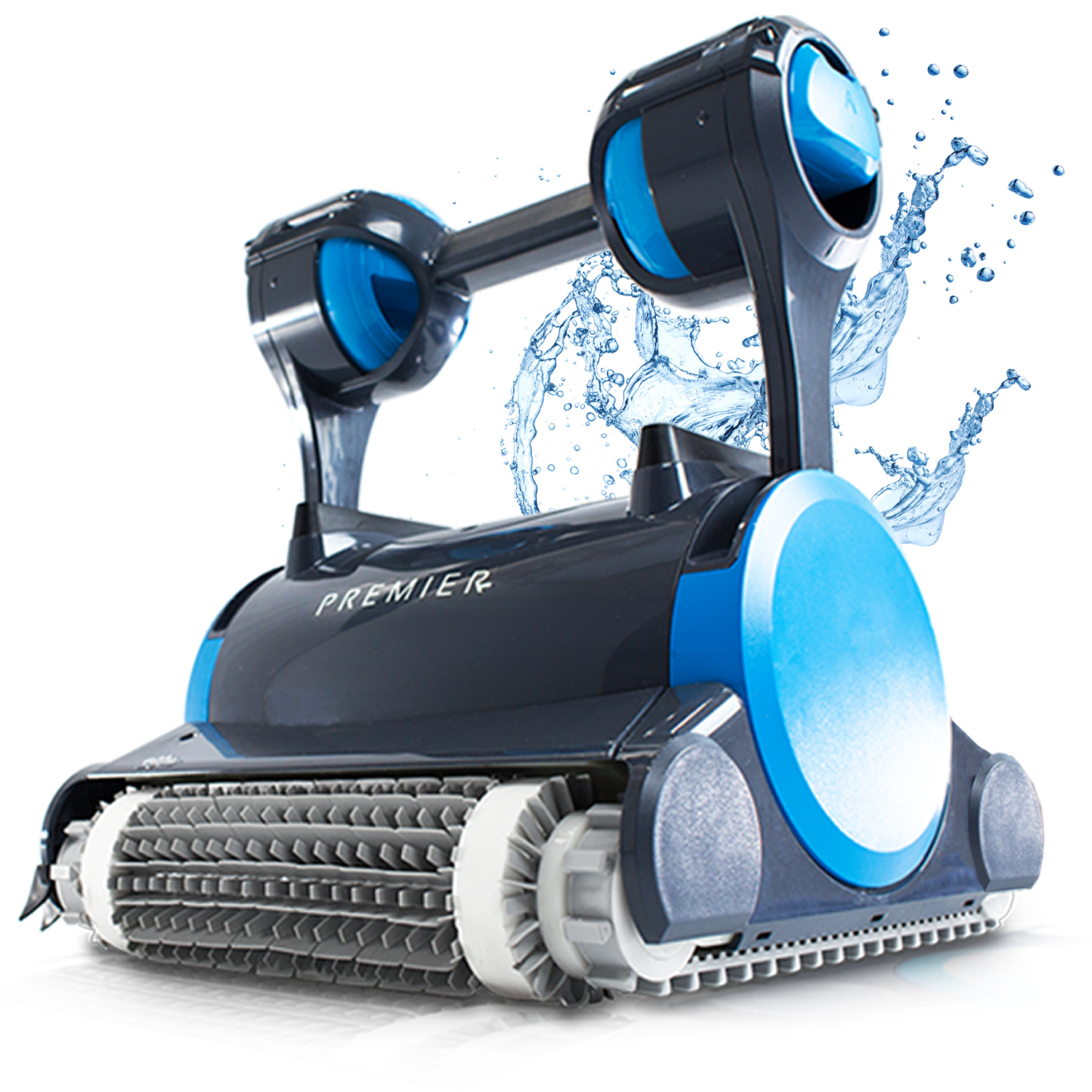
Dolphin Premier
Dead algae loads a fine filter faster than anything else in a pool, so the robot that suits it is the one that makes stopping to rinse painless. The Premier's NanoFilters are included and lift out from the top with no tools. The full-filter indicator on the power supply tells you when to pull them, and they go back in seconds.
Between rinses, dual ProLine motors keep 4,500 GPH moving through the media. The 3-hour cycle is long enough to cover the whole floor on one settled morning. Once the floor is clean, swap back to the standard fine filters.
- Best for
- In-ground pools up to 50 ft that need a shock cleanup once or twice a season.
- Keep in mind
- You have to watch the indicator on the power supply yourself. There are no phone alerts.
- 2
 $2349
$2999Save $650Temporarily out of stock
Alerts you the moment the filters load
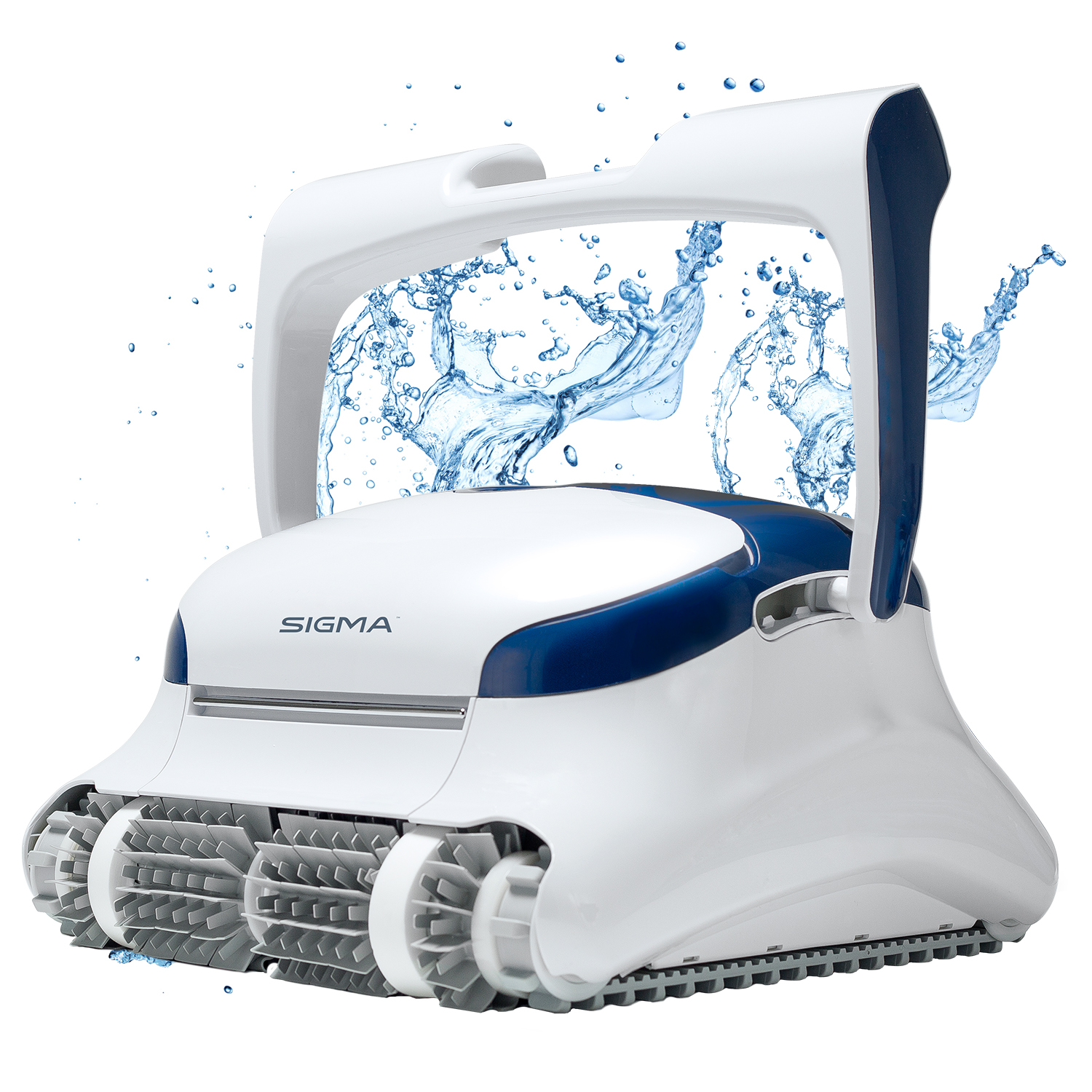
Dolphin Sigma
The Sigma takes the guesswork out of a dead algae cleanup. NanoFilters are included, and when they load, a filter alert arrives in the myDolphin Plus app, so you are not standing at the pool edge judging the flow by eye. SmartNav 3.0 with an onboard gyroscope works the floor in orderly lines, and four scrubbing brushes lift dust that has settled into rough plaster.
Three ProLine motors deliver 4,500 GPH. It ranks second for a practical reason: this job means pulling and rinsing filters several times, and cartridges are slower to handle than filters that lift straight out.
- Best for
- Large pools where an orderly pass matters and the owner prefers a phone alert to watching the flow.
- Keep in mind
- Cartridges slow the rinse-and-restart routine, and it is the highest-priced pick.
- 3
 $1599
$1799Save $200Temporarily out of stock
Largest fine filter, fewer stops to rinse
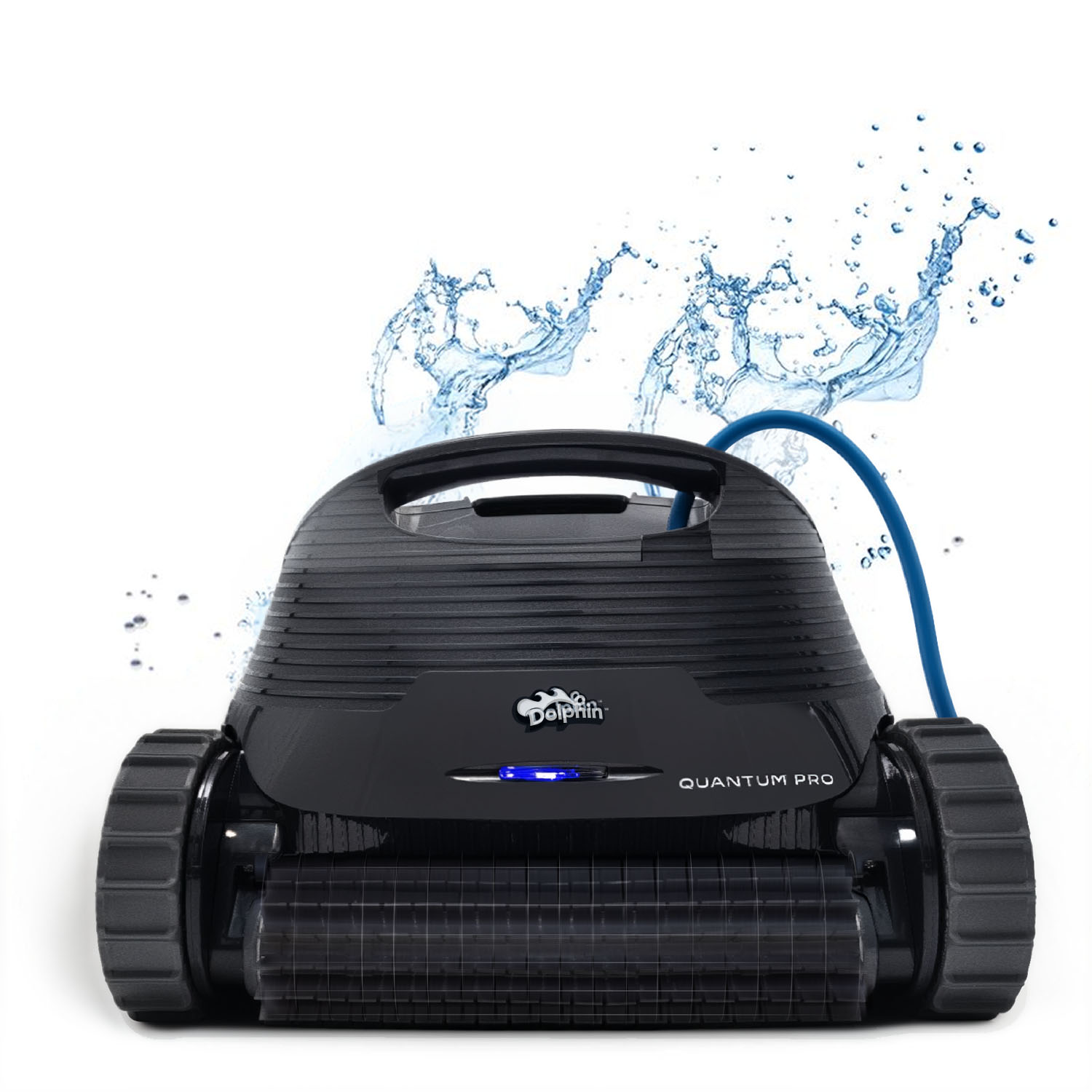
Dolphin Quantum
The Quantum's advantage is area. Its XXL MaxBin basket carries over 400 square inches of filter, and the NanoFilter panels come with the robot as a full set, so it holds more dead algae before the flow falls off. On a light dusting that can mean finishing the floor without a mid-cycle rinse. When you do need one, the top-load basket opens with a single click.
It is rated for stairs and sun shelves, where the dust also settles after a shock, and you can start or stop a cycle from the app. It is third on flow, at 4,000 GPH.
- Best for
- In-ground pools with steps or a shelf, whose owners want fine panels included for less.
- Keep in mind
- Its warranty runs 2 years, and at 4,000 GPH it moves less water than the two robots ranked above it.
- 4
 $1049
$1299Save $250Temporarily out of stock
Workable in pools up to 33 ft with fine panels
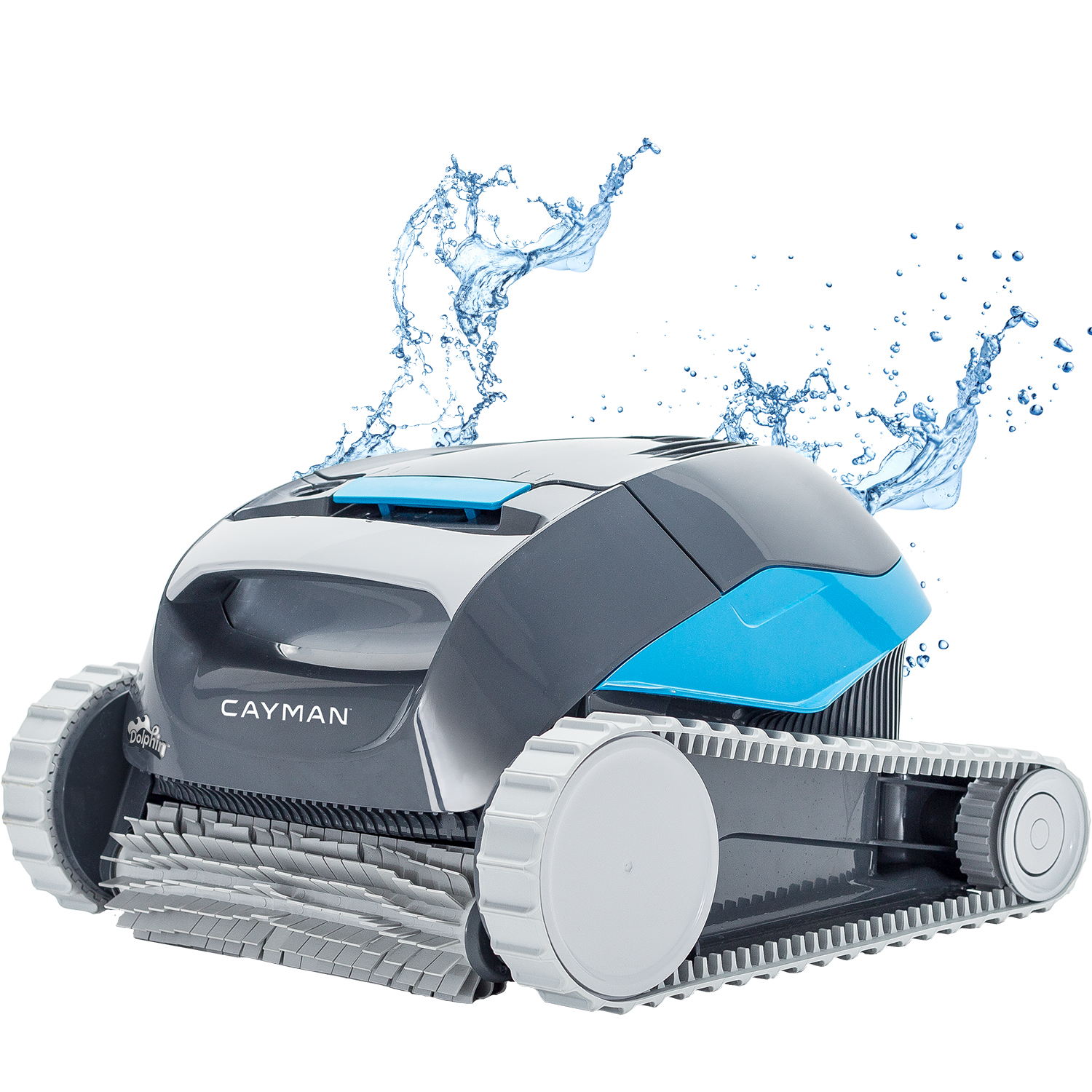
Dolphin Cayman
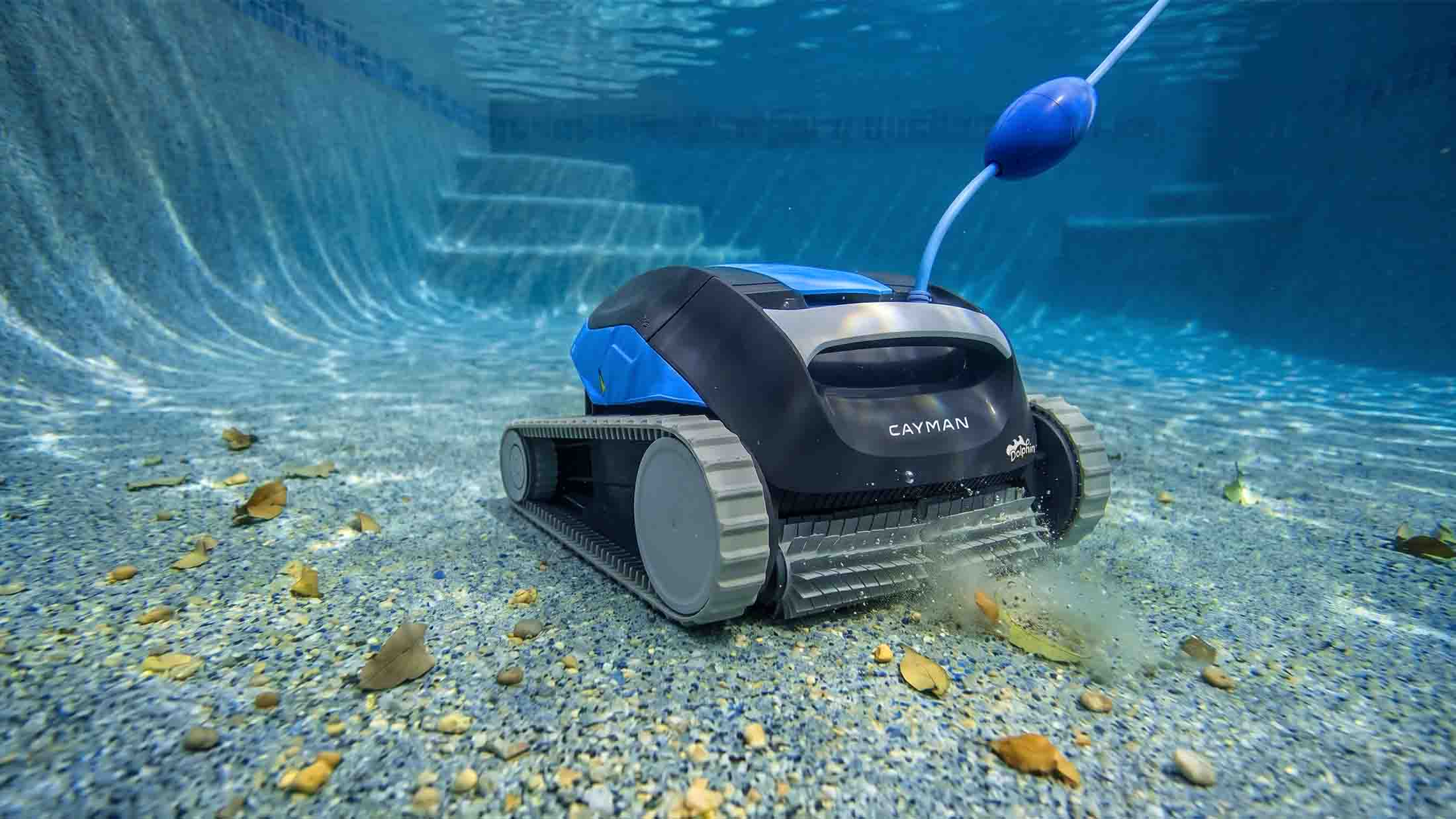
As it ships, the Cayman is the wrong tool for dead algae: its fine panels pass much of the dust back into the water. The optional NanoFilter panels fix that, and with them fitted it has real points in its favor for pools up to 33 ft.
The basket lifts out through the top hatch with one tab, so a mid-cycle rinse is quick. The robot weighs 14.6 lb, less than any other pick, which you will appreciate on the third lift of the morning. Its two 24-volt DC motors are rated at over 4,000 GPH, and the MaxBin basket gives the fine panels half as much room again as a standard Dolphin filter.
- Best for
- Pools up to 33 ft, when the NanoFilter panels are bought with the robot.
- Keep in mind
- On standard panels it will cloud the water with dead algae instead of removing it.


How to judge a robot for this
What a dead algae cleanup needs from a robot.
- 1
The finest media available
Dead algae particles are smaller than sand, silt or most dust. If the robot's filter is not in the NanoFilter class, most of what it picks up leaves again through the outlet. Nothing else on the spec sheet makes up for that.
- 2
Rinse and restart speed
Fine filters load within one cycle on this job, sometimes sooner. You will stop, lift, rinse and restart. Filters that come out and go back quickly keep the cleanup to one morning.
- 3
A clear sign the filter has loaded
Once the media is coated the robot keeps driving but collects very little, and its movement starts lifting dust it can no longer hold. A light or an alert tells you the moment to stop.
- 4
Whole-floor coverage in one session
The layer starts to lift as soon as the pool is disturbed. A robot that covers the floor in an orderly way, in a cycle long enough to finish, collects more before the dust is back in suspension.
Side by side
Filters, flow and cycle times.
| Specification | Dolphin Premier | Dolphin Sigma | Dolphin Quantum | Dolphin Cayman |
|---|---|---|---|---|
| Price today | $1949 | $2349 | $1599 | $1049 |
| Filtration | Multi-Media: NanoFilters, oversized leaf bag and standard fine filters | NanoFilters and standard filter cartridges | XXL MaxBin basket with standard and NanoFilter panels | MaxBin basket with fine panels; NanoFilter panels optional |
| Filter access | Top-load, no tools | Cartridges | Top-load, one-click open | Top hatch, one-tab emptying |
| Brushes | Dual scrubbing brushes | Quad scrubbing brushes | Dual HyperBrush | HyperBrush |
| Flow rate | 4,500 GPH | 4,500 GPH | 4,000 GPH | Over 4,000 GPH |
| Cycle time | 3 hours | 2.5 hours | 2 hours | 2 hours |
| Cleans | Floor, walls and waterline | Floor, walls and waterline | Floor, walls, waterline, sun shelves and stairs | Floor and walls |
| Scheduling | Weekly timer: every day, every 2 days or every 3 days | Weekly scheduler by day and time | Weekly timer: every day, every 2 days or every 3 days | Timer: every day |
| Warranty | 3 years | 3 years | 2 years | 2 years |
Make sure the algae is dead.
Cleaning up too early wastes a filter rinse and tells you nothing. Dead algae is gray-white or tan, never green. It lies loose on the floor and does not cling to the walls. The water above it is blue or cloudy blue, and the chlorine level holds from evening to morning instead of dropping overnight.
If there is still a green or yellow tint, if patches cling when brushed, or if chlorine keeps vanishing overnight, the algae is still alive. Keep treating and brushing. The robot waits on the deck until the chemistry is finished.
From shock to swim: where the robot fits.
A robot is the last step of an algae treatment, never the first.
- Shock and brush with the robot out of the pool. Run the pump and clean the pool filter as it loads.
- Wait until the chlorine has come back down to its normal range. Test it. Do not go by the calendar.
- Turn the pump off overnight so the dead algae settles on the floor.
- In the morning, with NanoFilters fitted, ease the robot into the water. When the flow drops or the indicator shows full, stop, rinse and restart. Expect that to happen quickly.
- Repeat the overnight settle and the cycle until the floor stays clean. Then restart the pump.
A heavy layer goes to waste first.
After a severe bloom the dead algae can lie thick enough to fill any robot filter within minutes. You would spend the morning rinsing. If your filter system has a waste setting, a manual vacuum on that setting sends the layer straight out of the pool without passing through the filter at all. It uses water, so top up and rebalance afterwards. Then let the pool settle and use the robot for the fine dusting that remains, which is the part a manual vacuum tends to stir more than it collects.
Small things that save a second cleanup.
- Brush walls and steps the evening before, not the morning of the cycle, so what you knock down has the night to settle.
- Keep swimmers out until the cleanup is finished. A single lap lifts the whole layer back into the water.
- Rinse fine filters from the clean side outward until the water runs clear. Dead algae forms a thin paste that a quick splash leaves behind.
- When the floor is clean, wash the robot's filters thoroughly, clean the pool filter as well, and go back to standard media.
Questions, answered
After the shock: common questions.
Why is my pool still cloudy after shocking?
Because the algae is dead but still in the water. Part of it stays suspended until the pool filter catches it, which can take days and several filter cleanings. Part settles on the floor as dust. The robot handles the settled part, and with ultra-fine filters it takes that share out of circulation for good.
How soon after shocking can the robot go back in?
When a test shows the chlorine is back in its normal range, and not before. How long that takes depends on the dose, the sunlight and how much algae there was, so there is no fixed number of days. Your robot's manual gives the chemical limits for your model.
Why does the filter clog so quickly on dead algae?
Dead algae particles are tiny, and ultra-fine media stops them at the surface, where they build into a film that blocks the flow. That is the filter working, not failing. Rinse it and carry on. A filter that never loads during this cleanup is one that is letting the dust through.
Can the best robotic pool cleaner for dead algae work with standard filters?
No robot does this job well on standard media. Standard panels and filters are sized for leaves, grit and ordinary dirt, and they pass much of the dead algae back out as a cloud. Use NanoFilters or NanoFilter panels for the cleanup, then return to standard media for everyday debris.
The verdict
Wait, settle, filter fine.
Dead algae comes out when three things line up: chlorine back to normal, a still night, and ultra-fine media. A heavy layer goes to waste with a manual vacuum first. For the robot, choose the Premier for the quickest filter rinses, the Sigma for a phone alert when the filters load, or the Quantum for the most fine-filter area at a lower price. The Cayman belongs on the list for pools up to 33 ft once NanoFilter panels are added to the order.
Keep reading