


By debris and dirt problem
The best robotic pool cleaner for algae scrubs and filters. It does not kill.
Top pick: Dolphin Sigma
Live prices · Free shipping · 30 Day Trial
The short answer
Chlorine kills algae. A robot's job is to scrub the surfaces algae clings to and filter out what brushing and treatment have loosened.
No robot kills algae, and none replaces sanitizer or hand brushing during treatment. For the scrubbing and filtering a robot can do, the Dolphin Sigma leads: four scrubbing brushes, NanoFilters, and coverage of floor, walls and waterline. The Dolphin Premier is the runner-up at a lower price, with two scrubbing brushes and the same fine filtration. The Dolphin Quantum is the pick if algae starts on your steps.
Before naming the best robotic pool cleaner for algae, start with what no robot can do. It does not kill algae. It does not replace sanitizer or balanced water, and it does not replace the hand brushing that an algae treatment calls for. Algae is a water chemistry problem, and the cure is chemical.
What a robot does is the mechanical half. It scrubs the floor and walls on a regular schedule, so algae has less chance to settle in, and it filters out the fine material that brushing and chlorine have loosened or killed. For that work, two things decide the ranking: how many brushes touch the surface, and how fine the filter is. We rank four robots on those terms, including the Dolphin Cayman.
Our picks, in order
Four robots ranked for algae work.
- 1
 $2349
$2999Save $650Temporarily out of stock
Most scrubbing: four brushes, floor to waterline
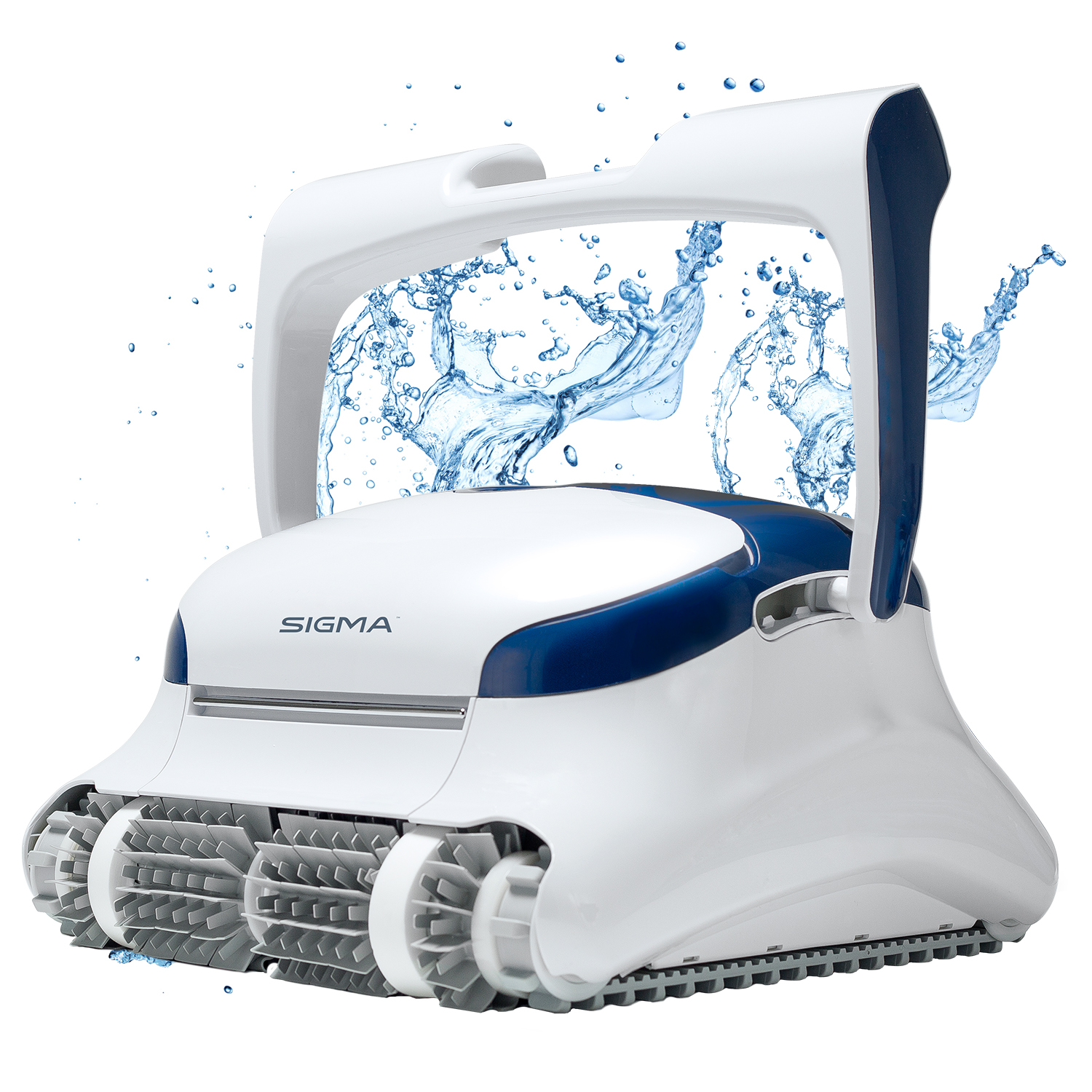
Dolphin Sigma
Algae holds on to a surface, and breaking that hold is brush work. The Sigma has four scrubbing brushes where the other robots here have two or one, and it runs them over the floor, the walls and the waterline. Three ProLine motors move 4,500 GPH through NanoFilters, which are included and fine enough for the material that brushing and chlorine leave behind.
SmartNav 3.0 with an onboard gyroscope keeps the coverage methodical, so fewer patches are skipped. In the app you set the days and time it runs, which keeps the scrubbing regular through the warm months.
- Best for
- In-ground pools up to 50 ft that fight algae every summer, especially plaster and tile finishes.
- Keep in mind
- It is the most expensive robot here, and its cartridges need careful washing after an outbreak.
- 2
 $1949
$2499Save $550Temporarily out of stock
Runner-up: fine filters and the longest cycle
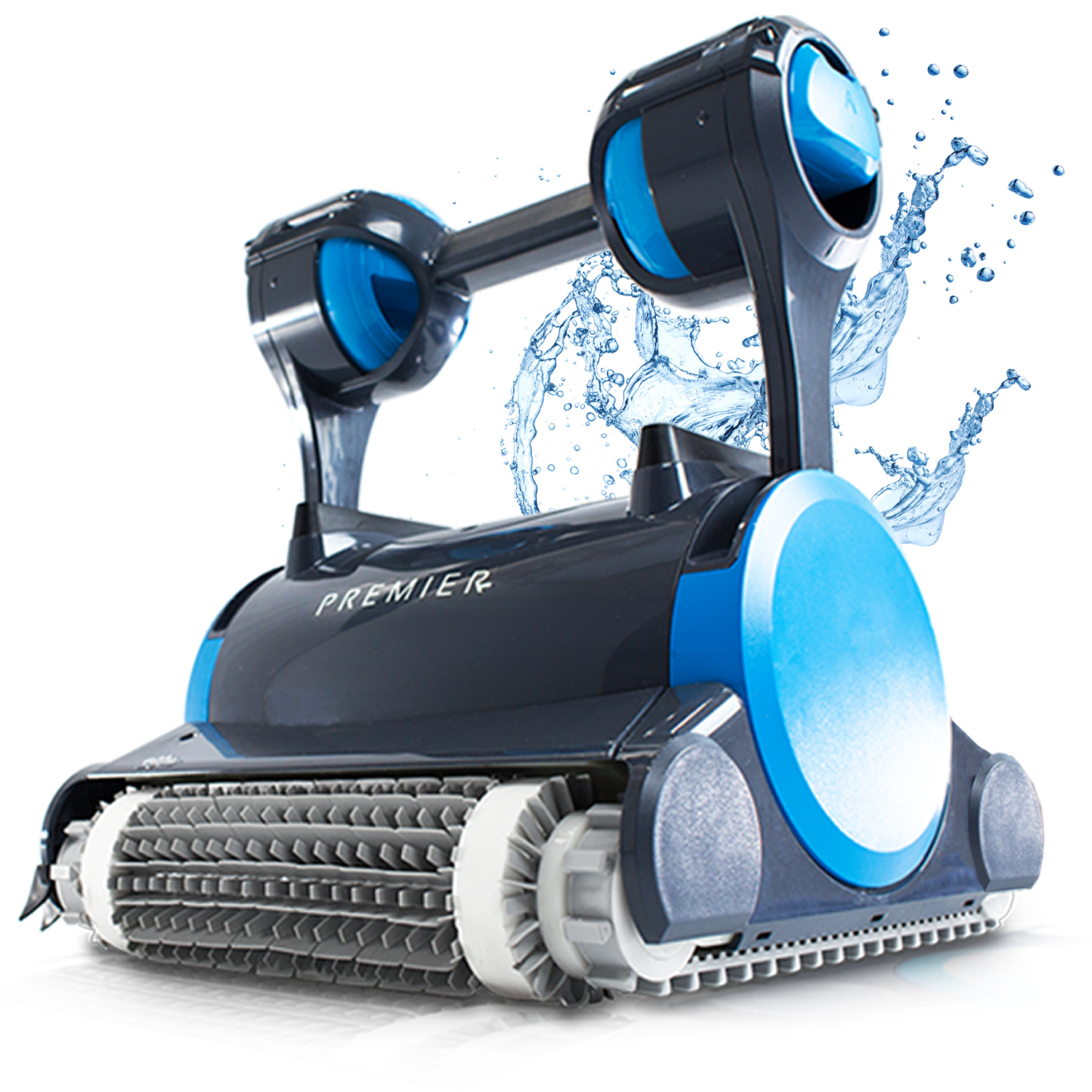
Dolphin Premier
The Premier does the same job with two scrubbing brushes and costs less. It covers floor, walls and waterline, and its 3-hour cycle is the longest here, which means more brushing time on each run. NanoFilters come in the box for dead and loosened algae, and dual ProLine motors move 4,500 GPH.
The timer on the power supply repeats the cycle every day, every 2 days or every 3 days, so the routine does not depend on memory. Its filters lift out from the top with no tools, which makes the wash after an outbreak easy to do properly.
- Best for
- Owners who want waterline scrubbing and fine filters included without paying the top price.
- Keep in mind
- Two brushes, not four, and no phone control. It is not rated for steps or ledges.
- 3
 $1599
$1799Save $200Temporarily out of stock
Best where algae starts on steps and ledges
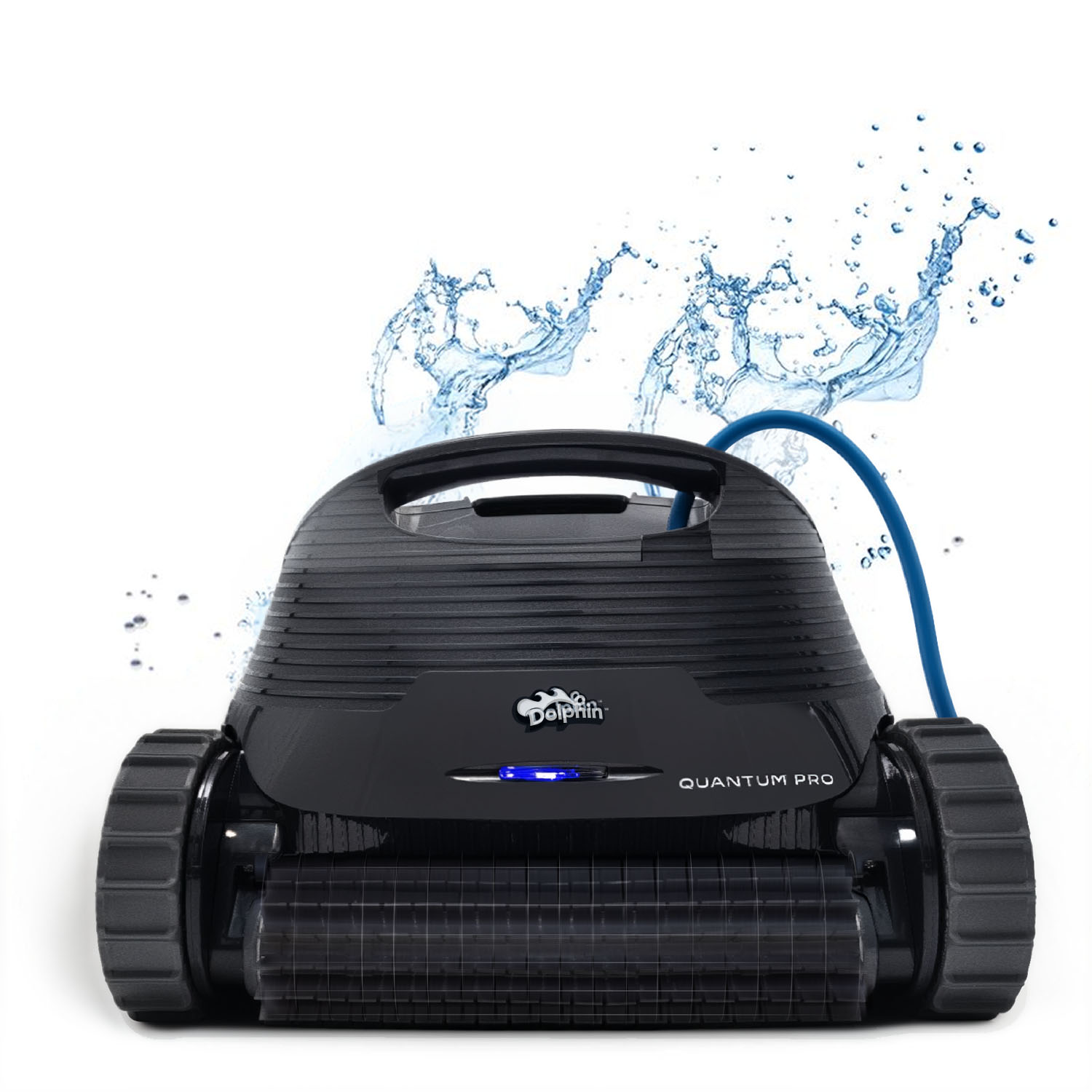
Dolphin Quantum
Algae often shows first where water is shallow, warm and poorly circulated: the steps, a sun shelf, a Baja ledge. The Quantum is the only robot on this page rated to clean those surfaces, in addition to floor, walls and waterline.
Its two HyperBrushes spin at twice the speed of standard brushes, and a full set of NanoFilter panels is included in an XXL MaxBin basket that opens from the top with one click. It runs on a weekly timer or a schedule in the app. It ranks third on brush count and on flow, at 4,000 GPH.
- Best for
- In-ground pools where algae appears first on steps, benches or a sun shelf.
- Keep in mind
- Half the brush count of the top pick, and a 2-year warranty.
- 4
 $1049
$1299Save $250Temporarily out of stock
Daily floor and wall scrub for pools up to 33 ft
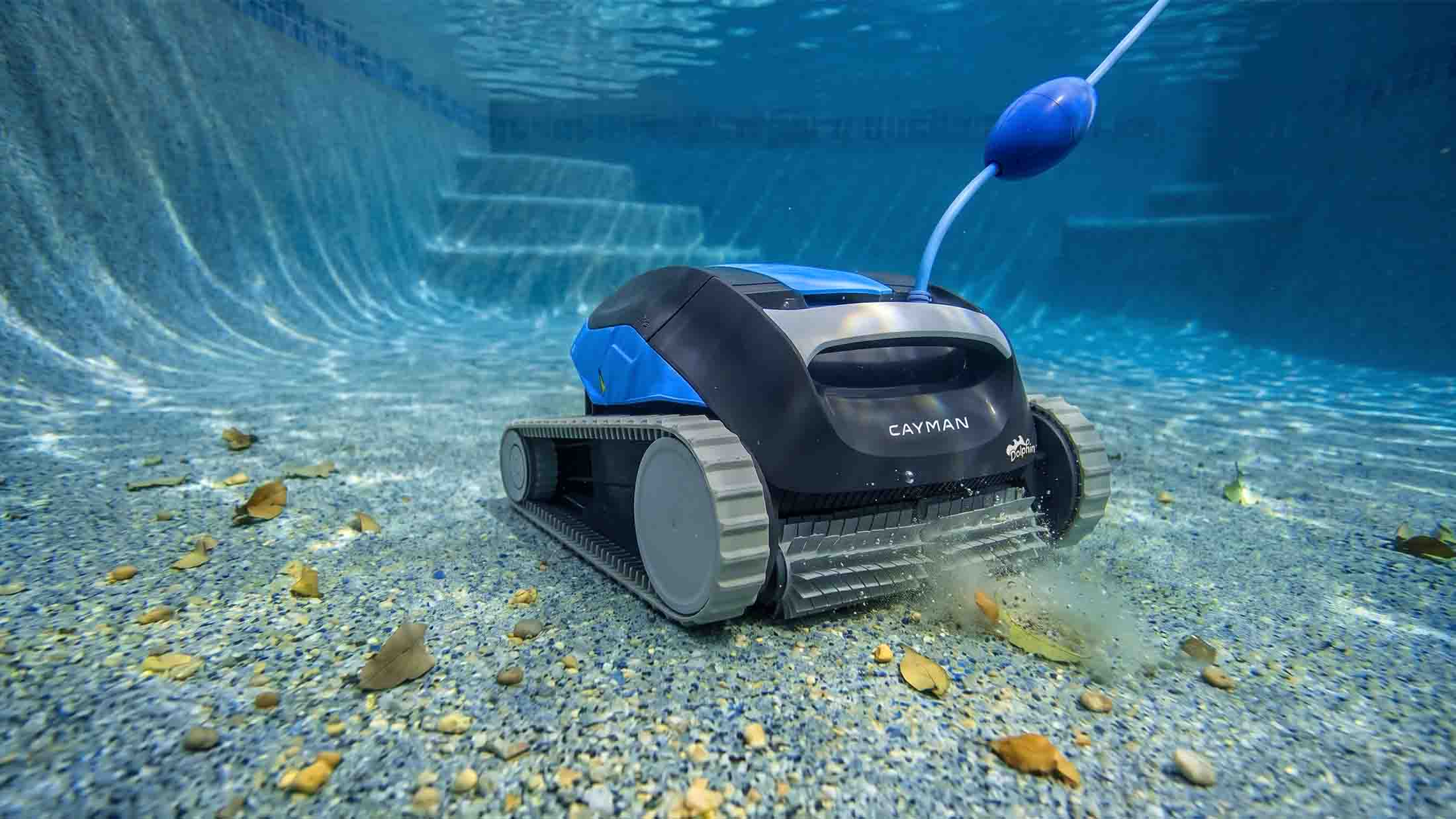
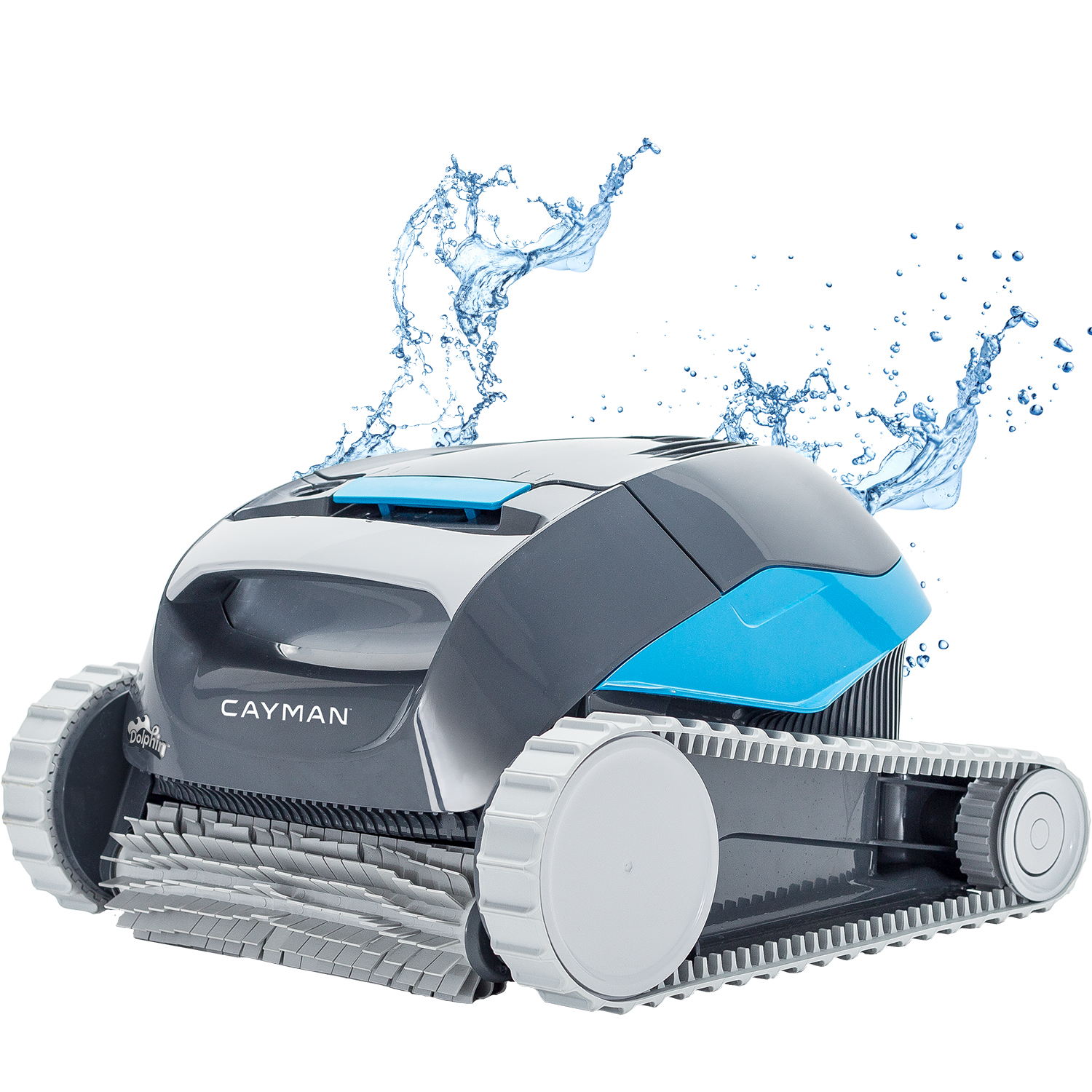
Dolphin Cayman
The Cayman's contribution is regularity. Its timer runs a cycle every day, sending a HyperBrush that turns at twice the speed of standard Dolphin brushes across the floor and up the walls. In a pool of 33 ft or less, that is a lot of brushing for the price.
It stops below the waterline and does not climb steps, so those remain yours to brush. It comes with fine panels in the MaxBin basket. For collecting dead algae after a treatment, add the optional NanoFilter panels. The basket lifts out through the top hatch for washing.
- Best for
- Well-balanced pools up to 33 ft whose owners want floor and walls brushed every day.
- Keep in mind
- One brush, no waterline or step cleaning, and NanoFilter panels are an optional extra.


How to judge a robot for this
What decides a robot's value against algae.
- 1
Brush count
Algae grips a surface, and suction alone slides over it. Scrubbing brushes break the grip. More brushes mean more scrubbing on every pass, which is why this is the first number to compare.
- 2
Walls and waterline, not only the floor
Algae shows on walls, in corners and at the water's edge at least as often as on the floor. A robot that climbs to the waterline scrubs more of the places where a bloom begins.
- 3
Fine filtration
Algae that has been brushed loose or killed by chlorine is extremely fine. Standard panels pass much of it back into the water. Ultra-fine media keeps it, and that decides how well the cleanup goes.
- 4
A regular schedule
Algae can take hold in a few warm days. A robot that runs on a timer or schedule keeps surfaces scrubbed between your own brushings, including the weeks when you are busy or away.
Side by side
Brushes, coverage and filters compared.
| Specification | Dolphin Sigma | Dolphin Premier | Dolphin Quantum | Dolphin Cayman |
|---|---|---|---|---|
| Price today | $2349 | $1949 | $1599 | $1049 |
| Filtration | NanoFilters and standard filter cartridges | Multi-Media: NanoFilters, oversized leaf bag and standard fine filters | XXL MaxBin basket with standard and NanoFilter panels | MaxBin basket with fine panels; NanoFilter panels optional |
| Filter access | Cartridges | Top-load, no tools | Top-load, one-click open | Top hatch, one-tab emptying |
| Brushes | Quad scrubbing brushes | Dual scrubbing brushes | Dual HyperBrush | HyperBrush |
| Flow rate | 4,500 GPH | 4,500 GPH | 4,000 GPH | Over 4,000 GPH |
| Cycle time | 2.5 hours | 3 hours | 2 hours | 2 hours |
| Cleans | Floor, walls and waterline | Floor, walls and waterline | Floor, walls, waterline, sun shelves and stairs | Floor and walls |
| Scheduling | Weekly scheduler by day and time | Weekly timer: every day, every 2 days or every 3 days | Weekly timer: every day, every 2 days or every 3 days | Timer: every day |
| Warranty | 3 years | 3 years | 2 years | 2 years |
What a robot does about algae, and what it does not.
Algae grows when sanitizer runs low, the water drifts out of balance or circulation is poor. Fixing that is chemical work: test, balance, shock, and hold the chlorine up until the water is clear. During a treatment the surfaces need hard brushing by hand, including corners and steps that no robot covers well. A robot does none of this.
Its part comes before and after. Before, regular scrubbing keeps the film on walls and floor disturbed, which gives algae less to anchor to. After, with fine filters fitted, it collects the dead and loosened algae that settles on the floor and would otherwise cloud the water each time someone swims.
Using a robot around a treatment.
The order matters, both for the result and for the robot. Keep it out of the water while the chemicals do their work, and bring it back for the cleanup.
- Take the robot out before you shock or add algaecide. It should not sit in treatment-level chemicals.
- Brush every surface by hand and run the pool filter around the clock, cleaning it as the pressure rises.
- When the chlorine is back in its normal range, fit NanoFilters and return the robot to collect what has settled. Rinse the filter after each cycle.
- Once the water is clear, wash the filters thoroughly and hose down the robot, so spores are not carried back into the pool.
Where algae starts, and which robot reaches it.
Algae rarely starts on the open floor. It starts where brushing and circulation are weakest: shaded walls, corners, the waterline, steps and shelves, behind ladders. All four picks scrub the floor and walls. The Sigma, Premier and Quantum also scrub the waterline. Only the Quantum is rated for stairs, sun shelves and Baja ledges. The Dolphin Escape, which we also sell, covers floor and walls as the Cayman does. No robot gets behind a ladder or into a skimmer throat, so a hand brush stays in the weekly routine whichever one you buy.
Habits that keep algae from getting a start.
- Keep the robot on its schedule through warm weather, when algae grows fastest, so walls and floor are scrubbed between your own brushings.
- Brush steps, corners and the area behind ladders by hand each week. Most robots do not reach them, and algae usually begins there.
- Look at the filter when you rinse it. A green tint on the media is an early warning, so test the water that day.
- After any outbreak, wash the filters before the robot goes back on its normal schedule, and let them dry fully.
Questions, answered
Straight answers on robots and algae.
Does a robotic pool cleaner kill algae?
No. Killing algae takes sanitizer at the right level in balanced water. A robot brushes surfaces and filters the water it draws in, which removes loosened and dead algae and keeps surfaces scrubbed between treatments. Think of it as the brush and the vacuum, never the chlorine.
Can I run the robot while I shock the pool?
No. Take it out before shocking or adding other chemicals, and leave it out until the water has returned to its normal range. The manual for your model gives the limits. Shock treatment is also when hand brushing matters most, so the robot would not save you that job anyway.
Will a robot clear green water?
Not on its own. Green water is algae suspended through the whole pool, and it needs chemical treatment and the pool's own filter running continuously. Once the algae is dead and has settled as a pale dust, a robot with ultra-fine filters is a good way to collect it.
Is the best robotic pool cleaner for algae simply the one with the most brushes?
Brushes come first, but two other things count. The robot has to reach where algae grows, which means walls and waterline as well as floor, and its filter has to be fine enough to keep what the brushes loosen. The Sigma leads because it is strongest on all three.
Can a robot spread algae around the pool?
A robot with an unwashed filter can return fine algae to the water, which is why the filters need a thorough wash after an outbreak. Standard panels can also pass very fine dead algae back out. Use ultra-fine media for the cleanup and rinse it after every cycle.
The verdict
Chemistry first, then the right brush.
Treat algae with a test kit and sanitizer, and choose a robot for the scrubbing and filtering around it. The Sigma brushes the most surface with the most brushes. The Premier comes close for less, with fine filters included. The Quantum is the answer when algae starts on steps or a shelf. For a pool up to 33 ft, the Cayman scrubs floor and walls every day at a lower price. Whichever you buy, keep testing the water.
Keep reading