


By debris and dirt problem
The best robotic pool cleaner for sand, and when sand is not a robot's job
Top pick: Dolphin Quantum
Live prices · Free shipping · 30 Day Trial
The short answer
Sand is heavy, gritty and sinks at once. Here is which robot lifts it, which filter holds it, and how to tell when the sand is coming from your own equipment.
The Dolphin Quantum is our first pick for sand: its XXL MaxBin basket carries the weight, NanoFilter panels for fine grains are included, and it is rated for the steps and sun shelf where sandy feet land. Choose the Premier instead for 4,500 GPH of flow and a longer warranty. In pools up to 33 ft, the Dolphin Cayman handles ordinary sand for less.
Sand behaves differently from everything else that lands in a pool. It does not float, so the skimmer never sees it. It sinks straight to the floor, drifts into corners and low spots, and sits there while the circulation passes overhead. Getting it out takes a machine working right at the floor, which is why looking for the best robotic pool cleaner for sand makes sense.
Three things decide how well a robot copes: suction where the brush meets the floor, a filter fine enough that the grains stay in, and a basket that can hold real weight without choking the flow. A fourth thing decides whether a robot can help at all, and that is where your sand is coming from.
Our picks, in order
Four robots ranked for sand.
- 1
 $1599
$1799Save $200Temporarily out of stock
Best for sand: biggest basket, fine panels included
Dolphin Quantum
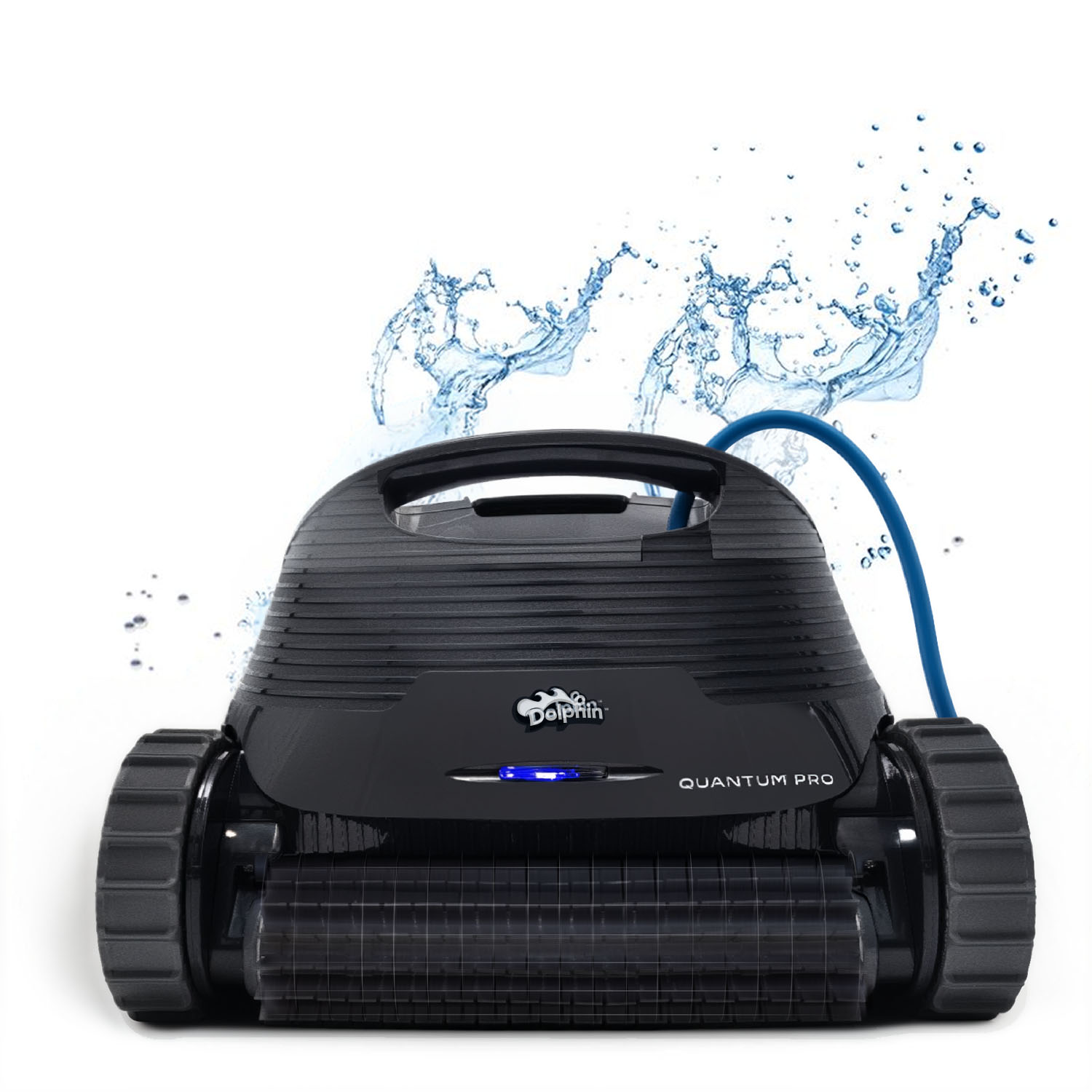
Sand loads a filter by weight, and the Quantum has the most filter to load: an XXL MaxBin basket with over 400 square inches of area, so flow holds up as grains pile in. It ships with standard panels for coarse beach sand and a full set of NanoFilter panels for the fine kind.
Two HyperBrushes at twice the speed of standard brushes flick packed sand out of corners. It is also the only robot here rated for stairs, sun shelves and Baja ledges, which is where sandy feet arrive.
- Best for
- In-ground pools up to 50 ft where sand comes in on feet, especially with entry steps or a sun shelf.
- Keep in mind
- The warranty is 2 years, and its 4,000 GPH flow is a step below the two robots ranked next.
- 2
 $1949
$2499Save $550Temporarily out of stock
Strongest suction with the longer warranty
Dolphin Premier
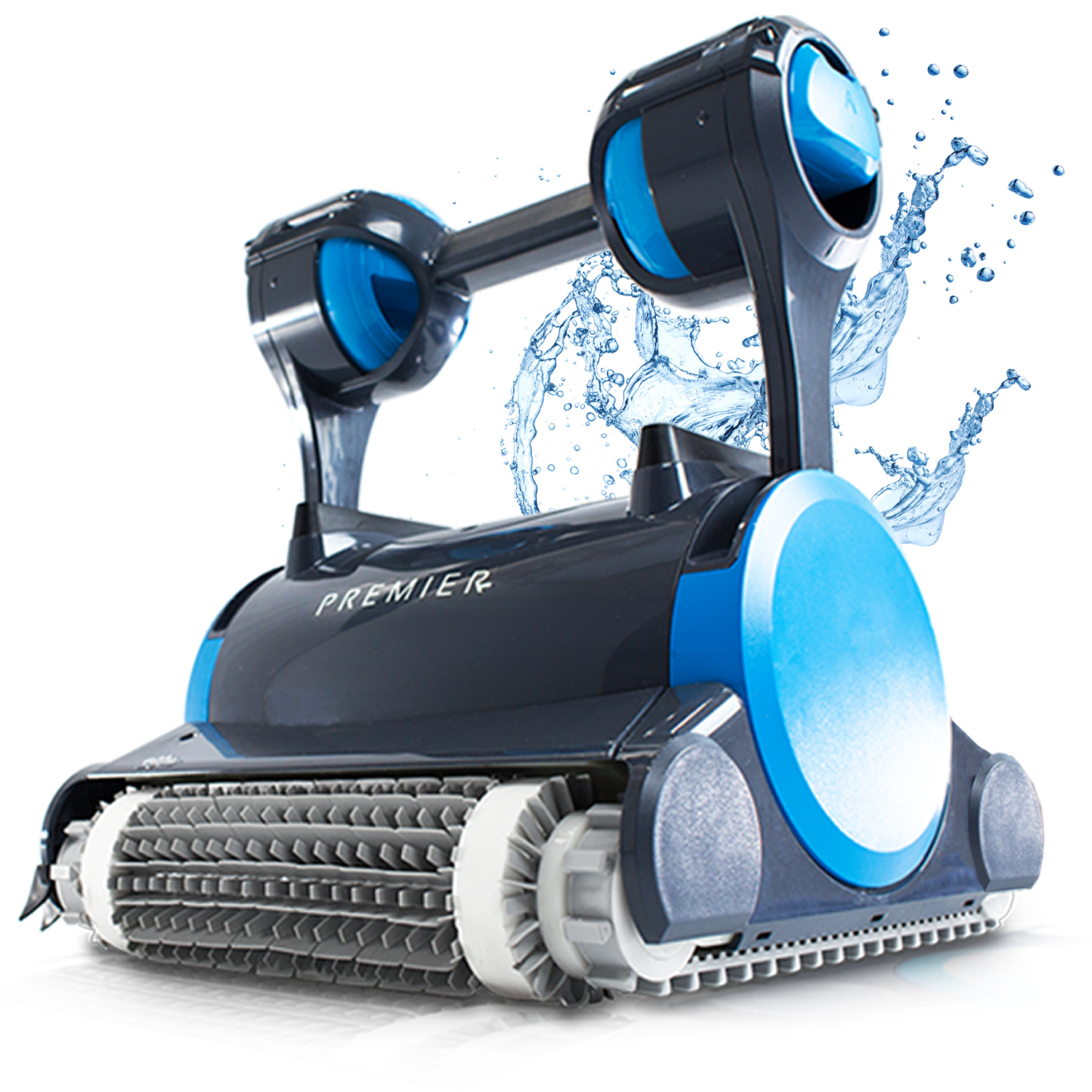
The Premier puts more water through the intake: dual commercial-grade ProLine motors rated at 4,500 GPH, which is what lifts dense grains off the floor. Its Multi-Media system lets you match the filter to the sand in front of you, with standard fine filters for coarse grains and NanoFilters for fine ones, both included.
The 3-hour cycle gives it time to return to drifts in the deep end, and an indicator on the power supply shows when the filter is full, a useful prompt once sand has packed it.
- Best for
- Owners of in-ground pools up to 50 ft who want the most flow and a 3-year warranty.
- Keep in mind
- It is not rated for steps or shelves, so sand there still needs brushing down. It weighs 20.3 lb before any sand is added.
- 3
 $2349
$2999Save $650Temporarily out of stock
Most methodical coverage of a sandy floor
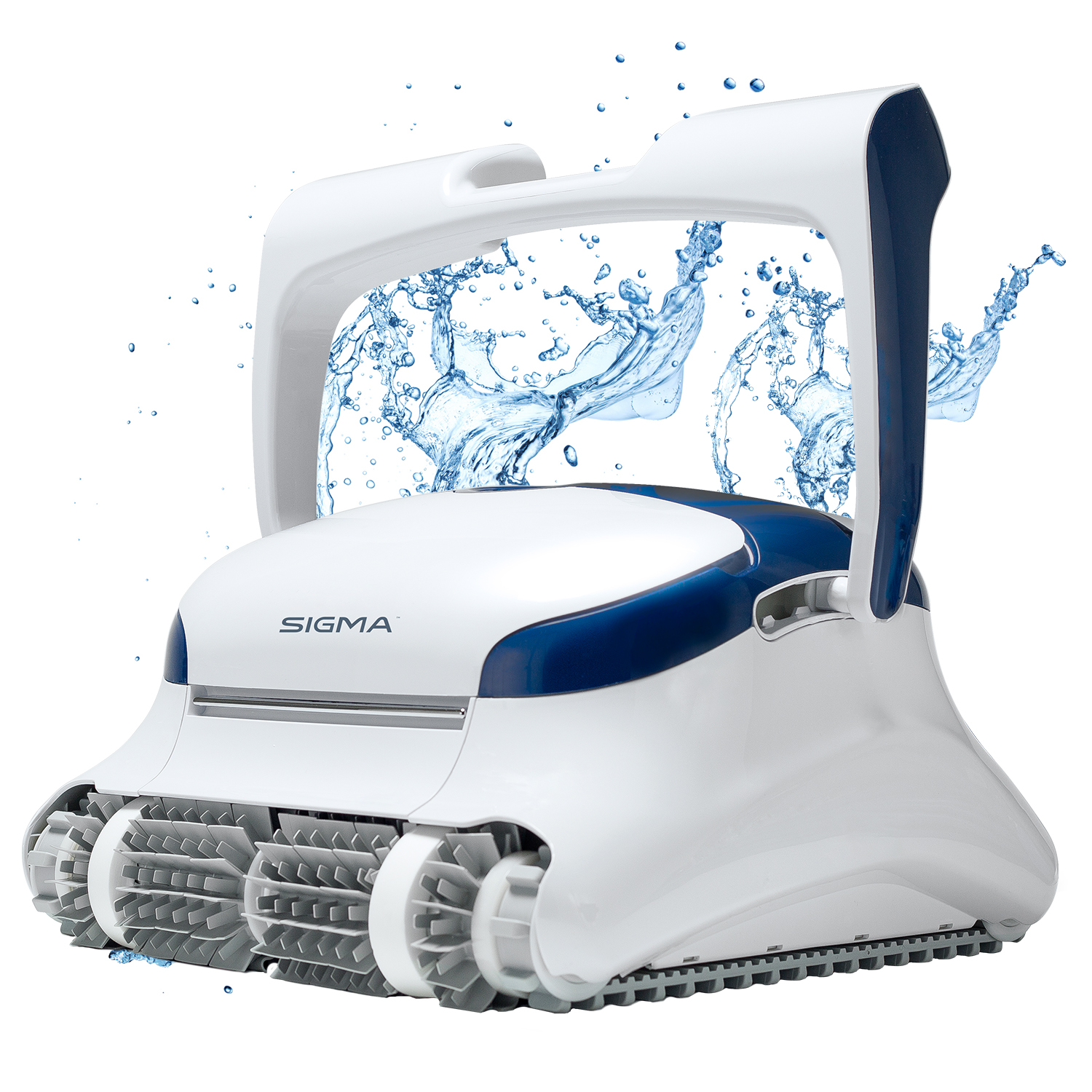
Dolphin Sigma
Sand hides in corners and along the base of the walls, and the Sigma is the most methodical robot on this page at reaching them. SmartNav 3.0 uses an onboard gyroscope to hold its lines, four scrubbing brushes work the floor, and three ProLine motors deliver 4,500 GPH. NanoFilters and standard filter cartridges both come in the box.
The myDolphin Plus app sends a filter alert, so you know when sand has filled the cartridges. It ranks third because sand packs into cartridge pleats and takes patience to rinse out.
- Best for
- Large in-ground pools where sand gathers in corners and you want filter alerts on your phone.
- Keep in mind
- Highest price on the page and 24.6 lb before sand. Allow extra time to rinse grit from the cartridges.
- 4
 $1049
$1299Save $250Temporarily out of stock
Sensible pick for sandy pools up to 33 ft
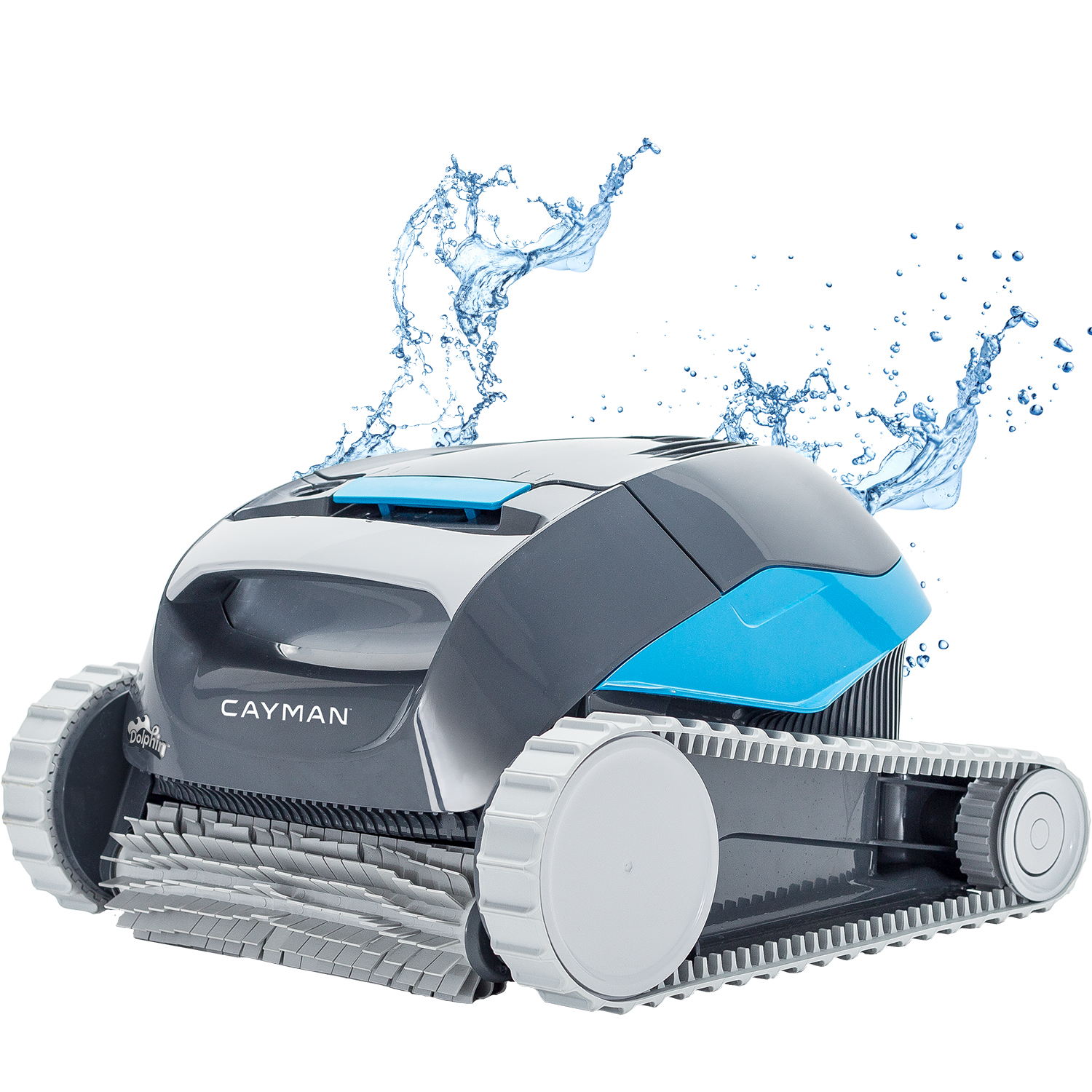
Dolphin Cayman
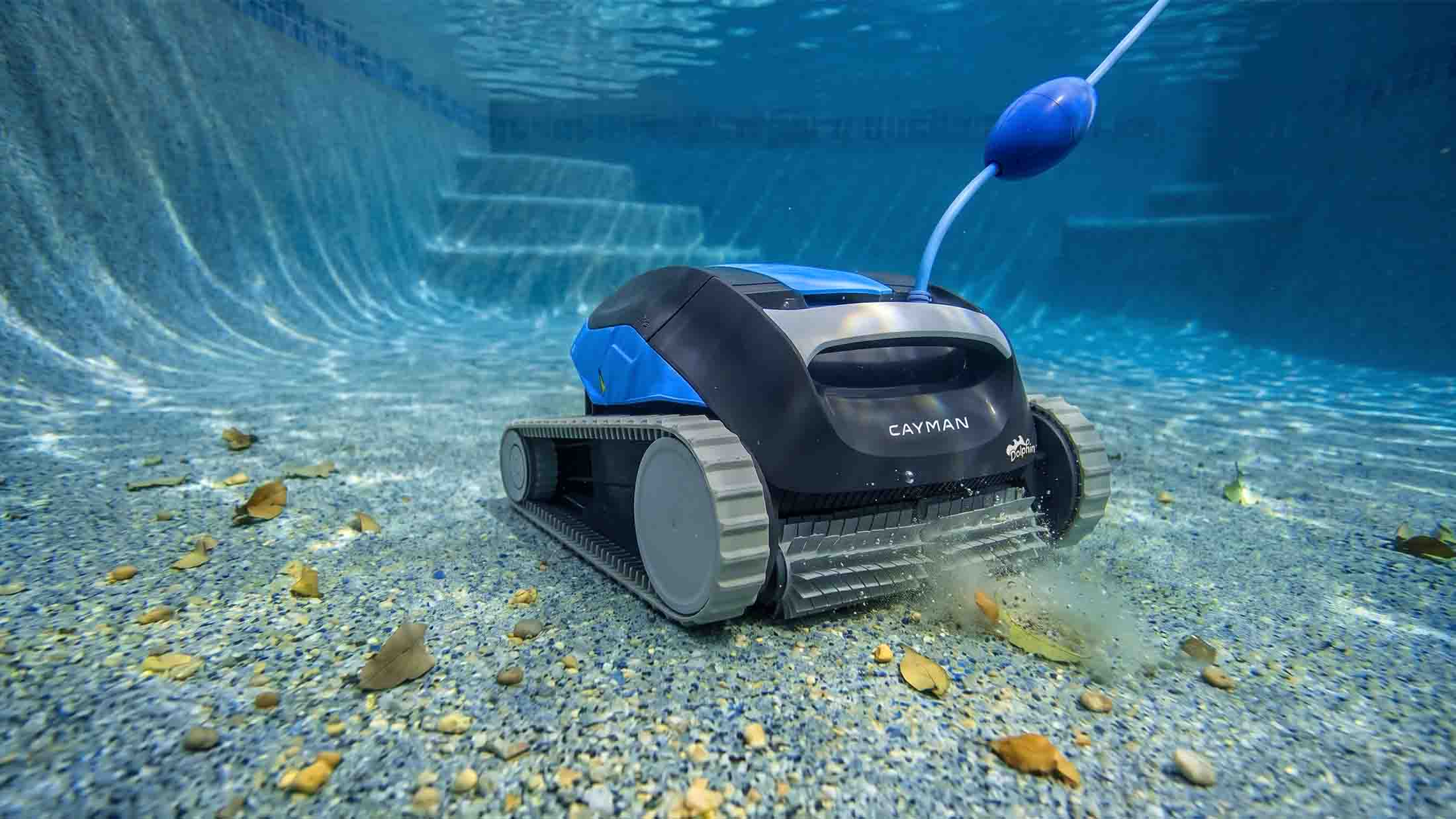
In a pool of 33 ft or less, the Cayman does the core job well. Dual 24-volt DC motors move over 4,000 GPH, one HyperBrush at double standard speed loosens the grains, and the MaxBin basket is 50% larger than standard Dolphin filters. Its fine panels hold ordinary beach and sandbox sand.
Fine sand needs the optional NanoFilter panels, which is the main reason it sits fourth. In its favor, at 14.6 lb it is the lightest pick, which matters when the basket is full of wet sand, and its every-day timer collects each day's sand before feet spread it.
- Best for
- In-ground or above-ground pools up to 33 ft with sand from feet, a sandbox or a beach bag.
- Keep in mind
- Floor and walls only, so the steps still need a hand brush. NanoFilter panels for fine sand are an extra purchase.


How to judge a robot for this
What sand asks of a robot.
- 1
Suction at the floor
Sand grains are dense. Water has to be moving fast at the intake to lift them, and a brush has to flick them off the surface first. Flow rate and an active brush count for more with sand than with anything that drifts.
- 2
A filter that matches the grain
Beach and sandbox sand is coarse enough for a standard fine panel. Play sand and windblown sand are finer and need ultra-fine media. Buy a robot that includes both, or one that lets you add the finer set.
- 3
A basket that carries weight
Sand is among the heaviest loads a robot collects. A large filter area keeps water moving as grains pile up inside, and a lighter robot is kinder to your back when you lift the load out of the pool.
- 4
Reach onto steps and shelves
Sand from feet lands where people get in. Most robots clean the floor and walls and never touch a step or a sun shelf. If that is where your sand collects, you need a robot rated for those surfaces, or a brush in your hand.
Side by side
Sand specs compared.
| Specification | Dolphin Quantum | Dolphin Premier | Dolphin Sigma | Dolphin Cayman |
|---|---|---|---|---|
| Price today | $1599 | $1949 | $2349 | $1049 |
| Filtration | XXL MaxBin basket with standard and NanoFilter panels | Multi-Media: NanoFilters, oversized leaf bag and standard fine filters | NanoFilters and standard filter cartridges | MaxBin basket with fine panels; NanoFilter panels optional |
| Filter access | Top-load, one-click open | Top-load, no tools | Cartridges | Top hatch, one-tab emptying |
| Brushes | Dual HyperBrush | Dual scrubbing brushes | Quad scrubbing brushes | HyperBrush |
| Flow rate | 4,000 GPH | 4,500 GPH | 4,500 GPH | Over 4,000 GPH |
| Cycle time | 2 hours | 3 hours | 2.5 hours | 2 hours |
| Cleans | Floor, walls, waterline, sun shelves and stairs | Floor, walls and waterline | Floor, walls and waterline | Floor and walls |
| Scheduling | Weekly timer: every day, every 2 days or every 3 days | Weekly timer: every day, every 2 days or every 3 days | Weekly scheduler by day and time | Timer: every day |
| Warranty | 2 years | 3 years | 3 years | 2 years |
Find the source before you buy anything.
Sand gets into a pool two ways, and a robot only solves one of them. The first is from outside: feet after the beach, a sandbox near the deck, a volleyball court, wind. Once collected, it stays gone until the next trip. A robot handles this well.
The second is from inside. If your pool has a sand filter and small piles keep forming under the return jets, the sand is coming from the filter itself, usually through a cracked lateral or standpipe. No robot fixes that. Clean the floor, run the pump for a day and see where fresh sand appears. If it is below the returns, have the filter opened and repaired before you spend money on a cleaner.
Match the filter to the grain.
Rub a pinch between your fingers. Coarse, sharp grains that sink the moment you let go are ordinary sand, and a standard fine panel holds them. Grains that feel closer to flour and leave a cloud when dropped into water are fine sand. They pass through standard media and blow back out behind the robot. Anything that smears instead of feeling gritty is not sand at all. It is more likely algae or pollen, and it needs a different approach.
| What you see | Likely source | Filter to use |
|---|---|---|
| Coarse grains near the steps and shallow end | Feet, beach gear, a sandbox | Standard fine panels or filters |
| Pale fine layer that clouds when disturbed | Windblown or play sand | NanoFilters or NanoFilter panels |
| Small piles under the return jets | The pool's own sand filter | None: repair the filter first |
Where a robot will not reach.
Sand settles in a few places most robots are not built for. Top steps and tanning shelves are too shallow for every robot here except the Quantum, which is rated for them. Sand also sits in the folds of a wrinkled liner, behind ladder legs and around a raised drain cover, where a brush passes over without lifting much. A hand brush pushed toward open floor before the cycle deals with all three. And no robot keeps sand out. A foot rinse and a mat at the gate do more than any filter.
Running a robot on a sandy floor.
- Sweep steps, benches and the sun shelf toward the floor first, unless your robot is rated to clean them.
- For fine sand, switch the pump off for a few hours beforehand so the grains settle and the return jets stop moving them around.
- Lift the robot slowly and hold it at the surface until it drains. Wet sand adds real weight to the load.
- Hose the filter from the outside in, so the water pushes grains back out the way they entered.
Questions, answered
Questions about sand and pool robots.
Will sand harm a robotic pool cleaner?
Collecting sand is normal work for these robots. The care point is what happens afterwards. Empty and rinse the basket after a sandy cycle, and hose the brushes and tracks so grit is not left sitting in them.
Can a robot pick up sand from pool steps?
Only if it is rated for them. Of the robots on this page, the Quantum is the one rated for stairs, sun shelves and Baja ledges. The others work the floor and walls, so brush sand off the steps toward the floor before the cycle and let the robot collect it there.
What makes the best robotic pool cleaner for sand different from one for leaves?
Leaves need volume and a wide path into the basket. Sand needs the opposite strengths: strong flow right at the floor, a filter fine enough to keep the grains in, and a basket that keeps working under weight. A robot with both standard and ultra-fine media handles the two jobs by swapping filters.
Should I vacuum a lot of sand to waste before using a robot?
For a large amount, yes. If a filter failure or a storm has left a thick layer, a manual vacuum set to waste sends the sand out of the pool entirely and is faster than emptying a robot many times. Use the robot for what remains.
The verdict
Decide in this order.
First rule out the sand filter. If piles form under the returns, fix that and keep your money. If the sand comes from outside, size decides next. Pools up to 33 ft with ordinary sand: the Cayman, plus NanoFilter panels if the grains are fine. Longer pools, or sand on the steps and shelf: the Quantum. Choose the Premier for extra flow and a longer warranty. Take the Sigma for gyroscope coverage and phone alerts.
Keep reading