


By feature
The best robotic pool cleaner with ultra-fine filters, for water that looks dull
Top pick: Dolphin Premier
Live prices · Free shipping · 30 Day Trial
The short answer
Fine filters trap what standard screens let through, but they clog sooner, so the right robot is one that makes rinsing and swapping them easy.
The Dolphin Premier is the pick: NanoFilters come in the box alongside a leaf bag and standard fine filters, so one robot handles dust and leaves. The Dolphin Sigma and the Dolphin Quantum also include NanoFilters. The Dolphin Cayman ships with fine panels and takes NanoFilter panels as an optional add-on, which keeps the price down for pools up to 33 ft.
Pool water can be balanced, sanitized and still look flat. The usual cause is particles too small for a standard screen: silt washed in by rain, pollen in spring, dust after a dry wind, the gray powder left when algae dies. A robot with a coarse filter stirs this up, pulls it in and blows much of it back out. The best robotic pool cleaner with ultra-fine filters keeps it.
Dolphin's ultra-fine media is called NanoFilter. Three of the five robots compared here include it, and two, the Cayman and the Escape, take it as an add-on. The harder part is living with fine media, because the tight weave that holds silt also clogs quickly. So this page ranks the robots on two things: whether ultra-fine filters come in the box, and how painless each robot makes the rinse and the swap.
Our picks, in order
Four robots, ranked for fine filtration.
- 1
 $1949
$2499Save $550Temporarily out of stock
Ultra-fine and leaf media in one box
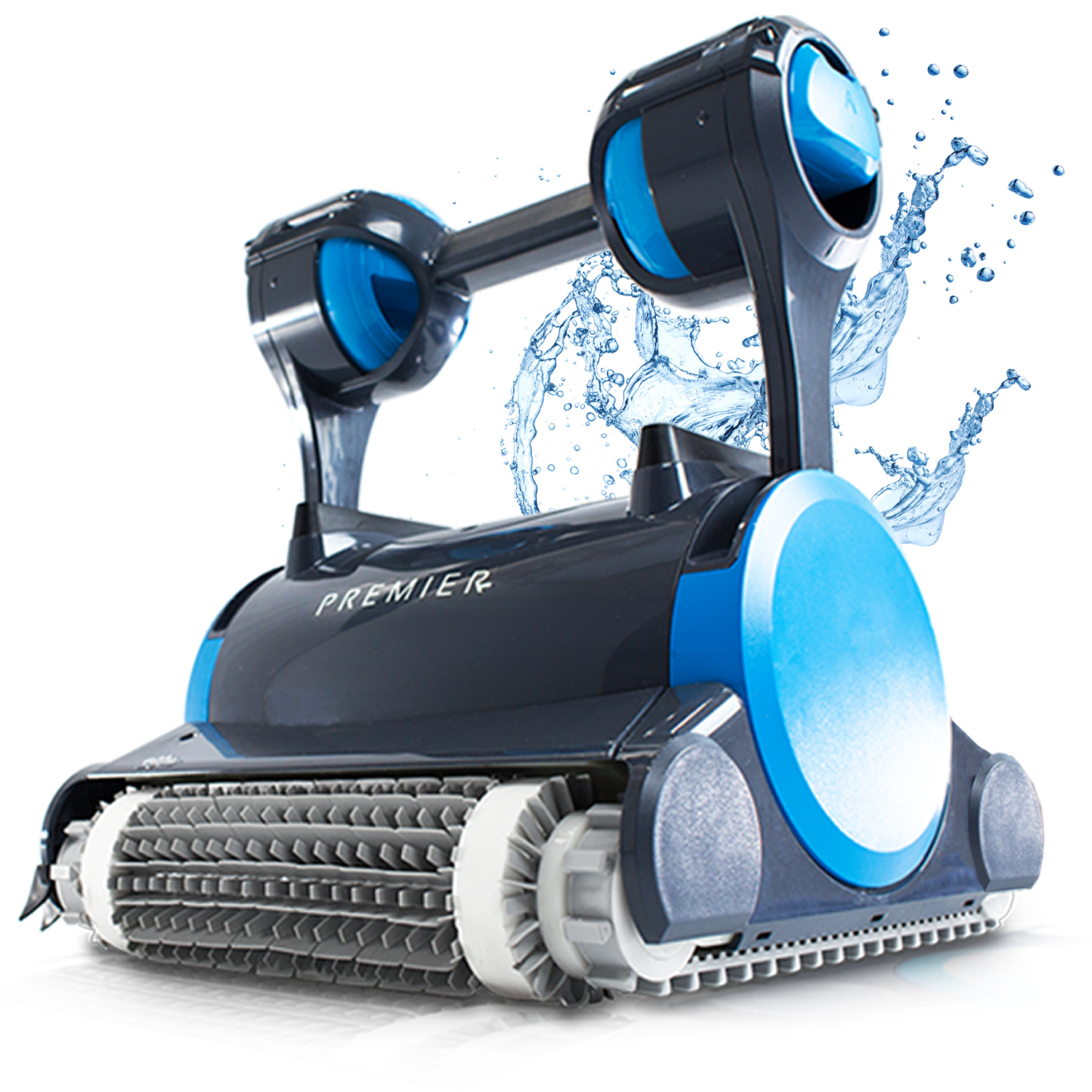
Dolphin Premier
Ultra-fine media asks two things of a robot: enough flow to push water through a tight weave, and a way to get that media out of the path when leaves arrive. The Premier answers both. Its two ProLine motors move 4,500 gallons per hour, and a 3-hour cycle, the longest here, gives dust that drifts and resettles more time to be collected. A full-filter indicator on the power supply shows when the fine filters have loaded. And because NanoFilters are one of four Multi-Media options, with a leaf bag and standard fine filters also included, you are never stuck running the wrong one.
- Best for
- In-ground pools up to 50 ft that see both fine dust and seasonal leaves.
- Keep in mind
- Upper price tier and 20.3 lb. Like all fine media, its NanoFilters need a rinse after each cycle.
- 2
 $2349
$2999Save $650Temporarily out of stock
Fine cartridges with a filter alert
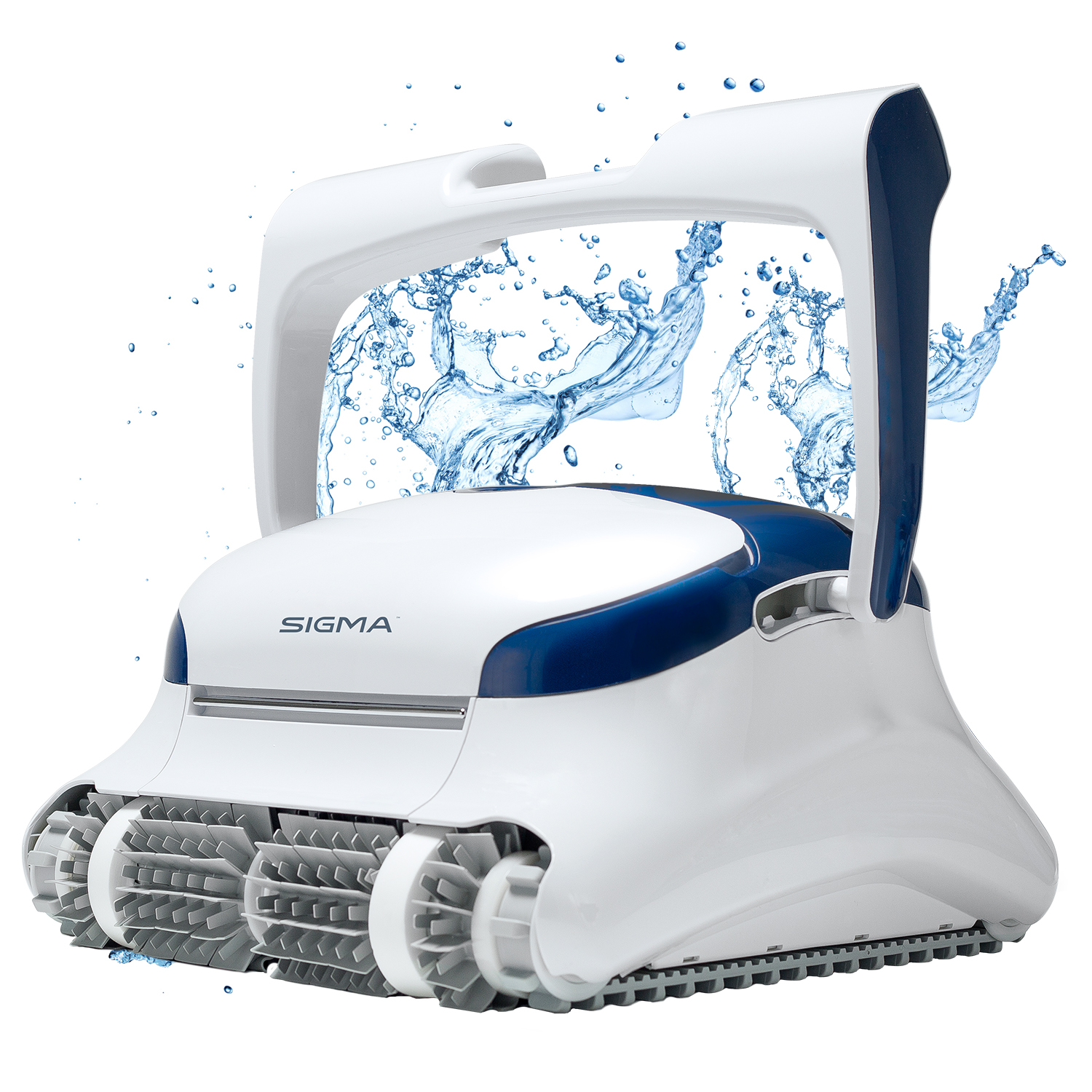
Dolphin Sigma
The Sigma includes NanoFilters and standard filter cartridges, so fine and everyday filtration are both in the box. Three ProLine motors hold 4,500 gallons per hour through them, and quad scrubbing brushes lift settled dust off the floor so the filters can catch it. The feature that matters most for fine media is in the app: a filter alert. Ultra-fine filters fill fast, and being told beats finding out when the robot stops climbing. It ranks second because its box holds no leaf bag and it is the highest-priced robot here.
- Best for
- Owners fighting persistent fine dust who want the robot to say when its filters are full.
- Keep in mind
- Highest price here and 24.6 lb. Its filters are cartridges, and the alert needs the app.
- 3
 $1599
$1799Save $200Temporarily out of stock
Most filter area for fine media
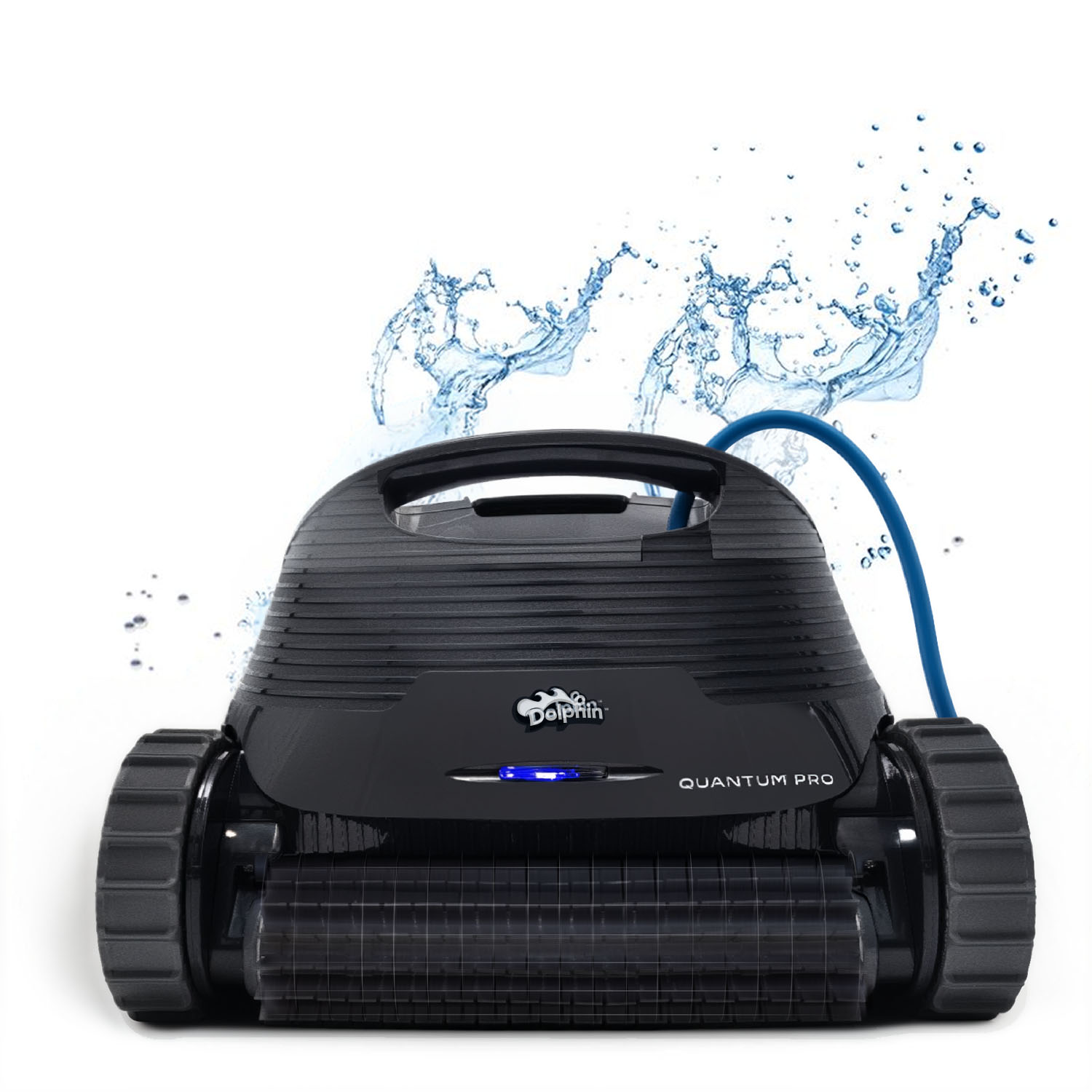
Dolphin Quantum
Fine media chokes when too much dust lands on too little fabric, and the Quantum has the most fabric to offer: the XXL MaxBin, with over 400 square inches of filter area, is the largest basket of the five Dolphins compared here. Its NanoFilter panels are included. The robot also goes where fine dust settles and most robots do not, since its coverage list names sun shelves, Baja ledges and stairs, and its dual HyperBrush spins at twice the speed of standard brushes to lift that dust into the flow. It is also the lowest-priced pick with NanoFilters in the box, and it ranks third on flow: 4,000 gallons per hour.
- Best for
- Dusty or pollen-heavy in-ground pools where one big basket is easier to rinse than small filters.
- Keep in mind
- Slightly less water flow than the two robots above it, and a 2-year warranty against their 3.
- 4
 $1049
$1299Save $250Temporarily out of stock
Fine panels now, ultra-fine as an add-on
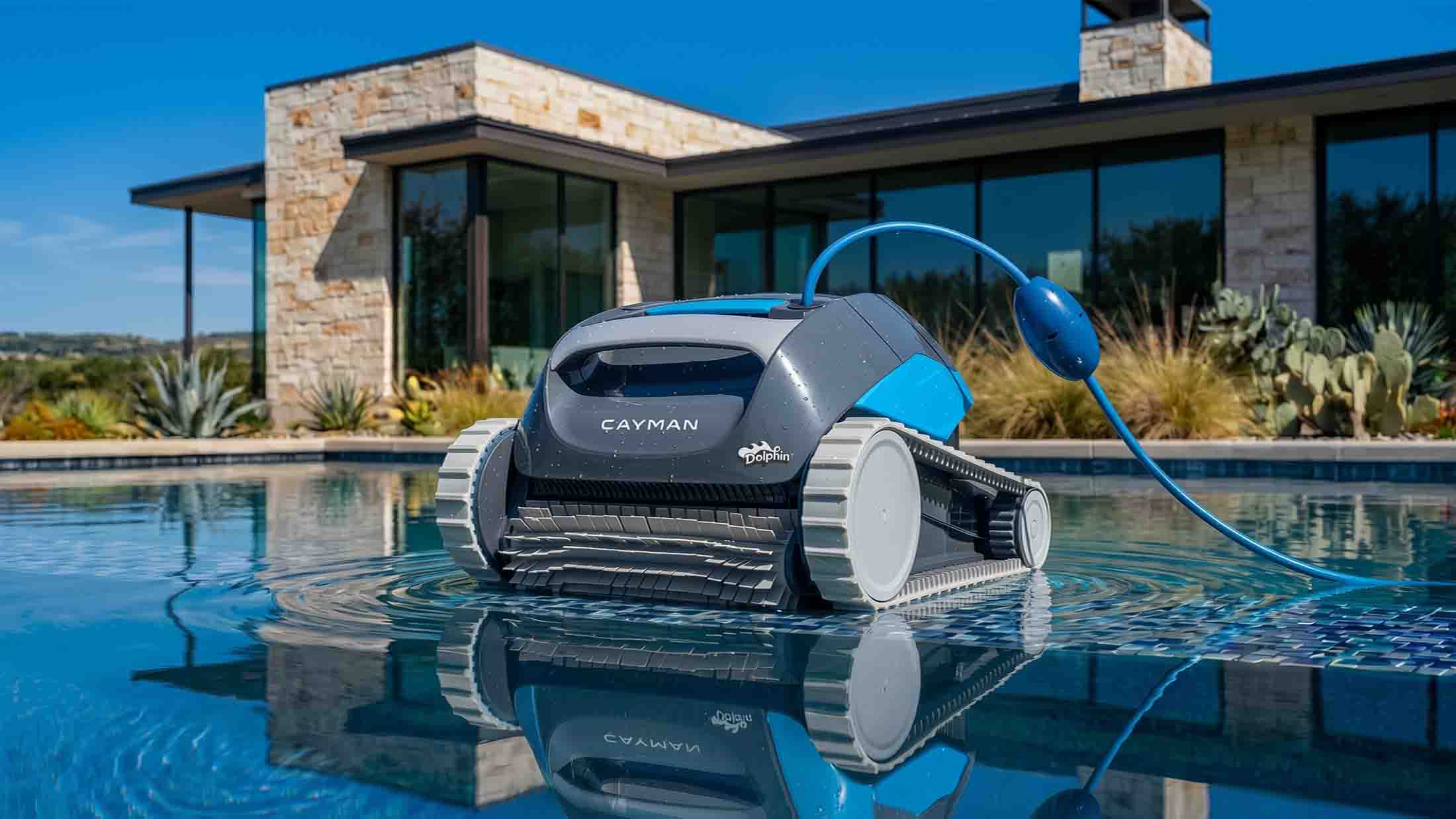
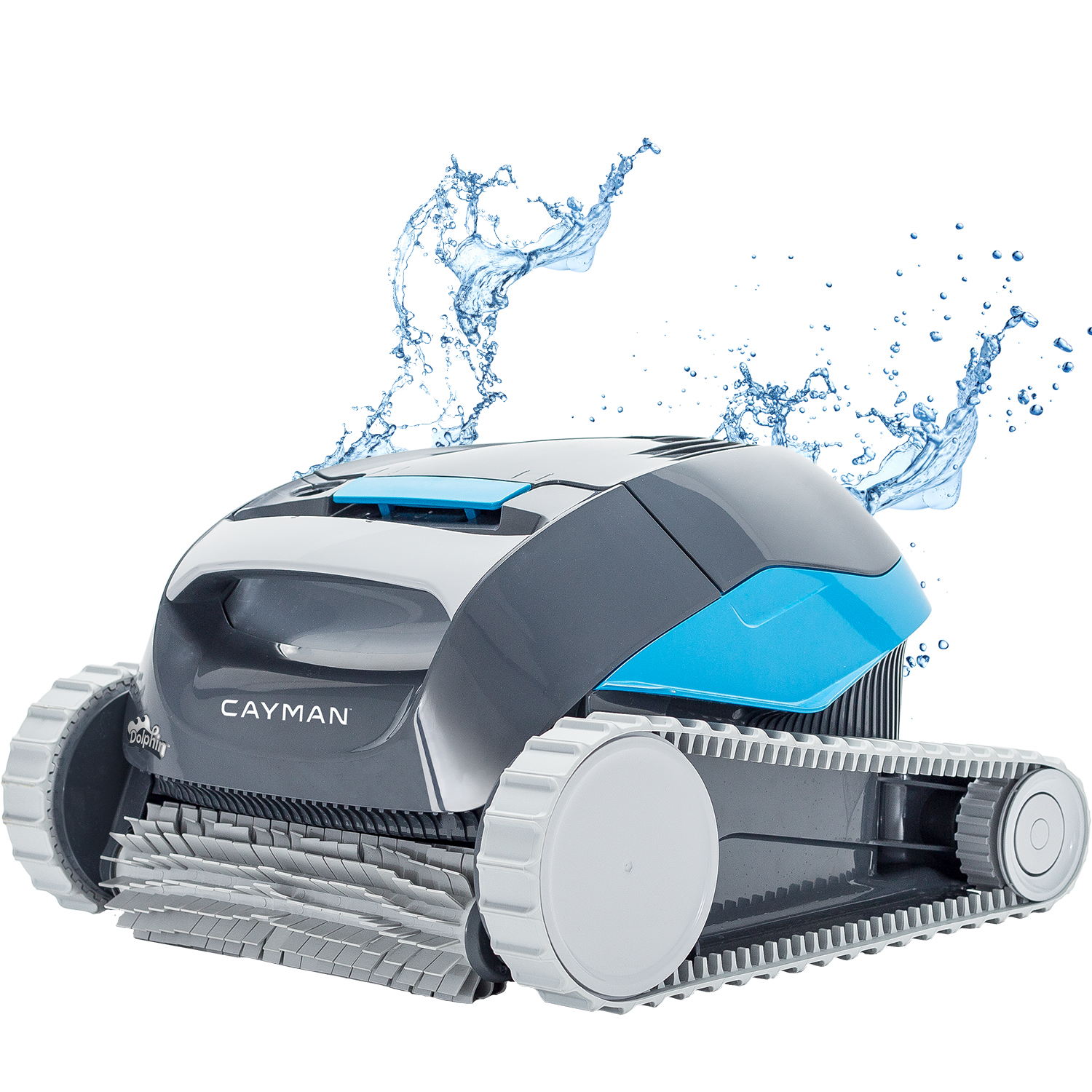
Dolphin Cayman
The Cayman's standard kit is a MaxBin basket with fine panels, and for everyday dirt and sand that is all a pool needs. For the weeks when silt, pollen or dead algae is the problem, NanoFilter panels are an optional add-on. Both sets work with the same hardware: two 24-volt DC motors, a flow rate above 4,000 gallons per hour, and a HyperBrush that turns twice as fast as a standard Dolphin brush and lifts settled dust for the filter to catch. Its timer runs a cycle every day, so fine debris has less time to build up. It is fourth because the ultra-fine part is a separate purchase.
- Best for
- Pools up to 33 ft with occasional fine dust, where a smaller robot plus add-on panels makes more sense.
- Keep in mind
- Ultra-fine panels are not in the box. Add them when you order, or expect the finest silt to pass the standard panels.


How to judge a robot for this
What to look for in fine filtration.
- 1
Fine media in the box
Check what ships with the robot. Included ultra-fine filters mean you can deal with dusty water on day one. An add-on means a second purchase, which is fine if you plan for it and wasted money if you never needed it.
- 2
A second, coarser option
Nobody runs fine media all year. In leaf season it clogs fast. The robot needs standard media or a leaf bag to switch to, and the switch should take seconds, not tools.
- 3
Filter area
The more surface the water passes through, the longer fine media runs before it chokes. A large basket or an oversized filter set buys you time between rinses and keeps suction up while it loads.
- 4
Flow to push through it
Fine media resists water. Strong motors keep the robot moving and climbing with tight filters in place. The Premier and Sigma are rated at 4,500 gallons per hour, the Quantum at 4,000 and the Cayman at over 4,000.
Side by side
Filtration and specs compared.
| Specification | Dolphin Premier | Dolphin Sigma | Dolphin Quantum | Dolphin Cayman |
|---|---|---|---|---|
| Price today | $1949 | $2349 | $1599 | $1049 |
| Cleans | Floor, walls and waterline | Floor, walls and waterline | Floor, walls, waterline, sun shelves and stairs | Floor and walls |
| Scheduling | Weekly timer: every day, every 2 days or every 3 days | Weekly scheduler by day and time | Weekly timer: every day, every 2 days or every 3 days | Timer: every day |
| App | No app; controls on the power supply | myDolphin Plus (Wi-Fi and Bluetooth) | myDolphin Plus (Wi-Fi) | No app; controls on the power supply |
| Filtration | Multi-Media: NanoFilters, oversized leaf bag and standard fine filters | NanoFilters and standard filter cartridges | XXL MaxBin basket with standard and NanoFilter panels | MaxBin basket with fine panels; NanoFilter panels optional |
| Brushes | Dual scrubbing brushes | Quad scrubbing brushes | Dual HyperBrush | HyperBrush |
| Navigation | SmartNav 2.0 | SmartNav 3.0 with gyroscope | SmartNav 2.0 | SmartNav 2.0 |
| Cable | 55 ft with 360° anti-tangle swivel | 55 ft with 360° anti-tangle swivel | 55 ft with anti-tangle swivel | 50 ft |
| Warranty | 3 years | 3 years | 2 years | 2 years |
What ultra-fine is up against.
The particles that dull a pool are small enough to hang in the water for hours and to slip through a standard screen. Silt arrives with rain and runoff. Pollen floats before it sinks. Dust arrives on dry wind. Dead algae is what remains after a successful treatment: a pale powder on the floor that clouds up the moment it is disturbed.
Ultra-fine media is a dense fabric, not a mesh with openings. Water has to work through it, and the particles stay in the weave. That is why it catches what a screen misses, and why it loads up quickly. Run the robot with the pump off when you can, so fine material settles to the floor first.
Use the right media for the week you are having.
Fine filters are a tool for certain conditions, not a permanent setting. A workable rule:
- After wind, rain or pollen, or when the water looks flat: ultra-fine media, rinsed after every cycle.
- After an algae treatment, once the water is back in range: ultra-fine media for the dead algae, with a rinse mid-job if the robot slows.
- Ordinary weeks: standard fine filters or panels, which hold sand and dirt and run longer between rinses.
- Leaf fall: standard media or, on the Premier, the oversized leaf bag. Leaves smother fine media almost at once.
What fine filters will not fix.
An ultra-fine filter removes particles. It does not correct water chemistry. Cloudiness from high pH, high calcium or low sanitizer will still be there after the cleanest cycle. Live algae is the same: it needs treatment and hand brushing first, and the robot comes out of the pool before you shock. Nor does a robot replace the pool's own filter, which handles what stays suspended. Use the robot's fine media for what has settled on the floor, and leave the haze in the water to the pool filter.
Living with fine media.
- Let the pool sit with the pump off for a few hours before a fine-dust cycle, so more of the dust is on the floor.
- If the robot stops climbing walls mid-cycle with fine media fitted, the filter is full. Rinse it and restart.
- Store the standard set beside the fine set, so the swap for leaf season actually happens.
Questions, answered
Fine-filter questions.
Will an ultra-fine filter clear cloudy water?
Only when the cloud is made of particles. Settled silt, pollen, dust and dead algae are what fine media is for, and a few cycles can make a visible difference. If the water is cloudy because of chemistry, such as high pH or low sanitizer, no filter in a robot will clear it. Test first, then clean.
How often do ultra-fine filters need rinsing?
After every cycle. The weave that traps fine particles fills quickly, and a loaded filter cuts water flow, which weakens pickup and wall climbing. In a very dusty pool you may need to rinse partway through the first few cycles, until the backlog is gone.
Do I need a robotic pool cleaner with ultra-fine filters if my pool has a sand filter?
It helps more with a sand filter than with the other types. A sand filter is the coarsest of the common pool filters, so the finest silt and dead algae can pass through it and return to the pool. A robot with ultra-fine media takes that material out of the water, and it leaves the pool for good when you rinse the filter in the yard.
Do ultra-fine filters remove algae?
They collect dead algae, not living algae. After a treatment has done its work, the pale powder on the floor is exactly what fine media is for. Live algae clings to surfaces and regrows, so it needs sanitizer and hand brushing first. Take the robot out before you shock, and put it back with fine filters once the water is back in range.
Can I run ultra-fine filters all season?
You can in a screened or leaf-free pool, if you rinse after every cycle. In an open pool, switch to standard media when leaves or seeds are falling, because bulky debris covers the fine weave and stops the flow.
The verdict
Buy for the swap as much as the filter.
Ultra-fine media is only useful if you will rinse it and change it. If your pool gets both dust and leaves, the Premier's four media options make it the natural choice. If dust is the constant problem, the Sigma's alert or the Quantum's large basket will suit you better, depending on budget. If the pool is 33 ft or shorter, buy the Cayman and add NanoFilter panels.
Keep reading