


By pool surface
Best robotic pool cleaner for fiberglass pools: grip, waterline and molded steps
Top pick: Dolphin Sigma
Live prices · Free shipping · 30 Day Trial
The short answer
Gelcoat is easy to keep clean and hard to climb. We rank four Dolphins on traction, waterline scrubbing and how they handle a shell's built-in steps and ledges.
Our pick for a fiberglass shell is the Dolphin Sigma: quad brushes, HyperGrip tracks and a gyroscope hold a slick gelcoat wall and scrub the waterline, where the scum line shows. The Dolphin Premier does the same core job for less. If your shell has a large tanning ledge or wide steps, look at the Dolphin Quantum, the one robot here that lists them.
A fiberglass pool arrives as one molded shell with a gelcoat finish, and that finish changes the cleaning job. It is smooth and non-porous, so dirt and algae have less to hold on to than on plaster. It is also slick, which makes wall climbing harder, and its pale surface shows every bit of scum at the waterline.
Then there is the shape. Steps, benches and tanning ledges are molded into nearly every shell, and most robots do not clean all of them. So the best robotic pool cleaner for fiberglass pools is the one with dependable traction, a real waterline pass, and honest coverage of the molded features you have. All five Dolphins in these guides list fiberglass as a supported surface. Four make this list, and the Dolphin Cayman is on it for small shells only.
Our picks, in order
Four robots for fiberglass, in order.
- 1
 $2349
$2999Save $650Temporarily out of stock
Surest grip and scrub on slick gelcoat
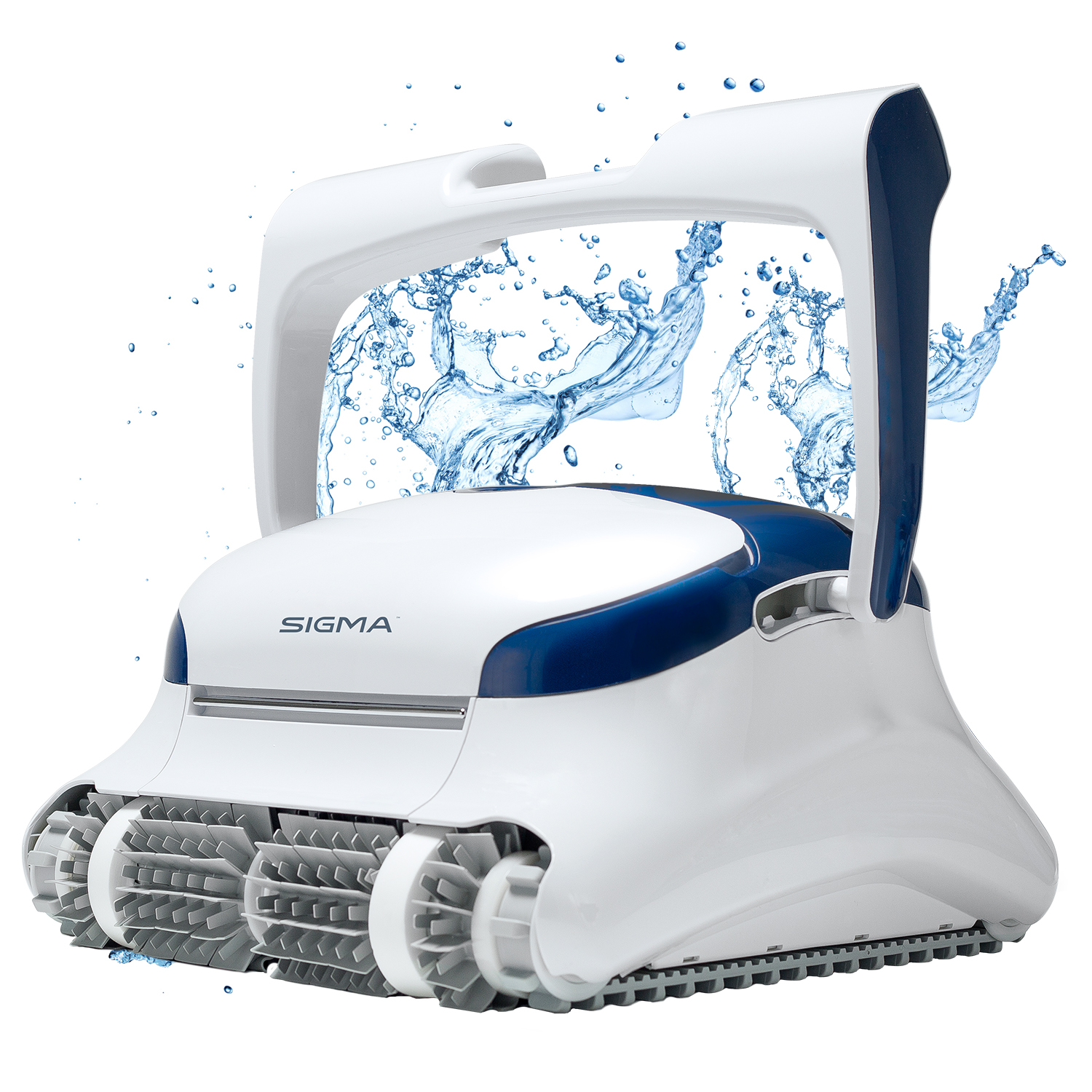
Dolphin Sigma
On a surface with this little friction, the Sigma has the most going for it. Four scrubbing brushes instead of two put more contact on the gelcoat, HyperGrip tracks carry it up the wall, and SmartNav 3.0 with an onboard gyroscope helps it keep its bearings on the curves and coves a molded shell is made of.
It scrubs the waterline every cycle, which is where fiberglass shows dirt first. Three ProLine motors move 4,500 GPH, the cycle runs 2.5 hours, and the myDolphin Plus app handles scheduling and tells you when the filter is full. The warranty is 3 years.
- Best for
- In-ground fiberglass shells up to 50 ft whose owners want the strongest wall and waterline cleaning.
- Keep in mind
- It does not list steps or tanning ledges among the areas it cleans, it weighs 24.6 lb, and it is the highest-priced robot here.
- 2
 $1949
$2499Save $550Temporarily out of stock
Waterline scrubbing and long cycles for less
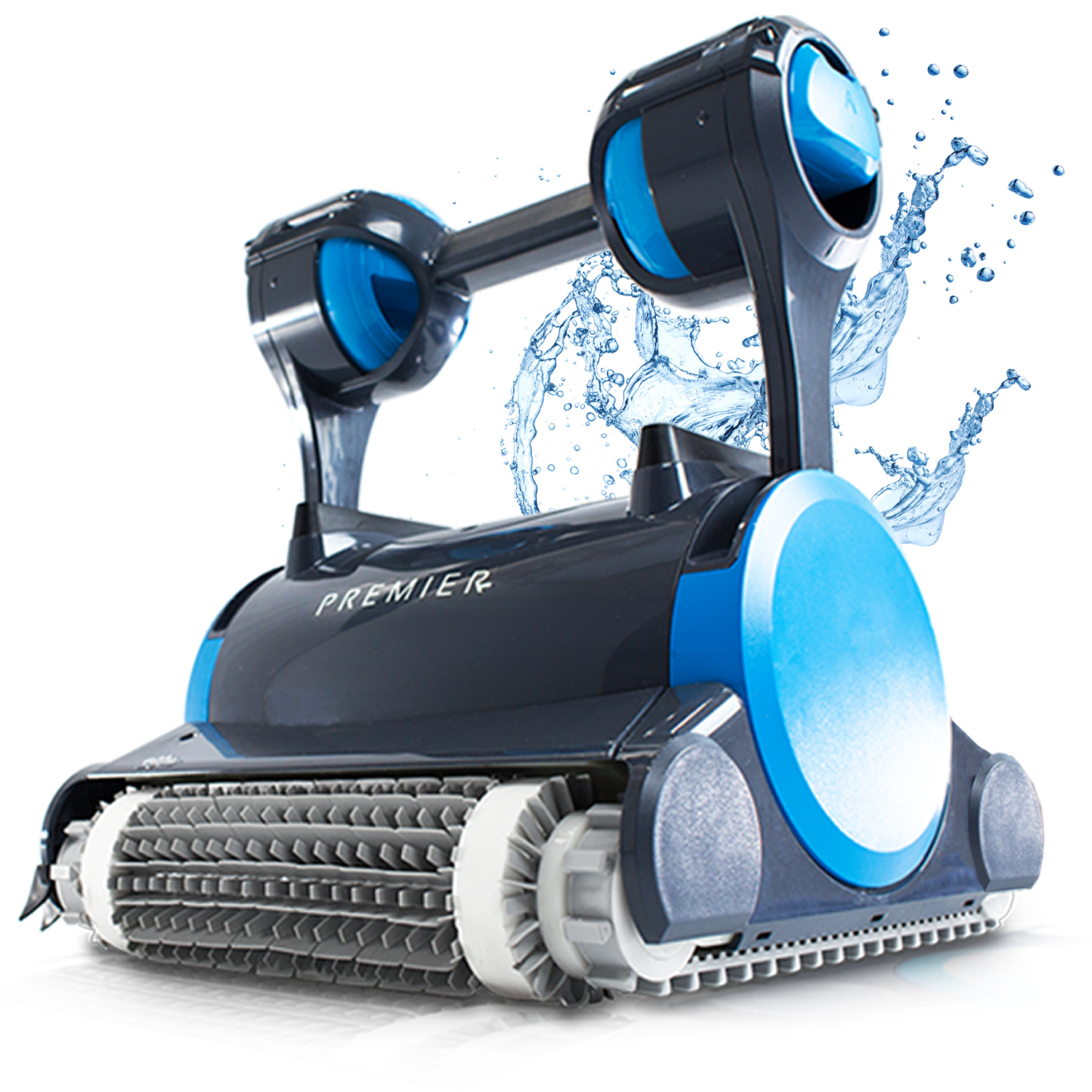
Dolphin Premier
The Premier covers the same ground as the Sigma on a fiberglass pool: floor, walls and waterline, on HyperGrip tracks, with a 50 ft rating. Its dual scrubbing brushes and 3-hour cycle give a slick shell plenty of passes, and 4,500 GPH of flow helps hold it on the wall.
What you give up is the gyroscope and the app. What you gain is a lower price, a simple weekly timer on the power supply, and the Multi-Media filter set: NanoFilters for the fine dust that shows on pale gelcoat, plus an oversized leaf bag.
- Best for
- Owners who want the scum line scrubbed on a mid-size or large shell without paying for app control.
- Keep in mind
- No app and no gyroscope. Like the Sigma, it does not list steps or ledges, so expect to brush those by hand.
- 3
 $1599
$1799Save $200Temporarily out of stock
The one that lists steps and tanning ledges
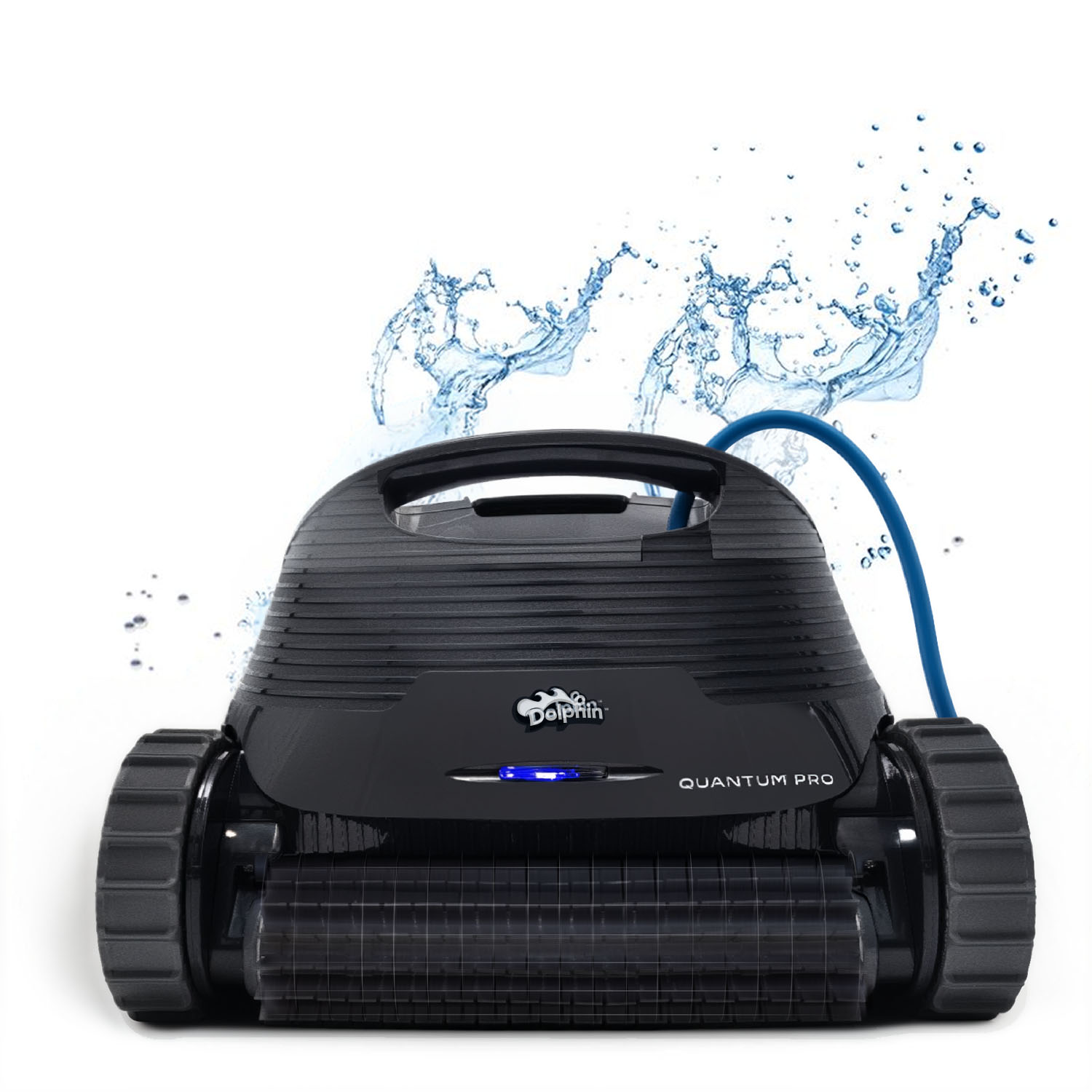
Dolphin Quantum
Most fiberglass shells have a tanning ledge, a bench or a wide set of steps, and the Quantum is the only robot in this guide that lists sun shelves, Baja ledges and stairs along with the floor, walls and waterline. If those features take up a real share of your pool, that matters more than extra brushes.
Its dual HyperBrush spins at twice the speed of standard brushes and the tracks are continuous rubber. It is third because its 2-hour cycle and 4,000 GPH sit a step below the two robots ahead of it, and the warranty is 2 years. It is also the lowest-priced robot here with a 50 ft rating.
- Best for
- Shells with a tanning ledge, bench or broad steps, and buyers who want a 50 ft rating at the lowest price.
- Keep in mind
- A very shallow ledge can still be out of reach: check the manual for minimum depth. Warranty is 2 years.
- 4
 $1049
$1299Save $250Temporarily out of stock
Sensible for a small shell, floor and walls only
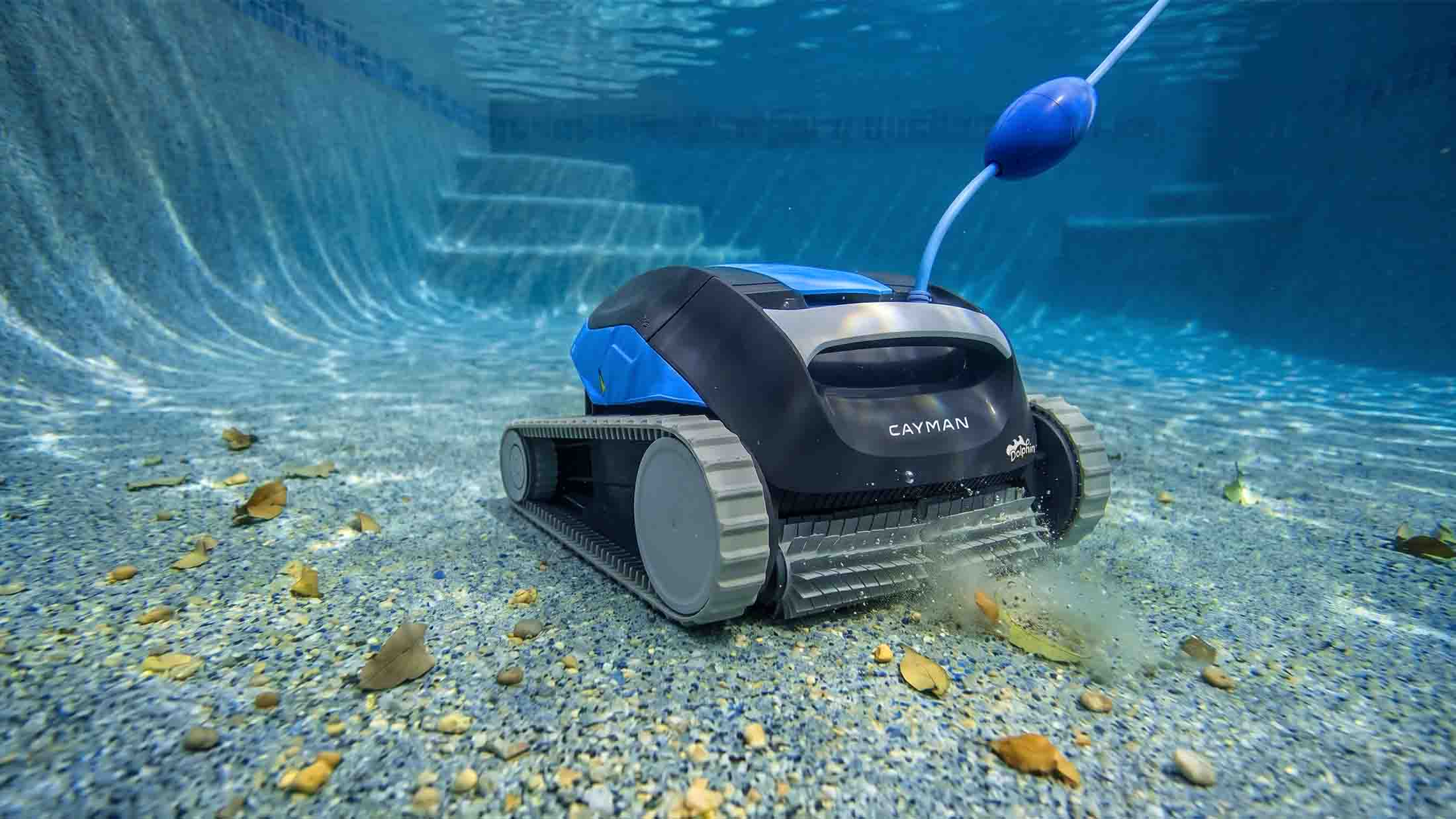
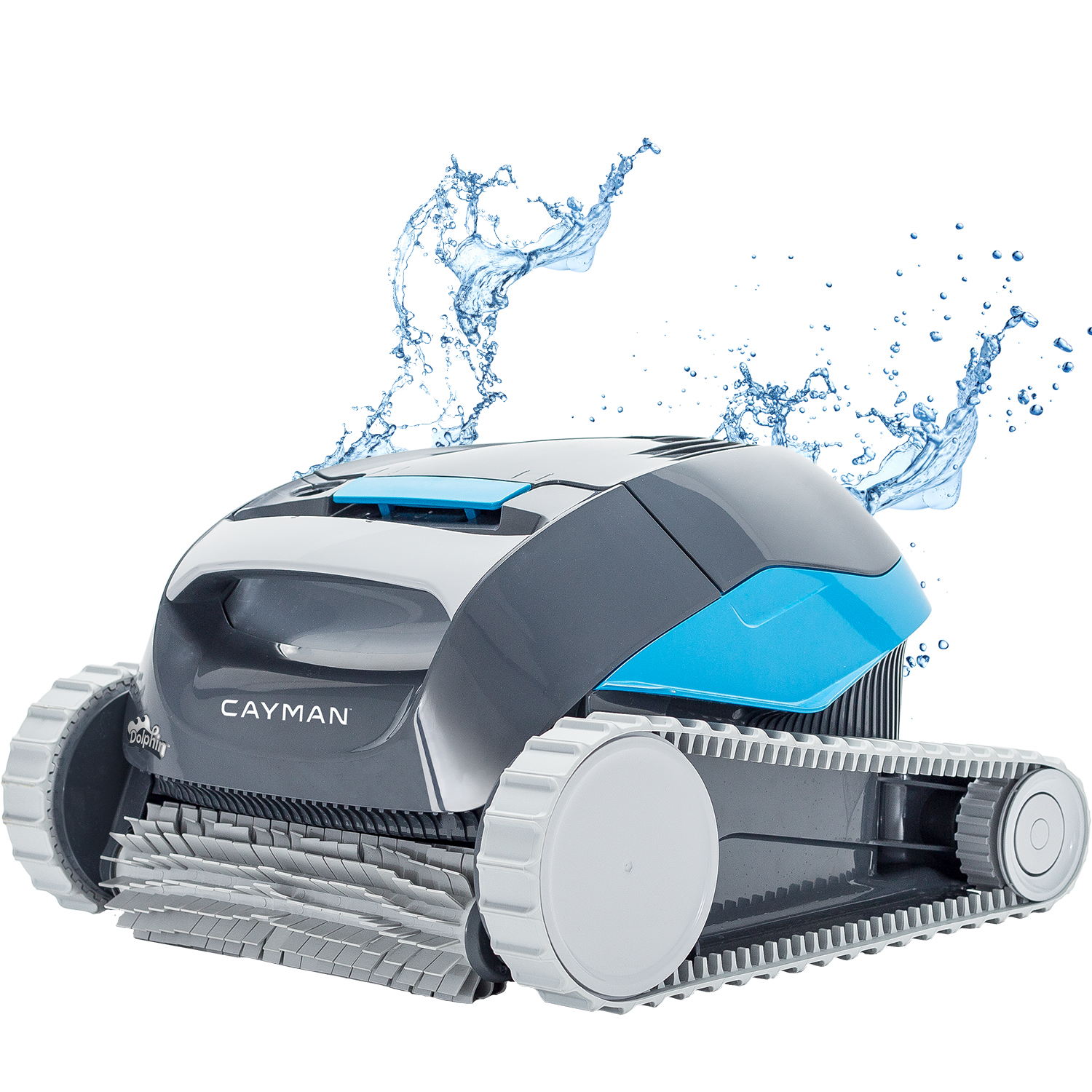
Dolphin Cayman
Plenty of fiberglass pools are small: plunge pools, cocktail pools and compact family shells under 33 ft. For those, the Cayman is rated, lists fiberglass, and costs less than any robot above it. It climbs on the same HyperGrip tracks, its HyperBrush works the floor and walls in 2 hours, and at 14.6 lb it is easy to lift out.
It is fourth because of what fiberglass shows most. The Cayman does not scrub the waterline, so the scum line stays a hand job. If you are happy to wipe it yourself now and then, this is the economical choice.
- Best for
- Small fiberglass shells of 33 ft or less whose owners do not mind wiping the scum line by hand.
- Keep in mind
- No waterline scrubbing and no listed coverage of steps or ledges. The timer runs every day only, with no other interval.


How to judge a robot for this
What gelcoat demands from a robot.
- 1
Traction on a slick wall
Gelcoat gives tracks little to bite on, especially with a film of oils or early algae on it. Continuous rubber tracks and steady water flow are what keep a robot on the wall. Every pick here runs on HyperGrip tracks.
- 2
A waterline pass
The scum line on a fiberglass shell is narrow, dark and obvious against the gelcoat. A robot that climbs to the waterline and scrubs there cuts down how often you wipe it by hand. Three of the four picks do.
- 3
Molded steps, benches and ledges
These are part of the shell, and they collect debris. Most robots clean the floor and walls and leave the top steps and shallow ledges alone. Only one robot in this guide lists stairs, sun shelves and Baja ledges among the areas it cleans.
- 4
Shell length
Shells travel by road, which keeps most of them to about 16 ft wide and 40 ft long or less. Many are under 33 ft and many are not. Measure the waterline along the longest side before choosing between a 33 ft and a 50 ft robot.
Side by side
Fiberglass picks, spec by spec.
| Specification | Dolphin Sigma | Dolphin Premier | Dolphin Quantum | Dolphin Cayman |
|---|---|---|---|---|
| Price today | $2349 | $1949 | $1599 | $1049 |
| Brushes | Quad scrubbing brushes | Dual scrubbing brushes | Dual HyperBrush | HyperBrush |
| Cleans | Floor, walls and waterline | Floor, walls and waterline | Floor, walls, waterline, sun shelves and stairs | Floor and walls |
| Traction | HyperGrip tracks | HyperGrip tracks | HyperGrip tracks | HyperGrip tracks |
| Pool length | Up to 50 ft | Up to 50 ft | Up to 50 ft | Up to 33 ft |
| Filtration | NanoFilters and standard filter cartridges | Multi-Media: NanoFilters, oversized leaf bag and standard fine filters | XXL MaxBin basket with standard and NanoFilter panels | MaxBin basket with fine panels; NanoFilter panels optional |
| Robot weight | 24.6 lb | 20.3 lb | 18.3 lb | 14.6 lb |
| Warranty | 3 years | 3 years | 2 years | 2 years |
The scum line is the fiberglass problem.
On plaster, the eye goes to the floor. On fiberglass it goes to the waterline. Sunscreen, body oils and airborne dust collect where water meets gelcoat and dry into a line that stands out against a pale shell. Because gelcoat is non-porous, the line usually wipes off easily when it is fresh and gets stubborn when it is left.
A robot that scrubs the waterline every cycle slows that film from building. It will not remove a line that has hardened with scale, and it does not replace balanced water. For the hand-wiping that remains, use a soft cloth or sponge. Abrasive pads and gritty cleaners dull gelcoat, and a dulled patch holds dirt more readily than the glossy surface around it.
Steps, benches and tanning ledges.
Walk around your shell and count the molded features: entry steps, a corner bench, a full-width tanning ledge, a swim-out in the deep end. Each is a flat surface where leaves and grit settle, and each sits higher than the main floor.
Most robots, including the Sigma, Premier and Cayman, list the floor and walls. They may brush the lower steps in passing, and that is not the same as cleaning them. The Quantum lists stairs, sun shelves and Baja ledges. Even so, a ledge under only a few inches of water may be too shallow for any robot, so check the manual for the minimum depth and keep a brush handy for the top step.
Getting the best from a robot on gelcoat.
- Brush the walls once by hand before the first run if they feel slimy. Tracks grip clean gelcoat far better than a film.
- Empty and rinse the filter at least weekly, and sooner if the robot starts to slip. Water flow helps hold the robot on a slick wall, and a clogged filter cuts it.
- Check the brushes each month. Worn or hardened brushes lose their grip on smooth surfaces first.
- Sweep the tanning ledge and top step toward deeper water before a cycle, so the robot can collect what it cannot reach.
Questions, answered
Fiberglass pool questions.
Do robotic pool cleaners scratch fiberglass gelcoat?
All five Dolphins in these guides list fiberglass as a supported surface, and their brushes and tracks are made to run on it. The usual cause of marks is grit: sand or a small stone trapped under a track or brush. Rinse the robot whenever you lift it out, and net out sharp debris before it runs.
Why does a robot slip on fiberglass walls?
Usually because something has reduced grip or flow. A film of oils or early algae makes gelcoat slicker, a full filter reduces the water flow that helps hold the robot up, and worn brushes lose traction. Brush the walls, clean the filter, check the brushes, and keep the water balanced.
Can a robot clean a fiberglass tanning ledge?
The Quantum is the only robot in this guide that lists sun shelves, Baja ledges and stairs. The Sigma, Premier and Cayman list floor and walls, so plan to sweep a ledge by hand with those. A very shallow ledge may be out of reach for any robot. The manual gives the minimum working depth.
Is the Cayman big enough for my fiberglass pool?
If the longest side of the shell is 33 ft or less, yes. Many compact and plunge-style shells are. Fiberglass pools can run to about 40 ft, though, and anything over 33 ft needs a 50 ft robot: the Quantum, Premier or Sigma. Measure the water, not the outer lip of the shell.
Which matters more on fiberglass, suction or traction?
Traction, then waterline scrubbing. Debris lifts off gelcoat easily, so every robot here has the suction for it. What separates the best robotic pool cleaner for fiberglass pools from the rest is whether it stays on a slick wall and scrubs the line at the top. That is why the Sigma and Premier lead.
The verdict
How to choose for a fiberglass shell.
Start with the waterline, because fiberglass shows it. If you want it scrubbed, buy the Sigma for the surest grip or the Premier to spend less. If a tanning ledge or wide steps are a big part of the shell, buy the Quantum. If the shell is 33 ft or less and you are content to wipe the scum line yourself, the Cayman is the economical answer. None of them replaces a soft cloth and balanced water.
Keep reading