


By pool surface
Best robotic pool cleaner for concrete pools: rough floors, grit and hard scrubbing
Top pick: Dolphin Sigma
Live prices · Free shipping · 30 Day Trial
The short answer
Poured, shotcrete, painted or bare, concrete is the roughest surface a pool robot works on. Here are the four Dolphins we would put on it, and why.
The Dolphin Sigma is our pick for concrete: four scrubbing brushes, three ProLine motors and HyperGrip tracks for a coarse, uneven surface, and concrete is named on its published surface list. The Dolphin Premier is the runner-up, with longer cycles and every filter type included. For a small concrete pool of 33 ft or less, the Dolphin Cayman also lists concrete and costs less.
Concrete is the oldest way to build a pool and the hardest surface on a robot. Whether yours is poured, shotcrete, painted or bare, the texture is coarse, the floor is seldom perfectly even, and decades of settling may have left hairline cracks or a low spot. Grit collects in all of it.
That is the job the best robotic pool cleaner for concrete pools has to do: scrub hard, keep its footing on a rough and sometimes tilted floor, and filter the sand and fines that concrete sheds. One more check is worth making. Not every robot names concrete on its published surface list. The Sigma, Premier and Cayman do. The Dolphin Quantum names gunite, plaster and pebble, so we recommend it for concrete with one of those finishes.
Our picks, in order
Four robots for concrete, ranked.
- 1
 $2349
$2999Save $650Temporarily out of stock
Hardest scrubbing for rough concrete
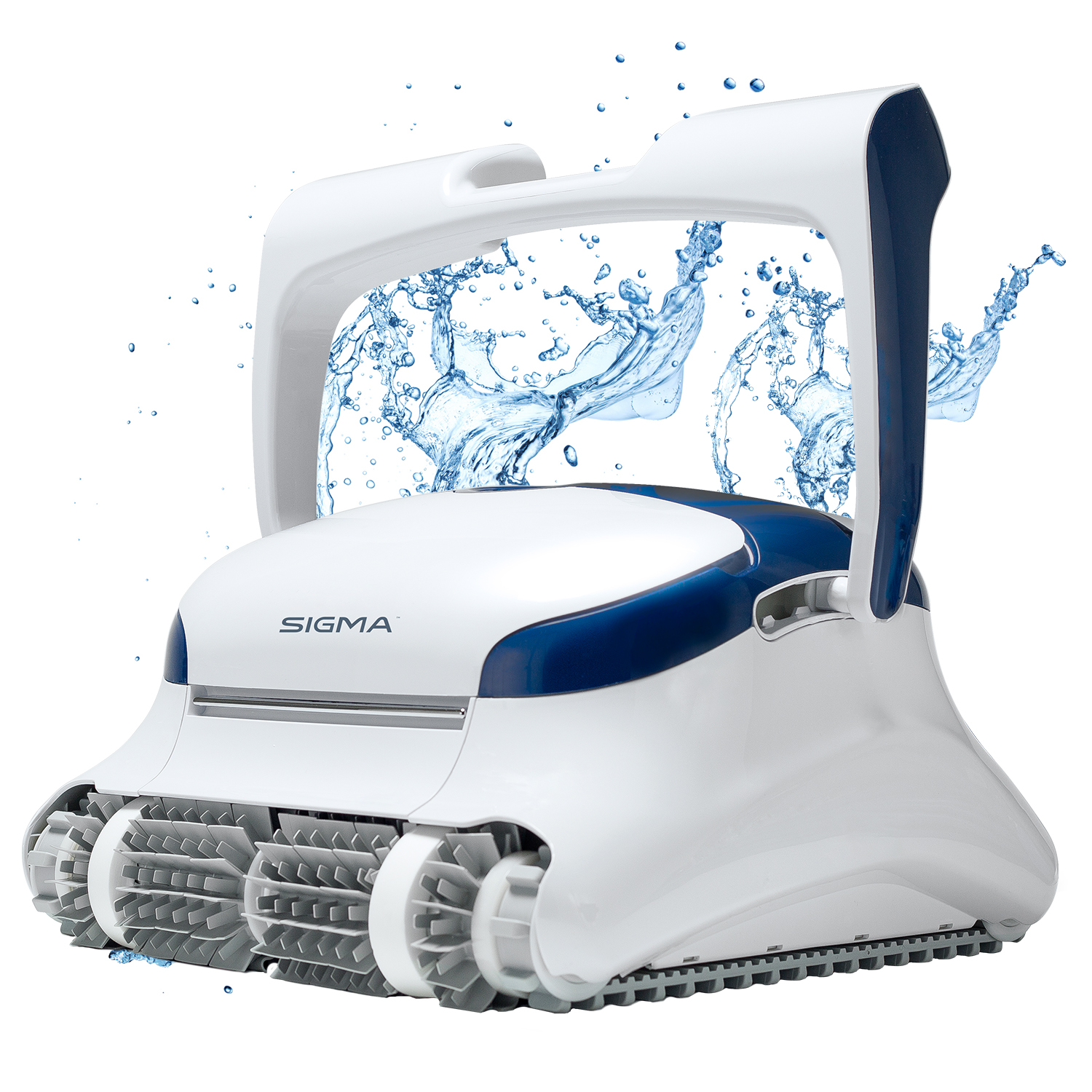
Dolphin Sigma
Concrete asks for scrubbing above everything else, and the Sigma has four scrubbing brushes where the others have two or one. Three commercial-grade ProLine motors move 4,500 GPH, so what the brushes loosen gets pulled in, and HyperGrip tracks hold the walls up to the waterline.
On an old pool with a floor that is no longer flat, SmartNav 3.0 and its onboard gyroscope give the robot a sense of its own heading as it tips over a settled section. Concrete is on its published surface list, NanoFilters are included for the fines, and the warranty is 3 years.
- Best for
- In-ground concrete pools up to 50 ft with a coarse or ageing surface that needs real scrubbing.
- Keep in mind
- Four brushes on abrasive concrete means four brushes to replace in time. Highest price, and 24.6 lb to lift.
- 2
 $1949
$2499Save $550Temporarily out of stock
Long cycles and every filter for gritty pools
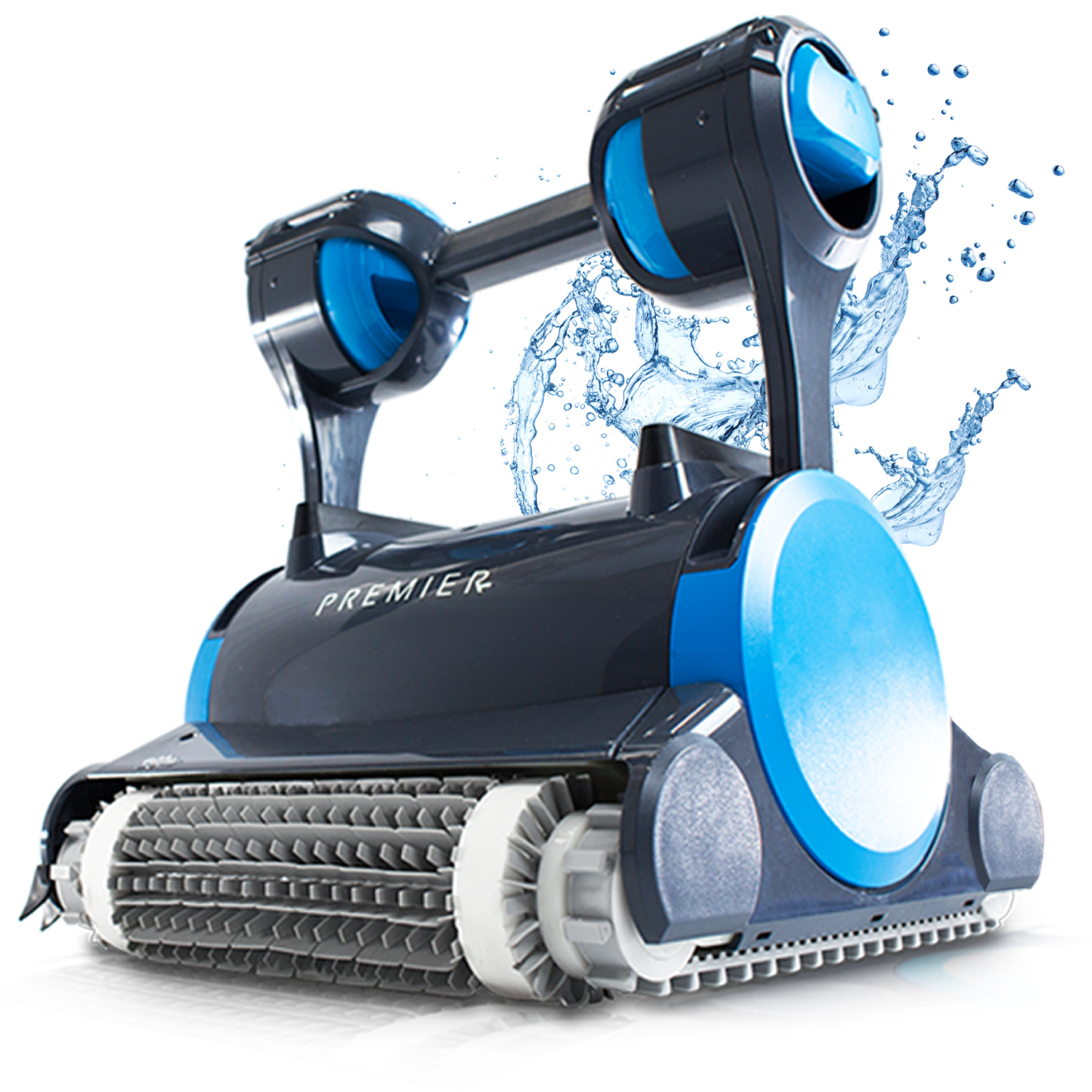
Dolphin Premier
The Premier names concrete on its surface list and gives it 3 hours a cycle, the longest on this page. Dual scrubbing brushes and dual ProLine motors at 4,500 GPH cover the floor, walls and waterline, and a longer cycle means more passes over a surface that gives up its dirt slowly.
Its advantage on concrete is the Multi-Media filter system. You get NanoFilters for sand and fines, standard fine filters for everyday use and an oversized leaf bag, and they swap from the top with no tools. If your yard gives you leaves and grit in the same week, this is the robot that copes with both.
- Best for
- Concrete pool owners who want waterline scrubbing, long cycles and no extra filters to buy.
- Keep in mind
- Two brushes, not four, and no app. Scheduling is the weekly timer on the power supply.
- 3
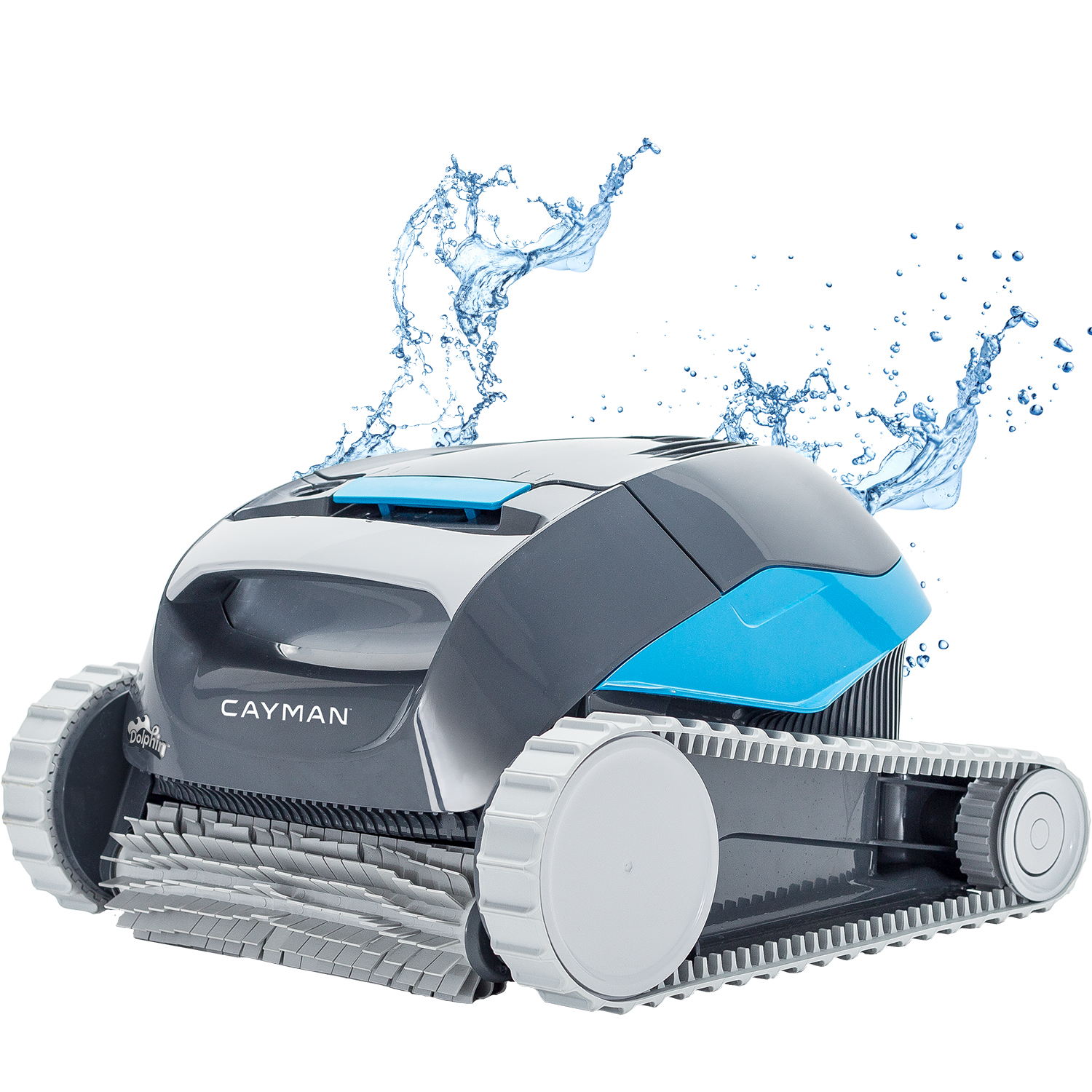 $1049
$1299Save $250Temporarily out of stock
Names concrete, for pools of 33 ft or less
Dolphin Cayman
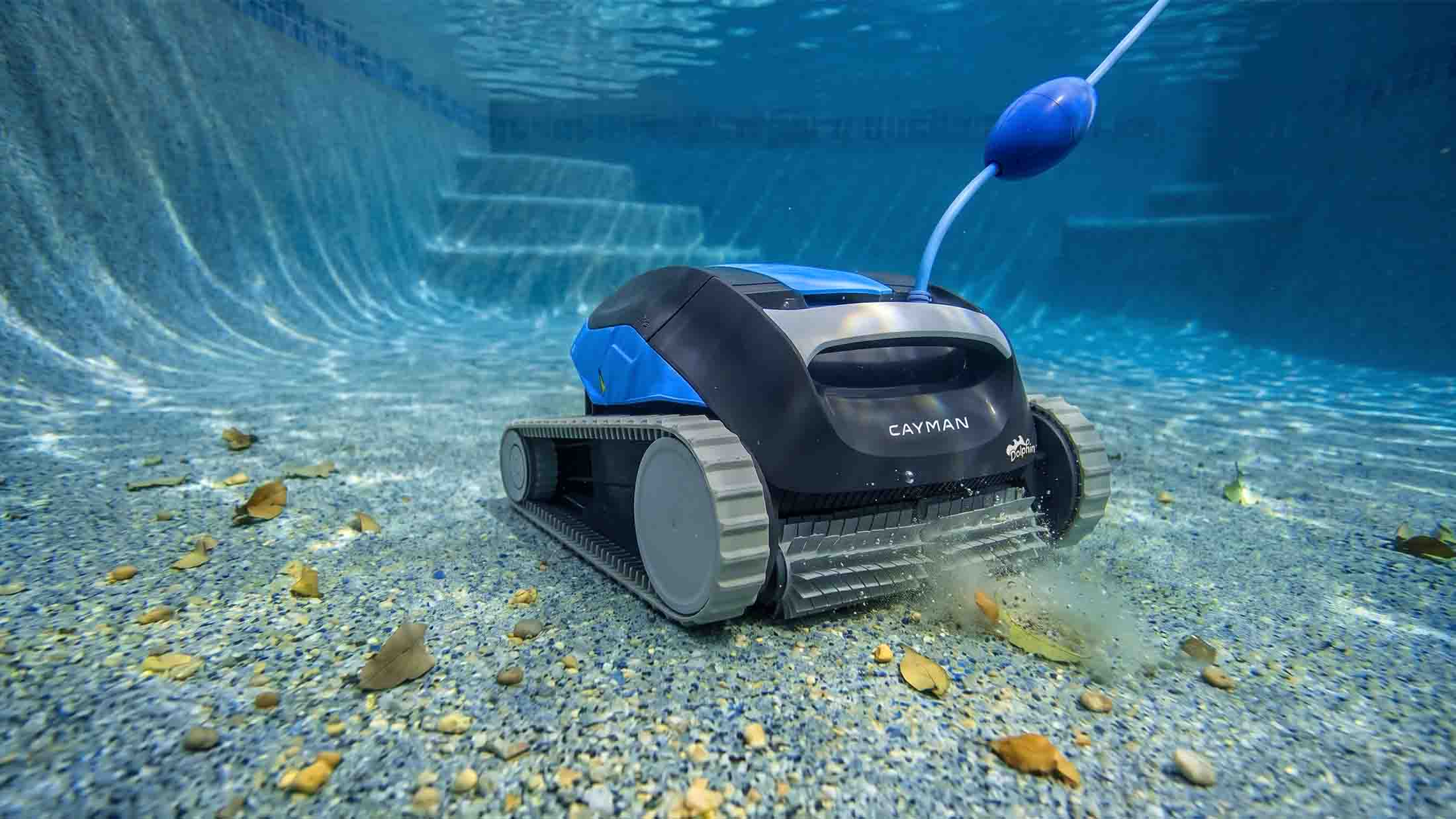
The Cayman is third, ahead of a more expensive robot, for a plain reason: concrete is named on its published surface list. For a small concrete pool, 33 ft or under, that makes it the straightforward choice. Its HyperBrush scrubs the floor and walls in 2 hours, and dual 24-volt DC motors move over 4,000 GPH.
The MaxBin basket is 50 percent larger than standard Dolphin filters and empties through a top hatch, which helps when a concrete floor gives up a lot of sand. The timer runs every day, so grit is collected before it builds. NanoFilter panels are an optional add-on, and worth having on a dusty pool.
- Best for
- Small in-ground concrete pools, including older painted or plastered ones, with a run of 33 ft or less.
- Keep in mind
- One brush, no waterline scrubbing and no swivel on the cable. Not rated for pools longer than 33 ft.
- 4
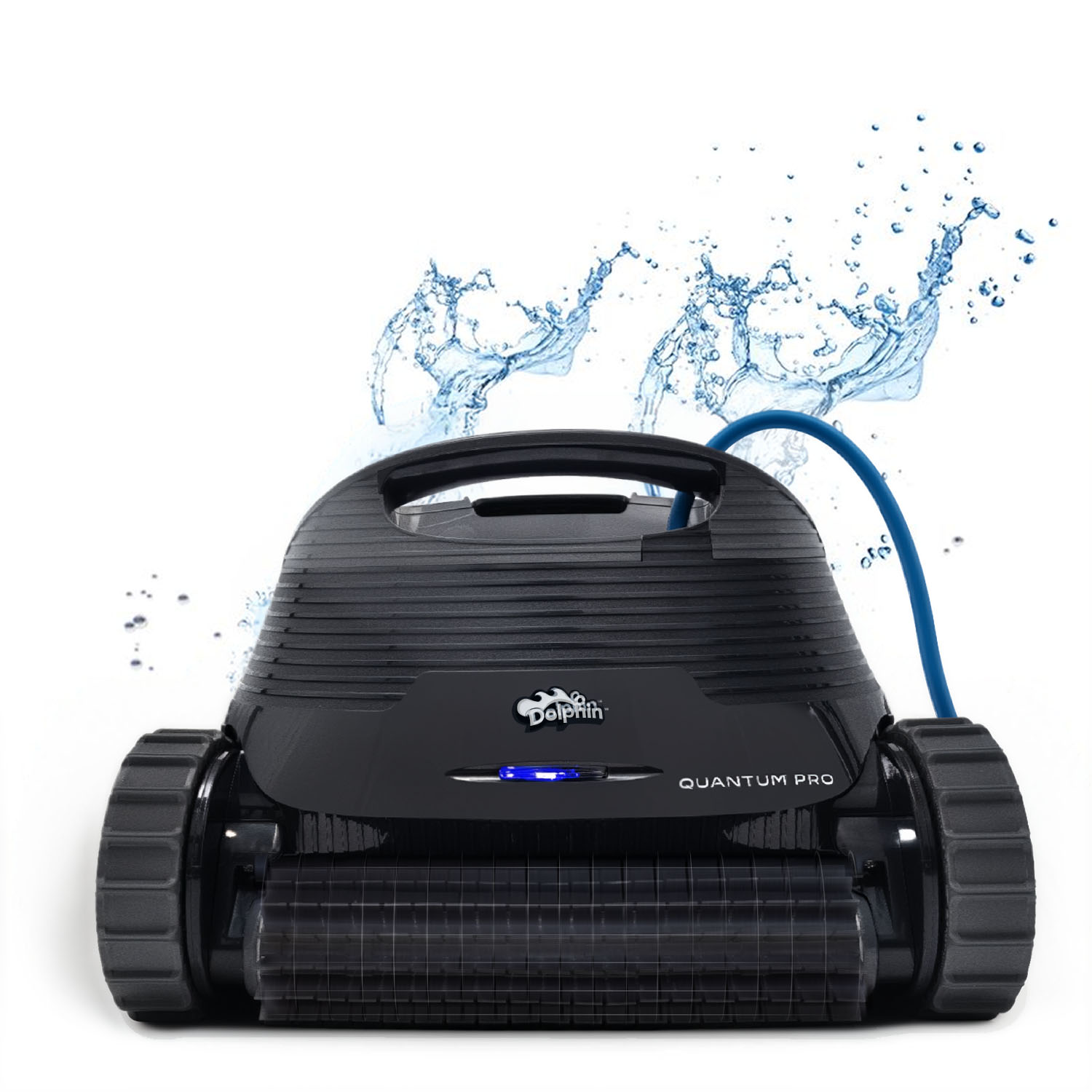 $1599
$1799Save $200Temporarily out of stock
For concrete finished in plaster or pebble
Dolphin Quantum
The Quantum's published surface list names gunite, plaster, pebble, tile, vinyl liner and fiberglass. It does not name concrete as such. Most concrete pools are finished in plaster or pebble, and for those the Quantum is a strong robot: a dual HyperBrush spinning at twice the speed of standard brushes, continuous rubber tracks, waterline scrubbing and NanoFilter panels included.
It is fourth because of that wording, not because of weakness. If your pool is bare or painted concrete, we would point you to a robot that names it. If it is plastered, the Quantum is the lowest-priced way to get a 50 ft rating, and the only pick that lists stairs and sun shelves.
- Best for
- Plaster or pebble-finished concrete pools up to 50 ft, especially with a ledge or wide steps.
- Keep in mind
- Concrete is not on its published surface list. For bare or painted concrete, choose one of the other three picks. Warranty is 2 years.


How to judge a robot for this
What counts on a concrete surface.
- 1
Aggressive scrubbing
Dirt and algae sit down in the grain of concrete, where water flow alone will not shift them. More brushes, and brushes that are driven, mean more of that grain gets worked on every pass.
- 2
Traction on a coarse, uneven floor
Rough concrete grips well, yet slopes, settled sections and patched areas tilt a robot as it crosses them. Continuous tracks spread the load and keep contact over a ridge or a patch. All four picks run on HyperGrip tracks.
- 3
Filtration for grit
Concrete pools produce sand, plaster fines and, if painted, a chalky residue. A large basket handles the bulk. Ultra-fine NanoFilters catch what clouds the water. Know which of those comes in the box.
- 4
Named on the surface list
A published surface list is the maker's own statement of where a robot belongs. Concrete is named for the Sigma, Premier and Cayman. It is not named for the Quantum or the Escape, though both list other hard finishes.
Side by side
The four concrete picks compared.
| Specification | Dolphin Sigma | Dolphin Premier | Dolphin Cayman | Dolphin Quantum |
|---|---|---|---|---|
| Price today | $2349 | $1949 | $1049 | $1599 |
| Brushes | Quad scrubbing brushes | Dual scrubbing brushes | HyperBrush | Dual HyperBrush |
| Cleans | Floor, walls and waterline | Floor, walls and waterline | Floor and walls | Floor, walls, waterline, sun shelves and stairs |
| Traction | HyperGrip tracks | HyperGrip tracks | HyperGrip tracks | HyperGrip tracks |
| Pool length | Up to 50 ft | Up to 50 ft | Up to 33 ft | Up to 50 ft |
| Filtration | NanoFilters and standard filter cartridges | Multi-Media: NanoFilters, oversized leaf bag and standard fine filters | MaxBin basket with fine panels; NanoFilter panels optional | XXL MaxBin basket with standard and NanoFilter panels |
| Robot weight | 24.6 lb | 20.3 lb | 14.6 lb | 18.3 lb |
| Warranty | 3 years | 3 years | 2 years | 2 years |
Know which concrete pool you have.
Concrete is a family of surfaces, and they do not all clean the same way.
- Plastered or pebble-finished concrete. The most common kind. The robot runs on the finish, and all four picks suit it.
- Painted concrete. Epoxy or rubber-based paint over the shell. As paint ages it chalks, and that residue ends up in the filter. Fine filters help. A robot will not stop paint from wearing.
- Bare or exposed concrete. Usually an old pool that has lost its finish. It is the roughest on brushes and the dustiest. Choose a robot that names concrete.
- Tiled concrete. Slick tile with grout lines, which is a different cleaning job from rough concrete.
Cracks, settled sections and rough patches.
Old concrete moves. Hairline cracks, a patch that stands a little proud, a floor that has settled toward the main drain: none of these stops a tracked robot. Tracks bridge a hairline crack and climb a shallow ridge. Debris tends to gather in low spots, so expect the filter to fill from those areas first.
A robot will not fix any of it. A crack that is widening, loses water or has a raised lip is a job for a pool professional, and a sharp lip can catch a brush. Have it repaired before you rely on any automatic cleaner. Rough patches wear brushes faster, so check the brushes more often if your floor has many.
Grit, chalk and choosing a filter.
Concrete pools make their own debris. Sand works out of the surface, plaster sheds fines, and painted pools give off a pale chalk that clouds the water when it is stirred. Use the standard filter for ordinary cleaning and fit NanoFilters when the water looks dusty or after brushing the walls. Fine media loads quickly, so rinse it after every cycle. The Premier and Sigma include NanoFilters, the Quantum includes NanoFilter panels, and on the Cayman they are an optional add-on. A robot clears what it can filter. It does not replace the pool's own filter or balanced water.
Before and after each run on concrete.
- Net out stones, acorns and anything hard before the robot starts. On a rough floor they are easy to miss and hard on brushes.
- Rinse the filter straight after the cycle. Concrete grit sets like silt if it dries in the media.
- Turn the robot over once a month and check the brushes and tracks for wear and for grit packed into them.
Questions, answered
Concrete pool questions.
Does the Dolphin Quantum work on concrete pools?
Its published surface list names gunite, plaster, pebble, tile, vinyl liner and fiberglass, and does not name concrete as such. In practice most concrete pools have a plaster or pebble finish, and the Quantum suits those. For bare or painted concrete we recommend the Sigma, Premier or Cayman, which name concrete.
Can I use a robot in a painted concrete pool?
Yes, with realistic expectations. The Sigma, Premier and Cayman list concrete. The brushes are made for pool surfaces, not for stripping paint, but paint that is already chalking or lifting will shed into the filter, and a robot cannot prevent that. Rinse the filter after every cycle, and fit fine filters if the water turns cloudy.
How long do robot brushes last on rough concrete?
There is no fixed figure, because it depends on how coarse the surface is and how often the robot runs. Expect a shorter life than on vinyl or fiberglass. Check the brushes monthly and replace them when the ridges are worn smooth. They are a standard replaceable part.
Is an old concrete pool worth buying a robot for?
Yes. Rough concrete is exactly where scrubbing helps most, which is why the best robotic pool cleaner for concrete pools is the one with the most brush and motor, the Sigma. What an old surface costs you is brush life, and time rinsing grit from the filter.
The verdict
Choosing a robot for concrete.
Check two things: what the surface is, and how long the pool is. For bare, painted or badly worn concrete, stay with the robots that name it. That means the Sigma for the hardest scrubbing, the Premier for long cycles and included filters, or the Cayman if the pool is 33 ft or less. For plaster or pebble over concrete, the Quantum joins the list as the lower-priced 50 ft option. Whichever you choose, brushes will wear, and that is the surface, not the robot.
Keep reading