


By pool surface
Best robotic pool cleaner for gunite pools: built for rough, porous finishes
Top pick: Dolphin Premier
Live prices · Free shipping · 30 Day Trial
The short answer
Gunite is a concrete shell under a plaster, pebble or tile finish. What follows is a ranking of four robots by scrubbing, fine filtration, reach and warranty cover.
For a typical gunite pool, large, freeform and finished in plaster or pebble, we recommend the Dolphin Premier: dual ProLine motors, waterline scrubbing, NanoFilters in the box, a 50 ft rating and a 3-year warranty. The Dolphin Sigma adds quad brushes and a gyroscope for more money. Small gunite pools of 33 ft or less can use the Dolphin Cayman.
Gunite is concrete sprayed over a steel frame, then finished with plaster, pebble or tile. So when you shop for the best robotic pool cleaner for gunite pools, you are really shopping for a robot that suits a hard, textured, porous finish. Fine dirt and algae lodge in that texture, and a robot's brushes have to work to get them out.
Gunite also means custom. These pools tend to be larger than vinyl or fiberglass ones, freeform more often than not, with a real deep end and often a ledge or attached spa. That puts three things at the top of the list: scrubbing power, a rating long enough for the pool, and a robot built to last on an abrasive surface. The Premier and Sigma lead, with the Dolphin Quantum close behind.
Our picks, in order
Four robots for gunite, ranked.
- 1
 $1949
$2499Save $550Temporarily out of stock
Best all-round match for a large gunite pool
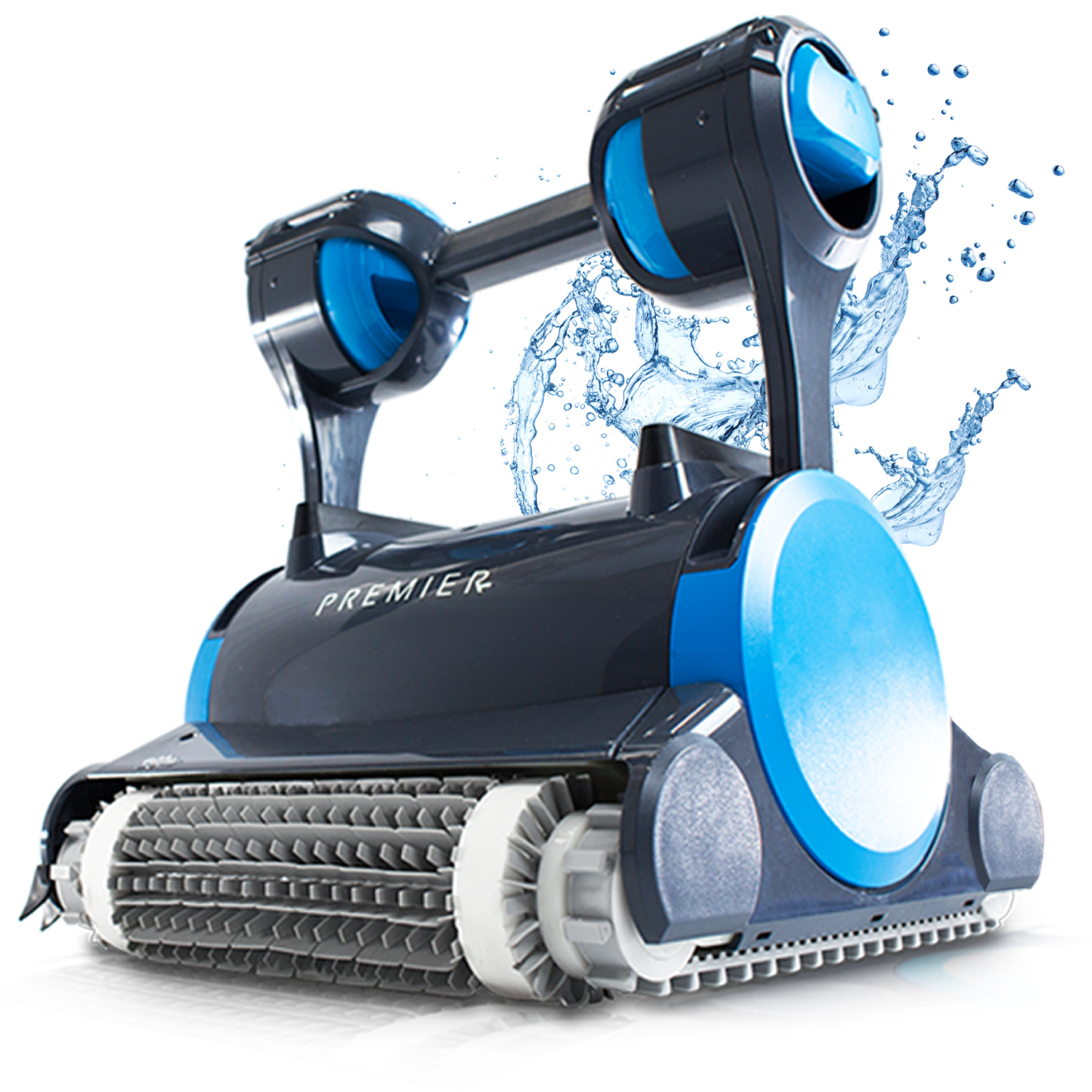
Dolphin Premier
Gunite pools reward stamina, and the Premier has the longest cycle on this page at 3 hours. Dual scrubbing brushes and dual ProLine motors at 4,500 GPH keep working the texture of plaster or pebble across the floor, up the walls and along the waterline.
The filtration settles it. NanoFilters, standard fine filters and an oversized leaf bag are all included, so one robot handles plaster dust in spring and leaves in autumn with nothing extra to buy. Its published shapes include freeform and L-shaped pools, the 55 ft cable has a 360-degree swivel, and the 3-year warranty is not prorated or limited by cycle count.
- Best for
- Owners of in-ground gunite pools up to 50 ft who want strong scrubbing and every filter type included.
- Keep in mind
- No app: you set the timer at the power supply. It does not list steps or tanning ledges among the areas it cleans.
- 2
 $2349
$2999Save $650Temporarily out of stock
Most scrubbing on a rough finish
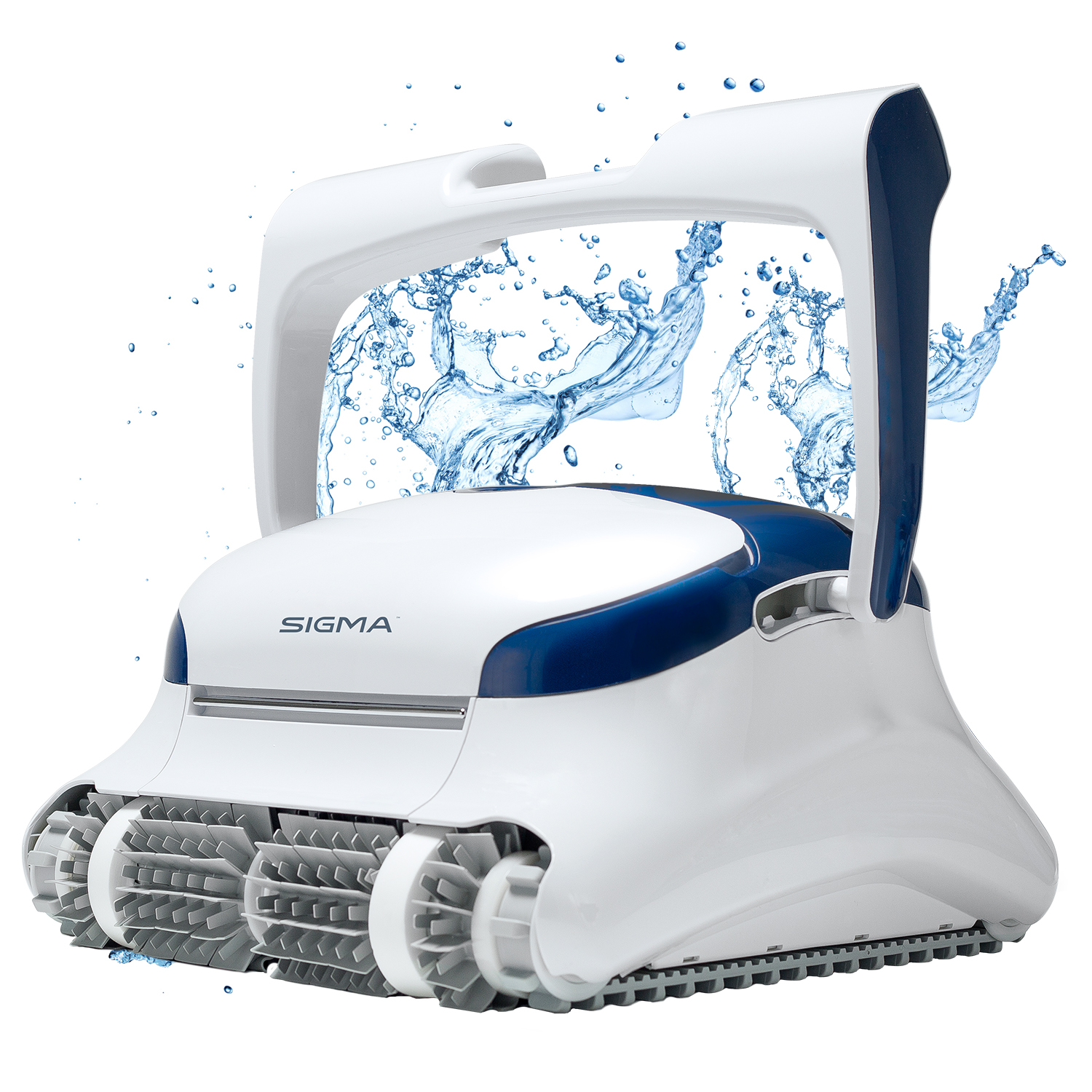
Dolphin Sigma
If your gunite pool has an older, rougher finish, the Sigma brings the most scrubbing of the four picks: quad brushes and three ProLine motors, with 4,500 GPH of flow. SmartNav 3.0 and its onboard gyroscope keep the pattern orderly in a freeform shell, where a robot is always meeting a curve.
NanoFilters and standard cartridges are included, and the app schedules by day and time and warns of a full filter. It carries the same 3-year warranty as the Premier. It is second because it costs more and its cycle is half an hour shorter, and on most gunite pools the first pick does the job.
- Best for
- Rough or ageing finishes, big freeform shells, and owners who want app scheduling.
- Keep in mind
- Highest price here and 24.6 lb to lift from a deep end. Filters are cartridges, not a basket.
- 3
 $1599
$1799Save $200Temporarily out of stock
Fast brushes and ledge coverage for less
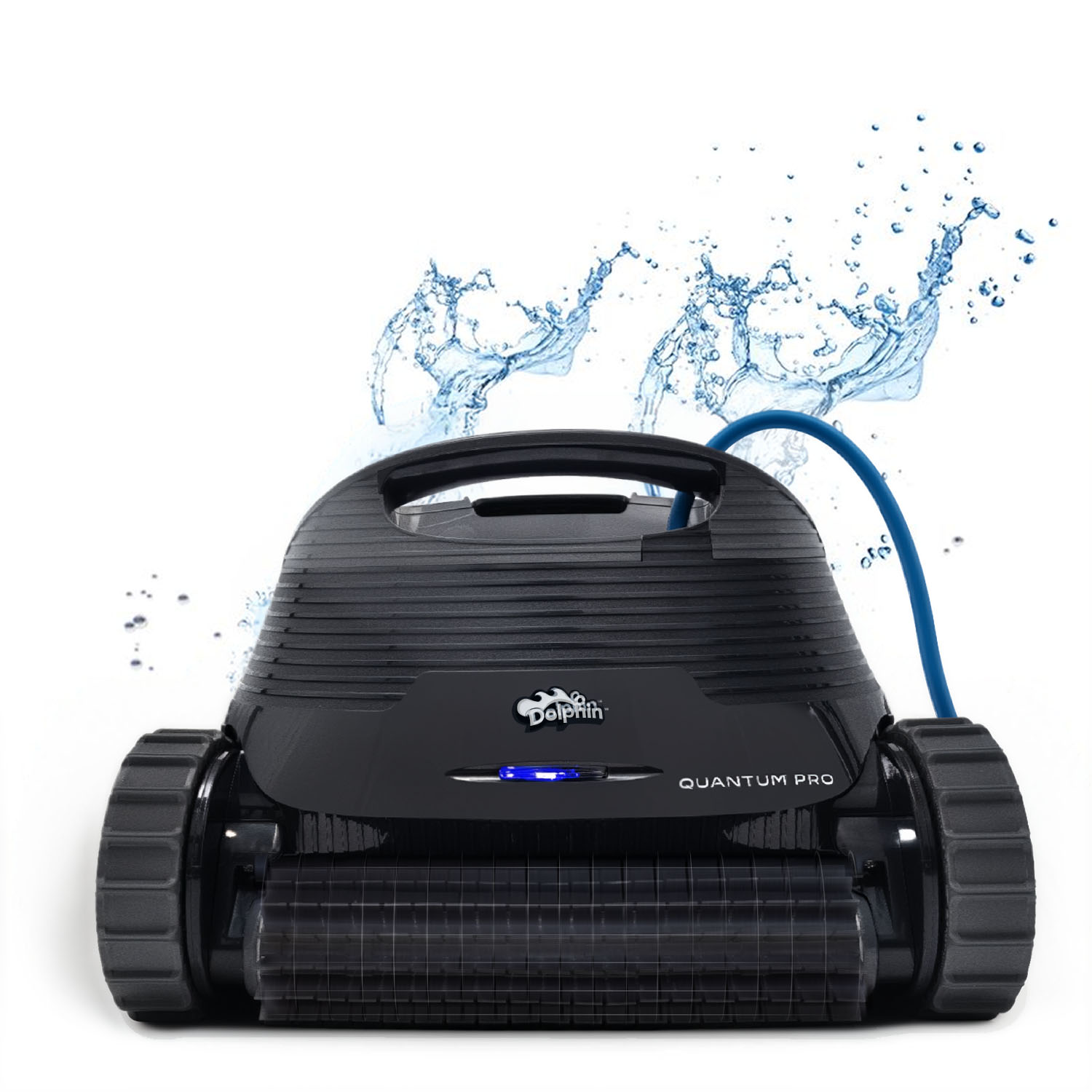
Dolphin Quantum
The Quantum is the lowest-priced robot here that is rated to 50 ft, and its surface list names gunite, plaster, pebble and tile. Its dual HyperBrush spins at twice the speed of standard brushes, which helps on texture, and it scrubs the waterline.
It also lists sun shelves, Baja ledges and stairs, features that custom gunite pools often have and the other picks do not list. A full set of NanoFilter panels comes with the XXL MaxBin basket. It sits third on motor and cover: 4,000 GPH against 4,500, a 2-hour cycle, and a 2-year warranty.
- Best for
- Gunite pools with a tanning ledge or wide steps, and buyers who want a 50 ft robot at the lowest price.
- Keep in mind
- Shorter cycle and a 2-year warranty. On a large pool with heavy debris, expect to run it more often.
- 4
 $1049
$1299Save $250Temporarily out of stock
For small gunite pools of 33 ft or less
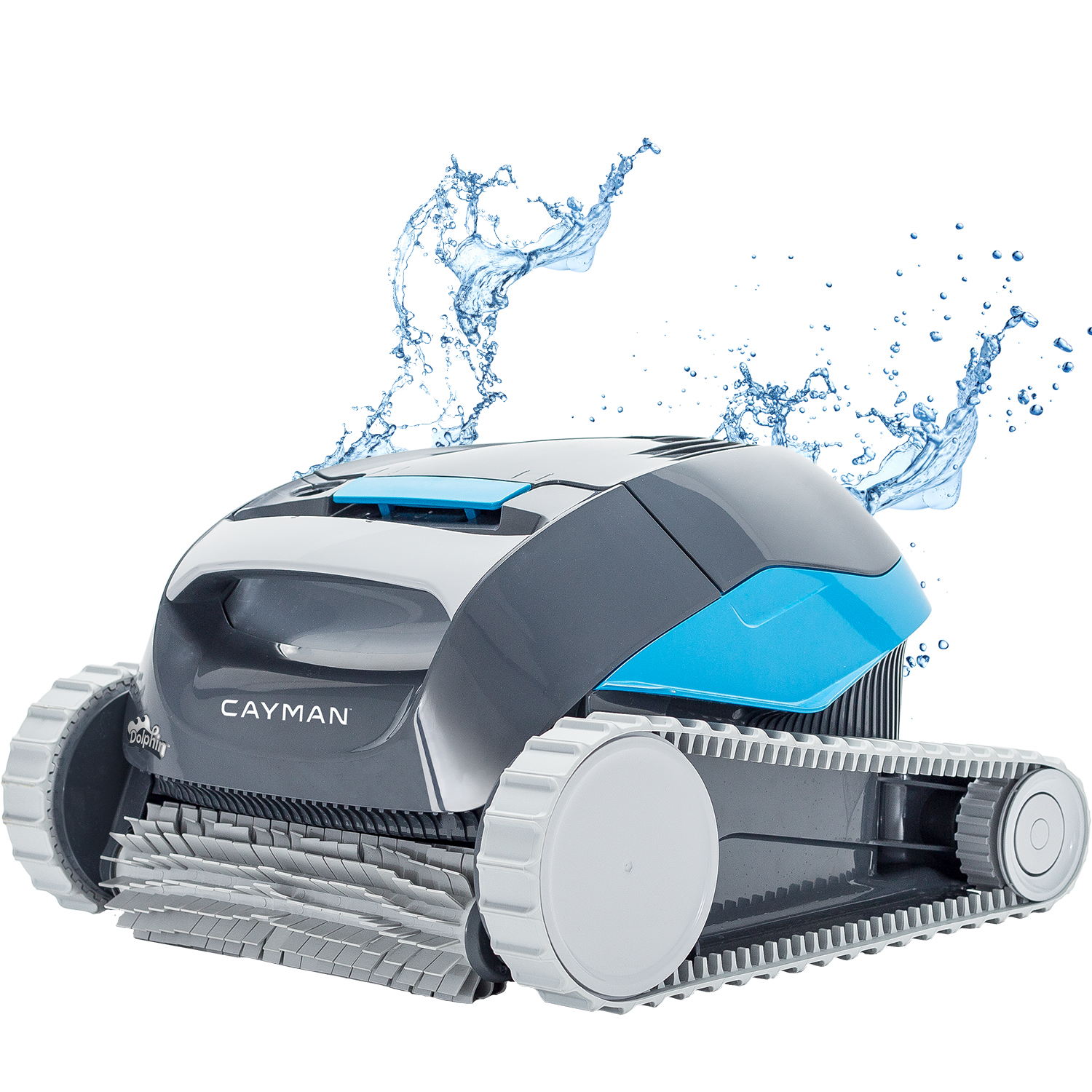
Dolphin Cayman
Not every gunite pool is big. Courtyard pools, cocktail pools and older rectangles often measure 33 ft or less, and for those the Cayman is rated and lists gunite, plaster, pebble and tile. Its HyperBrush scrubs the floor and walls in a 2-hour cycle, and dual 24-volt DC motors move over 4,000 GPH.
The every-day timer suits a porous finish, where frequent light cleaning beats an occasional heavy one. It is last here because it leaves out two things gunite owners usually want: waterline scrubbing, and NanoFilter panels in the box. The panels are an optional add-on.
- Best for
- Small in-ground gunite pools with a longest run of 33 ft or less.
- Keep in mind
- Floor and walls only, a 50 ft cable with no swivel, and fine dust needs the optional NanoFilter panels.


How to judge a robot for this
What a gunite pool asks of a robot.
- 1
Scrubbing power
Rough finishes hold on to dirt. A robot needs active brushes and strong water flow to lift what has settled into the texture, on the walls as well as the floor. Look for two or four scrubbing brushes and 4,000 GPH or more.
- 2
Waterline cleaning
Plaster and tile show a scale and scum line where the water sits. A robot that climbs and scrubs the waterline works on the freshest layer each cycle. Three of our four picks do it.
- 3
Ultra-fine filtration
Plaster sheds fine dust, and wind adds silt that standard panels let through. Ultra-fine NanoFilters catch it. Check whether they come in the box or as an optional add-on, because that changes the real cost.
- 4
Rated length and reach
Measure a freeform pool along its longest straight line of water. Many gunite pools exceed 33 ft, which rules out the smaller robots. A swivel on the cable helps on curving walls, where a robot changes direction constantly.
- 5
Durability and warranty
An abrasive surface is harder on brushes and drive parts than vinyl is. Brushes are replaceable wear items. For the rest, look at motor grade and warranty length: 3 years on the Premier and Sigma, 2 on the Quantum and Cayman.
Side by side
The four gunite picks compared.
| Specification | Dolphin Premier | Dolphin Sigma | Dolphin Quantum | Dolphin Cayman |
|---|---|---|---|---|
| Price today | $1949 | $2349 | $1599 | $1049 |
| Brushes | Dual scrubbing brushes | Quad scrubbing brushes | Dual HyperBrush | HyperBrush |
| Cleans | Floor, walls and waterline | Floor, walls and waterline | Floor, walls, waterline, sun shelves and stairs | Floor and walls |
| Traction | HyperGrip tracks | HyperGrip tracks | HyperGrip tracks | HyperGrip tracks |
| Pool length | Up to 50 ft | Up to 50 ft | Up to 50 ft | Up to 33 ft |
| Filtration | Multi-Media: NanoFilters, oversized leaf bag and standard fine filters | NanoFilters and standard filter cartridges | XXL MaxBin basket with standard and NanoFilter panels | MaxBin basket with fine panels; NanoFilter panels optional |
| Robot weight | 20.3 lb | 24.6 lb | 18.3 lb | 14.6 lb |
| Warranty | 3 years | 3 years | 2 years | 2 years |
Gunite is the shell. The finish is what the robot cleans.
People say gunite, concrete and plaster as if they were one thing. Gunite, like shotcrete, is the sprayed concrete structure. On top of it sits the finish you see and touch: white or colored plaster, a pebble blend, or tile. The robot never meets the gunite itself.
The finish decides how the pool cleans. Smooth new plaster is easy on brushes and sheds dust. Aged plaster is rough and holds algae. Pebble is bumpy and hides fine dirt between the stones. Tile is slick, with grout lines. All four picks list gunite, plaster, pebble and tile, so any of them is at home here. What differs is how hard they scrub and how fine they filter.
Freeform shapes, deep ends and cable.
Custom shapes are where a robot's cable is tested. A freeform wall sends the robot off at a new angle every few feet, and each turn puts a twist in the cable. The Premier, Sigma and Quantum have a swivel that lets those twists run out. The Cayman's cable has none, which is fine in a small pool and a nuisance in a winding one.
Deep ends matter too. Every foot of depth uses a foot of cable before the robot starts across the floor, so a pool with a diving end needs more reach than a flat pool of the same length. Place the power supply near the middle of the long side if you can.
Brush wear is normal on rough finishes.
A brush that scrubs plaster or pebble every few days is being sanded, slowly. Expect brushes to wear faster in a gunite pool than in a vinyl or fiberglass one, and faster still on old, etched plaster. This is not a fault. Brushes are replaceable parts, and changing them when they are worn smooth restores the robot's scrub and its grip on the walls. What a robot will not do is cure the surface. Algae rooted in porous plaster needs sanitizer and hand brushing, and stains or scale need their own treatment.
Running a robot in a gunite pool.
- Wait out the start-up period on new plaster before the first run. Your builder sets the timing.
- Fit the NanoFilters when the water looks dusty or after a windy spell, and switch back to standard filters for leaves. Fine filters clog quickly with large debris.
- Look at the brushes monthly in season. When the ridges are worn flat, replace them.
Questions, answered
Gunite pool questions.
Is gunite the same as concrete or plaster?
Gunite is a type of concrete, sprayed dry and wetted at the nozzle. It forms the shell. Plaster is the finish coat applied over it. If a robot lists gunite and plaster, as all four picks here do, it suits a plastered gunite pool.
How often should I run a robot in a gunite pool?
More often than in a smooth pool, because a porous finish gives dirt and algae a foothold. Every 2 or 3 days is a reasonable starting point on the Premier or Quantum timer, and daily during heavy debris. The Cayman's timer runs every day only. Adjust to what you see on the floor.
Will a robot get algae out of porous plaster?
It helps, and it is not a treatment. Scrubbing lifts loose algae and the filter traps it. Algae that has taken hold in the pores needs sanitizer, hand brushing and filtration. Use the robot afterwards, with NanoFilters fitted, to collect what the treatment leaves behind.
Do I need a 50 ft robot for a gunite pool?
Often, yes. Custom gunite pools commonly run past 33 ft once you measure the longest line across a freeform shape. That is why the best robotic pool cleaner for gunite pools is usually one of the three 50 ft robots. If your longest run is 33 ft or less, the Cayman is rated for it.
The verdict
Picking for your gunite pool.
Measure the longest run first. Over 33 ft, choose between three robots: the Premier for the best balance of scrub, filters and warranty, the Sigma if the finish is rough enough to justify four brushes, and the Quantum if a ledge or the price decides it. At 33 ft or less, the Cayman is rated and costs less, without waterline scrubbing. On any of them, treat brushes as wear parts and the robot as a cleaner, not a cure for the plaster.
Keep reading