


By pool surface
Best robotic pool cleaner for plaster pools: fine filters first, then scrubbing
Top pick: Dolphin Premier
Live prices · Free shipping · 30 Day Trial
The short answer
Plaster is smooth when new and rough when old, and it makes fine dust at every age. Filtration decides this ranking, with waterline scrubbing and brush life close behind.
For a plaster pool we recommend the Dolphin Premier: NanoFilters and standard filters both come in the box for plaster dust, it scrubs the waterline where scale shows, and its warranty is 3 years. The Dolphin Sigma is the alternative, with four brushes for older, rougher plaster. If your plaster pool is 33 ft or less, the Dolphin Cayman fits, with NanoFilter panels as an optional add-on.
Plaster changes as it ages, and so does what it needs from a robot. New plaster is smooth and still curing. Middle-aged plaster is the easy stretch, apart from the fine dust it sheds and the scale line at the waterline. Old plaster is etched and rough, and it wears brushes the way sandpaper would.
Through all of it one thing stays constant: plaster makes dust too fine for a standard filter to hold. That is why the best robotic pool cleaner for plaster pools is chosen on filtration first, then waterline scrubbing, then scrubbing power. The Premier and Sigma include ultra-fine NanoFilters, and so does the Dolphin Quantum. One warning before anything else: do not put any robot in a newly plastered pool until your builder says the start-up period is over.
Our picks, in order
Four robots for plaster pools, ranked.
- 1
 $1949
$2499Save $550Temporarily out of stock
Every filter plaster needs, in the box
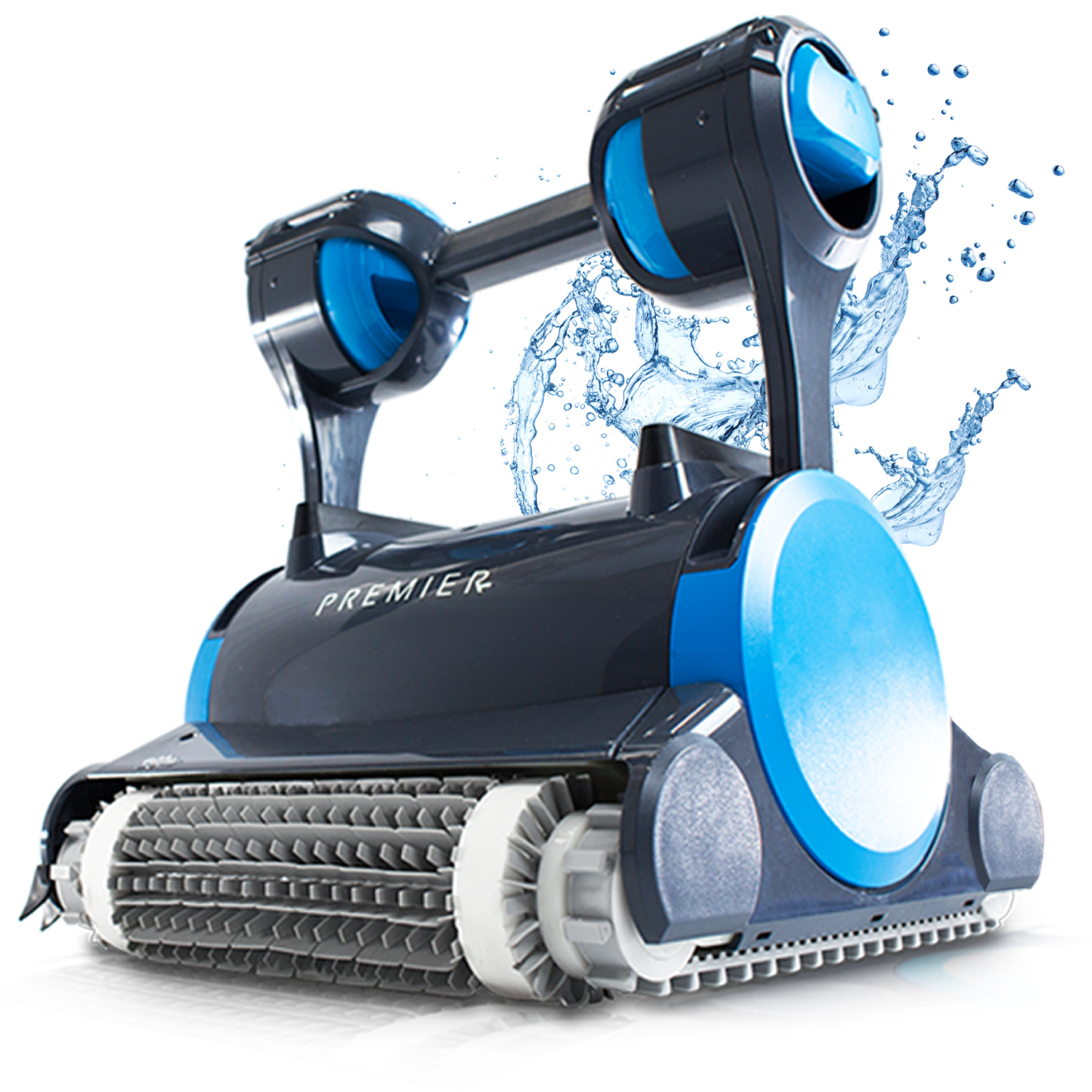
Dolphin Premier
Plaster dust is a filter problem, and the Premier arrives with the full answer: NanoFilters for the dust, standard fine filters for ordinary cleaning and an oversized leaf bag for autumn. They swap from the top in seconds with no tools.
It scrubs floor, walls and waterline with dual brushes over a 3-hour cycle, which gives stirred-up fines more time to be drawn in. A full-filter indicator on the power supply tells you when to rinse, useful with fine media that loads quickly. The warranty is 3 years.
- Best for
- In-ground plaster pools up to 50 ft, especially dusty ones and pools with a visible scale line.
- Keep in mind
- No phone alerts: the timer and full-filter indicator are on the power supply. Two brushes, where the Sigma has four.
- 2
 $2349
$2999Save $650Temporarily out of stock
Four brushes for older, etched plaster
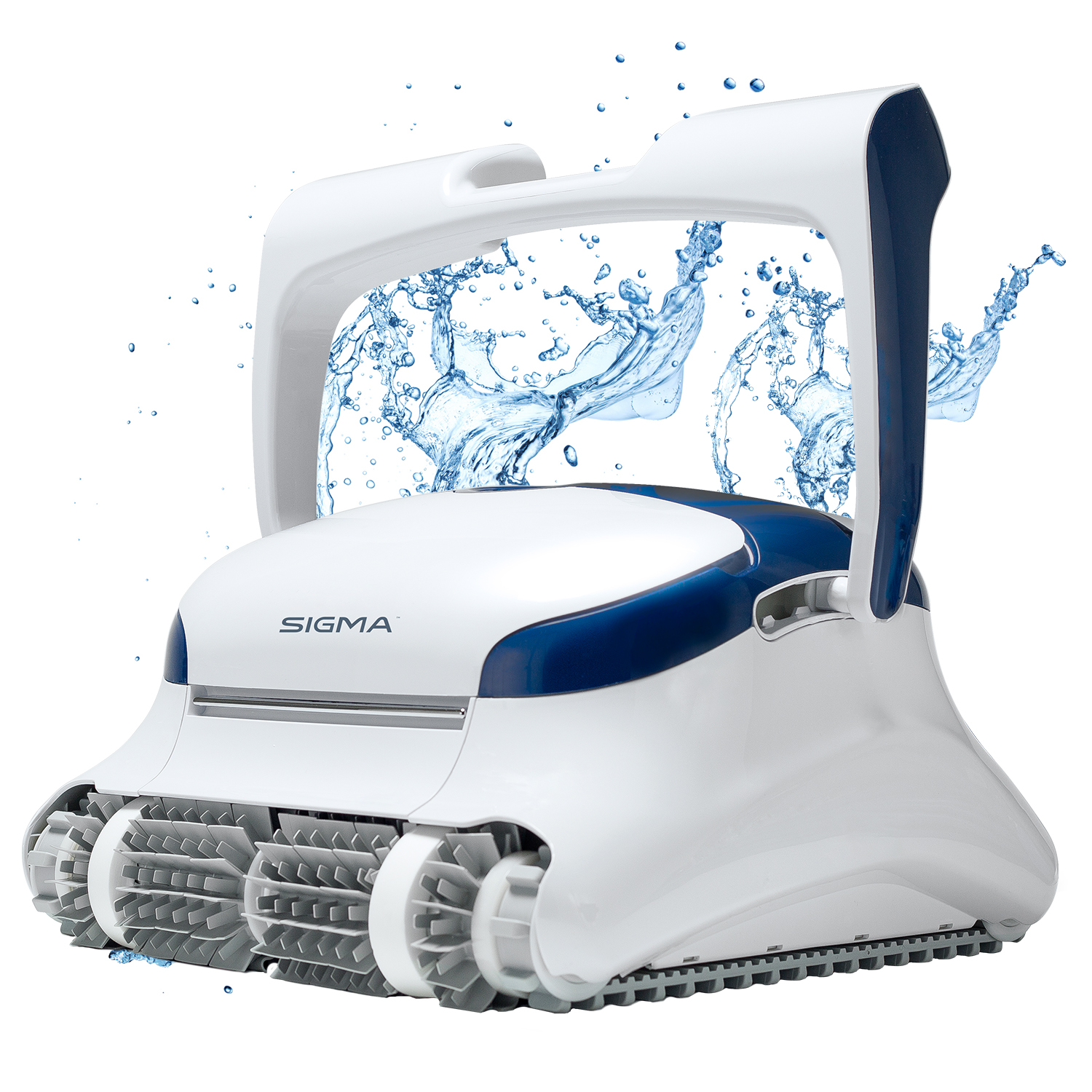
Dolphin Sigma
When plaster has gone rough with age, more brush contact is what gets dirt out of the pits, and the Sigma's quad scrubbing brushes give it the most contact of any robot on this page. Three ProLine motors move 4,500 GPH, and SmartNav 3.0 with a gyroscope keeps its passes orderly across the floor.
NanoFilters and standard filter cartridges are both included. The myDolphin Plus app sends a filter alert and schedules cleaning by day and time. It ranks second because on plaster in good condition the extra brushes add cost and wear without adding much.
- Best for
- Older, rougher plaster and owners who want a phone alert when the fine filter is full.
- Keep in mind
- Highest price, 24.6 lb, and four brushes to replace when abrasive plaster wears them.
- 3
 $1049
$1299Save $250Temporarily out of stock
The sensible buy for a small plaster pool
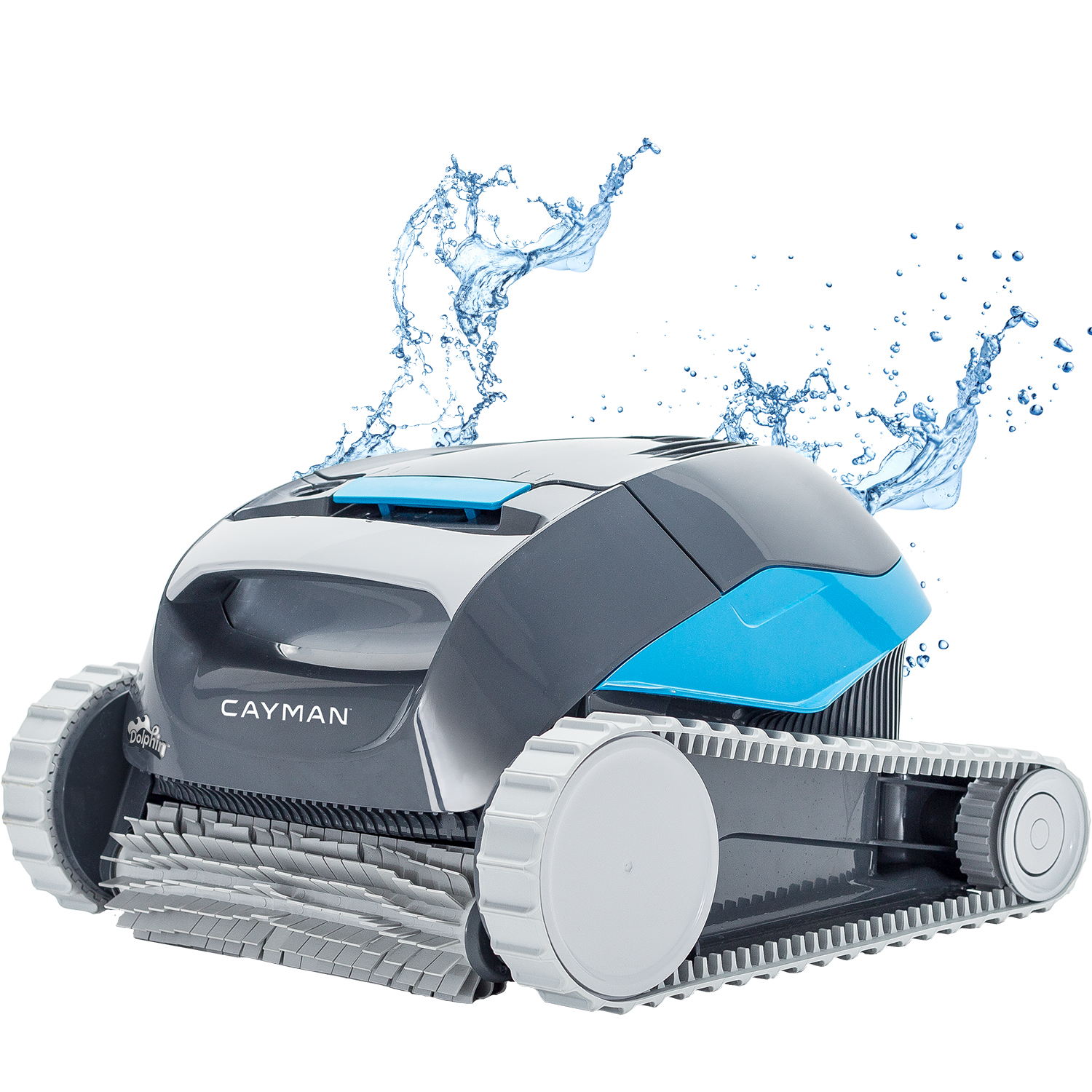
Dolphin Cayman
A plaster pool of 33 ft or less does not need a longer-rated robot, and the Cayman is rated for it and names plaster on its surface list. One HyperBrush and over 4,000 GPH of flow clean the floor and walls in 2 hours, with one brush to replace when rough plaster wears it down.
It ranks above a robot with more features because, for the small pools it is built for, it does the core job at a lower price. Be clear about two things. NanoFilter panels are an optional add-on, and on plaster we would add them. And the waterline is not part of its cycle, so the scale line is yours to brush.
- Best for
- In-ground plaster pools with a longest run of 33 ft or less and owners watching the budget.
- Keep in mind
- NanoFilter panels cost extra, there is no waterline scrubbing, and the timer runs every day only.
- 4
 $1599
$1799Save $200Temporarily out of stock
NanoFilter panels included, at a lower price
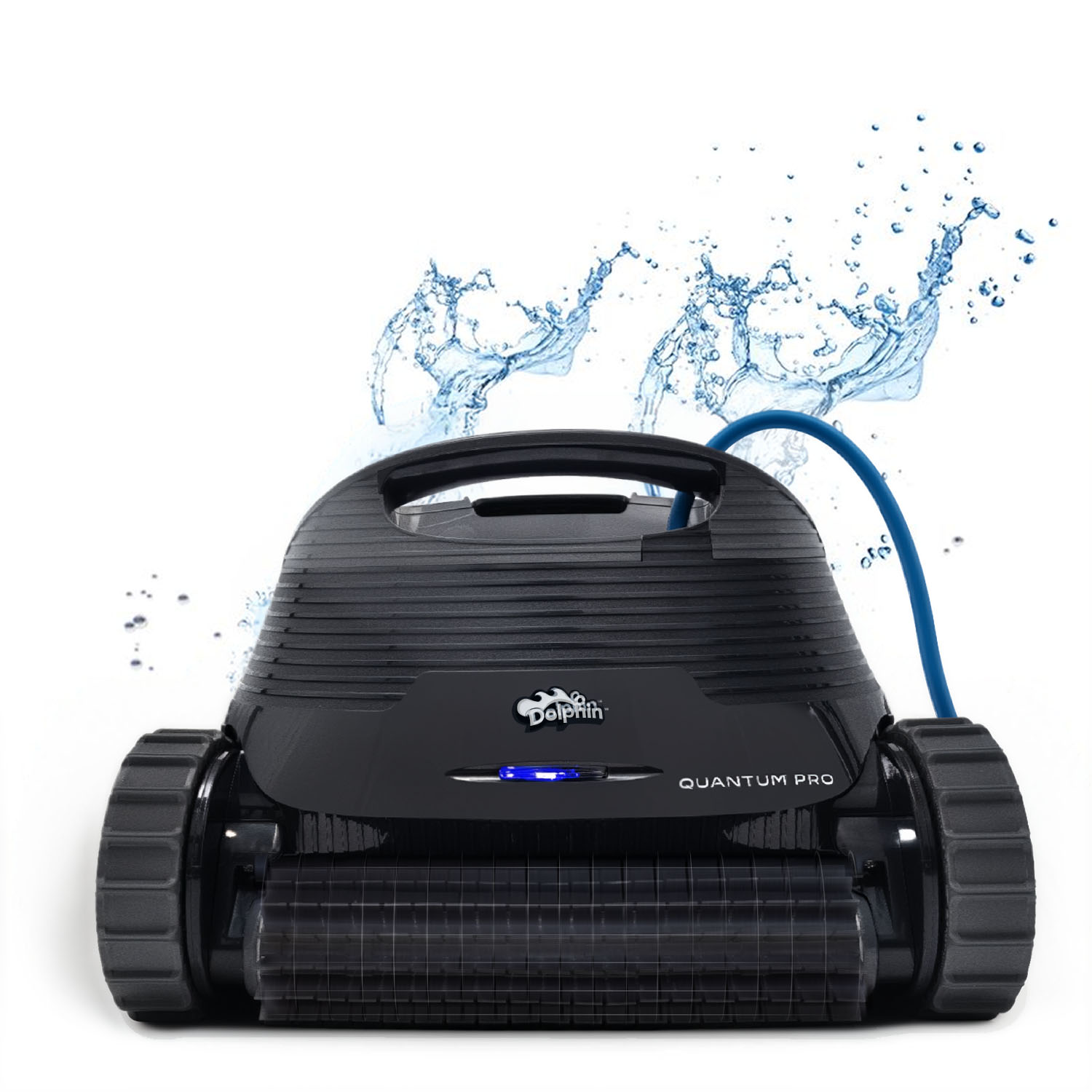
Dolphin Quantum
The Quantum deserves a look from any plaster owner whose pool is longer than 33 ft and whose budget stops short of the top two. A full set of NanoFilter panels comes with its XXL MaxBin basket, it scrubs the waterline, and its dual HyperBrush spins at twice the speed of standard brushes.
It is fourth on stamina and cover. Its motors move 4,000 GPH against 4,500, its cycle is 2 hours, and its warranty is 2 years on a surface that is hard on parts. On smooth plaster in good condition none of that should put you off.
- Best for
- Plaster pools from 34 to 50 ft where the fine filters must be included and the price kept down.
- Keep in mind
- A 2-year warranty and the shortest cycle of the 50 ft robots. In-ground pools only.


How to judge a robot for this
What plaster asks of a robot, at every age.
- 1
Ultra-fine filtration
Plaster dust and the calcium fines that come with it pass through ordinary filter panels and drift back to the floor. Ultra-fine NanoFilters hold them. On a plaster pool this is the feature to check first, including whether it costs extra.
- 2
Waterline scrubbing
Scale and scum form a line where the water meets the plaster or the tile band above it. A robot that scrubs the waterline every cycle works on the soft, fresh layer. It will not remove hardened scale.
- 3
Scrubbing for the age of the surface
Smooth plaster needs little force. Etched, pitted plaster holds dirt and algae in its pits and needs more brush contact. The older and rougher your plaster, the more a second pair of brushes is worth.
- 4
Brush wear
Aged plaster is abrasive. Brushes are replaceable wear parts, and they will need changing sooner here than in a vinyl or fiberglass pool. That is the cost of the surface, whichever robot you buy.
Side by side
Plaster picks: filters, brushes and cover.
| Specification | Dolphin Premier | Dolphin Sigma | Dolphin Cayman | Dolphin Quantum |
|---|---|---|---|---|
| Price today | $1949 | $2349 | $1049 | $1599 |
| Brushes | Dual scrubbing brushes | Quad scrubbing brushes | HyperBrush | Dual HyperBrush |
| Cleans | Floor, walls and waterline | Floor, walls and waterline | Floor and walls | Floor, walls, waterline, sun shelves and stairs |
| Traction | HyperGrip tracks | HyperGrip tracks | HyperGrip tracks | HyperGrip tracks |
| Pool length | Up to 50 ft | Up to 50 ft | Up to 33 ft | Up to 50 ft |
| Filtration | Multi-Media: NanoFilters, oversized leaf bag and standard fine filters | NanoFilters and standard filter cartridges | MaxBin basket with fine panels; NanoFilter panels optional | XXL MaxBin basket with standard and NanoFilter panels |
| Robot weight | 20.3 lb | 24.6 lb | 14.6 lb | 18.3 lb |
| Warranty | 3 years | 3 years | 2 years | 2 years |
New plaster: wait for your builder.
Fresh plaster cures under water for weeks. During that start-up period the surface is soft, it sheds heavy plaster dust, and the water chemistry is being walked into balance. The pool is brushed by hand, often twice a day, and the dust is removed through the pool's own filter.
Do not run a robot during this time. Tracks and brushes can mark a surface that has not hardened, and the volume of dust will clog a robot's fine filter quickly. Follow your builder or plasterer, who will typically say about four weeks. When they clear it, start with the NanoFilters fitted and rinse them after every cycle until the dust tails off.
Plaster dust, scale and the fine filter.
Once the pool is in normal use, plaster keeps giving off a little dust, more when the water is out of balance. You see it as a pale haze that puffs up when you brush and settles again overnight. A standard filter panel lets most of it through. Ultra-fine media holds it, at the price of filling faster.
Scale is the other plaster habit. Hard water leaves a chalky line at the waterline and sometimes rough deposits on the floor. A robot that scrubs the waterline works on the line while it is still soft. It will not dissolve hardened scale, and no robot corrects the water balance that causes it.
Old, etched plaster.
Years of chemistry leave plaster pitted and rough to the hand. Dirt and algae settle in the pits, so the pool looks dingy sooner after each clean and benefits from more frequent runs. Brushes pay for it: expect to replace them more often than the same robot would need in a smooth pool. A robot will keep an old surface cleaner between brushings. It will not restore it, and when plaster is rough enough to snag swimwear, resurfacing is the real fix.
Running a robot on plaster.
- Keep a robot out of a newly plastered pool until the builder ends the start-up period, typically about four weeks.
- Fit NanoFilters whenever you can see a haze lift off the floor, and go back to standard filters when leaves are the main problem.
- Check brushes at the start and middle of the season on older plaster, and replace them when they are worn smooth.
Questions, answered
Plaster pool questions.
How soon can I put a robot in a newly plastered pool?
After the start-up period, not during it. New plaster is soft and sheds heavy dust while it cures, and it is brushed by hand in that time. Your builder or plasterer sets the date, typically about four weeks. Ask them directly, since finishes and start-up methods differ.
Will a robotic cleaner pick up plaster dust?
With ultra-fine filters, yes, as far as any robot can. Plaster dust passes through standard panels. NanoFilters come in the box with the Premier and Sigma, NanoFilter panels with the Quantum, and for the Cayman they are an optional extra. Let the pool's own filter do its share too.
Why is there still a white line at the waterline after the robot runs?
Most likely because it is scale, not dirt. A robot's brushes lift loose dirt and the soft film at the waterline. Scale that has hardened onto plaster needs the water balance corrected and, often, treatment by a pool professional. Regular waterline scrubbing by the Premier, Sigma or Quantum helps with the fresh layer only.
Should I leave NanoFilters in all the time?
Not usually. Fine media fills fast, and a full filter cuts the water flow the robot uses to clean and climb. Use NanoFilters for dust, pollen and silt, and standard filters or the leaf bag when larger debris is falling. Rinse fine filters after every cycle, before the dust dries hard in them.
Is the Cayman a good robot for a small plaster pool?
Yes, if the longest run is 33 ft or less. It names plaster on its surface list and costs less than the 50 ft robots. For bigger pools, or if you want dust filtration and waterline scrubbing as standard, the best robotic pool cleaner for plaster pools is the Premier.
The verdict
The plaster decision.
Decide on filters first. If you want ultra-fine filtration and waterline scrubbing included, buy the Premier, or the Sigma if the plaster is old and rough enough to need four brushes. If the pool is 33 ft or less, the Cayman with the optional NanoFilter panels is the sensible buy. If it is longer and the budget is tight, the Quantum includes the fine panels for less. And if the plaster is new, wait for your builder before any of them goes in.
Keep reading