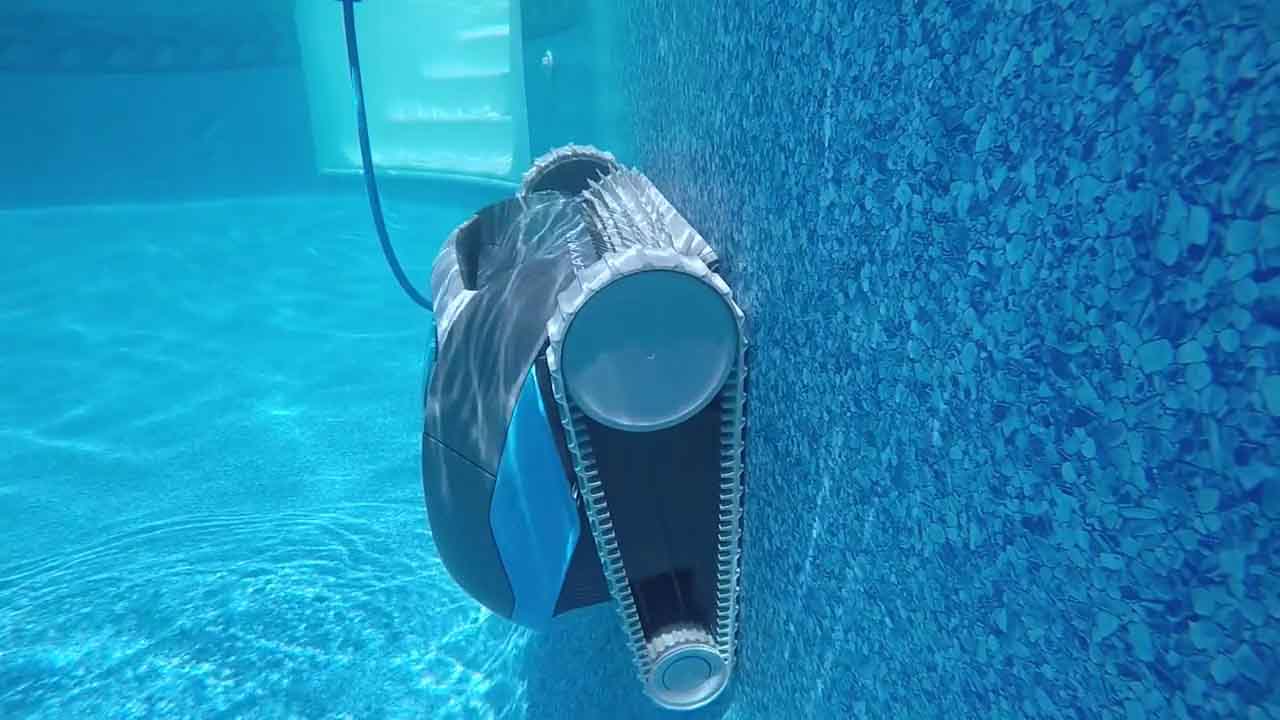



By pool surface
Best robotic pool cleaner for glass tile pools, and what to check first.
Top pick: Dolphin Premier
Live prices · Free shipping · 30 Day Trial
The short answer
Glass tile is the slickest surface a pool robot meets and the costliest to repair. This page ranks four Dolphins and says what to watch on the first cycle.
For a glass tile pool we would start with the Premier: two scrubbing brushes, HyperGrip tracks, a 3-hour cycle and waterline scrubbing, for less than the Sigma. Choose the Sigma if you want four brushes and scheduling from your phone. Neither is certified for glass, and no robot can promise the climb on a mirror-smooth wall, so watch the first cycle.
None of the robots in these guides publishes glass tile by name. Their surface lists say tile. Soft PVC brushes do not scratch glass tile in normal use, but very slick glass is where wall climbing is least certain, and a robot may slip on the upper wall. Treat these as best-match picks and watch a test cycle.
Glass tile changes the question. Before asking which robot scrubs hardest, you ask two things: will it mark the tile, and will it stay on the wall. The honest answers are no to the first, in normal use, and probably to the second. The brushes are soft, non-abrasive PVC and the tracks are rubber. What scratches glass tile is hard grit, and grit comes from the pool, not the machine.
So the best robotic pool cleaner for glass tile pools is the one with the most brush contact and traction, filters that carry grit away, and a waterline pass, because a glass band shows every dried drop. That points to the Premier, the Sigma, then the Quantum. The Cayman comes fourth, for smaller pools where floor and walls are the job. None lists glass tile specifically, and we will not pretend the upper wall is a sure thing.
Our picks, in order
Our picks for glass tile, in order.
- 1
 $1949
$2499Save $550Temporarily out of stock
First robot to try on glass tile
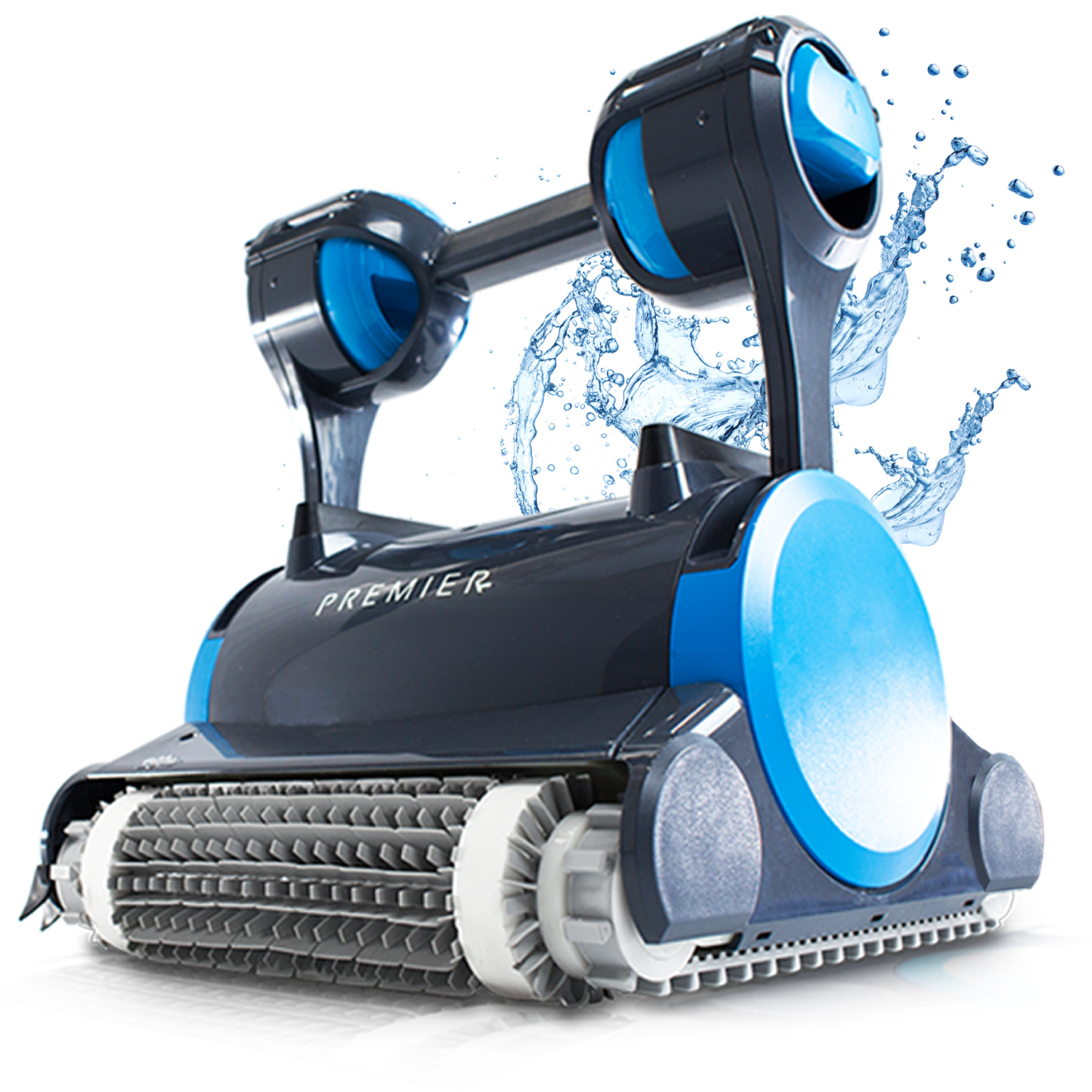
Dolphin Premier
The Premier leads because it pairs waterline scrubbing with the longest cycle here, 3 hours, and costs less than the Sigma. Where nobody can promise the climb, that matters: you pay for brushing, traction and filtration, not for extras that do nothing for grip. Two scrubbing brushes and HyperGrip tracks work the floor and walls, its dual ProLine motors push 4,500 GPH, and the NanoFilters in the Multi-Media set take fine grit out of the water. Tile is on its surface list. Glass tile, specifically, is not.
- Best for
- In-ground glass tile pools up to 50 ft whose owners want the band scrubbed and can watch the first cycle.
- Keep in mind
- If it slips near the top of a very glossy wall, that is the surface, not a fault. Call us about brush options first.
- 2
 $2349
$2999Save $650Temporarily out of stock
Most brushes touching the glass
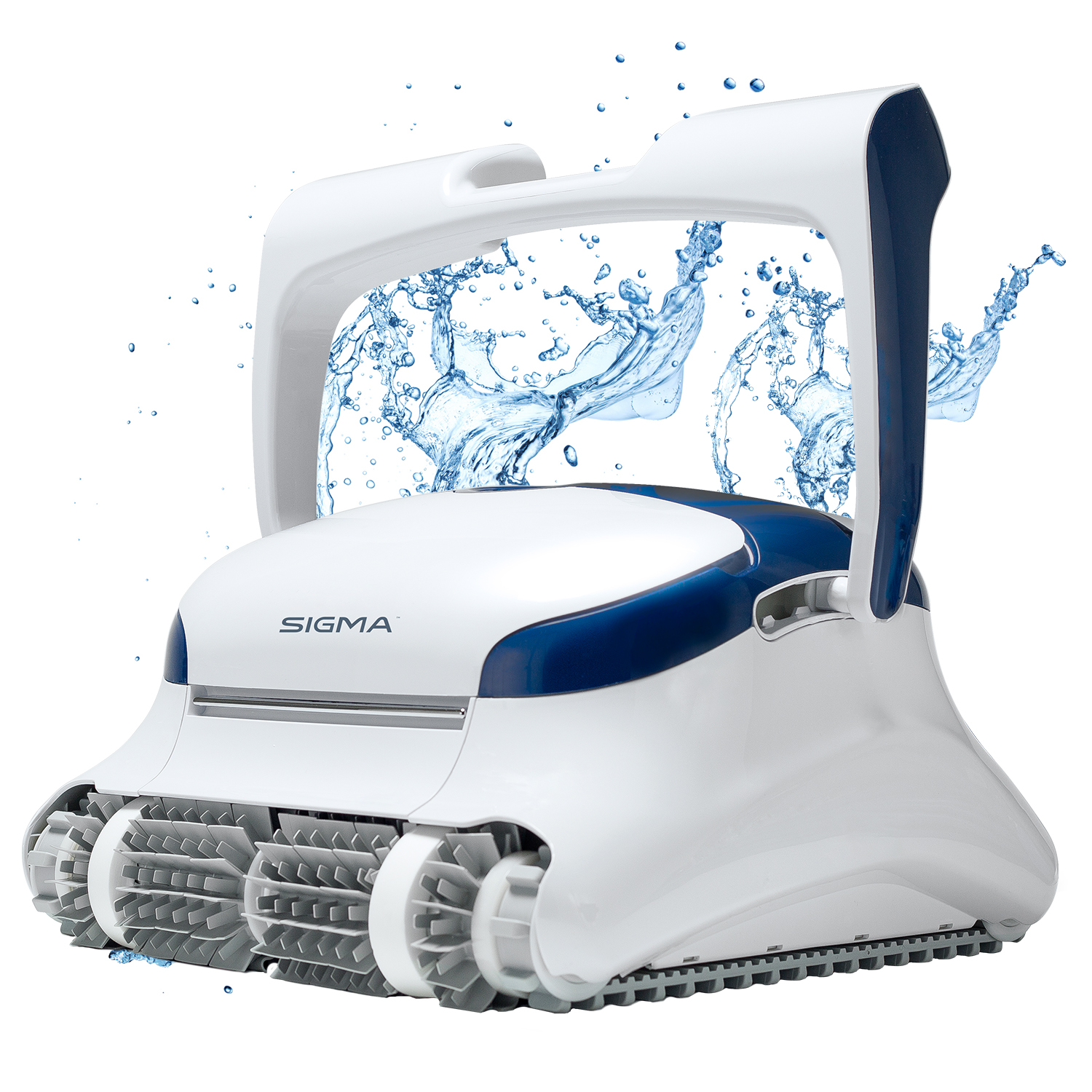
Dolphin Sigma
The Sigma puts four scrubbing brushes on the tile where the Premier puts two, and adds a third ProLine motor. More brush contact is useful on glass, which shows film more readily than any other finish. SmartNav 3.0 with its onboard gyroscope plans the route, and the myDolphin Plus app schedules by day and time and tells you when the filter needs attention. It is second because it is the highest-priced robot on this page and the heaviest at 24.6 lb, and neither price nor weight helps on a slick wall.
- Best for
- Owners who want the most scrubbing per cycle and prefer to schedule and monitor from a phone.
- Keep in mind
- Highest price here, with the same uncertainty on mirror-smooth upper walls as every other robot. Its filters are cartridges.
- 3
 $1599
$1799Save $200Temporarily out of stock
Lightest waterline robot, and it covers glass steps
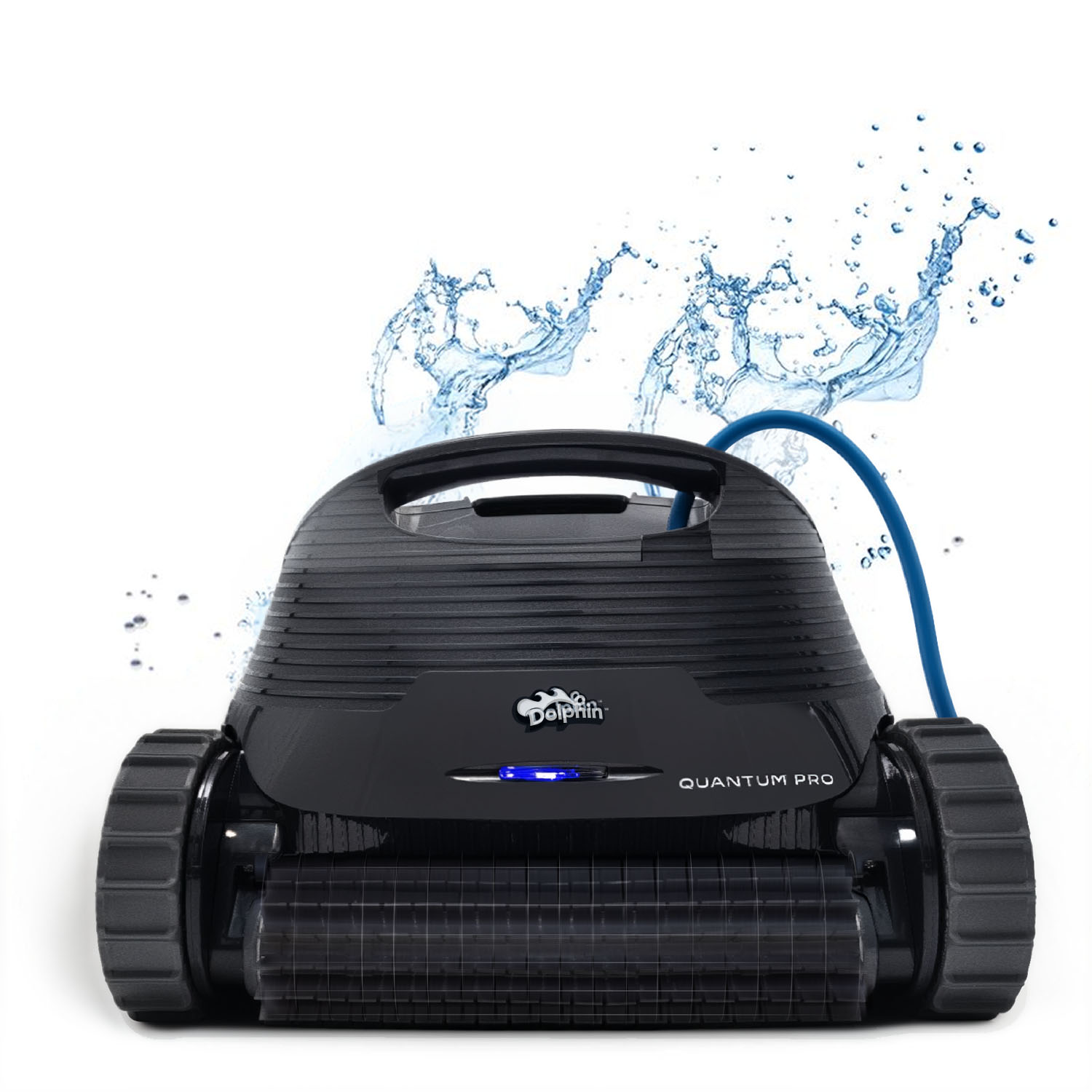
Dolphin Quantum
At 18.3 lb the Quantum is the lightest of the three waterline robots, and it rides on HyperGrip continuous rubber tracks. No other robot here lists stairs, sun shelves and Baja ledges in its coverage, and those are the places designers love to put glass tile. Two HyperBrushes spin at twice the speed of standard brushes, and NanoFilter panels are supplied for its XXL MaxBin basket to hold grit. It sits third because its flow is 4,000 GPH against 4,500 for the two robots above, and its warranty is 2 years.
- Best for
- Pools where the steps, sun shelf or Baja ledge are glass too, and buyers after the least expensive of the three waterline robots.
- Keep in mind
- Two-year warranty and slightly less flow than the Premier or Sigma. Glass tile is not named on its surface list either.
- 4
 $1049
$1299Save $250Temporarily out of stock
Floor and walls on smaller glass tile pools
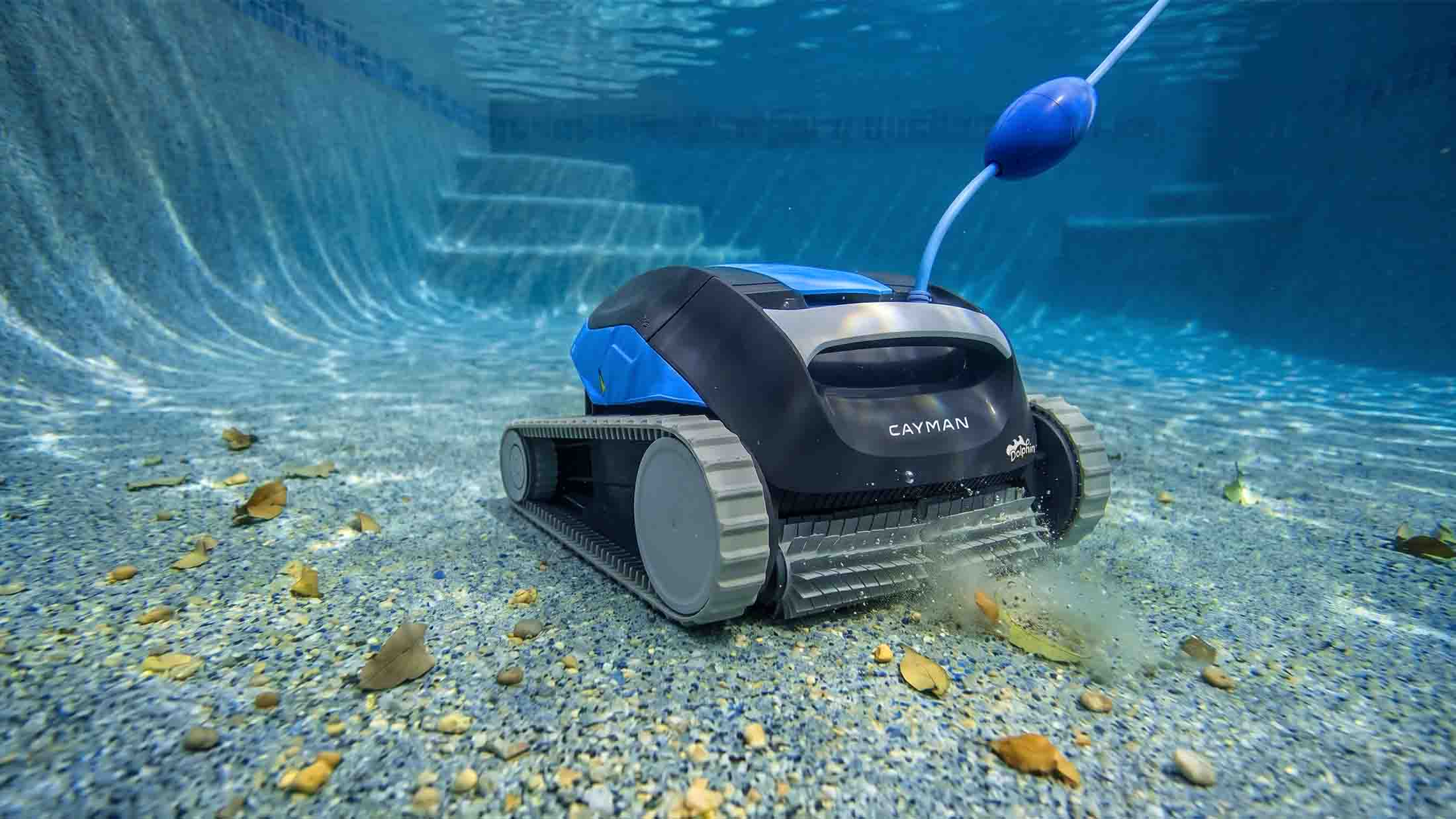
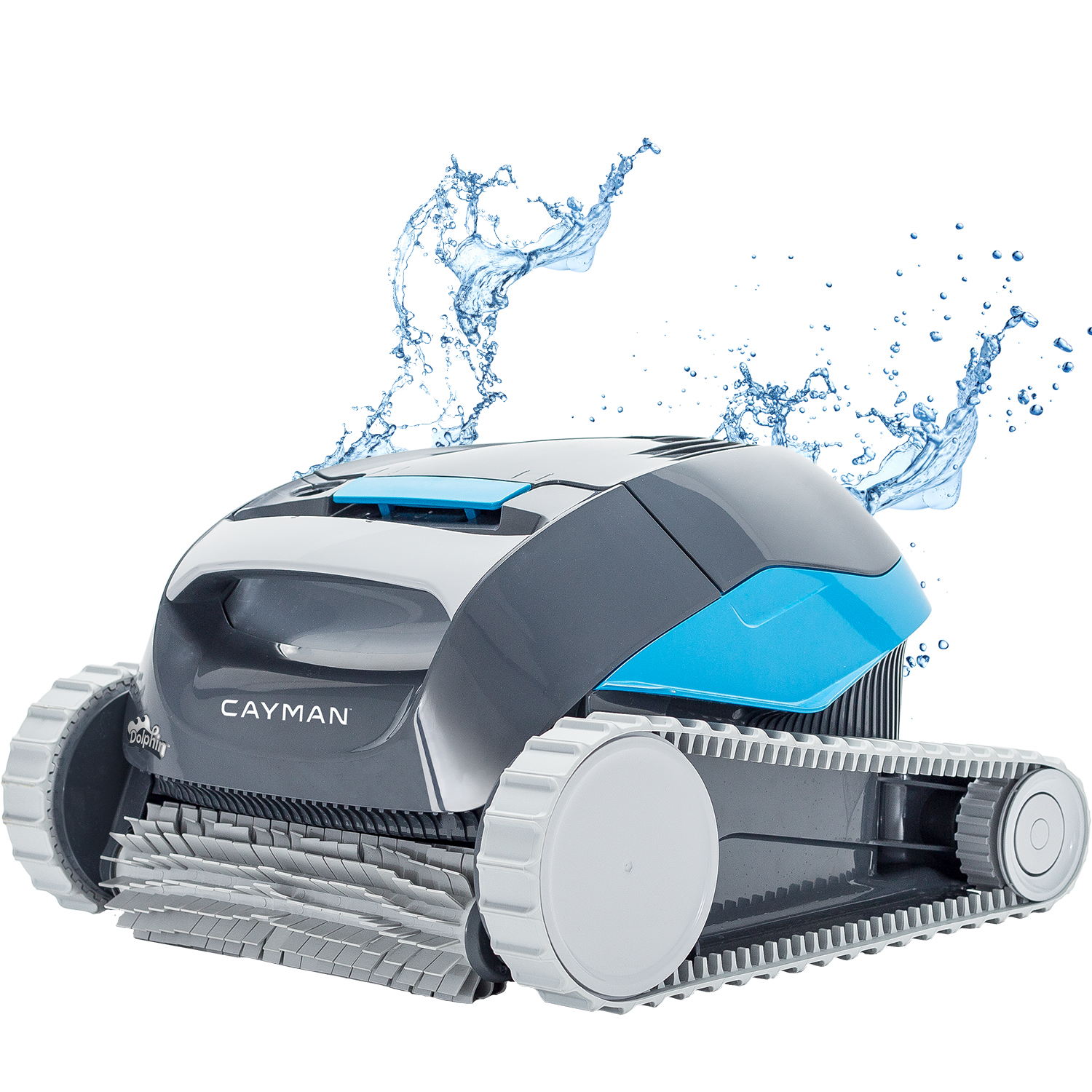
Dolphin Cayman
The Cayman suits a glass tile pool of 33 ft or less when what you need cleaned is the floor and the walls. It weighs 14.6 lb, less than any other pick here, so it is easy to lift out and rinse, and rinsing is the habit that protects glass. One HyperBrush and HyperGrip tracks do the work in 2 hours, and the timer runs it every day so grit never sits long. It is last for a plain reason: it leaves the band at the water's surface to you, and its finest filter panels cost extra.
- Best for
- Glass tile pools 33 ft and under where daily floor and wall cleaning is the goal.
- Keep in mind
- No waterline scrubbing, and NanoFilter panels are an optional add-on. For a glass band you want scrubbed, pick one of the three above.


How to judge a robot for this
Four things to judge on glass.
- 1
Clean brushes, not gentler brushes
Every robot here scrubs with soft PVC, which is non-abrasive and does not scratch glass tile in normal use. So brush softness does not separate them. What you control is cleanliness: a rinsed brush is safe on glass, and a brush packed with sand is the one real risk.
- 2
Traction on the upper wall
Glass offers a track almost nothing to grip. These robots ride on HyperGrip tracks, and the water they move helps press them to the wall. Even so, the last stretch below the surface is where a robot is most likely to slide back. Small mosaic tile with many grout lines gives more hold than large-format glass.
- 3
A pass along the surface line
Glass shows water spots and sunscreen film more than any other tile. The Premier, Sigma and Quantum scrub the waterline as part of each cycle, when traction lets them reach it. The Cayman and Escape clean floor and walls only.
- 4
Filtration that takes grit out
Sand and fine grit are what you want out of a glass pool quickly, and finer filters hold more of it per pass. You get NanoFilters in the box with the Premier or the Sigma, and NanoFilter panels with the Quantum. The Cayman takes them as an optional add-on.
Side by side
Specs that matter on glass tile.
| Specification | Dolphin Premier | Dolphin Sigma | Dolphin Quantum | Dolphin Cayman |
|---|---|---|---|---|
| Price today | $1949 | $2349 | $1599 | $1049 |
| Brushes | Dual scrubbing brushes | Quad scrubbing brushes | Dual HyperBrush | HyperBrush |
| Cleans | Floor, walls and waterline | Floor, walls and waterline | Floor, walls, waterline, sun shelves and stairs | Floor and walls |
| Traction | HyperGrip tracks | HyperGrip tracks | HyperGrip tracks | HyperGrip tracks |
| Pool length | Up to 50 ft | Up to 50 ft | Up to 50 ft | Up to 33 ft |
| Filtration | Multi-Media: NanoFilters, oversized leaf bag and standard fine filters | NanoFilters and standard filter cartridges | XXL MaxBin basket with standard and NanoFilter panels | MaxBin basket with fine panels; NanoFilter panels optional |
| Robot weight | 20.3 lb | 24.6 lb | 18.3 lb | 14.6 lb |
| Warranty | 3 years | 3 years | 2 years | 2 years |
Run a test cycle and watch the walls.
Do this before you trust any robot with a glass pool on a timer. Rinse the brushes and tracks so nothing gritty goes in with the machine. Start a cycle and stay for the first wall climbs. Watch three things: does it climb at all, how high does it get before it turns or slides, and does it come back down under control.
A robot that scrubs most of the wall and stops short of the top is doing useful work, and you finish the band by hand. A robot that cannot leave the floor is telling you the tile is too slick for its standard brushes. That is the moment to ask a Dolphin expert about brush options for slick surfaces. Every robot we sell comes with a 30-day in-pool trial with no restocking fee, which suits exactly this kind of pool.
Grit is the risk. Manage it.
Glass tile is scratched by hard particles dragged across it under pressure: sand tracked in on feet, windblown grit, bits of broken grout. A robot does not create those, and by filtering them out it reduces how much is lying on the tile. But a brush can carry grit for a whole cycle if it goes in dirty.
- Hose the brushes and tracks before each run, not only the filter.
- Empty the filter after every cycle so collected sand is not carried back in.
- Look over the brushes for embedded stones when you rinse, and pick out anything hard.
Before the first cycle on glass.
- Ask your tile installer or pool builder whether they have any objection to a tracked robot on your specific tile.
- Stay for the first full cycle and note how high the robot climbs on each wall. Walls with a film of algae or sunscreen are harder than clean ones.
- Do not put a glass pool on an unattended schedule until you have seen two or three clean cycles.
Questions, answered
Glass tile questions.
Will a robotic pool cleaner scratch glass tile?
Not in normal use. The brushes are soft, non-abrasive PVC and the tracks are rubber. Scratches on glass tile come from hard grit caught between a moving surface and the tile. Rinse the brushes and tracks before each run and empty the filter after.
Why did my robot climb plaster walls but slide on glass tile?
Plaster has texture for tracks and brushes to bite into. Glass has almost none, so the robot relies on track contact and water flow alone, and a film of algae or sunscreen makes it worse. Clean the wall, empty the filter so flow is at full strength, and try again. If it still slides, ask us about brushes for slick surfaces.
Can a robot clean a glass tile spillway or vanishing edge?
Not the spillway or the outside face of the edge. Robots clean the basin they are placed in: floor, walls and, on the Premier, Sigma and Quantum, the waterline. The Quantum's published coverage adds stairs, sun shelves and Baja ledges. Weir walls, spillways and raised spa faces are hand work.
Why is the Premier ranked above the Sigma as the best robotic pool cleaner for glass tile pools?
Because the uncertain part on glass is the climb, and the Sigma's extra cost buys two more brushes, a gyroscope and phone control, not a promise of grip. The Premier scrubs the same three surfaces with a longer cycle for less money. If the first cycle goes well and you want more brushing, the Sigma is a fair step up.
The verdict
How to decide for a glass tile pool.
Buy for traction and brush contact, then prove it in your own water. Start with the Premier. Move to the Sigma for four brushes and phone scheduling, or to the Quantum if price or glass-tiled steps decide it. Choose the Cayman only for a pool of 33 ft or less where floor and walls are enough. Then watch the first cycle and rinse the brushes every time. Nobody can promise the climb.
Keep reading