


By pool surface
Best robotic pool cleaner for aggregate pools: match it to the finish.
Top pick: Dolphin Sigma
Live prices · Free shipping · 30 Day Trial
The short answer
Aggregate covers everything from rough exposed stone to polished quartz, so the right robot depends on how much texture yours has. Here is how to judge it and what to buy.
For most aggregate pools the Dolphin Sigma is the pick: four scrubbing brushes reach into texture that hides dirt, and NanoFilters catch the dust it releases. Second choice is the Dolphin Premier, with a 3-hour cycle and the same fine filters at a lower price. If your pool is 33 ft or under, the Cayman handles aggregate floors and walls every day.
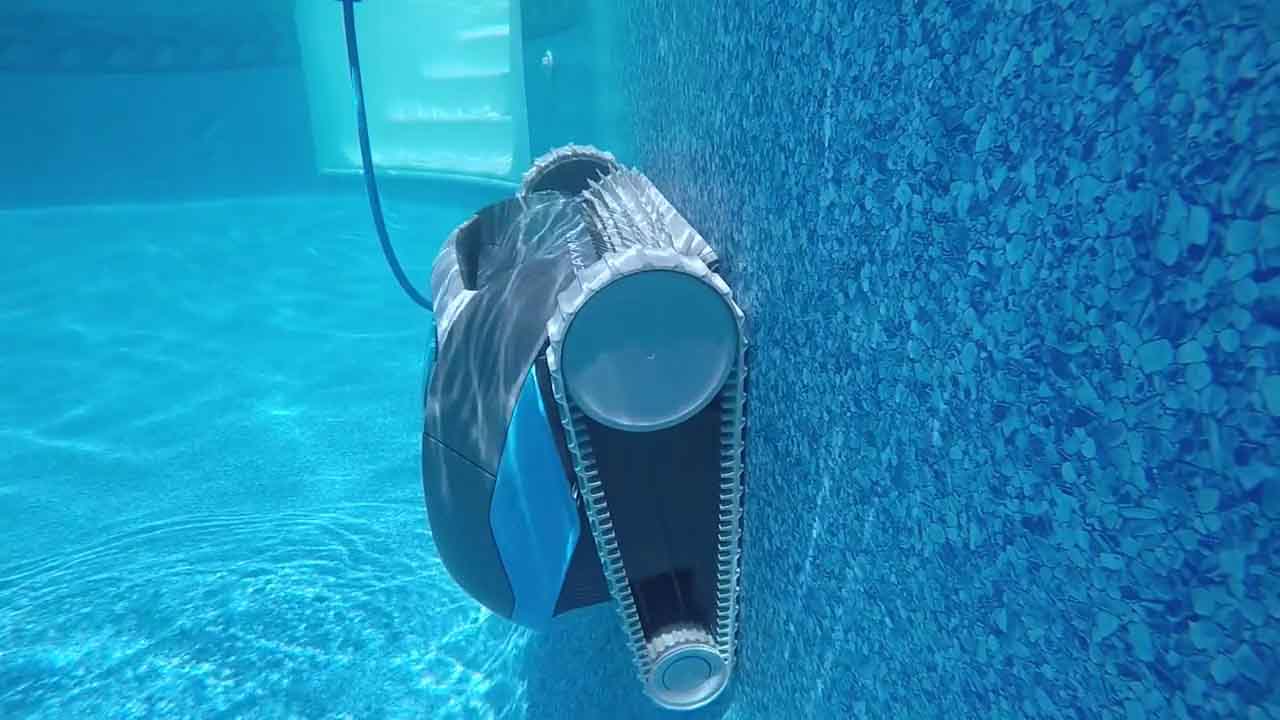
Aggregate is a family of finishes, not one surface. Run your hand over the wall and you will know which member you own. Exposed aggregate feels like fine gravel set in cement: small stones stand proud and the cement between them sits lower. Polished aggregate has been ground flat and feels close to smooth plaster. Quartz and glass-bead blends land in the middle, with a light, even grit.
The best robotic pool cleaner for aggregate pools is chosen by that roughness. Rough texture hides dirt in its low spots, needs more brushing to release it, and wears brushes faster. Smooth texture behaves like plaster and is easier on everything. The four robots ranked here publish pebble among their supported surfaces, and aggregate behaves the same way under a robot. So the ranking below follows brushing first, filtration second and pool length third.
Our picks, in order
Four robots for aggregate, ranked.
- 1
 $2349
$2999Save $650Temporarily out of stock
Most scrubbing for rough exposed aggregate
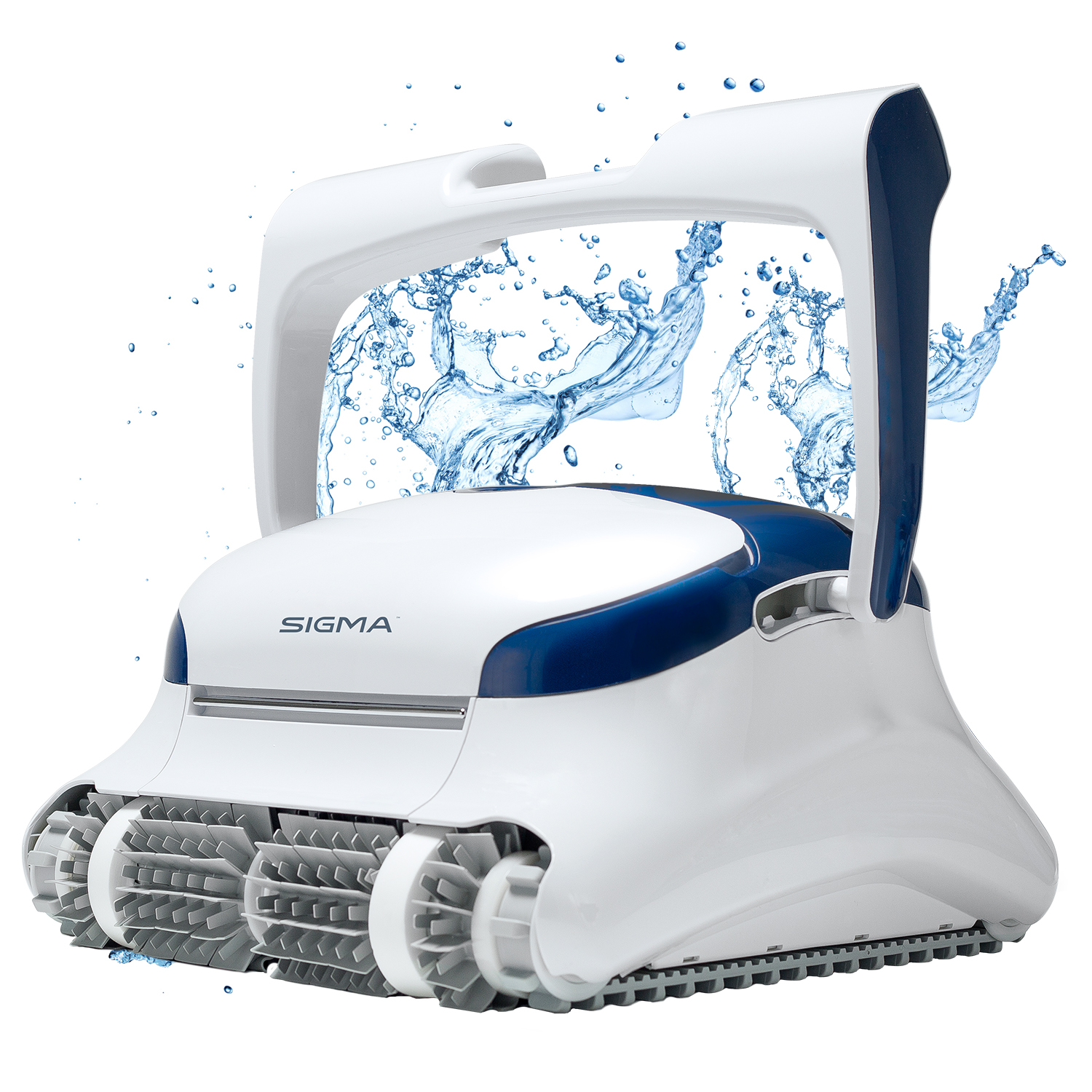
Dolphin Sigma
Exposed aggregate is the finish that most needs brushing, and the Sigma brings four scrubbing brushes to it, twice what the Premier or Quantum carry. Each pass works the stone tops and the cement between them, on the floor, the walls and the waterline. Three ProLine motors pull 4,500 GPH through NanoFilters or standard cartridges, so the dust it frees does not drift back down. SmartNav 3.0 with an onboard gyroscope lays out the route in pools up to 50 ft, and you set the weekly schedule by day and time in the app.
- Best for
- Rough exposed aggregate and pebble-style finishes in in-ground pools up to 50 ft.
- Keep in mind
- Four brushes on abrasive stone means four brushes to replace in time. It is also the highest-priced robot on this page.
- 2
 $1949
$2499Save $550Temporarily out of stock
Longest cycle and a filter for every season
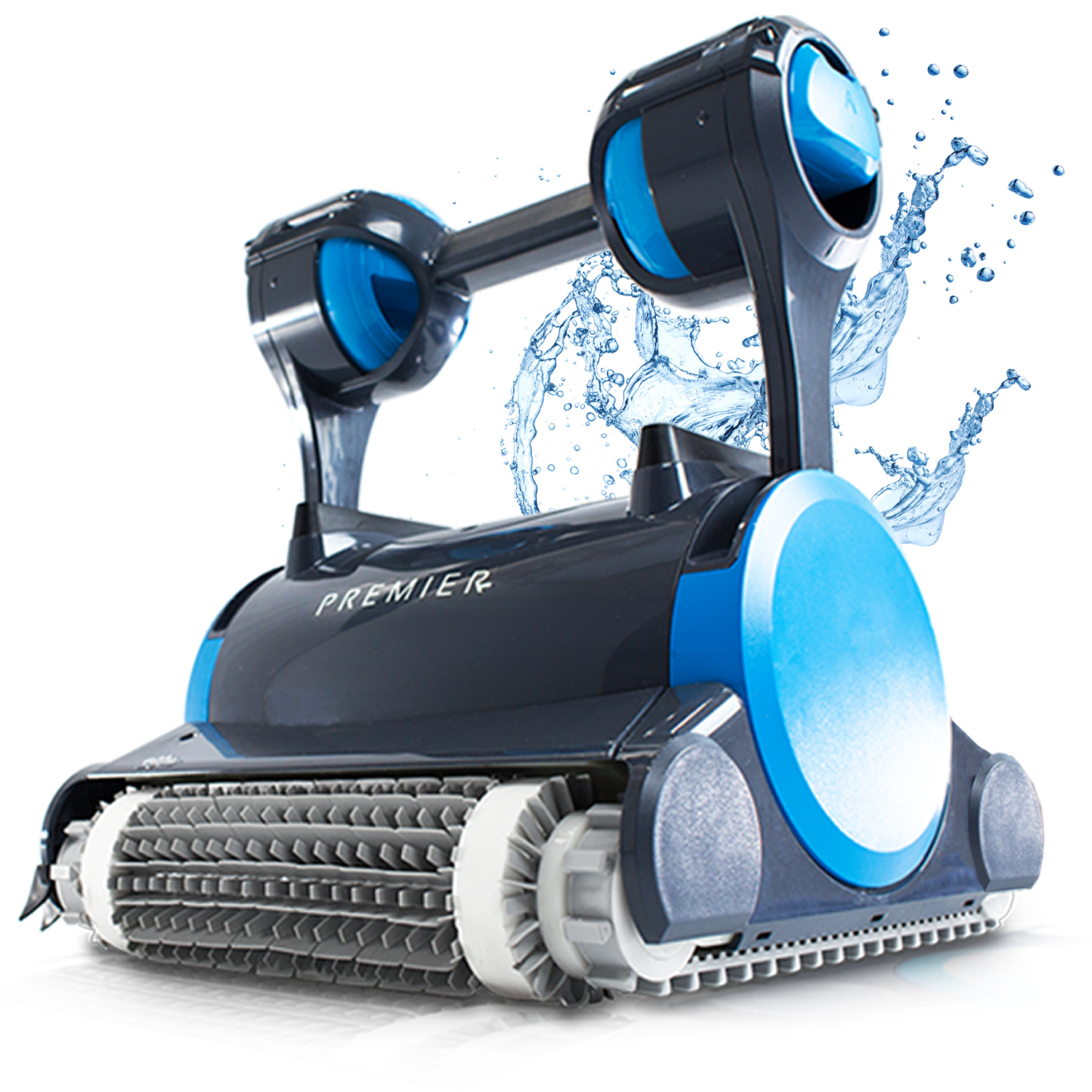
Dolphin Premier
The Premier gives aggregate the longest run on this page: 3 hours of floor, wall and waterline cleaning with two scrubbing brushes and 4,500 GPH of flow. Its real advantage on a textured pool is the Multi-Media filter set. Fit the NanoFilters when the water carries the fine dust that aggregate holds, the standard fine filters day to day, and the oversized leaf bag in fall. They swap in seconds from the top with no tools. The weekly timer repeats the cycle every day, every 2 days or every 3 days.
- Best for
- Owners of quartz, glass-bead or exposed aggregate pools who want deep cleaning and controls on the power supply.
- Keep in mind
- Two brushes, not four, so very rough finishes get less scrubbing per pass than with the Sigma. No phone control.
- 3
 $1599
$1799Save $200Temporarily out of stock
Fast brushes at the lowest 50 ft price
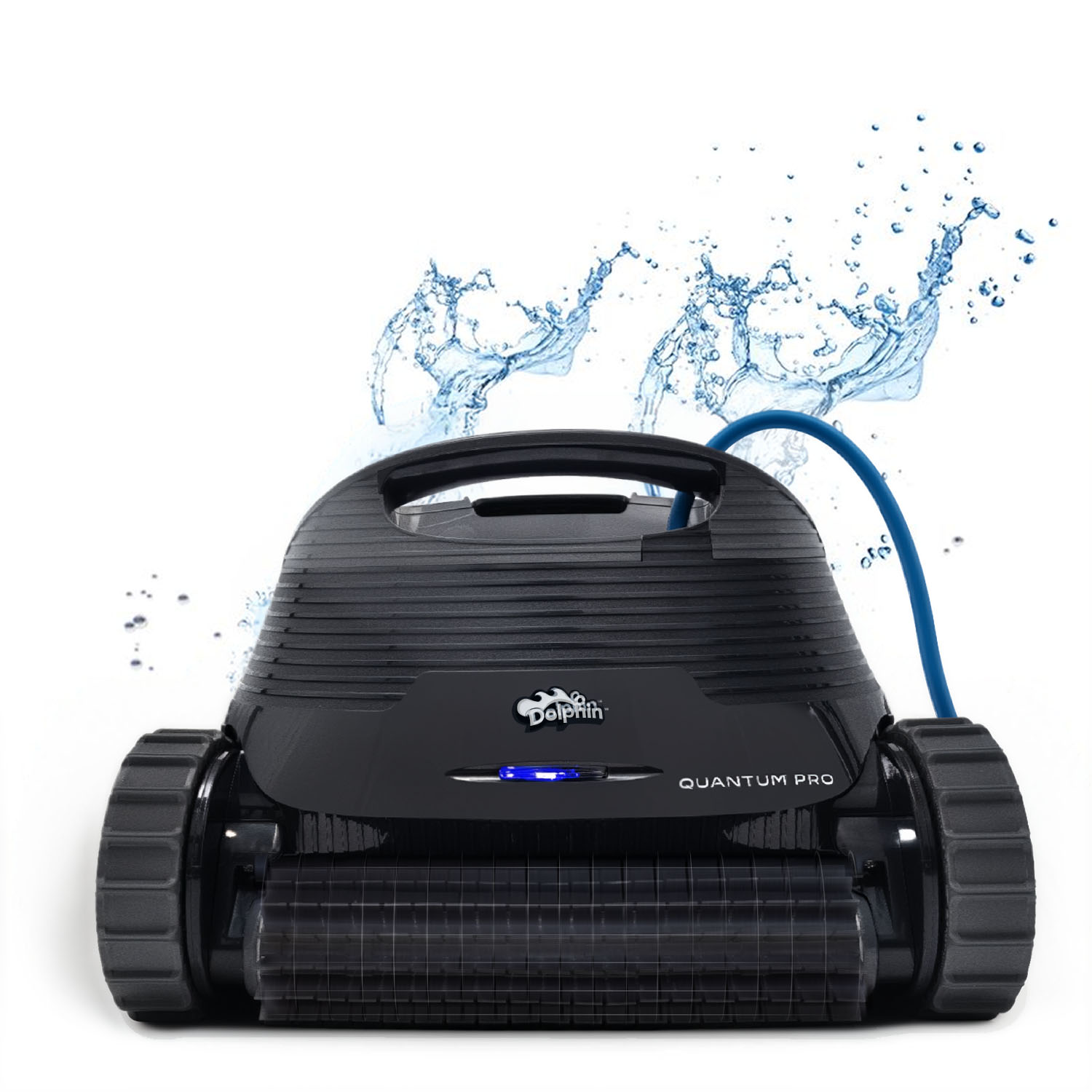
Dolphin Quantum
The Quantum's two HyperBrushes spin at twice the speed of standard brushes, a different route to the same goal: more bristle strikes on each stone per pass. It is the lowest-priced robot here rated for 50 ft pools, and it still cleans floor, walls and waterline, plus stairs, sun shelves and Baja ledges, which are often finished in the same aggregate. Both standard and NanoFilter panels are supplied for the XXL MaxBin basket, which has over 400 square inches. The cycle is 2 hours, so on very rough finishes run it more often.
- Best for
- Polished and mid-texture aggregate pools up to 50 ft, especially those with a sun shelf or steps.
- Keep in mind
- Shorter 2-hour cycle and a 2-year warranty. Fast-spinning brushes on exposed stone will also wear and need replacing.
- 4
 $1049
$1299Save $250Temporarily out of stock
Aggregate pools 33 ft and under
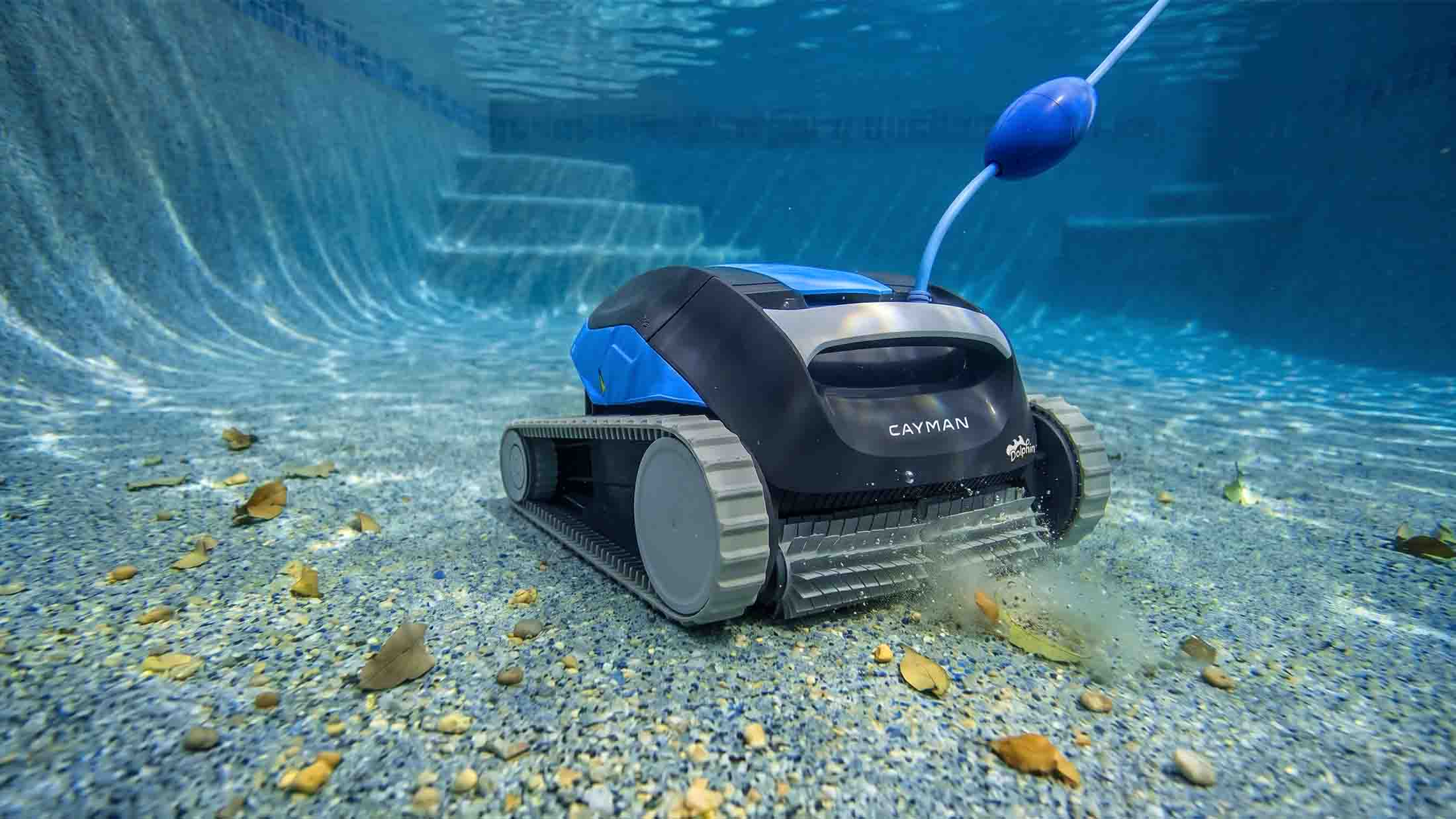
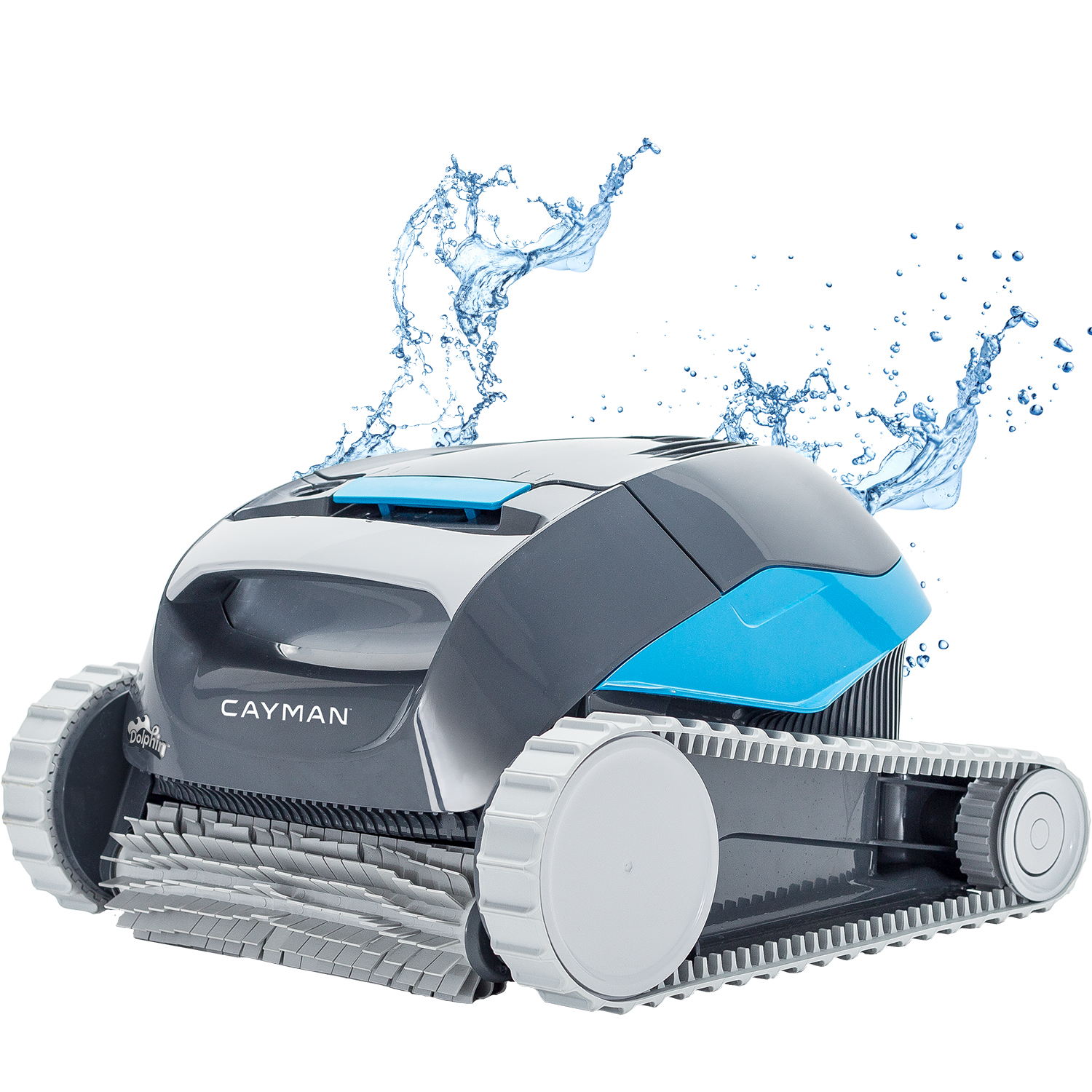
Dolphin Cayman
If your aggregate pool is 33 ft or shorter, the Cayman is the sensible buy. Pebble is on its published surface list, and aggregate behaves the same under its HyperBrush and HyperGrip tracks. Dual 24-volt DC motors move over 4,000 GPH into a MaxBin basket that empties through a top hatch. What suits textured finishes best is the timer: it runs a 2-hour cycle every day, and daily passes stop dirt from packing into the low spots between stones. With one brush to replace, wear on rough stone costs less to keep up with.
- Best for
- Smaller aggregate pools where a daily floor and wall clean keeps texture from loading up.
- Keep in mind
- It does not scrub the waterline, it has one brush, and NanoFilter panels are an optional add-on, not included.


How to judge a robot for this
Judge a robot by your finish, not the label.
- 1
Brushing that reaches the low spots
On exposed aggregate, dust and algae settle in the cement between stones, below the level a single light pass touches. Extra brushes, or brushes that spin faster, put more bristle time into those pockets. The Sigma has four scrubbing brushes, the Premier two, the Quantum two HyperBrushes at twice standard speed, the Cayman one HyperBrush.
- 2
Cycle length
Texture slows cleaning because each square foot needs more than one pass. A longer cycle gives the robot those passes. The Premier runs 3 hours, the Sigma 2.5, the Quantum and Cayman 2. On polished aggregate the shorter cycles are plenty. On rough exposed stone, longer helps.
- 3
Fine filtration
What brushing frees from aggregate is mostly fine: cement dust, silt, pollen that had been sitting in the texture. Standard filters pass some of it. NanoFilters are in the box with the Sigma and Premier, NanoFilter panels with the Quantum, and they are an optional add-on for the Cayman.
- 4
Brush wear
Rough stone is abrasive, and brushes are the part that pays. Expect to replace them sooner on exposed aggregate than you would on plaster or vinyl. That is normal wear, not a defect, and a small running cost next to the robot itself. Polished finishes are much kinder.
Side by side
Brushes, cycles and filters compared.
| Specification | Dolphin Sigma | Dolphin Premier | Dolphin Quantum | Dolphin Cayman |
|---|---|---|---|---|
| Price today | $2349 | $1949 | $1599 | $1049 |
| Brushes | Quad scrubbing brushes | Dual scrubbing brushes | Dual HyperBrush | HyperBrush |
| Cleans | Floor, walls and waterline | Floor, walls and waterline | Floor, walls, waterline, sun shelves and stairs | Floor and walls |
| Traction | HyperGrip tracks | HyperGrip tracks | HyperGrip tracks | HyperGrip tracks |
| Pool length | Up to 50 ft | Up to 50 ft | Up to 50 ft | Up to 33 ft |
| Filtration | NanoFilters and standard filter cartridges | Multi-Media: NanoFilters, oversized leaf bag and standard fine filters | XXL MaxBin basket with standard and NanoFilter panels | MaxBin basket with fine panels; NanoFilter panels optional |
| Robot weight | 24.6 lb | 20.3 lb | 18.3 lb | 14.6 lb |
| Warranty | 3 years | 3 years | 2 years | 2 years |
Find out which aggregate you have.
Builders and resurfacers use trade names, so the paperwork may not say. The hand test is quicker. Reach below the waterline and rub the wall with your palm, then look at the floor in bright sun. Stones you can feel one by one mean exposed aggregate. A flat surface with visible flecks of stone means polished. A fine, sandpaper-like grit that sparkles is usually a quartz or glass-bead blend. Older exposed finishes get rougher with age as the cement between stones wears back, so a pool that was easy on brushes when it was new may not be now.
| Finish | How it feels | What to prioritise |
|---|---|---|
| Exposed aggregate | Individual stones, rough underfoot | Most brushes, longer cycles, fine filters; expect faster brush wear |
| Quartz or glass-bead blend | Even, light grit | Two or more brushes and fine filters for dust |
| Polished aggregate | Flat and smooth, like plaster | Choose by pool length; add waterline scrubbing if you want it |
Textured pools look clean when they are not.
Mottled stone hides dirt. A layer of dust that would show as a gray film on white plaster disappears into the pattern of an aggregate floor. The first sign is often the water, which turns dull after swimmers stir the floor, or a faint green tint in shaded corners where algae has started in the texture.
That is why schedule matters more than suction on these finishes. A robot that runs every day or so lifts dust before it packs down. For the first week with a new robot, expect the filter to come out dirtier than the floor looked, so fit the finest filters you have and rinse them after each cycle. A robot does not replace brushing during an algae treatment, and it will not remove calcium deposits that have hardened on the stones.
Running a robot on aggregate.
- Check the brushes each month on exposed aggregate. When the fins look rounded or the robot starts missing dirt it used to pick up, replace them.
- Run more frequent cycles on rough finishes instead of waiting for the floor to look dirty. Dirt that sits works deeper into the texture.
- Use fine filters after windy weather or when the water looks dull, and standard filters when leaves are falling.
- Look for sharp spots. A chipped or spalled patch of exposed aggregate catches swimmers and brushes alike, and it needs a repair, not a robot.
Questions, answered
Aggregate questions.
Is aggregate the same as pebble for a pool robot?
For practical purposes, yes. Pebble finishes are a type of exposed aggregate, and all four robots ranked here list pebble among their supported surfaces. The Escape does not, which is why it is not a pick. Quartz, glass-bead and polished aggregate are smoother versions of the same idea and are easier on a robot than exposed stone.
How long do robot brushes last on exposed aggregate?
Less time than on smooth surfaces. We will not put a number on it, because it depends on how rough the finish is and how often the robot runs. Check them monthly. Brushes are a replaceable wear part on every robot here, and swapping them restores the scrubbing the robot had when new.
Will a robot damage a polished aggregate finish?
No. Soft PVC brushes and rubber tracks are both far softer than stone and cement. Polished aggregate is one of the easier surfaces for a robot. What a robot cannot help with is water balance: etching and scale come from chemistry, not from cleaning.
Does the best robotic pool cleaner for aggregate pools change if my pool is under 33 ft?
Yes. Under 33 ft the Cayman becomes the sensible buy if floor and walls are what you need cleaned. It lists pebble among its surfaces, and its timer runs every day, which suits textured finishes. If you want the tile line scrubbed too, the Quantum is the lowest-priced robot here that does it.
The verdict
The decision rule for aggregate.
Feel the wall, measure the pool, then choose. Rough exposed aggregate in a pool over 33 ft: the Sigma for four brushes, or the Premier for a 3-hour cycle and a lower price. Mid-texture or polished finishes up to 50 ft: the Quantum does the job for less. Any aggregate pool of 33 ft or under where floor and walls are enough: the Cayman, running every day. Whatever you buy, budget for brushes on rough stone and keep fine filters on hand for the dust that texture holds.
Keep reading