


By feature
The robotic pool cleaner with a gyroscope, and who actually needs one
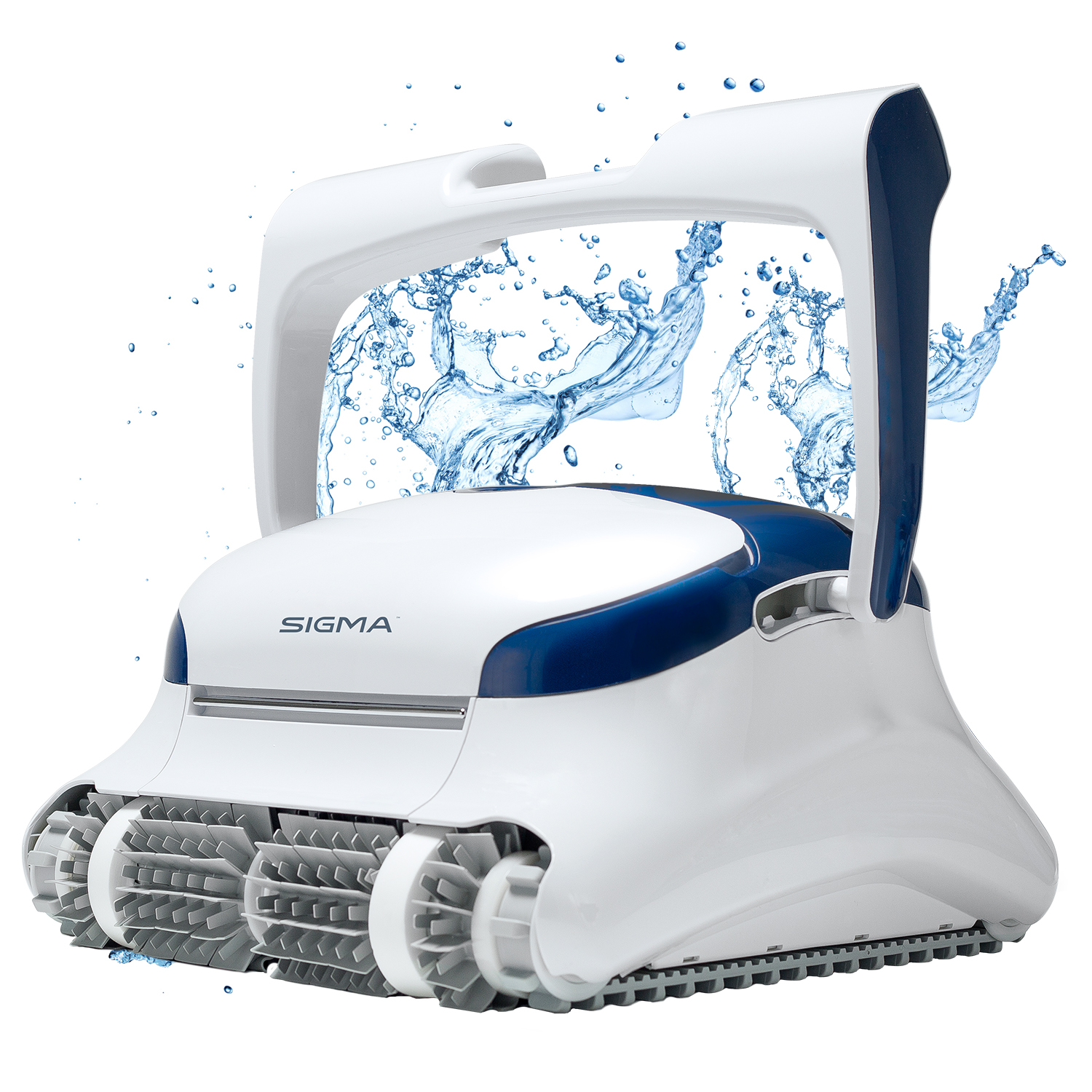
Top pick: Dolphin Sigma
Live prices · Free shipping · 30 Day Trial
The short answer
A gyroscope tells a robot which way it is pointing and tilting. One Dolphin in these guides has one, and not every pool needs it. Here is how to tell.
Among the five Dolphins in these guides, only the Dolphin Sigma has a gyroscope: SmartNav 3.0 with an onboard gyroscope, in a robot for in-ground pools up to 50 ft. It is the right buy for freeform, sloped and obstacle-heavy pools. The Cayman and the other three use SmartNav 2.0 scanning without a gyroscope. In a plain rectangular pool, you may not need one at all.
This is a short list. The best robotic pool cleaner with a gyroscope, among the robots in these guides, is one machine: the Dolphin Sigma. The Cayman this store is named for does not have one. Neither do the Premier, the Quantum or the Escape.
So instead of padding the page with robots that do not qualify, we will spend the space on the more useful question: do you need a gyroscope at all? It is a real navigation aid, not a gimmick. It tells the robot which way it is pointing and how it is tilted, so the robot can hold a straight line, know when it is on a wall or a slope, and recover its heading when an obstacle spins it. In some pools that changes the result. In others the simpler system is enough.
Our picks, in order
The one Dolphin here with a gyroscope.
- 1
 $2349
$2999Save $650Temporarily out of stock
The only gyroscope among the five Dolphins here
Dolphin Sigma
The Sigma's navigation is SmartNav 3.0 with an onboard gyroscope. The gyroscope reports which way the robot is pointing and how it is tilted, and the robot uses that to hold straight lines across open floor, recognize walls and slopes, and recover its heading after a step, ladder or drain cover turns it. No other Dolphin in this guide carries that sensor.
It sits in a robot built to make use of it. HyperGrip tracks give the grip to hold a line on a slope. Its 55 ft cable has a 360-degree anti-tangle swivel, so cable twist is less likely to pull it off course. Three commercial-grade ProLine motors move 4,500 GPH, quad scrubbing brushes do the scrubbing, and a 2.5-hour cycle takes in floor, walls and waterline. Scheduling by day and time is in the myDolphin Plus app, and the warranty is 3 years.
- Best for
- Freeform, sloped or obstacle-heavy in-ground pools up to 50 ft, and owners who want app scheduling.
- Keep in mind
- It is the highest-priced Dolphin in this guide, the heaviest at 24.6 lb, and an in-ground robot. In a plain rectangle, much of what you pay for goes unused.

How to judge a robot for this
Who actually needs a gyroscope.
- 1
Freeform and curved pools
With no straight walls to square up against, a robot in a freeform pool is always correcting its course. A gyroscope gives it a fixed sense of direction to correct against, which helps keep its passes even instead of fanning out and leaving wedges uncleaned.
- 2
Sloped floors and deep ends
On a steep run down to a deep end, a robot tends to drift downhill. Tilt sensing lets it recognize the slope and hold its line across it. The steeper and longer the slope, the more this helps.
- 3
Obstacle-heavy pools
Steps, ladders, raised drains and ledges turn a robot when it meets them. What matters is what happens next. A gyroscope lets the robot pick its previous heading back up instead of setting off in whatever direction it was left facing.
- 4
Walls you want cleaned to the top
A robot has to know when it has gone from floor to wall, and when to turn at the top. Tilt sensing makes that transition deliberate. It counts for more the more wall your pool has.
- 5
Simple rectangles
A rectangular pool with a flat or gently sloped floor is the easy case. The walls are straight, the corners are square, and scanning navigation handles it. Here a gyroscope is a nice extra, not a need.
What a gyroscope does under water.
A gyroscope is a small sensor that measures rotation. Fixed inside a robot, it reports every change in the direction the robot is facing and every change in its tilt. The robot compares that with where it meant to go.
Three things follow. The robot can drive a straight line, because any drift shows up as a rotation it can correct. It can tell floor from slope from wall, because each has a different tilt. And when something turns it, a step, a ladder leg, a drain cover, it knows how far it was turned and can come back to its original heading.
A robot that lacks one is not blind. It follows a scanning pattern and reacts to walls and obstacles as it meets them. What it is missing is that constant reference for direction.
Check your pool in two minutes.
Walk around the pool and answer the four questions below. One yes among the first three is a reason to consider the Sigma. Two or more make it the clear choice. A yes to the fourth rules out the Cayman and Escape whatever else is true, since both are rated to 33 ft. Four no answers mean a simpler robot will do.
- Do the walls curve for most of their length?
- Does the floor drop steeply to a deep end?
- Are there wide steps, a ledge, a ladder or raised drain covers in the robot's path?
- Is the pool longer than 33 ft?
What the other four Dolphins use instead.
The Premier, Quantum, Cayman and Escape all run SmartNav 2.0 scanning. None of them is a pick on this page, for the plain reason that the page is about a sensor they do not have. That does not make them poor navigators. It makes them the right tools for simpler pools.
If your pool is in-ground and up to 50 ft, the Dolphin Premier and Dolphin Quantum are the two to weigh against the Sigma. The Premier gives its navigation a 3-hour cycle and lists L-shaped pools among its shapes. The Quantum's SmartNav 2.0 senses ladders and drains. Both sit below the Sigma in price. If your pool is 33 ft or under, the Cayman works the floor and walls at a lower price again.
What a gyroscope will not do.
It does not map your pool. The Sigma does not build a floor plan, and it does not use cameras or sonar. It does not see dirt. A gyroscope improves how accurately the robot follows its pattern. It does not change what the pattern covers, so top steps and very shallow ledges are still missed, as they are by most robots.
It also cannot overcome the things that defeat any navigation: a cable left twisted, a power supply tucked away in a far corner, a filter so clogged the robot can no longer climb. Get those right first. A gyroscope refines good coverage. It does not rescue a bad setup.
If you buy the Sigma, set it up to use the gyroscope well.
- Give the power supply a central spot, halfway along the longest side, so the cable does not drag the robot off the straight lines it is trying to hold.
- Lower the robot in and let it sink and settle flat on the floor before the cycle starts.
- Set the weekly schedule in the app by day and time, then let several cycles run before you judge coverage in an irregular pool.
- Keep the filters rinsed and act on the app's filter alert. A clogged filter weakens wall climbing however good the navigation is.
- Clear toys and large branches first. A gyroscope helps the robot recover from fixed obstacles, not from being wedged under a pool float.
Questions, answered
Gyroscope questions.
What does a gyroscope do in a robotic pool cleaner?
It senses which way the robot is pointing and how it is tilted. With that, a robotic pool cleaner with a gyroscope can hold straight lines, tell when it is on a slope or a wall, and return to its heading after an obstacle turns it. What you are paying for is more even coverage in pools that are hard to navigate.
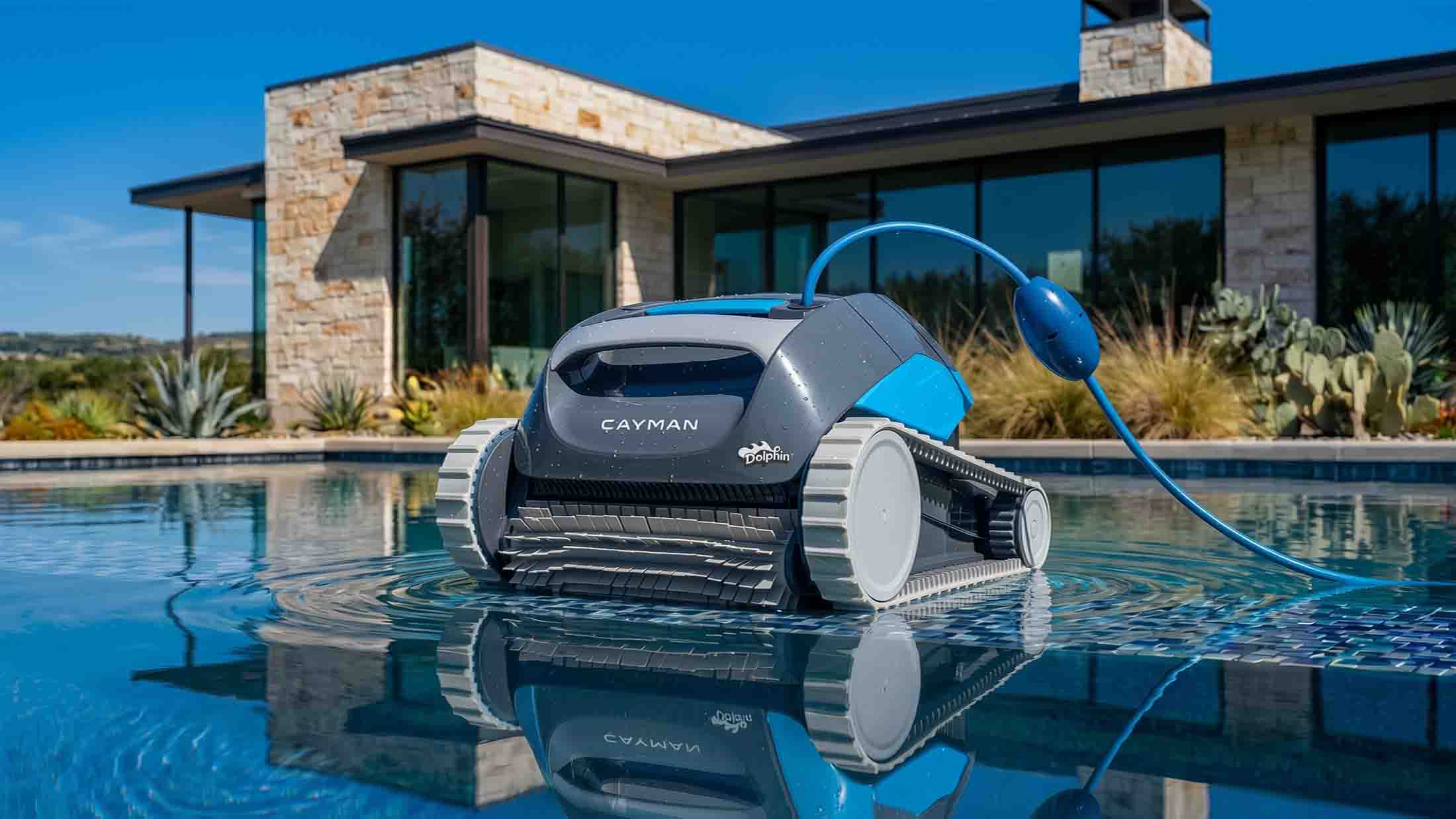
Is there a gyroscope in the Dolphin Cayman?
No. The Cayman uses SmartNav 2.0 scanning, with no gyroscope. The same is true of the Escape, the Premier and the Quantum. Among the five Dolphins in this guide, the Sigma is the only one that has it, as part of SmartNav 3.0.
Is a gyroscope the same as pool mapping?
No. A gyroscope measures the robot's own direction and tilt. Mapping would mean building a plan of the pool, and the Sigma does not do that with cameras, sonar or anything else. Think of the gyroscope as a compass and a level, not a map. Its job is to keep the robot's pattern accurate.
Does the Sigma's gyroscope work without the app?
The gyroscope is onboard, part of the robot's own navigation, so it is at work on every cycle. The app is where you set the Sigma's weekly schedule by day and time and receive its filter alert. It is not what steers the robot around your pool.
Will a gyroscope stop a robot from getting stuck?
It helps with one kind of stuck: the robot that gets turned by an obstacle and then wanders. With its gyroscope, the Sigma can recover its heading and carry on with its pattern. It does nothing for a robot wedged under a ladder or held back by a twisted cable. No sensor can promise that a robot never gets stuck.
The verdict
Buy the gyroscope for the pool, not the spec sheet.
If your pool is freeform, steeply sloped or full of obstacles, and it is in-ground and up to 50 ft, buy the Sigma. It is the one Dolphin here with a gyroscope, and those are the pools that reward it. If your pool is a regular shape, save the money: the Premier or Quantum up to 50 ft, or the Cayman up to 33 ft, will suit it. Unsure which side of that line you are on? Ask a Dolphin expert and describe the pool.
Keep reading