


By feature
Robotic pool cleaners with strong suction, ranked by published flow
Top pick: Dolphin Premier
Live prices · Free shipping · 30 Day Trial
The short answer
Robot suction is water flow through the filter, quoted in gallons per hour. Here are the published figures, and why the biggest number is only part of the answer.
The Dolphin Premier and Dolphin Sigma share the highest published flow here, 4,500 GPH. We put the Premier first because it reaches that figure at a lower price. For pools up to 33 ft, the Dolphin Cayman moves over 4,000 GPH from dual 24-volt DC motors. The Dolphin Quantum is listed at 4,000 GPH and pairs it with the largest basket of the group, which helps hold that flow through a cycle.
A pool robot does not have suction the way a shop vacuum does. It has a pump that pulls water in underneath, pushes it through a filter and sends it out the top. What people call suction is that flow, and manufacturers publish it in gallons per hour, or GPH. More flow means more water, and whatever is in it, goes through the filter each minute.
So the best robotic pool cleaner with strong suction is, on paper, the one with the highest GPH. In the pool it is less simple. Brushes have to loosen debris before the flow can take it. The intake has to be big enough for what is on your floor. And a clogged filter cuts any robot's flow to a fraction of its rating.
Our picks, in order
Four robots, ordered by published flow.
- 1
 $1949
$2499Save $550Temporarily out of stock
4,500 GPH at the lower price of the top two
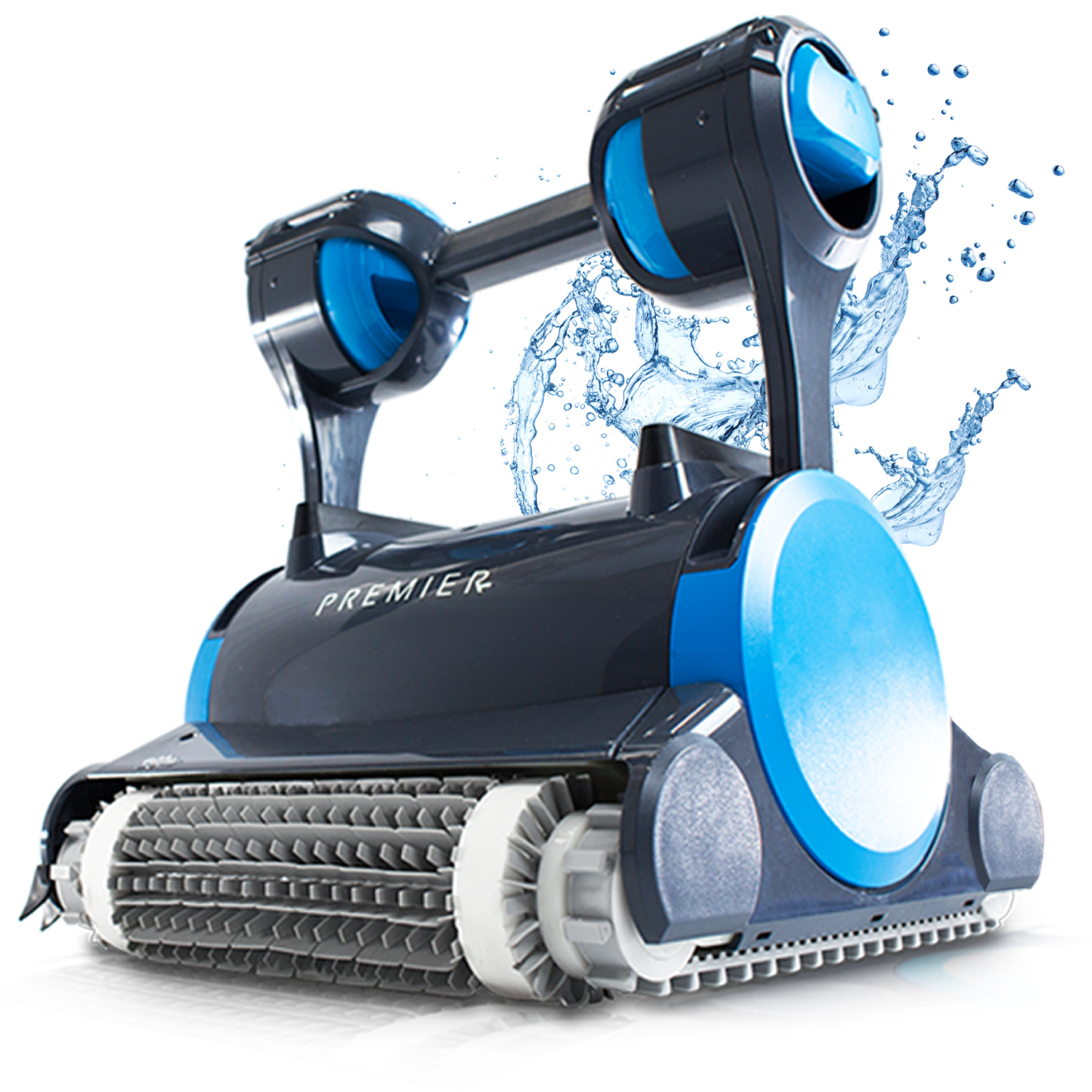
Dolphin Premier
The Premier is listed at 4,500 GPH from dual commercial-grade ProLine motors, the joint-highest flow among the Dolphins in this guide. It shares that figure with the Sigma and leads on this site because it gets there for less money, with every control on the power supply.
It also gives you ways to protect that flow. Multi-Media filtration lets you fit the oversized leaf bag when debris is bulky and NanoFilters when it is fine, so the filter suits the load instead of choking on it. A full-filter indicator on the power supply shows when flow is being lost.
- Best for
- In-ground pools up to 50 ft with mixed debris, where high flow has to last a long cycle.
- Keep in mind
- It is for in-ground pools and weighs 20.3 lb. In a pool of 33 ft or less, the Cayman's flow is close and its price is lower.
- 2
 $2349
$2999Save $650Temporarily out of stock
4,500 GPH from three motors
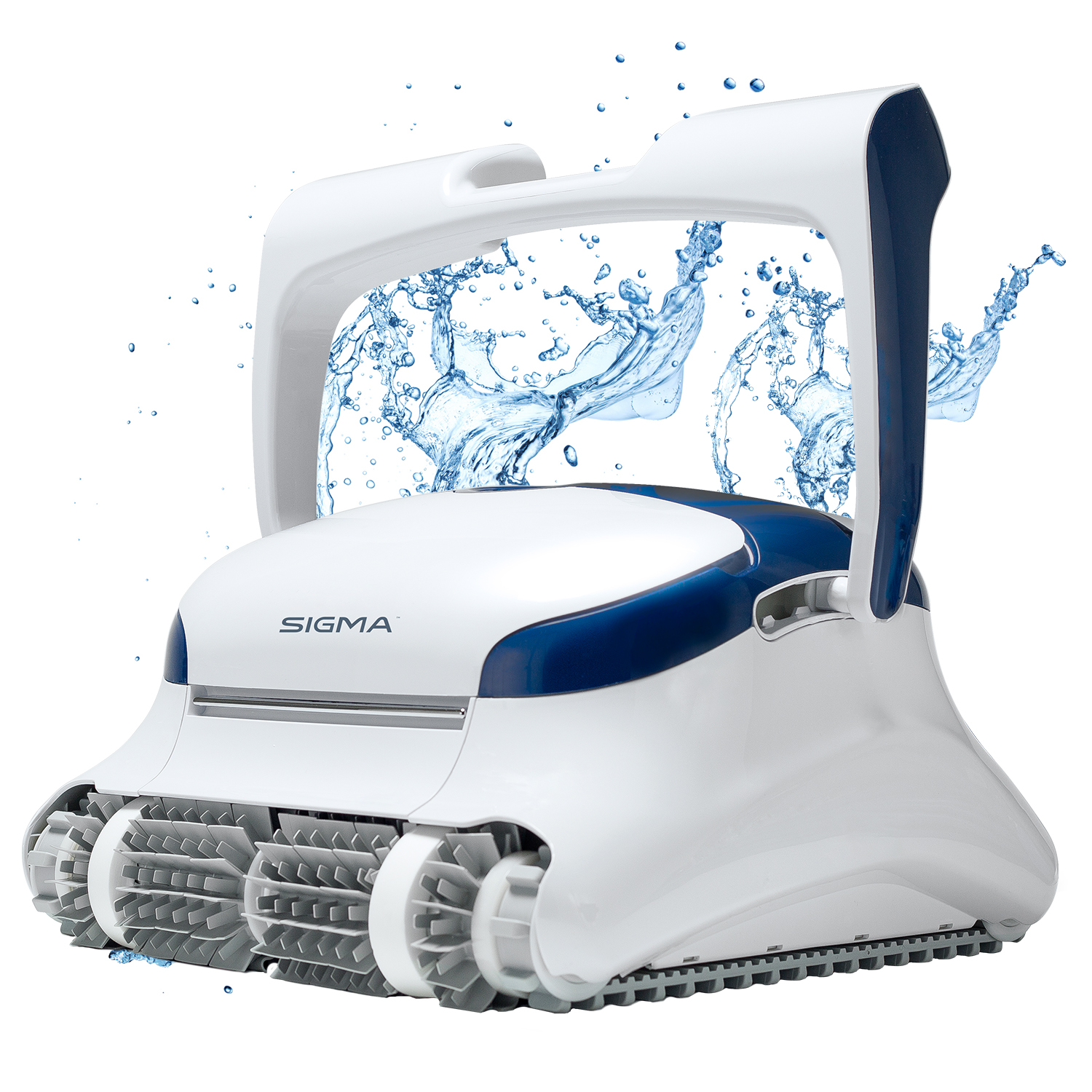
Dolphin Sigma
The Sigma matches that 4,500 GPH and produces it with three commercial-grade ProLine motors instead of two. Flow is only half of pickup, and the Sigma is strong on the other half: quad scrubbing brushes loosen what is stuck, so the flow has something to carry.
Its included NanoFilters are described as filtering down to 2 microns, and the app sends a filter alert when they need cleaning. It is second on price alone: the same published flow costs more here.
- Best for
- In-ground pools up to 50 ft with fine debris or wall film, and owners who will use the app.
- Keep in mind
- Highest price of the four and 24.6 lb to lift. If flow is all you are buying, the Premier gives the same figure for less.
- 3
 $1049
$1299Save $250Temporarily out of stock
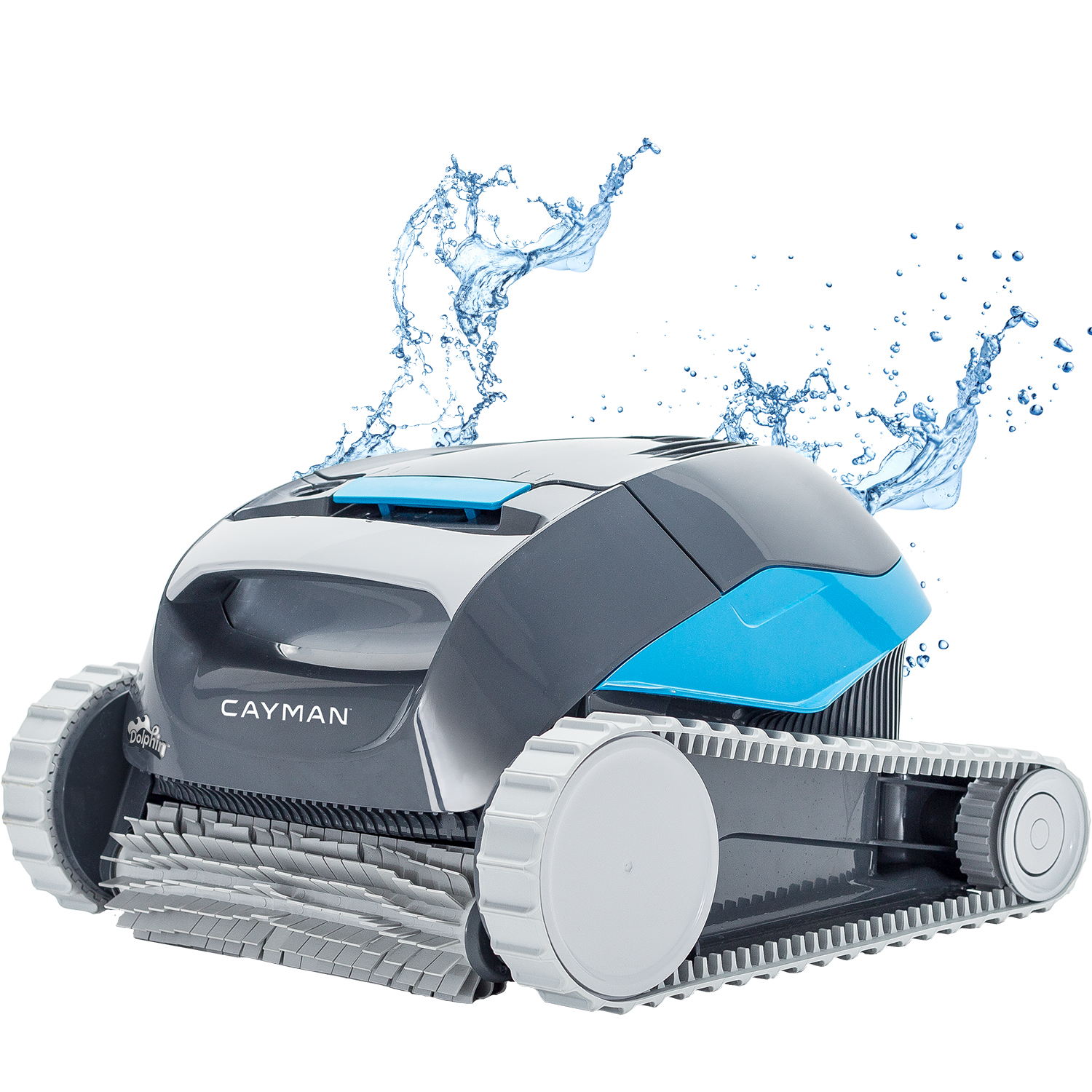
Over 4,000 GPH in a 14.6 lb robot
Dolphin Cayman
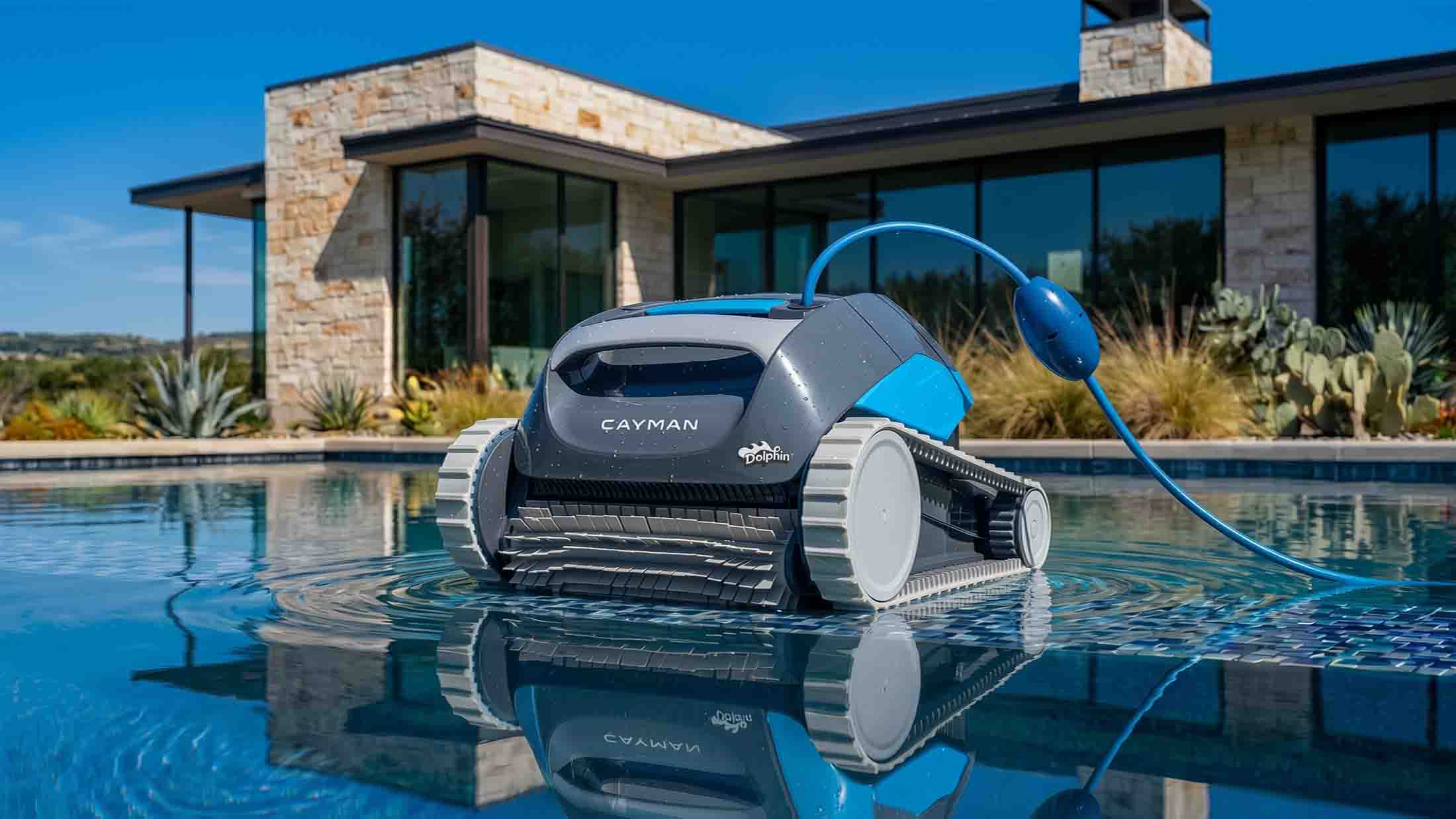
The Cayman is listed at over 4,000 GPH from dual 24-volt DC motors. That is within reach of the two 50 ft robots above, from a machine that weighs 14.6 lb and sits lower in price.
It ranks third, ahead of the Quantum, on the published figure alone: over 4,000 against 4,000. The MaxBin basket, 50% larger than standard Dolphin filters, gives the flow room to keep moving as debris collects, and the every-day timer means the filter never meets a week of build-up in one run.
- Best for
- In-ground or above-ground pools up to 33 ft that need solid pickup on floor and walls.
- Keep in mind
- Not for pools over 33 ft, and its coverage is the floor and walls, nothing higher. NanoFilter panels for very fine debris are an optional add-on.
- 4
 $1599
$1799Save $200Temporarily out of stock
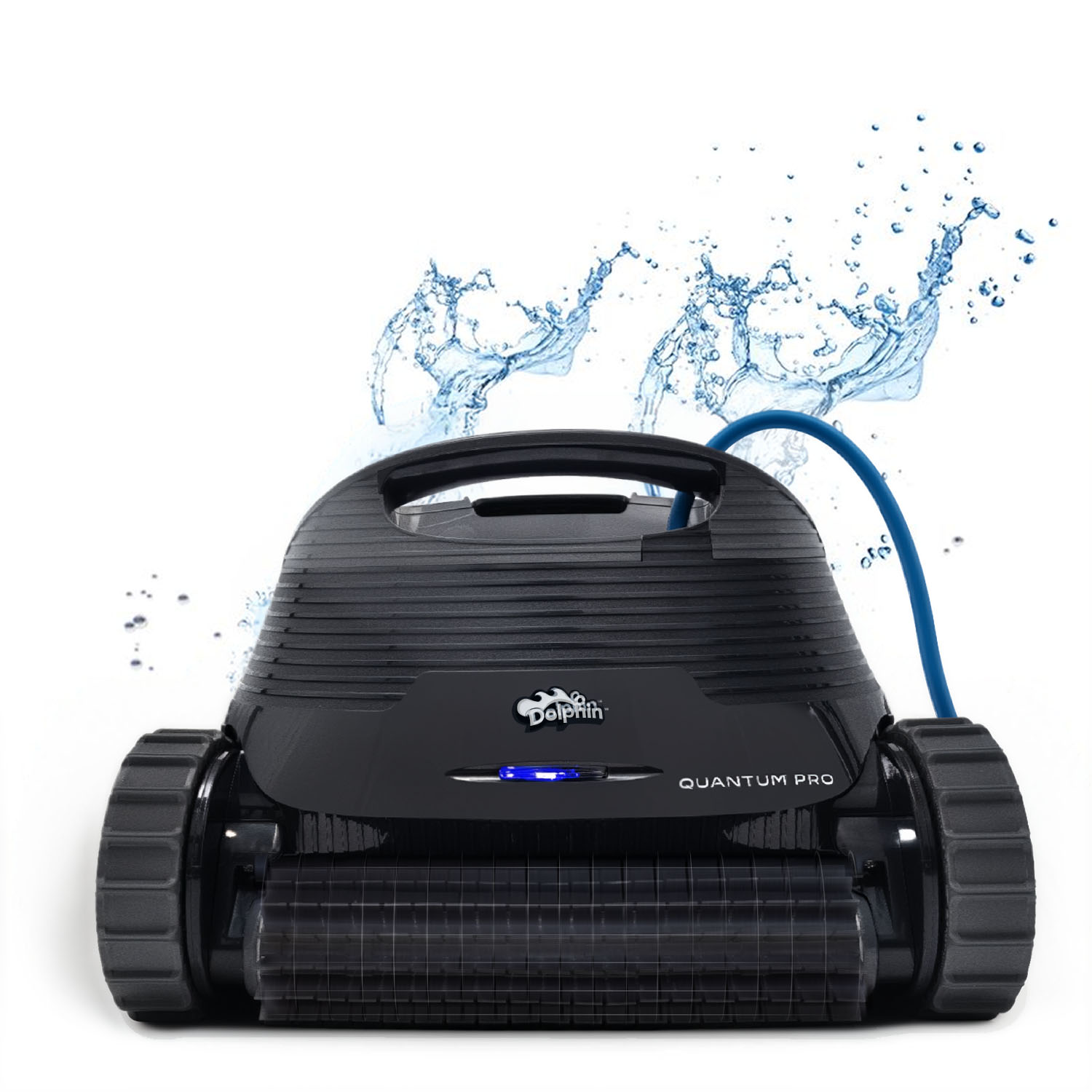
4,000 GPH, with the biggest basket to sustain it
Dolphin Quantum
The Quantum is listed at 4,000 GPH from dual commercial-grade motors, the lowest published figure of the four by a small margin. We would not read much into that margin. Its XXL MaxBin basket has over 400 square inches of filter area, the largest basket of the five Dolphins compared here, and filter area is what keeps real flow close to rated flow as a cycle goes on.
Dual HyperBrushes, spinning at twice the speed of standard brushes, feed that flow with loosened debris. On a leafy pool, a filter that stays open can count for more than the last few hundred GPH.
- Best for
- In-ground pools up to 50 ft with leaves and bulky debris, where a filter that stays open matters most.
- Keep in mind
- The lowest published flow of these four, by a little, and a 2-year warranty. If the number itself matters to you, choose the Premier.


How to judge a robot for this
What makes suction strong in practice.
- 1
Published flow
GPH is the starting point, and the one suction figure published for every robot here. The range is narrow: 4,000 to 4,500 GPH. A gap that size matters less than the factors below, so do not buy on the number alone.
- 2
Filter size and condition
Flow has to pass through the filter. As the mesh loads up, flow falls, whatever the motors are rated for. A larger basket or more filter area holds the rated flow further into the cycle, and a rinsed filter brings it back.
- 3
Filter grade
Fine media catches smaller particles and resists flow more. Ultra-fine filters such as NanoFilters are for dust and silt. For leaves and heavier grit, a standard or coarser filter lets more water through and keeps pickup strong.
- 4
Brushes and intake
Flow lifts only what is loose and small enough to enter. Brushes break dirt free of the surface, and the intake opening sets the largest thing a robot can swallow. Strong suction with weak brushing leaves film behind.
Side by side
Flow, motors and filters compared.
| Specification | Dolphin Premier | Dolphin Sigma | Dolphin Cayman | Dolphin Quantum |
|---|---|---|---|---|
| Price today | $1949 | $2349 | $1049 | $1599 |
| Cleans | Floor, walls and waterline | Floor, walls and waterline | Floor and walls | Floor, walls, waterline, sun shelves and stairs |
| Scheduling | Weekly timer: every day, every 2 days or every 3 days | Weekly scheduler by day and time | Timer: every day | Weekly timer: every day, every 2 days or every 3 days |
| App | No app; controls on the power supply | myDolphin Plus (Wi-Fi and Bluetooth) | No app; controls on the power supply | myDolphin Plus (Wi-Fi) |
| Filtration | Multi-Media: NanoFilters, oversized leaf bag and standard fine filters | NanoFilters and standard filter cartridges | MaxBin basket with fine panels; NanoFilter panels optional | XXL MaxBin basket with standard and NanoFilter panels |
| Brushes | Dual scrubbing brushes | Quad scrubbing brushes | HyperBrush | Dual HyperBrush |
| Navigation | SmartNav 2.0 | SmartNav 3.0 with gyroscope | SmartNav 2.0 | SmartNav 2.0 |
| Cable | 55 ft with 360° anti-tangle swivel | 55 ft with 360° anti-tangle swivel | 50 ft | 55 ft with anti-tangle swivel |
| Warranty | 3 years | 3 years | 2 years | 2 years |
What GPH tells you, and what it does not.
Gallons per hour is the volume of water a robot's pump moves through its filter. It is a fair way to line one robot up against another. It tells you how fast the robot can process water. It does not tell you how much dirt it removes.
Removal depends on the whole path. Dirt has to be loosened, lifted, drawn in and then held. A robot with slightly less flow, stronger brushing and a filter that stays open can leave a cleaner pool than a high-flow robot running on a packed filter. Among these four the spread between the published figures is about 500 GPH, small enough that the other links in the chain decide the result.
The filter is the weakest link. Fine dust seals the mesh, leaves pack against it, hair mats across it, and by the end of a dirty cycle a robot can be moving a fraction of the water it started with. Rinsing the filter is the cheapest suction upgrade there is.
What suction will not pick up.
Anything attached to the surface: algae film, scale, stains. Flow passes over them. Anything floating, which is the skimmer's job. Anything larger than the intake, such as big sticks, palm fronds and pool toys. And anything finer than the filter you have fitted, which goes in underneath and straight back out the top as a cloud.
That last one catches people out. If the pool looks hazy after a cycle, the suction is working and the filter is too coarse for the debris. Fit NanoFilters, which are included with the Premier, Sigma and Quantum and are an optional add-on for the Cayman.
Get the flow you paid for.
- Rinse the filter before it looks full. Flow drops well before a basket is packed, especially with fine dust.
- Match the filter to the debris: coarser media for leaves, NanoFilters for dust and silt. Ultra-fine filters in leaf season throttle any robot.
- If pickup is weak with a clean filter, look for hair, string or a twig caught at the impeller. The manual shows how to reach it.
- Skim the surface and net heavy leaf piles first, so the robot's flow is spent on what only it can reach.
Questions, answered
Suction questions, answered straight.
What does GPH mean on a robotic pool cleaner?
Gallons per hour: how much water the robot's own pump moves through its filter. It is the usual measure of suction for a robot. On the robots here it runs from 4,000 GPH on the Quantum to 4,500 GPH on the Premier and Sigma, with the Cayman and Escape listed at over 4,000.
Is the robot with the highest GPH always the best cleaner?
No. Flow is one link in a chain that also includes brushing, intake size and filter condition. A robotic pool cleaner with strong suction and a clogged filter cleans worse than a modest one with a clean filter. Use GPH to rule out weak robots, then choose on filter capacity, brushes and fit for your pool.
Does a pool robot use my pool pump for suction?
No. A robotic cleaner is self-contained. It plugs into a standard outlet through its own power supply, drives itself with its own motors and collects debris in its own filter. It does not connect to the skimmer or a suction line, so it works the same whether your pool pump is running or off.
Why has my robot lost suction?
Start with the filter. A loaded or slimy filter is the usual cause, and rinsing it restores flow. If the filter is clean, check for debris wedged in the intake or wound around the impeller, and make sure the filter is seated properly. If none of that helps, ask a Dolphin expert before assuming a motor fault.
Will strong suction pick up fine sand and dust?
Flow will lift it, but only the filter can keep it. Fine sand and dust pass through coarse media and blow back into the pool. With NanoFilters fitted, that fine material stays in the robot. They are included with the Premier, Sigma and Quantum and optional on the Cayman.
The verdict
How to decide.
If you want the highest published flow, buy the Premier: 4,500 GPH at a lower price than the Sigma, which matches it. If your pool is 33 ft or under, the Cayman's figure is close enough that pool size, weight and price should decide, and they favor the Cayman. If leaves are the problem, weigh the Quantum's bigger basket above its slightly lower number. Then keep the filter clean, because that is where suction is won or lost.
Keep reading