


By steps, ledges and tricky features
Best robotic pool cleaner for sloped pools: holding a line on the incline
Top pick: Dolphin Sigma
Live prices · Free shipping · 30 Day Trial
The short answer
Tracks get a robot up a normal slope without trouble; what separates robots on a sloped floor is whether they keep their heading or drift back to the deep end.
The Dolphin Sigma is the pick for a sloped pool: its gyroscope senses the incline and holds the robot's line, so the slope gets covered instead of the deep end getting cleaned twice. The Dolphin Premier is the runner-up, with a 3-hour cycle that gives its scanning navigation time to even out coverage. The Dolphin Quantum and Dolphin Cayman do fine on standard slopes for less.
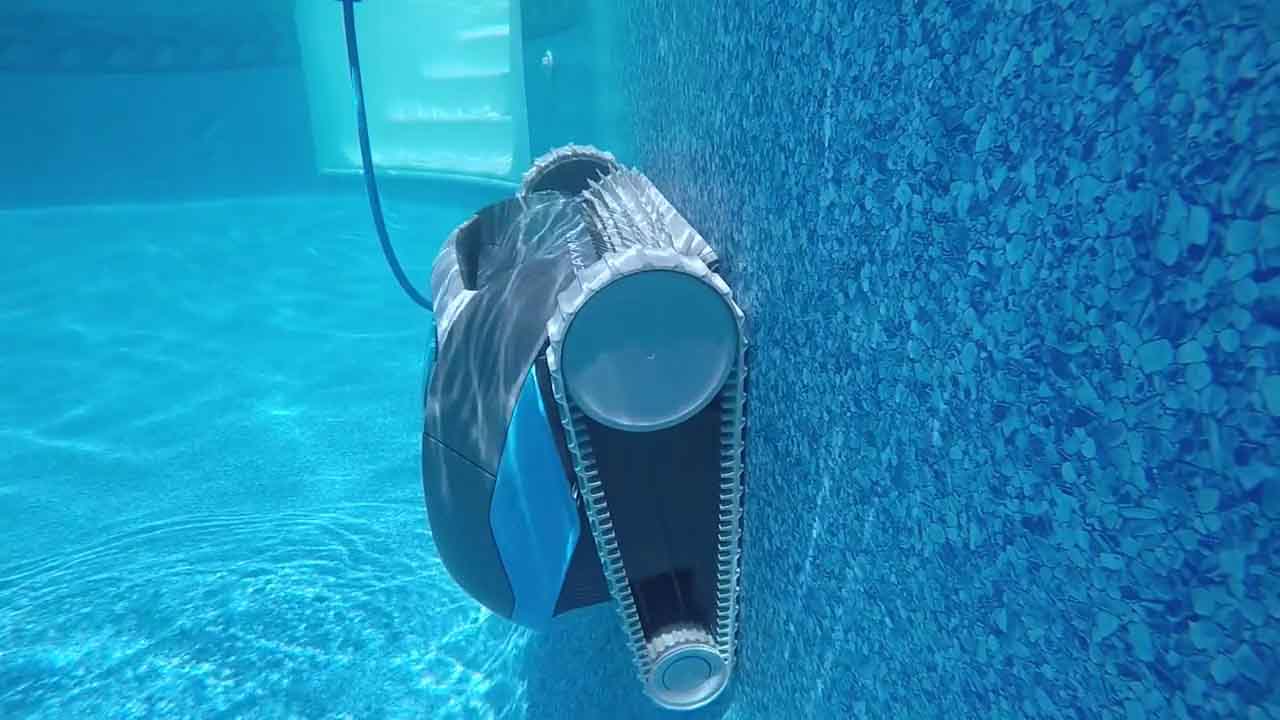
Nearly every in-ground pool has a slope somewhere: the break from shallow to deep, the angled sides of a hopper bottom, the V of a sport pool. Owners worry that a robot will not climb it. That is rarely the problem. A tracked robot goes up a transition slope the way it goes up a wall, with less effort.
The real trouble is direction. Gravity and the drag of the cable nudge a robot downhill each time it crosses the slope at an angle. A robot that loses its heading ends up back in the deep end, cleaning it again, while the slope and the shallow end wait. So the best robotic pool cleaner for sloped pools is the one that knows which way it is pointing.
Our picks, in order
Four picks for sloped floors.
- 1
 $2349
$2999Save $650Temporarily out of stock
The one that senses the incline
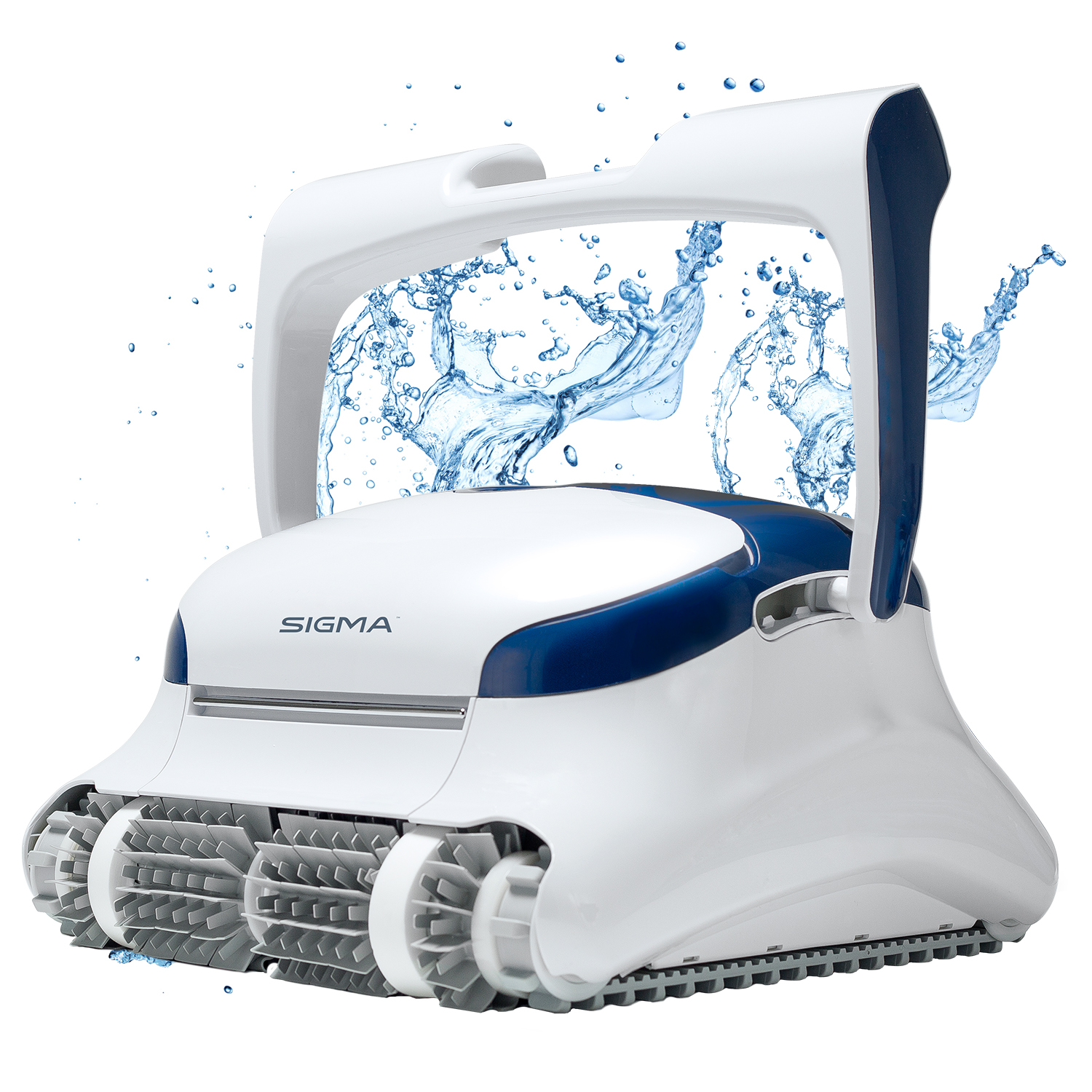
Dolphin Sigma
The Sigma leads because it is the only robot in this guide with a gyroscope. SmartNav 3.0 uses it to sense the incline and hold a line across the slope, so the robot does not slide off course and wander back to the deep end. That is the exact failure sloped floors cause, and this is the direct answer to it.
The rest of the machine is equal to the job: three ProLine motors at 4,500 gallons per hour, quad scrubbing brushes, HyperGrip tracks and a 55 ft cable with a 360-degree swivel. It covers floor, walls and waterline in 2.5 hours.
- Best for
- In-ground pools up to 50 ft with a long or steep break, a hopper bottom or a sport-pool V floor.
- Keep in mind
- Highest price of the four and, at 24.6 lb, the heaviest lift. On a standard slope the lower-priced picks also finish the job.
- 2
 $1949
$2499Save $550Temporarily out of stock
Three hours to even out a slope
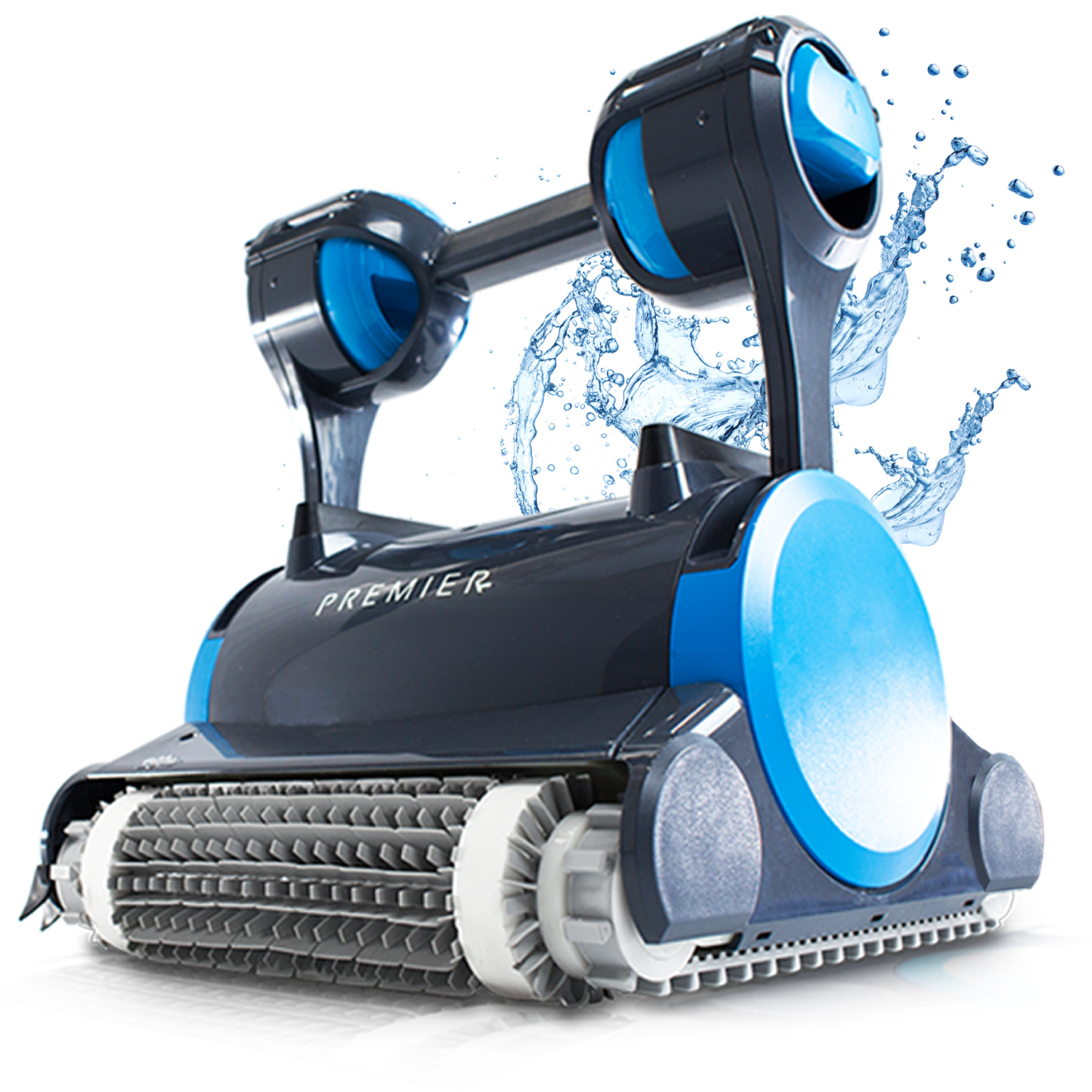
Dolphin Premier
The Premier has no tilt sensor. It relies on SmartNav 2.0 scanning and HyperGrip tracks, and on a standard slope that is enough, because it has time on its side. Its 3-hour cycle is the longest of the four, and a scanning robot's coverage evens out the longer it runs. A strip of slope missed in the first hour is likely to be crossed in the second or third.
The 55 ft cable has a 360-degree swivel, so twist from repeated trips up and down the slope works itself out. Multi-Media filtration, with its oversized leaf bag, handles the leaves that slide toward the deep end.
- Best for
- Pools with a standard shallow-to-deep slope where leaves gather at the bottom of it.
- Keep in mind
- No gyroscope and no app. On a very steep or long incline the Sigma holds its line better.
- 3
 $1599
$1799Save $200Temporarily out of stock
Grip and a swivel at the lowest 50 ft price
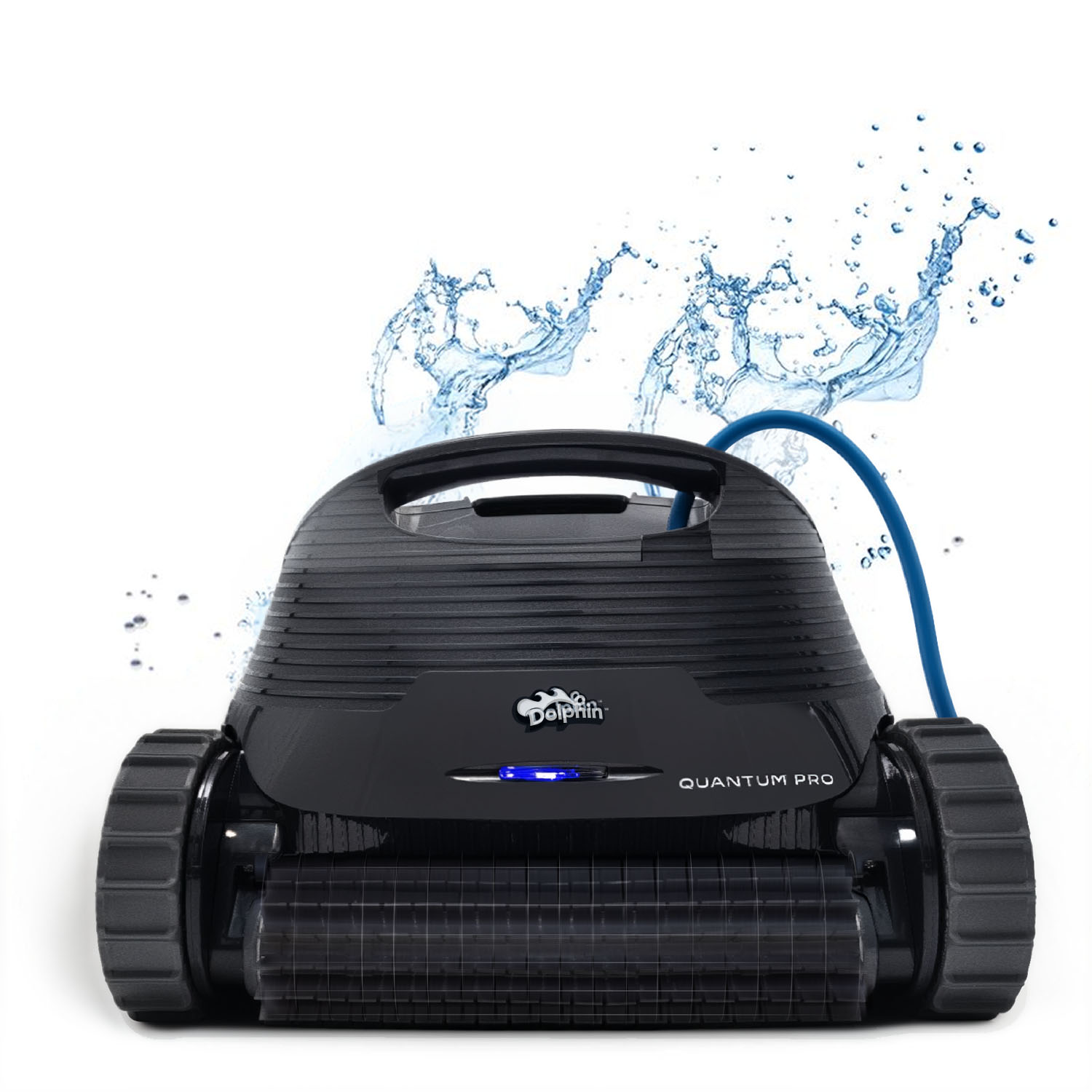
Dolphin Quantum
The Quantum takes the same approach as the Premier, SmartNav 2.0 scanning plus track grip, in a 2-hour cycle. Its HyperGrip continuous rubber tracks suit an incline, and the dual HyperBrush scrubs the slope itself, where fine dirt tends to cling instead of sliding. The 55 ft cable has an anti-tangle swivel.
An hour less running time is why it sits behind the Premier here. You can close the gap with frequency: the weekly timer runs it every day, every 2 days or every 3 days, and the app can start an extra cycle when the slope looks neglected.
- Best for
- Standard sloped in-ground pools up to 50 ft, bought on a tighter budget.
- Keep in mind
- No gyroscope, and the shortest cycle of the three 50 ft robots. Plan on more frequent runs for a long slope.
- 4
 $1049
$1299Save $250Temporarily out of stock
Standard slopes in pools up to 33 ft
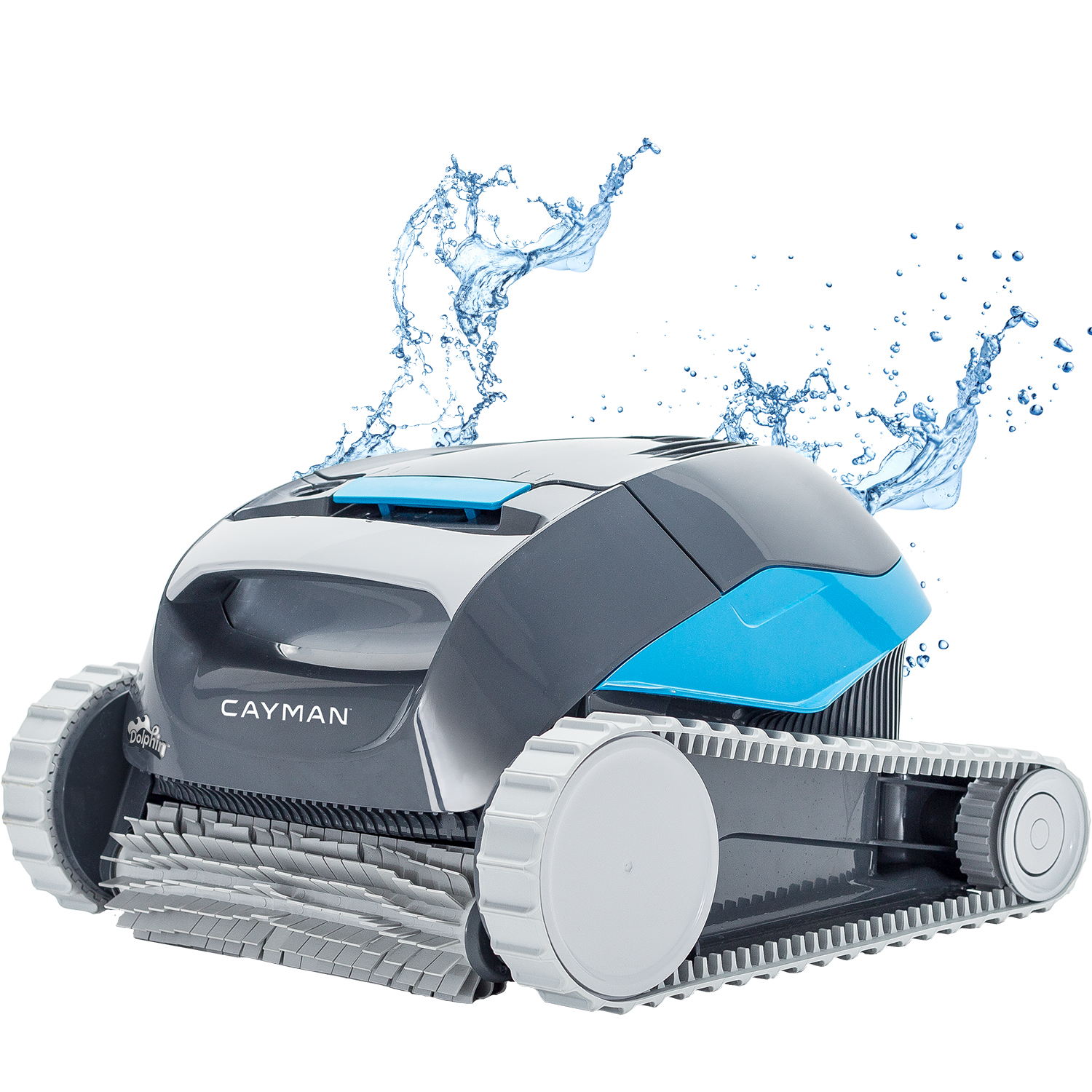
Dolphin Cayman
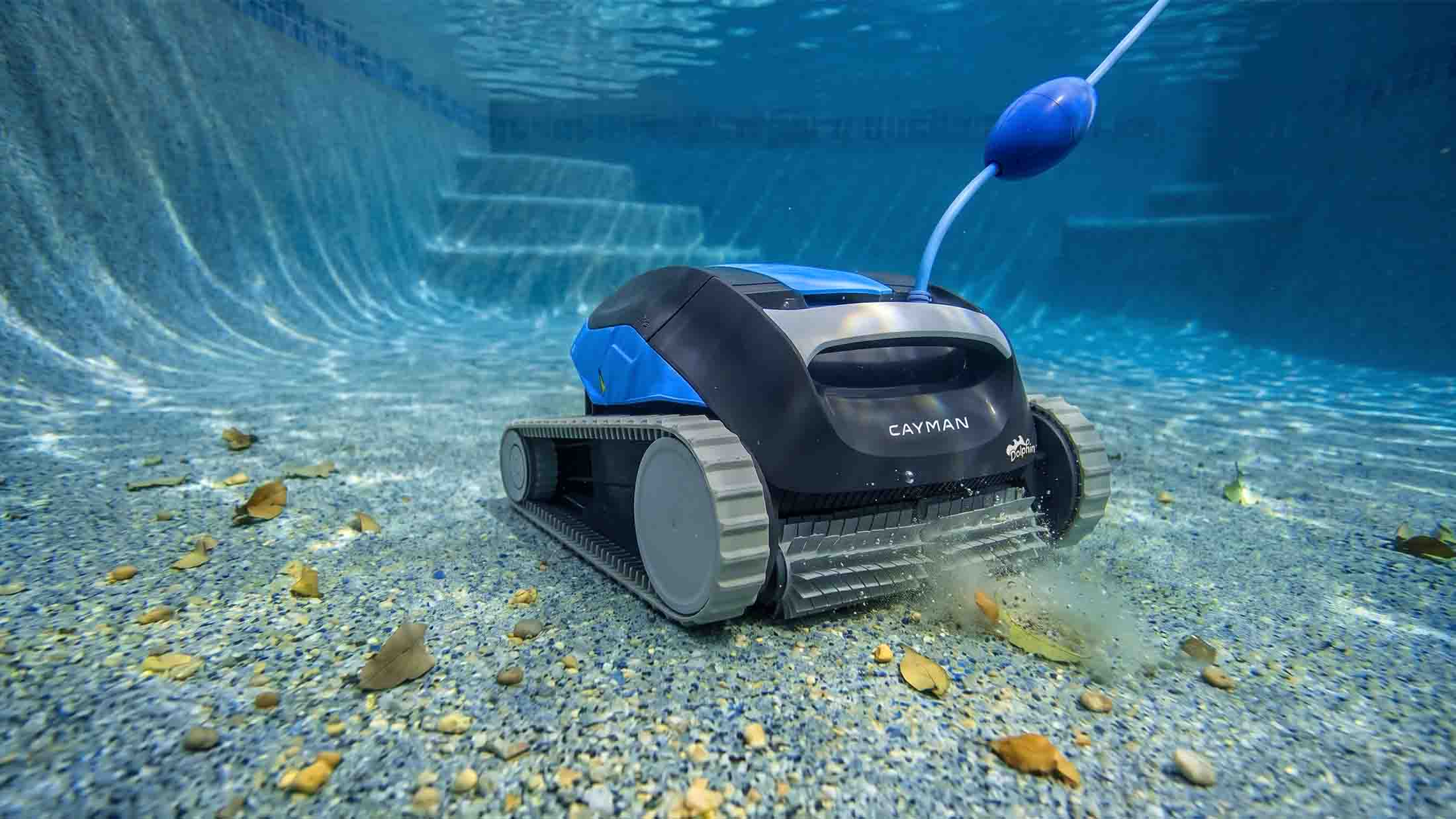
In a pool of 33 ft or under the slope is short, and the Cayman handles it the way the Premier and Quantum do: SmartNav 2.0 scanning and HyperGrip tracks.
What suits a slope is its every-day timer. A scanning robot that runs daily gets seven attempts at the slope each week, so a strip missed on Monday is likely covered on Tuesday. It is fourth because of the 33 ft limit, the lack of a waterline pass, and a 50 ft cable with no swivel.
- Best for
- Smaller in-ground pools, and above-ground pools with a dished center, where a daily run is welcome.
- Keep in mind
- No gyroscope, no swivel and no waterline cleaning. Rated to 33 ft, so a longer sloped pool needs one of the other three.


How to judge a robot for this
What a slope tests in a robot.
- 1
Heading, not horsepower
On a tilted floor a robot is pulled sideways whenever it travels across the fall line. Navigation that senses the tilt can correct for it. Navigation that scans without sensing tilt gets there too, but it needs more passes.
- 2
Tracks and grip
A slope is a gentle wall. Tracks spread a robot's contact along its whole length, where wheels touch at a few points. Every pick here runs on HyperGrip tracks, so on a standard transition slope grip is not what divides them.
- 3
Cycle length
Robots that rely on scanning even out their coverage over time. The longer the cycle, the more chances the slope gets. That is why a 3-hour cycle ranks above a 2-hour one on this page, all else equal.
- 4
Steepness and surface
A shallow-to-deep break is one thing. The sides of a hopper bottom can be steep enough that a robot treats them as walls. On vinyl, a steep slope also depends on a tight liner, because a loose one can lift under the robot's suction.
Side by side
Navigation, cycle and cable compared.
| Specification | Dolphin Sigma | Dolphin Premier | Dolphin Quantum | Dolphin Cayman |
|---|---|---|---|---|
| Price today | $2349 | $1949 | $1599 | $1049 |
| Cleans | Floor, walls and waterline | Floor, walls and waterline | Floor, walls, waterline, sun shelves and stairs | Floor and walls |
| Traction | HyperGrip tracks | HyperGrip tracks | HyperGrip tracks | HyperGrip tracks |
| Navigation | SmartNav 3.0 with gyroscope | SmartNav 2.0 | SmartNav 2.0 | SmartNav 2.0 |
| Cable | 55 ft with 360° anti-tangle swivel | 55 ft with 360° anti-tangle swivel | 55 ft with anti-tangle swivel | 50 ft |
| Robot weight | 24.6 lb | 20.3 lb | 18.3 lb | 14.6 lb |
| Warranty | 3 years | 3 years | 2 years | 2 years |
Three kinds of slope, three levels of difficulty.
Before you choose, work out which slope you have. A rough test: if you could walk down it, it is a slope. If you would slide, a robot treats it as a wall.
- Transition slope: the ordinary ramp from shallow end to deep end. Every pick handles it, and coverage evens out over a full cycle.
- Sport-pool V: two gentle slopes meeting in the middle. Easy to climb. Debris settles along the center line, so that strip needs repeat passes.
- Hopper bottom: a flat deep pad with angled sides and ends, common in vinyl diving pools. The steep faces behave like short walls, and robots climb them as walls.
When the robot keeps drifting back to the deep end.
A common worry with sloped pools has an ordinary cause. A scanning robot covers the pool in overlapping passes, and on a slope some of those passes bend downhill. Over a whole cycle the coverage fills in. Stop it after an hour and you see the bias, not the result.
Let a full cycle finish before judging. If the shallow end is still being missed, check the cable first: a twisted or short cable pulls the robot back toward the deep end as surely as gravity does. Then check the filter, because a clogged one cuts the suction that holds the robot on an incline.
Vinyl liners and steep slopes.
On a vinyl pool, check the liner before you blame the robot. Press on the slope with your foot. A tight liner feels firm against the base. A loose one shifts, and a robot's suction can lift it into a wrinkle that the robot then has to climb over. A loose liner on a slope usually points to water behind it or to vinyl that has stretched with age, and a pool professional should look at it. A robot will not fix it.
Setting up for a sloped floor.
- Run complete cycles. Coverage on a slope evens out late in the cycle, so stopping early leaves the incline half done.
- Place the power supply near the middle of the pool's long side, so the cable does not drag the robot toward one end.
- Keep the filter clean. Suction holds a robot to an incline, and a full filter weakens it.
- After a storm, expect a line of debris at the foot of the slope. Run a second cycle the same day.
Questions, answered
Sloped pool questions.
Can a robot climb from the deep end back up to the shallow end?
Yes. A shallow-to-deep slope is far gentler than a wall, and every pick here climbs walls. If yours seems unable to get back up, look for a twisted cable holding it back or a full filter cutting suction before you suspect the slope.
Do I need a gyroscope for a sloped pool floor?
No, though it helps most on long or steep inclines, which is why the best robotic pool cleaner for sloped pools is the Sigma. Its gyroscope senses the tilt and holds a line. The other picks do not have one; they use SmartNav 2.0 scanning and cover a standard slope over a full cycle. If yours is an ordinary shallow-to-deep break, choose on price and pool length.
How do robots cope with steep slopes such as hopper-bottom sides?
They treat them as walls. The angled faces of a hopper are steep enough that a robot climbs them the way it climbs the pool wall, then turns and comes back down. So the best robotic pool cleaner for steep slopes is one that climbs well and keeps its bearings while doing it, which on this page is the Sigma. We do not publish a maximum angle.
Does the Escape work on a sloped floor?
Yes, within its limits. The Escape has the same HyperGrip tracks and SmartNav 2.0 scanning as the Cayman and is rated for pools up to 33 ft, above-ground or in-ground. It is outside this shortlist because its cable is 40 ft and it has no timer as standard, and frequent runs are what help a scanning robot on a slope.
The verdict
The slope rule.
If the slope is long, steep or a hopper, buy the Sigma; a gyroscope is the tool made for that problem. If it is an ordinary shallow-to-deep break, navigation is not the deciding factor, so choose on the rest of the pool. Take the Premier for leaves and the longest cycle. Take the Quantum to spend less on a 50 ft robot. Take the Cayman if the pool is 33 ft or under. Then let every cycle run to the end.
Keep reading