


By steps, ledges and tricky features
Best robotic pool cleaner for main drains and raised drain covers
Top pick: Dolphin Cayman
Live prices · Free shipping · 30 Day Trial
The short answer
A main drain is the one obstacle nearly every in-ground pool floor has, and debris collects right around it, so a robot must cross the cover cleanly and keep coming back.
For pools up to 33 ft, the Dolphin Cayman is our pick for main drains: drain covers are on its published list of obstacles handled, and its timer brings it back to the drain area every day. In a larger pool, choose the Dolphin Sigma, whose gyroscope helps it back off a dome and re-route. The Dolphin Premier and Dolphin Quantum also list drain covers.
The main drain sits at the lowest point of the pool, which makes it two problems in one place. The cover is a bump in an otherwise smooth floor: a raised anti-entrapment dome on newer pools, a flat grate on older ones, sometimes a pair set a few feet apart. And because it is the low point, it is where leaves, grit and silt gather.
So the best robotic pool cleaner for main drains has to do two things. It has to ride over or around the cover without hanging up, and it has to come back to that spot again and again, because one pass does not clear what settles there. This page ranks four robots that list drain covers, then covers two checks that matter more than the robot: the state of the cover and whether the pump is running.
Our picks, in order
Four robots that list drain covers, ranked.
- 1
 $1049
$1299Save $250Temporarily out of stock
Back at the drain every day, up to 33 ft
Dolphin Cayman
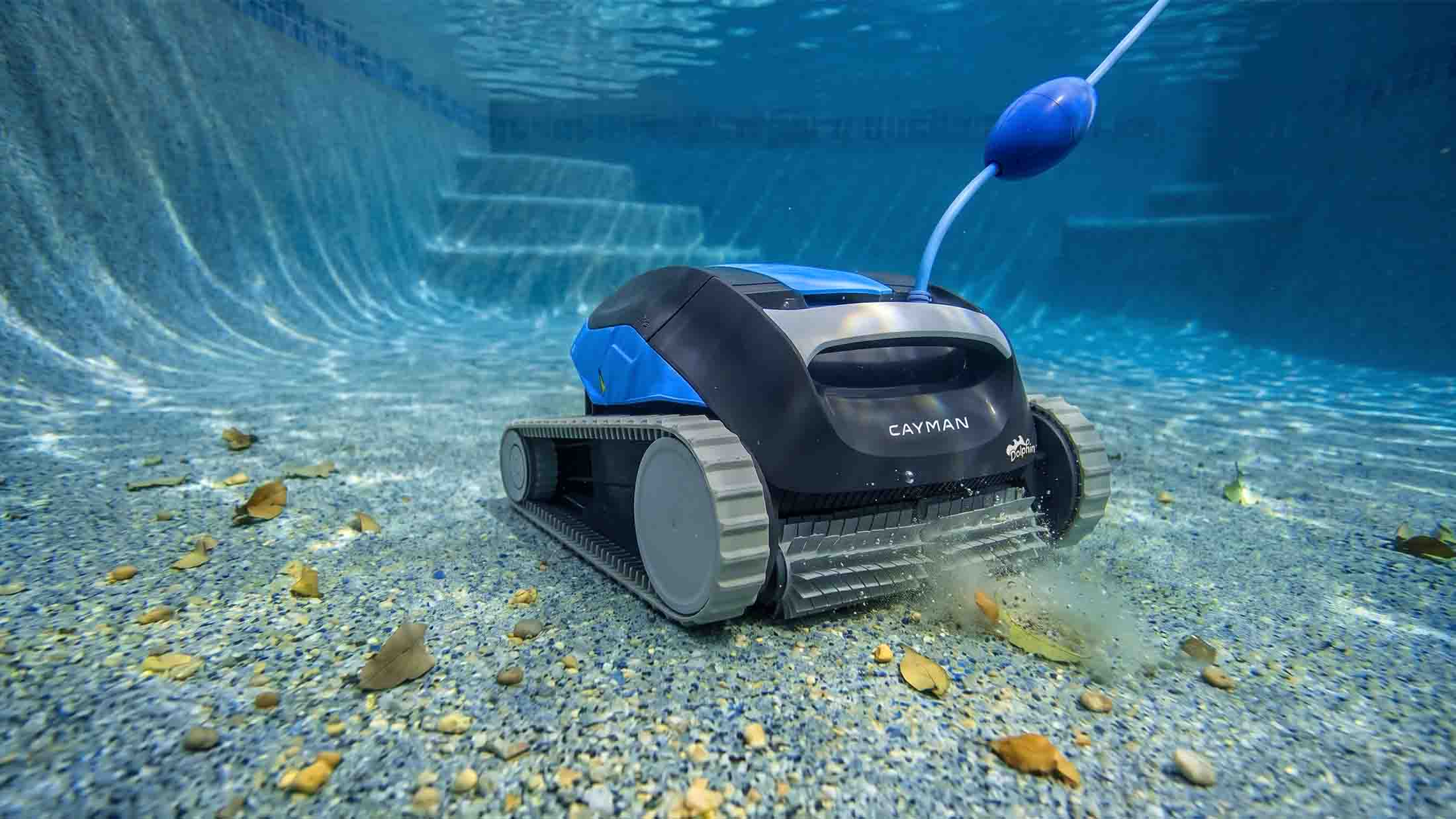
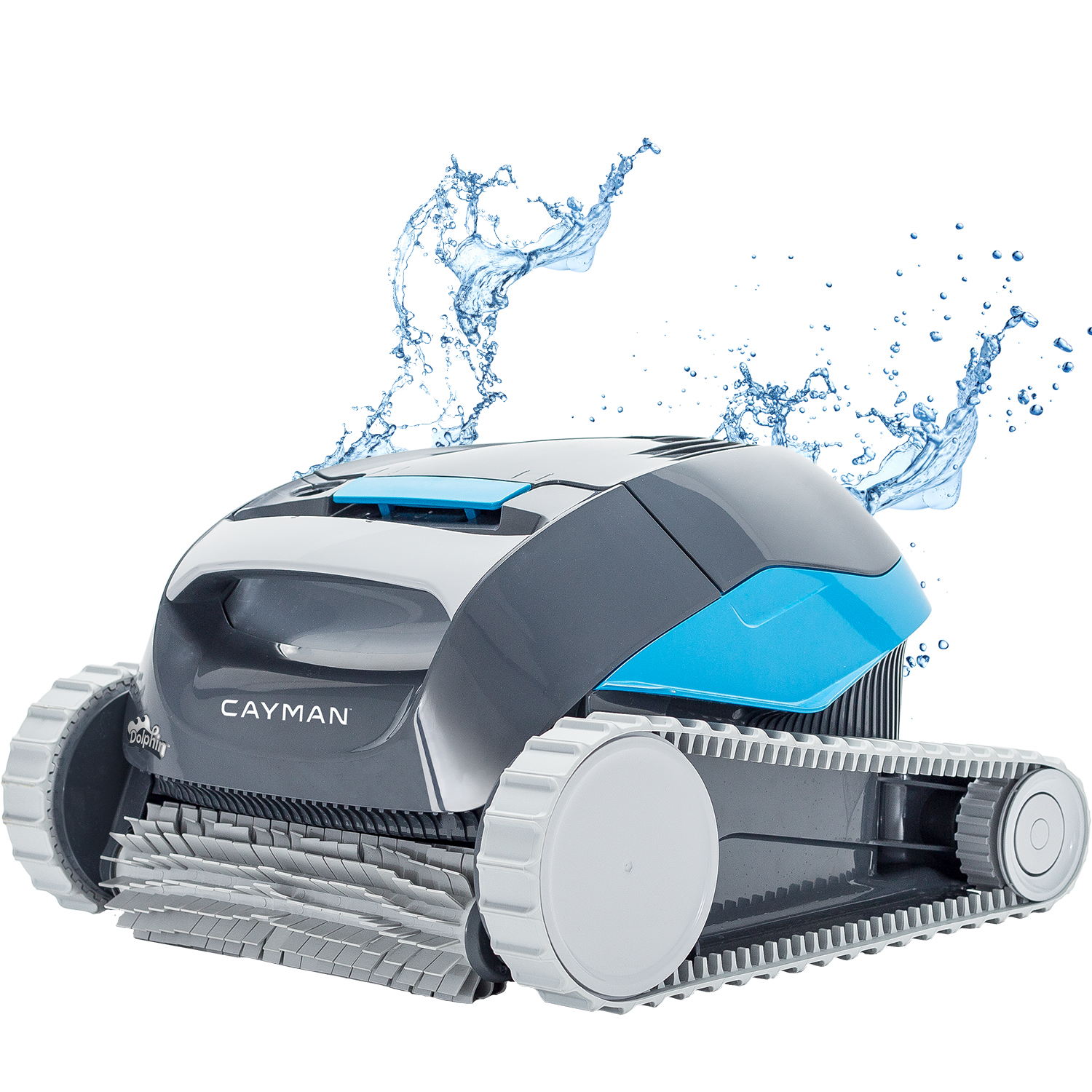
Drain covers are on the Cayman's published list of obstacles handled, with steps, ladders and ledges, so a dome on the floor is something it is expected to meet and move past. What puts it first for pools of 33 ft or under is how often it returns. The timer runs it every day, so the ring of debris around the drain is collected before it builds.
It weighs 14.6 lb, the lightest of the four, which makes it the easiest to lift clear if a tall dome does catch it. The MaxBin basket is 50% larger than standard Dolphin filters and empties through the top hatch. It also sits lowest of the four on price.
- Best for
- In-ground pools 33 ft and under with a single dome or paired drains where debris gathers.
- Keep in mind
- Not for pools longer than 33 ft. Its cable has no swivel, and nothing in its navigation is described as sensing drains.
- 2
 $2349
$2999Save $650Temporarily out of stock
Backs off a dome and re-routes
Dolphin Sigma
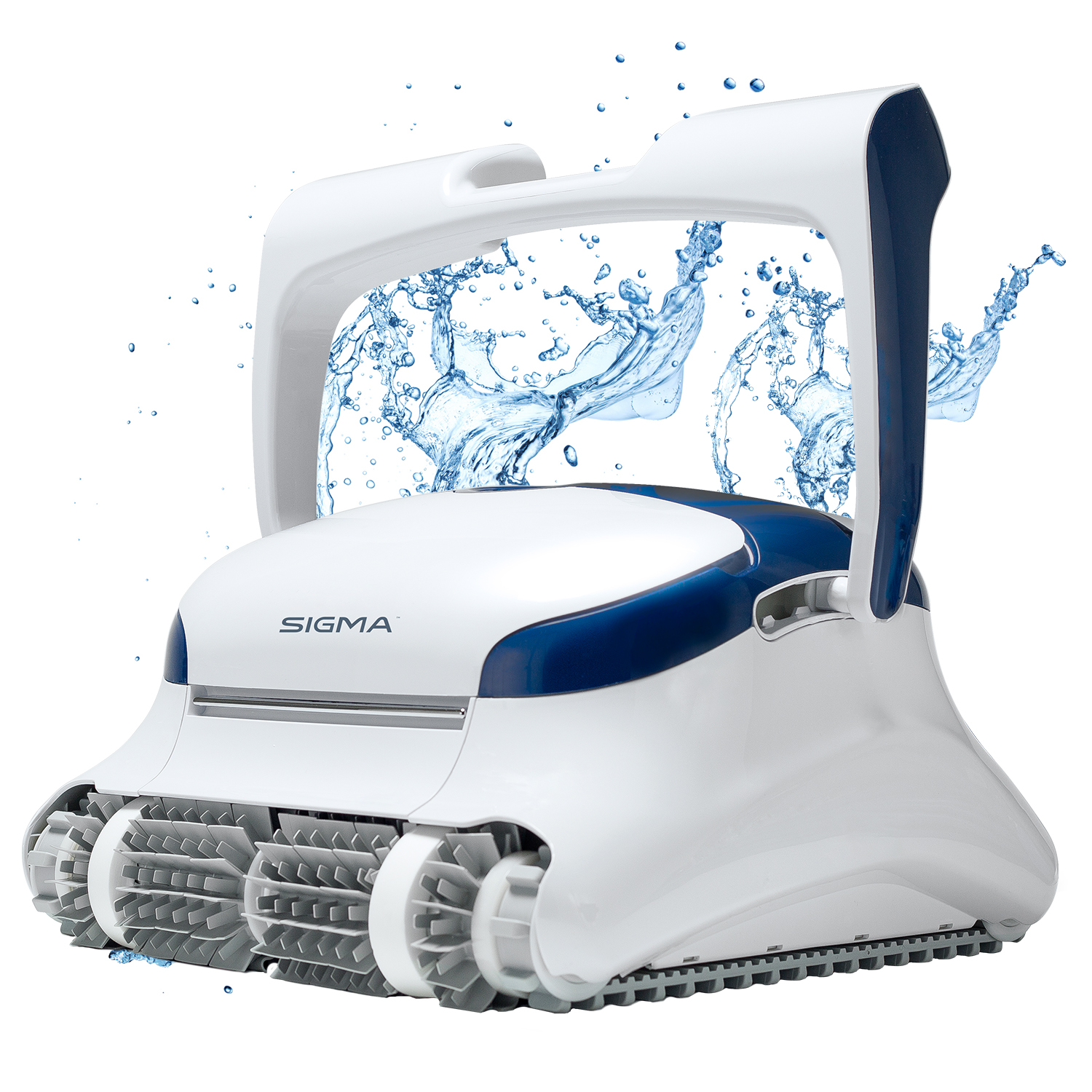
In a pool too long for the Cayman, the Sigma is the first choice around drains. It lists drain covers among its obstacles, and it is the only robot here with a gyroscope. If a tall dome tilts it, the gyroscope registers the change and helps SmartNav 3.0 back the robot off and send it on a new line, so it is not left pushing at the cover.
Paired drains suit it for the same reason: two bumps close together are where a robot is most likely to be turned around. Three ProLine motors at 4,500 gallons per hour and quad brushes clear the debris ring.
- Best for
- Larger in-ground pools with tall dome covers or paired drains, and owners who want app alerts.
- Keep in mind
- It costs the most of the four and weighs 24.6 lb. On a low, flat cover its gyroscope has little to add.
- 3
 $1949
$2499Save $550Temporarily out of stock
Longest cycle for the debris ring
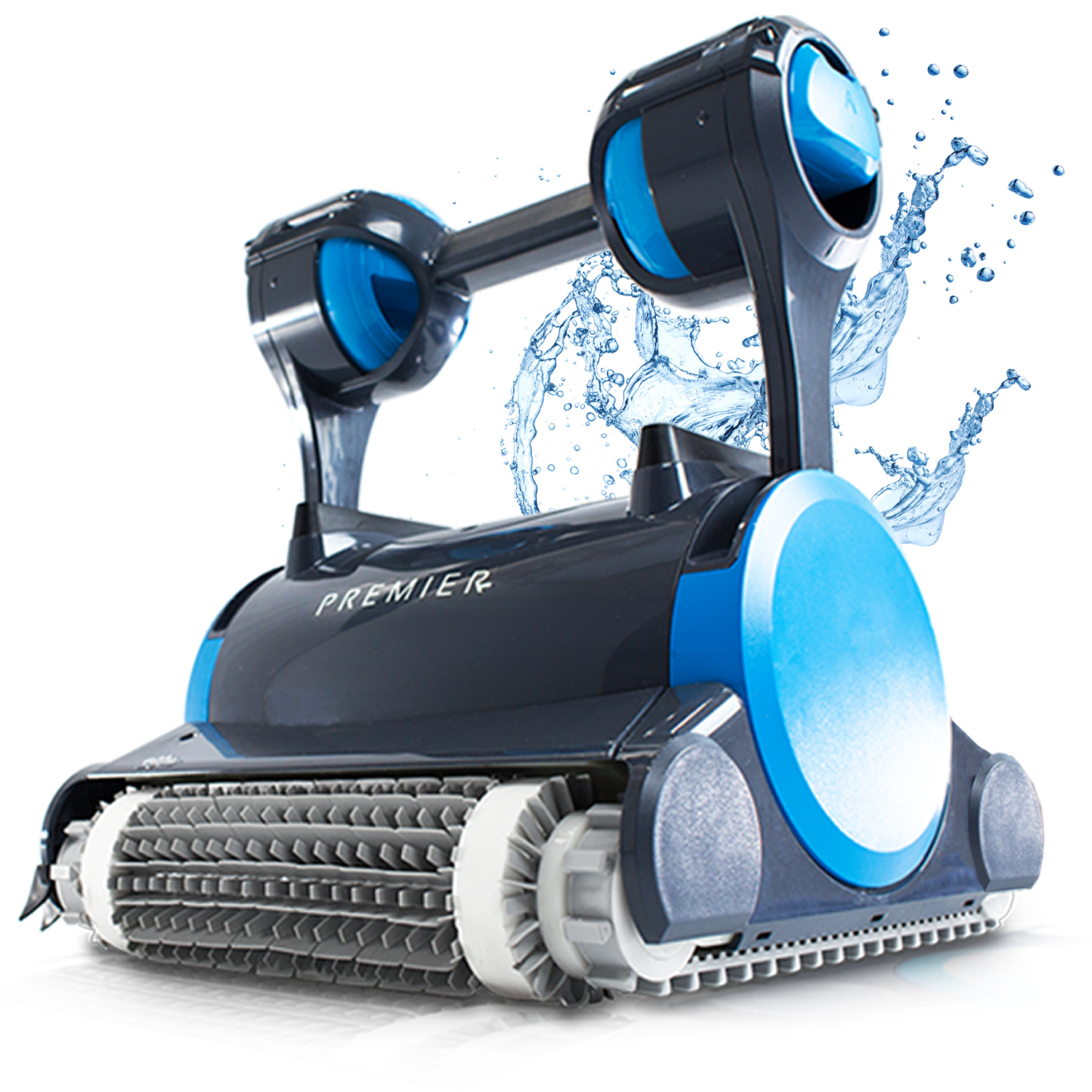
Dolphin Premier
The Premier lists drain covers among its obstacles and gets on with it. Its place here comes from what surrounds the drain. The low point of the pool collects more debris than anywhere else, and the Premier brings the longest cycle of the four, 3 hours, and the widest choice of filter media: an oversized leaf bag, NanoFilters and standard fine filters, all included.
More time means more crossings of the drain area, and the leaf bag means the robot is not full after the first of them. The 55 ft cable has a 360-degree swivel. Its power supply has a full-filter indicator, so you know when to empty it.
- Best for
- In-ground pools up to 50 ft where leaves and acorns pile up around the drain.
- Keep in mind
- There is no gyroscope here and no app. On a tall dome it relies on scanning and tracks to work free.
- 4
 $1599
$1799Save $200Temporarily out of stock
Navigation described as sensing drains
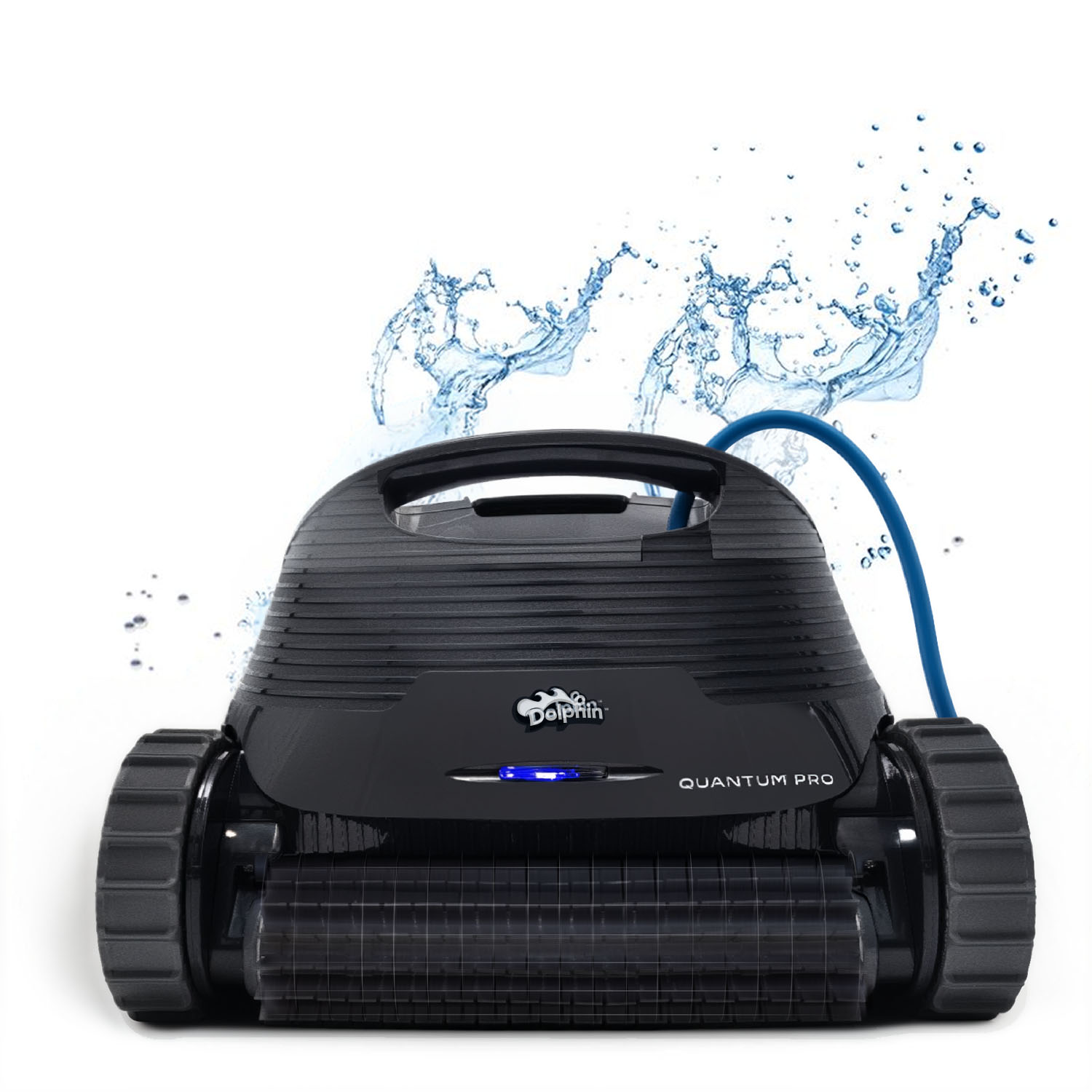
Dolphin Quantum
The Quantum has a point in its favor that no other pick has: its SmartNav 2.0 scanning is described as sensing ladders and drains. It also lists drain covers among its obstacles, runs on HyperGrip continuous rubber tracks, and scrubs with a dual HyperBrush at twice the speed of standard brushes, which suits the fine dirt that packs around a cover.
So why fourth? Cycle time. Its 2 hours is the shortest of the three 50 ft robots, and the drain area rewards repeat visits. You can make that up by scheduling it every day from the timer or the app. It is the lowest-priced 50 ft robot in this guide.
- Best for
- Larger in-ground pools on a budget, above all with flat grates or low domes.
- Keep in mind
- Shortest cycle of the 50 ft picks and a 2-year warranty. It is not for above-ground pools.


How to judge a robot for this
What matters around a main drain.
- 1
Drain covers on the obstacle list
Look for drain covers named in a robot's published obstacles. The Cayman, Sigma, Premier and Quantum all list them. That tells you the robot is expected to meet a cover and carry on, which is the minimum you want.
- 2
Cover height and condition
A low dome or flat grate is crossed without fuss. A tall dome can lift one side of a robot and leave it perched. A loose or cracked cover is worse, and it needs replacing whether or not you own a robot, because a sound cover is there to protect swimmers.
- 3
Repeat passes at the low point
Debris arrives at the drain all day. A robot that crosses the area several times per cycle, or runs often, keeps it clear. One that visits once leaves a ring.
- 4
The pump's pull
With the pump running, the drain draws water down and can tug at a robot passing over it. Switching the pump off for the cycle removes that pull and lets fine debris settle where the robot can collect it.
Side by side
The four picks compared.
| Specification | Dolphin Cayman | Dolphin Sigma | Dolphin Premier | Dolphin Quantum |
|---|---|---|---|---|
| Price today | $1049 | $2349 | $1949 | $1599 |
| Cleans | Floor and walls | Floor, walls and waterline | Floor, walls and waterline | Floor, walls, waterline, sun shelves and stairs |
| Traction | HyperGrip tracks | HyperGrip tracks | HyperGrip tracks | HyperGrip tracks |
| Navigation | SmartNav 2.0 | SmartNav 3.0 with gyroscope | SmartNav 2.0 | SmartNav 2.0 |
| Cable | 50 ft | 55 ft with 360° anti-tangle swivel | 55 ft with 360° anti-tangle swivel | 55 ft with anti-tangle swivel |
| Robot weight | 14.6 lb | 24.6 lb | 20.3 lb | 18.3 lb |
| Warranty | 2 years | 3 years | 3 years | 2 years |
Check the cover before you check the robot.
Look at each drain cover through still water, or with goggles. It should sit flat, with every screw in place and no cracks or missing ribs. Press on it. It should not rock.
A loose or broken cover is a swimmer-safety matter first and a robot matter second. Have it replaced with the correct cover by a pool professional before anything else. From the robot's side, a cover that is whole and screwed down is a bump to cross. A cover that lifts at one edge is a hook, and that is where robots hang up.
Pump off, robot on.
Run the robot with the circulation pump off if you can. With the pump on, the main drain pulls water toward itself, and a robot crossing the cover feels that pull on top of its own suction. With the pump off, the drain is only a shape on the floor.
There is a second gain. Still water lets fine debris settle to the floor, where the robot can collect it, instead of circulating past. If your pump runs on a schedule, line the robot's cycle up with the pump's off hours where you can. The robot has its own motors and filter and does not need the pump.
Drain-area routine.
- Check every cover screw at the start of the season and after any service visit.
- Switch the pump off for the cycle, or run the robot during the pump's off hours.
- Watch the robot cross the drain once. If it perches on the dome and stays, note the cover height and ask a Dolphin expert.
- Empty the filter after any cycle when the drain area was heavily loaded. Most of what the robot collected came from there.
Questions, answered
Main drain questions.
Will a robot get stuck on a raised main drain cover?
It can on a tall dome, and it is uncommon on a low one. A robot hangs up when the cover lifts part of its tracks off the floor. The Cayman, Sigma, Premier and Quantum all list drain covers among the obstacles they handle. If yours perches in the same place every cycle, check that the cover is the right one and is fully screwed down.
Should the pool pump be on or off while the robot runs?
Off is better around a main drain. A running pump draws water through the drain and adds to the pull on a robot crossing it. With the pump off, the robot treats the cover as a simple bump, and fine debris settles where it can be picked up.
Can a robot pull a drain cover off?
Not a cover that is sound and screwed down. A robot is not built to pry anything loose. If a cover shifts when a robot passes over it, it was already loose, and it needs securing or replacing by a pool professional whatever cleaner you use. Stop running the robot until that is done.
Do paired drains cause more trouble than a single drain?
Slightly. Two covers a few feet apart give a robot two bumps to cross and a narrow strip between them that gets fewer clean passes. One cover can also turn a robot into the other. The Sigma's gyroscope helps it hold a line through the pair. With any robot, frequent cycles keep the strip between the drains from building up.
Does the Escape handle a main drain?
It is suitable, with a caveat. The Escape runs on the same tracks as the Cayman, but no obstacles are published for it, drain covers included, so we cannot point to a line in its specifications. Many above-ground pools have no main drain at all. If yours is an in-ground pool with one, the best robotic pool cleaner for main drains at this size is the Cayman.
The verdict
Cover first, then the robot.
Make the cover sound, switch the pump off, then choose by pool length. At 33 ft or under, the Cayman: drain covers are on its list and it returns every day. Over 33 ft, the Sigma if the domes are tall or paired, the Premier if leaves bury the drain, the Quantum if price leads. Any of the four will cross a good cover. None should be asked to cross a broken one.
Keep reading