


By steps, ledges and tricky features
Best robotic pool cleaner for tight corners: what the brushes can and cannot reach
Top pick: Dolphin Sigma
Live prices · Free shipping · 30 Day Trial
The short answer
A robot cleans a corner with brush contact and repeated passes from different angles, not by squeezing into it. Here is how four Dolphins compare on exactly that.
For tight corners, the Dolphin Sigma is the pick: four scrubbing brushes put the most bristle against the floor-wall joint, and an onboard gyroscope keeps its lines straight so it meets each corner squarely. The Dolphin Premier is second, on a 3-hour cycle that allows the most approaches. In pools up to 33 ft, the Cayman and its fast single brush do solid work for less.
A corner is where a pool collects what the rest of the pool lets go of. Water from the return jets sweeps the open floor, slows in the corners and drops what it was carrying: silt, leaf fragments, and often the first algae of the season. If you want the best robotic pool cleaner for tight corners, that is the problem you are really solving.
Start with a fact that saves disappointment. No robot fits into a square corner. The brush is a cylinder, the body is a box, and the spot where two walls meet the floor is a three-sided pocket. A good robot presses as much brush as possible against the joint and comes at it repeatedly, along the floor and up both walls. The ranking below is about how little it leaves.
Our picks, in order
The four picks, ranked for corner work.
- 1
 $2349
$2999Save $650Temporarily out of stock
Most brush on the joint: quad scrubbing brushes
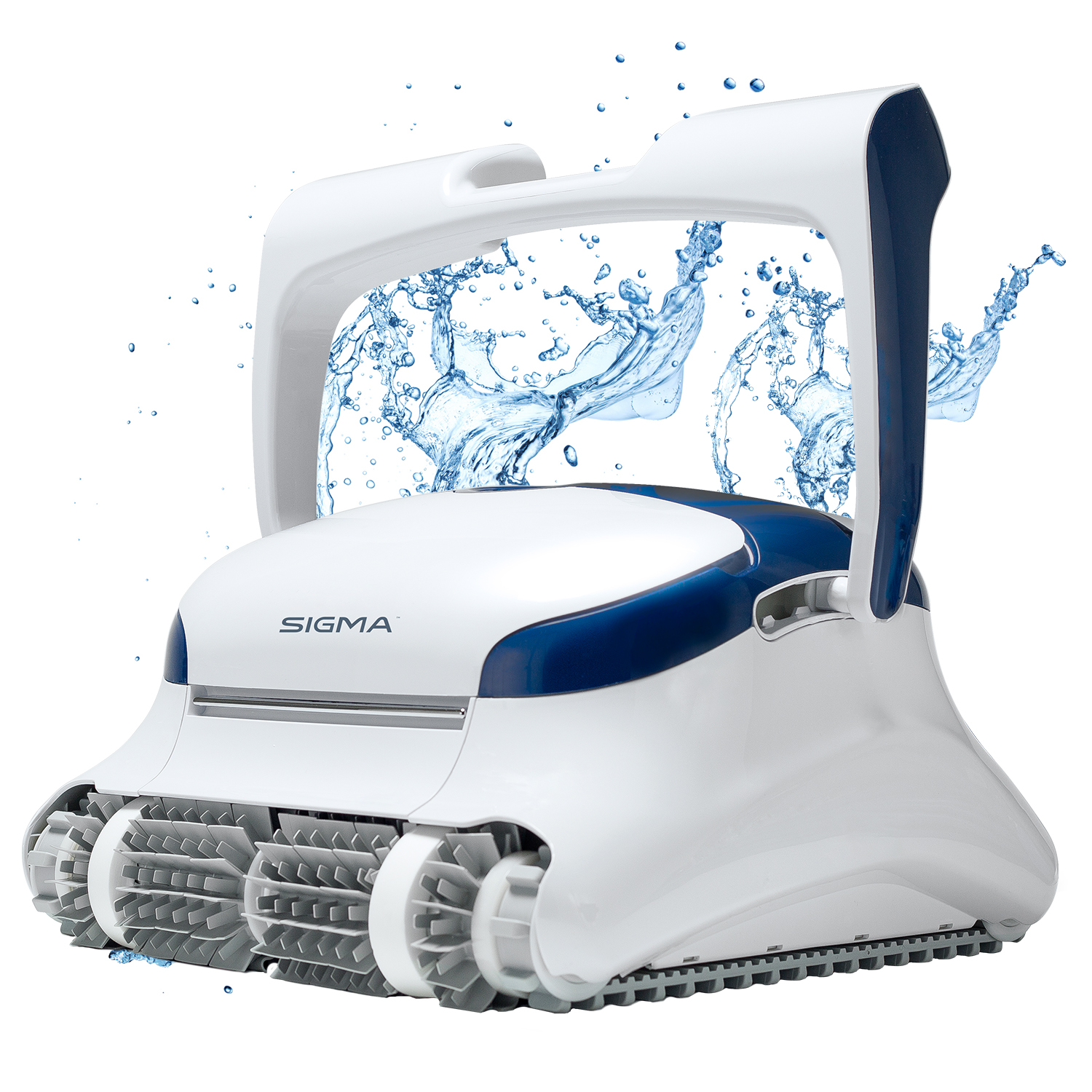
Dolphin Sigma
Four scrubbing brushes are the reason the Sigma leads. More bristle meets the floor-wall joint on every pass, and the brushes keep working on the climb, so each side of a vertical corner is scrubbed up to the waterline. SmartNav 3.0 and its onboard gyroscope hold straight, repeatable lines, which helps the robot reach the same corner from the floor and from each wall. Three ProLine motors move 4,500 GPH, and NanoFilters are included for the fine silt corners collect.
- Best for
- Square-cornered in-ground pools up to 50 ft where algae or silt keeps returning to the same corners.
- Keep in mind
- Highest-priced pick here, and four brushes still leave the last inch of a true 90-degree corner for an occasional hand brush.
- 2
 $1949
$2499Save $550Temporarily out of stock
Most passes per cycle: three hours of approaches
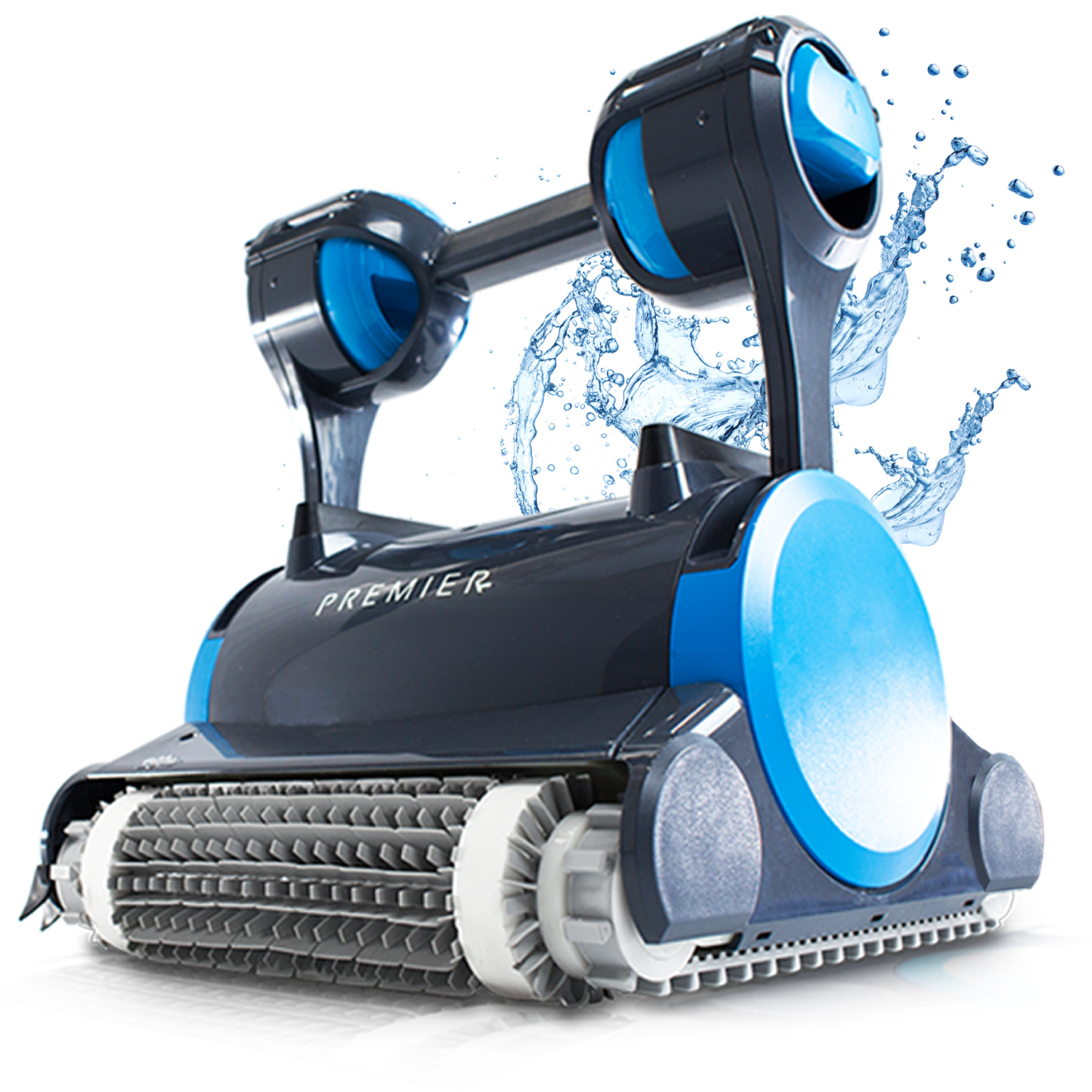
Dolphin Premier
The Premier has two scrubbing brushes, not four, and makes up ground with time. Its 3-hour cycle is the longest of the robots in this guide, so SmartNav 2.0 scanning has more minutes to bring it back to each corner on another line. Dual ProLine motors move 4,500 GPH, level with the Sigma, and the included NanoFilters hold fine sediment. It scrubs floor, walls and waterline, and the 360-degree swivel stops the cable pulling it off line during all that turning.
- Best for
- Owners who want thorough corner coverage with the widest filter choice and a long warranty.
- Keep in mind
- Two brushes give less contact than four, and a full cycle takes three hours. Control is on the power supply, not a phone.
- 3
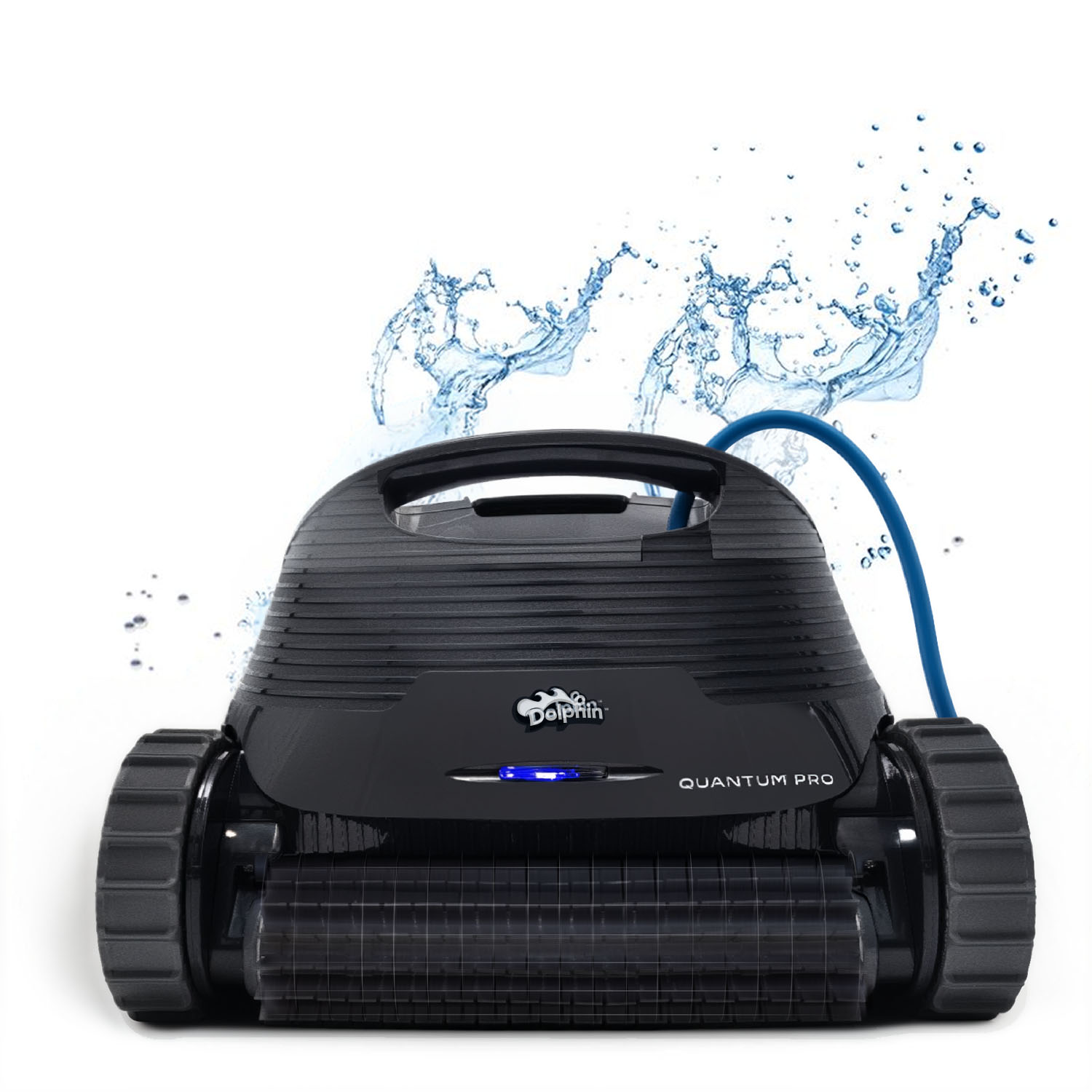 $1599
$1799Save $200Temporarily out of stock
Fast dual brushes that also work step corners
Dolphin Quantum
The Quantum has two HyperBrushes spinning at twice the speed of standard brushes, which means more bristle strokes in the seconds the robot spends at a corner. Its published coverage adds stairs, sun shelves and Baja ledges to floor, walls and waterline, and step corners are among the dirtiest in most pools. A full set of NanoFilter panels is included. With dual motors moving 4,000 GPH on a 2-hour cycle, it has a little less pull and time than the picks above.
- Best for
- Pools up to 50 ft where the problem corners are on the steps or a shelf.
- Keep in mind
- A shorter cycle means fewer repeat approaches than the Premier or Sigma. The warranty runs 2 years.
- 4
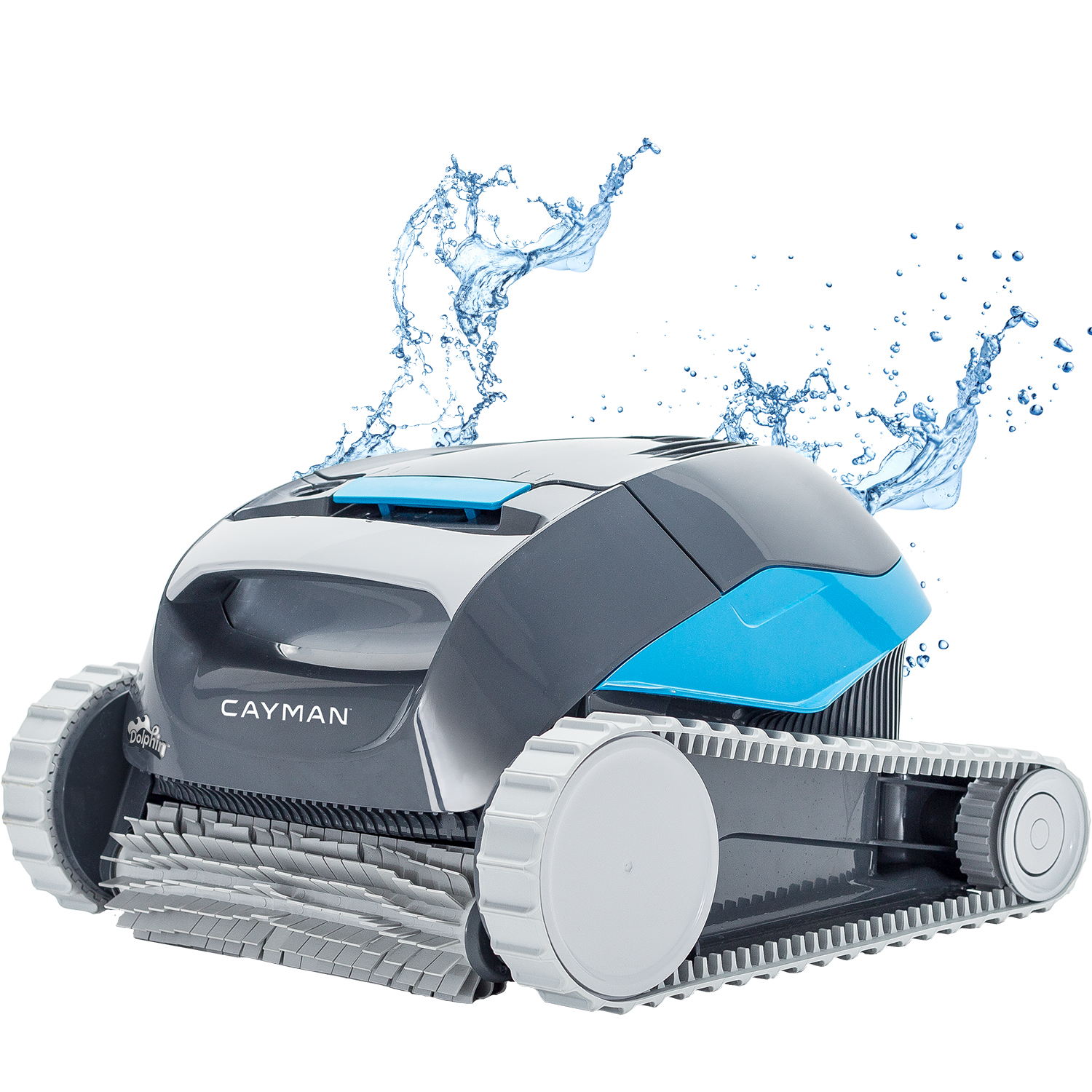 $1049
$1299Save $250Temporarily out of stock
One fast brush, right-sized for pools to 33 ft
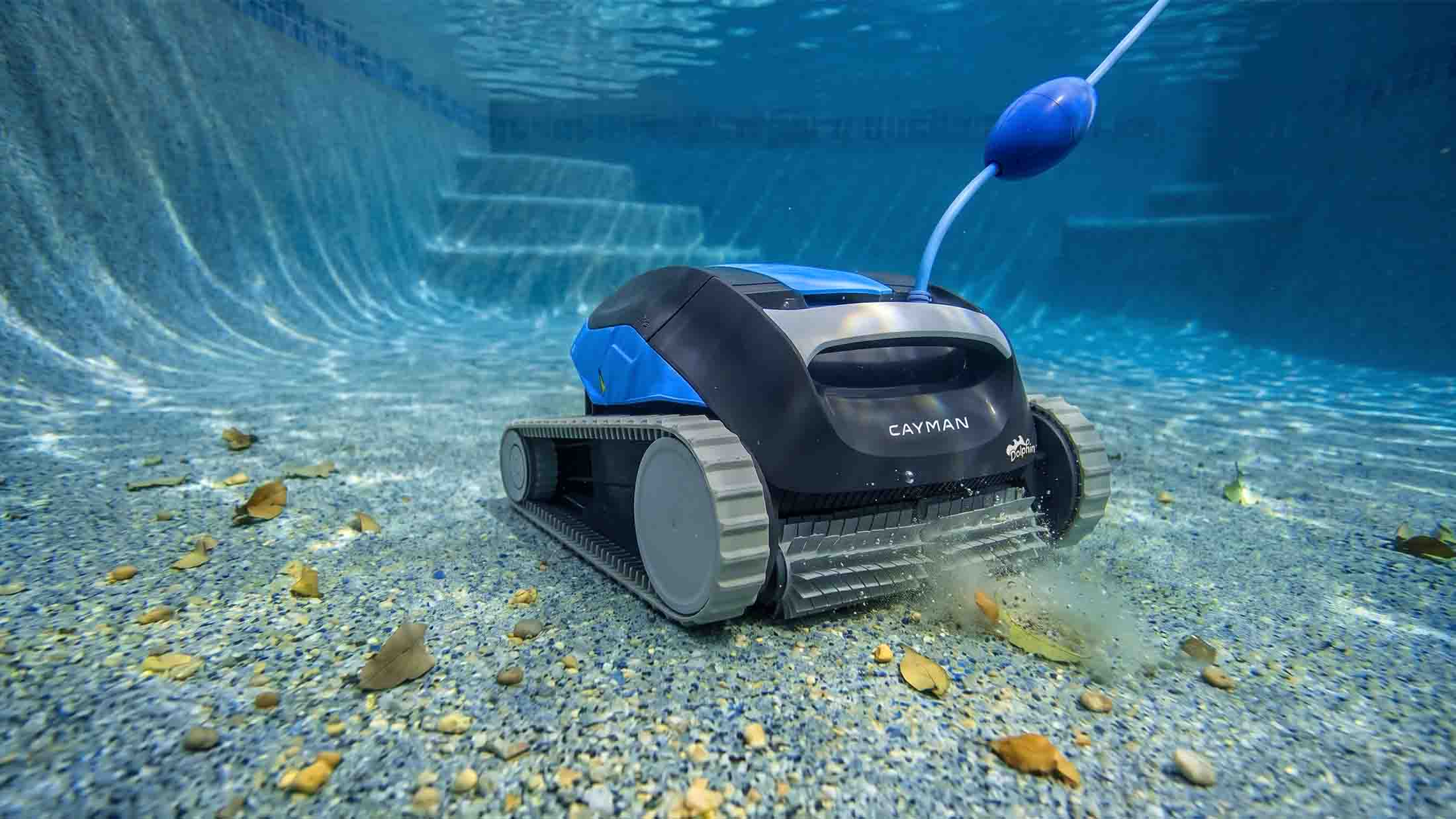
Dolphin Cayman
The Cayman has a single HyperBrush spinning at twice the speed of standard Dolphin brushes. One brush is less contact than two or four, which is why it ranks fourth. What keeps it on the list is proportion. In a pool up to 33 ft, a 2-hour cycle returns to each corner often, and with the timer running every day, corners never go long between scrubbings. It cleans the floor and the walls. It does not scrub the waterline, and NanoFilter panels for fine silt are an optional add-on.
- Best for
- Pools up to 33 ft where a daily floor-and-wall scrub keeps corners from building up.
- Keep in mind
- Single brush and no waterline cleaning. For a pool over 33 ft, or for stubborn corner algae, the Sigma is the right robot.


How to judge a robot for this
What gets a corner clean.
- 1
Brush contact
Bristle against the surface is what lifts film and early algae. The Sigma has four scrubbing brushes and the Premier two. The Quantum has two HyperBrushes that spin at twice the speed of standard brushes, and the Cayman has one HyperBrush at that same doubled speed.
- 2
Approaches from different angles
A corner is reached from three directions: along the floor into the joint, and up each of the two walls. Scanning navigation and a longer cycle both add approaches, and a robot that climbs both walls scrubs each side of the vertical seam.
- 3
Flow near the joint
The brush loosens debris and water flow carries it into the filter, including silt lying just beyond the bristles. The Premier and Sigma move 4,500 GPH, the Quantum 4,000 and the Cayman over 4,000.
- 4
The shape of the corner
Radius corners, also called coved corners, curve gently enough for a brush to follow, and robots clean them well. True 90-degree corners, step corners and the slot behind a ladder are the hard cases. Know which kind you have.
Side by side
Brushes, flow and cycle time compared.
| Specification | Dolphin Sigma | Dolphin Premier | Dolphin Quantum | Dolphin Cayman |
|---|---|---|---|---|
| Price today | $2349 | $1949 | $1599 | $1049 |
| Cleans | Floor, walls and waterline | Floor, walls and waterline | Floor, walls, waterline, sun shelves and stairs | Floor and walls |
| Traction | HyperGrip tracks | HyperGrip tracks | HyperGrip tracks | HyperGrip tracks |
| Navigation | SmartNav 3.0 with gyroscope | SmartNav 2.0 | SmartNav 2.0 | SmartNav 2.0 |
| Cable | 55 ft with 360° anti-tangle swivel | 55 ft with 360° anti-tangle swivel | 55 ft with anti-tangle swivel | 50 ft |
| Robot weight | 24.6 lb | 20.3 lb | 18.3 lb | 14.6 lb |
| Warranty | 3 years | 3 years | 2 years | 2 years |
Why corners get dirty first.
Circulation explains it. Return jets push water in a loop around the pool, and the loop rounds off the corners the way traffic cuts a bend. In the slow water left behind, fine debris drops out and fresh sanitizer arrives more slowly, which is why the first green patch of the season so often appears in a corner, on a step or behind the ladder. A robot removes the settled debris, and its brushes disturb the film before it takes hold. It does not replace sanitizer or fix circulation. Pointing a return jet toward a dead corner often does more than any upgrade in robot.
What the last inch means.
Picture the robot driving into a corner along the floor. Its brush reaches the wall it faces, but stops short of the robot's outer edges, where the tracks run, so a strip along the side wall goes untouched on that pass. The robot turns or climbs, and the next pass covers part of that strip from another direction. After enough passes, what remains is a small triangle at the point of the corner. On a radius corner there is no point, so nothing remains. On a square corner, expect to run a hand brush into each one now and then; the robot collects what you knock loose.
Step corners and the space behind a ladder.
Steps multiply corners: every tread meets a riser and two side walls. The Quantum is the only pick whose published coverage includes stairs. The other three clean the floor at the foot of the steps and the walls beside them. Behind a ladder, the gap between the rails and the wall is usually narrower than a robot, so nothing motorized cleans there. Lift the ladder out every few weeks, brush the wall and floor beneath it, and let the robot collect the debris.
Setting up for cleaner corners.
- Aim one return jet so the flow sweeps along a wall into your worst corner. Moving water is the cheapest corner cleaner you own.
- Brush square corners and step corners toward the open floor shortly before a cycle, so the robot picks up what you loosen.
- Fit fine filters when the corner debris is silt or dead algae. NanoFilters come with the Sigma, Premier and Quantum; they are an add-on for the Cayman.
- Run the robot more often in warm weather, when corners turn first. The Cayman's timer does this daily without being asked.
- Empty the filter first. Full flow is what lifts loosened debris out of the joint.
Questions, answered
Corner questions, answered.
Can a robotic pool cleaner reach all the way into tight corners?
Not to the very point. The brush is round and the body is square, so a small triangle at the tip of a true 90-degree corner stays out of reach on any robot. Repeated passes shrink it to about the last inch. A hand brush now and then finishes it.
Why does algae always start in the corners?
Because water moves slowest there. Slow water lets debris settle and brings fresh sanitizer more slowly, so algae gets a foothold in corners before the open walls show anything. A robot's regular scrubbing helps by disturbing the film. During an active bloom you still need to treat the water and brush by hand.
Do robots clean the corners of pool steps?
Most do not climb onto the steps at all. Of the four picks, only the Quantum lists stairs in its published coverage, and even then narrow or shallow treads can be missed. Brush the treads toward the floor before a cycle and any of the four will collect the debris.
Are radius corners easier for a robot than square ones?
Yes. A radius or coved corner curves gradually, so the brush stays in contact and there is no point for debris to hide in. Fiberglass pools and many vinyl liner pools have radius corners. Square corners are more common in concrete and tile pools, where brush count matters most.
Will a longer cycle clean corners better?
Up to a point. More time means more approaches from more angles, which is the Premier's case: three hours against two for the Quantum and Cayman. Time does not replace brush contact, though, which is why the four-brush Sigma ranks ahead of the Premier on this page.
The verdict
Match the robot to the corner.
Square corners with recurring algae call for the most brush on this page, and that is the Sigma. If you would sooner have the longest cycle and the broadest filter choice, take the Premier. If the dirty corners are on your steps, the Quantum is the one that goes there. If your pool is 33 ft or under with radius corners, the Cayman's daily run keeps them clean for the least money of the four. In every case, keep a corner brush on the pole.
Keep reading