


By steps, ledges and tricky features
Best robotic pool cleaner for deep pools: depth uses cable, walls and time
Top pick: Dolphin Premier
Live prices · Free shipping · 30 Day Trial
The short answer
In a pool 8 ft deep or more, the water above the robot costs you cable, adds wall to scrub and sends debris to one spot, and the ranking follows from that.
For a deep pool the Dolphin Premier is our first pick: a 3-hour cycle for tall walls and a 55 ft cable with a 360-degree swivel to reach the bottom of the deep end. The Dolphin Sigma is the runner-up if you want app control and a gyroscope. The Dolphin Quantum costs less, and the Dolphin Cayman suits deep pools of 33 ft or under.
A deep pool, the kind with a diving end of 8 ft or more, asks more of a robot than its length suggests. The best robotic pool cleaner for deep pools has to get down there, stay long enough, and climb back out along walls twice the height of a shallow end's.
Depth changes three things. Cable runs down as well as across, so a deep end uses up reach. Wall area grows, so the same cycle is spread over more surface. And debris slides to the lowest point and waits. None of the Dolphins here publishes a maximum depth, and we will not invent one: they are built for residential in-ground pools, standard diving depths included. What separates them in deep water is cable, cycle time and capacity.
Our picks, in order
Four robots for deep water, ranked.
- 1
 $1949
$2499Save $550Temporarily out of stock
Longest cycle for the tallest walls
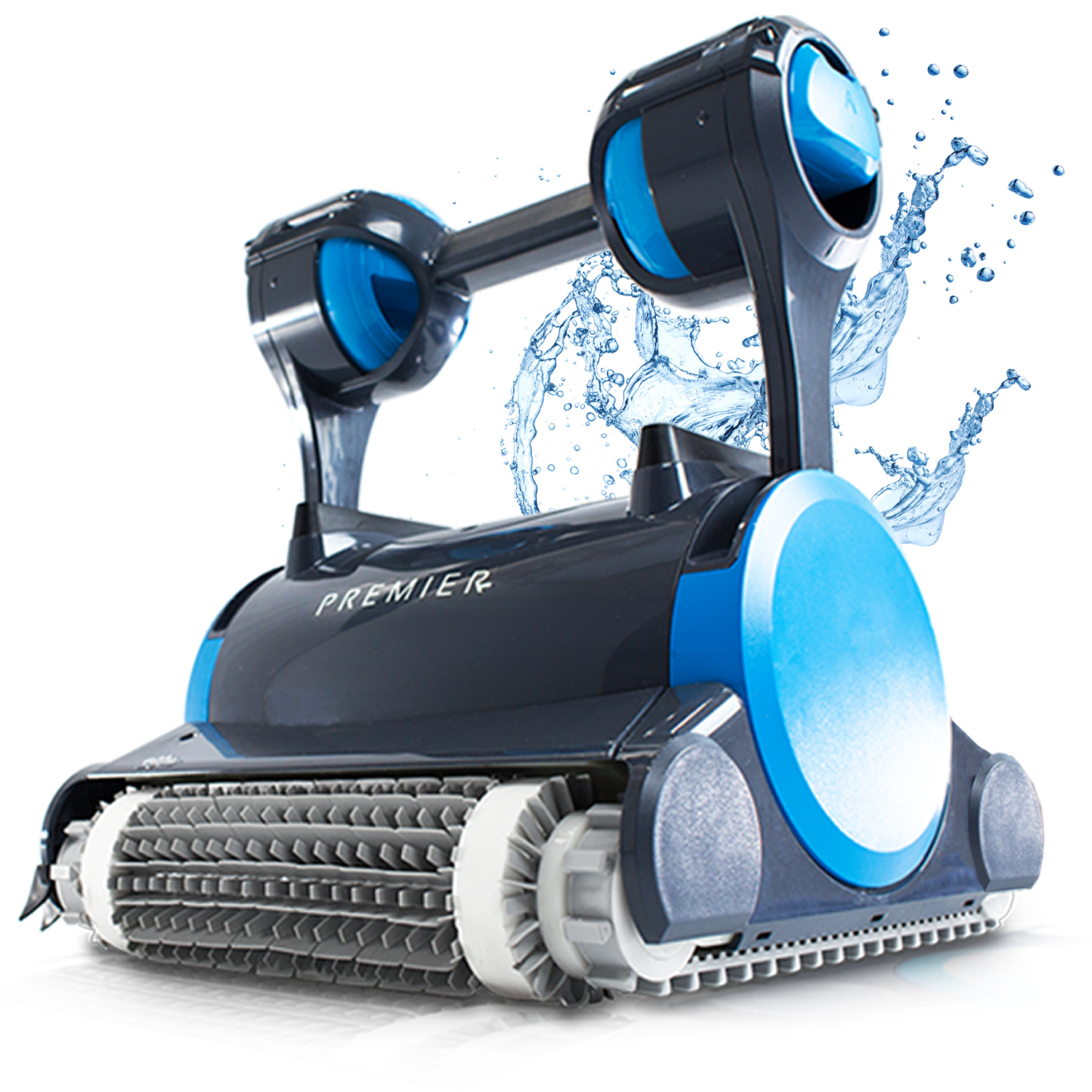
Dolphin Premier
Depth rewards time, and the Premier has the most of it: a 3-hour cycle, the longest of the four. In a diving pool that extra time goes to the deep-end walls, which take more strips to cover than any other part of the pool. Dual ProLine motors move 4,500 gallons per hour, and the robot scrubs floor, walls and waterline.
Its 55 ft cable has a 360-degree anti-tangle swivel, which matters when every pass includes a long climb. Whatever slides to the bottom meets Multi-Media filtration: an oversized leaf bag, NanoFilters and standard fine filters all come in the box. The warranty is 3 years.
- Best for
- In-ground diving pools up to 50 ft, above all where leaves settle in the deep end.
- Keep in mind
- No app, and at 20.3 lb it is a firm pull up from 9 ft of water. In-ground pools only.
- 2
 $2349
$2999Save $650Temporarily out of stock
Most power, plus a gyroscope
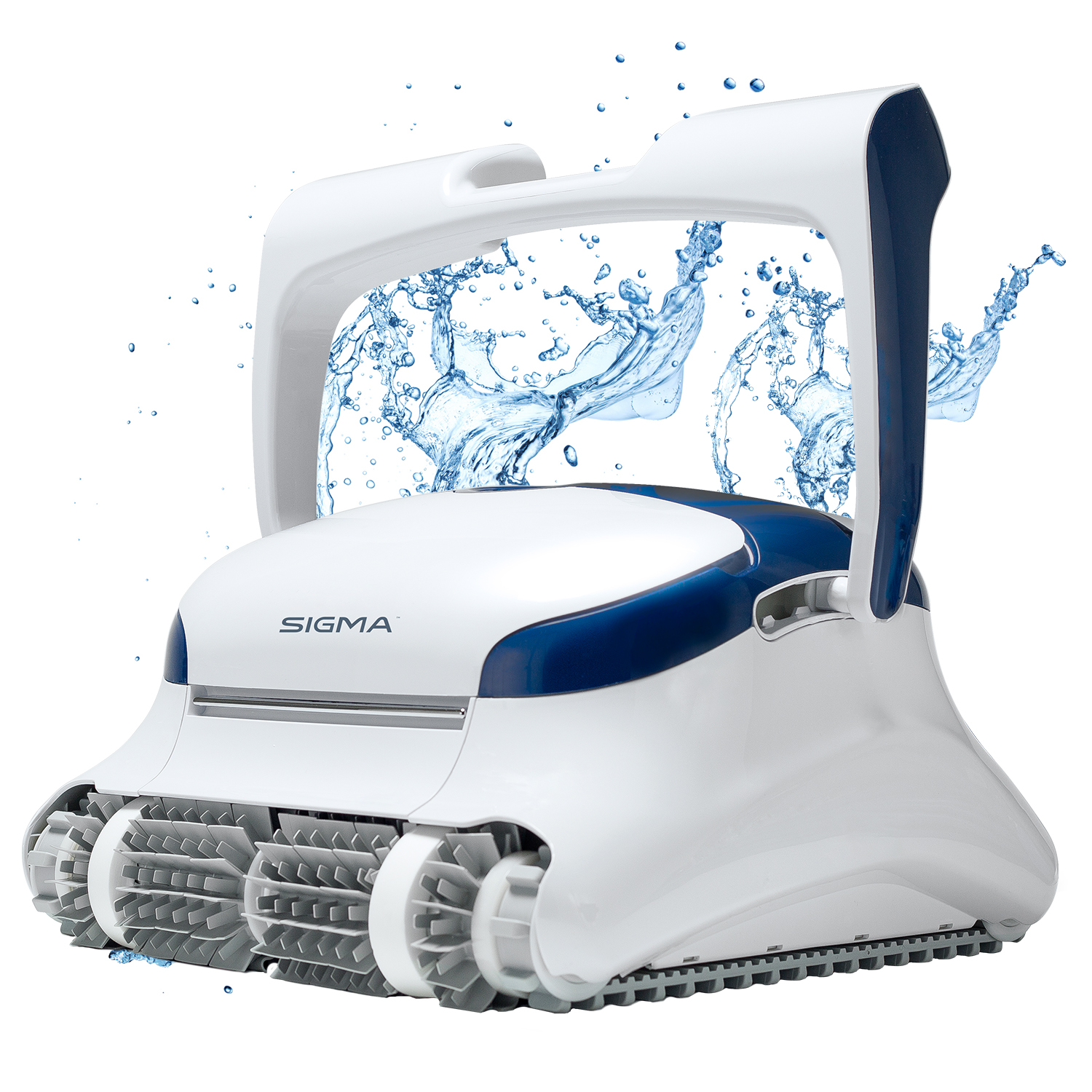
Dolphin Sigma
The Sigma brings the most hardware to deep water: three ProLine motors at 4,500 gallons per hour, quad scrubbing brushes and SmartNav 3.0 with an onboard gyroscope, which helps it hold its heading through the slope and the long climbs of a deep end. It cleans floor, walls and waterline in 2.5 hours on the same 55 ft swivel cable.
It is second, not first, because its cycle is half an hour shorter and it costs the most of the four. It is also the heaviest at 24.6 lb, which you notice when raising it from the bottom.
- Best for
- Deep in-ground pools whose owners want app scheduling, a filter alert and the strongest scrubbing.
- Keep in mind
- Highest price and heaviest lift of the four. Its filters are cartridges, not a lift-out basket.
- 3
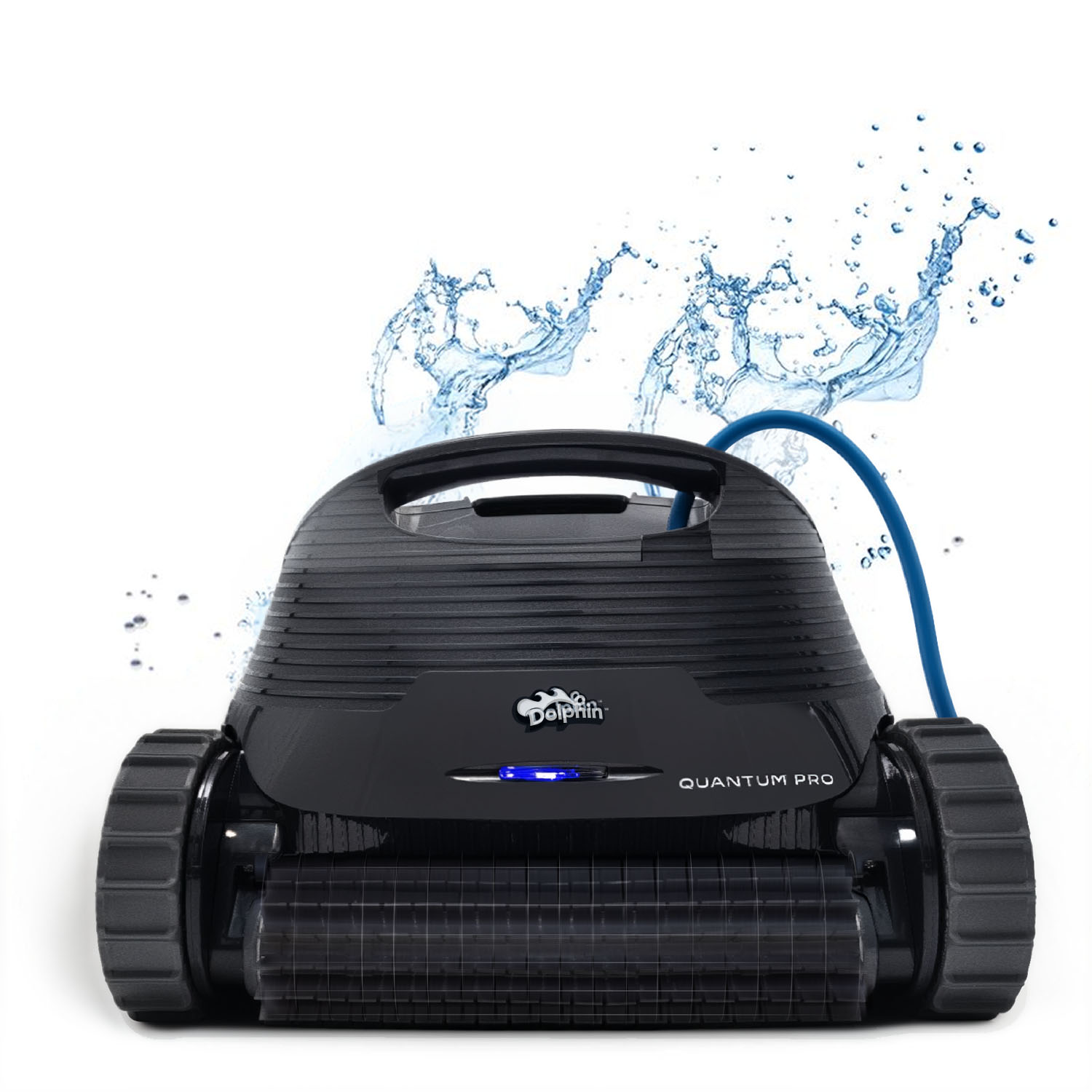 $1599
$1799Save $200Temporarily out of stock
Lowest-priced pick with a 55 ft swivel cable
Dolphin Quantum
The Quantum gives a deep pool the two things it most needs, reach and a swivel, at the lowest price of the three 50 ft robots here. Its 55 ft cable has an anti-tangle swivel, HyperGrip continuous rubber tracks hold on tall walls, and it cleans floor, walls and waterline with a dual HyperBrush.
It is third because its cycle is 2 hours. In a deep pool near the top of its 50 ft rating, that is less time per square foot of wall than the Premier or Sigma give. In a mid-size diving pool it is plenty, and at 18.3 lb it is the lightest of the three to bring up.
- Best for
- Mid-size in-ground diving pools where price matters and a swivel cable is wanted.
- Keep in mind
- Shortest cycle of the three 50 ft robots, and a 2-year warranty. In a large, deep pool, schedule it more often.
- 4
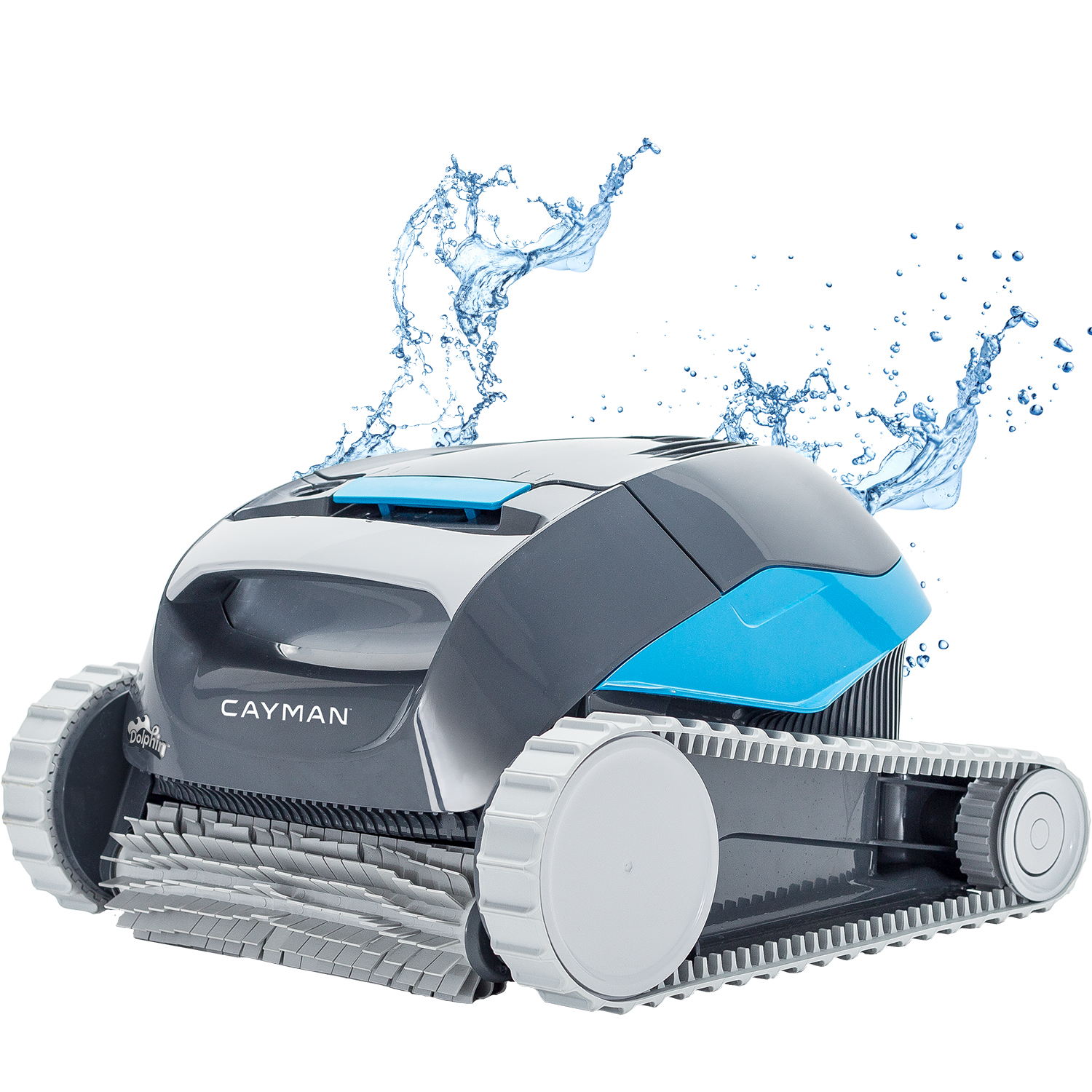 $1049
$1299Save $250Temporarily out of stock
Deep pools of 33 ft or under
Dolphin Cayman
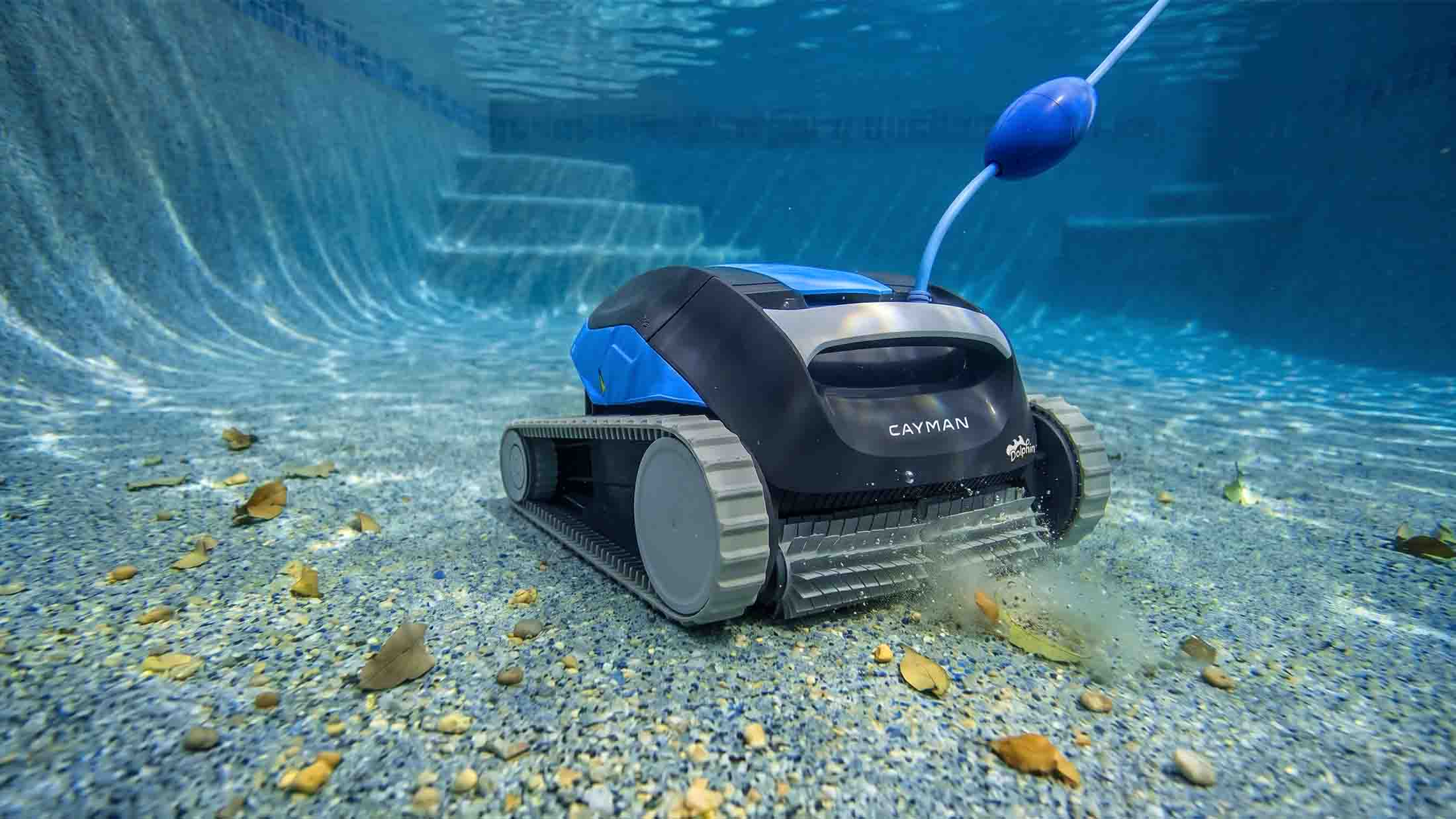
Plenty of deep pools are short: a 16 by 32 ft diving pool is inside the Cayman's 33 ft rating. There it cleans the floor and climbs the deep-end walls on HyperGrip tracks in a 2-hour cycle, and its every-day timer means debris never has long to collect at the bottom. At 14.6 lb it is by far the easiest of the four to raise from the deep end.
Depth is where its cable needs care. It has 50 ft, 5 ft less than the others, and no swivel. Place the power supply to keep the run short, and straighten the cable when it starts to coil.
- Best for
- Diving pools 33 ft long or less, for daily floor-and-wall cleaning at a lower price.
- Keep in mind
- Not for pools over 33 ft. No waterline cleaning, and 50 ft of cable without a swivel leaves less margin in a deep end.


How to judge a robot for this
What depth changes for a robot.
- 1
Cable that goes down
The cable crosses the deck, drops down the wall and then crosses the floor. In a 9 ft deep end, the drop alone uses 9 ft. The Premier, Sigma and Quantum carry 55 ft of cable; the Cayman carries 50 ft.
- 2
More wall per cycle
Deep-end walls can be twice as tall as shallow-end walls, and a robot climbs them in strips. A longer cycle covers more strips. Cycle times among these four picks run from 2 hours to 3.
- 3
Twist on long climbs
Every climb and descent turns the robot, and in deep water it climbs a long way. A swivel on the cable lets twist run out instead of building into coils that shorten its reach.
- 4
The lift from the bottom
A robot that finishes in the deep end is drawn up by its cable, then lifted by the handle. Weight tells: 14.6 lb for the Cayman, 18.3 for the Quantum, 20.3 for the Premier and 24.6 for the Sigma.
Side by side
Deep-pool specs compared.
| Specification | Dolphin Premier | Dolphin Sigma | Dolphin Quantum | Dolphin Cayman |
|---|---|---|---|---|
| Price today | $1949 | $2349 | $1599 | $1049 |
| Cleans | Floor, walls and waterline | Floor, walls and waterline | Floor, walls, waterline, sun shelves and stairs | Floor and walls |
| Traction | HyperGrip tracks | HyperGrip tracks | HyperGrip tracks | HyperGrip tracks |
| Navigation | SmartNav 2.0 | SmartNav 3.0 with gyroscope | SmartNav 2.0 | SmartNav 2.0 |
| Cable | 55 ft with 360° anti-tangle swivel | 55 ft with 360° anti-tangle swivel | 55 ft with anti-tangle swivel | 50 ft |
| Robot weight | 20.3 lb | 24.6 lb | 18.3 lb | 14.6 lb |
| Warranty | 3 years | 3 years | 2 years | 2 years |
Do the cable sum before you buy.
Add three numbers. One: the distance from the power supply to the water. The power supply has to sit back from the edge by the distance your manual gives; as an example only, call it roughly 12 ft, and use your own manual's figure. Two: the depth of the deep end, because the cable drops straight down. Three: the distance along the floor from that point to the farthest corner.
Take a pool with a 9 ft deep end where the farthest corner is 25 ft along the floor. That is 12 plus 9 plus 25, or 46 ft. A 55 ft cable covers it with 9 ft of slack. A 50 ft cable covers it with 4. If the sum is tight, move the power supply toward the deep end.
Raising a robot from the deep end.
A robot that ends its cycle at the bottom of a diving end has to come up through 8 or 9 ft of water. Do it gently, the same way each time.
- Draw the cable in slowly and steadily until the robot reaches the surface by the wall.
- Take the handle and lift, pausing to let water drain before you swing it onto the deck.
- Do not lift the robot clear of the water by its cable. The handle is there for that.
- If the lift is hard for you, weight is a fair reason to choose a lighter robot.
What depth does not change.
Depth does not change the length rating. A robot is rated by the pool's longest straight run, so a 30 ft pool is a 30 ft pool whether it is 5 ft deep or 10. Depth also does not change what a robot is for. It will not clear a deep end that has turned green; that takes chemicals, brushing and filtration first, and the robot comes out of the water while you shock. Once the water is balanced, the robot collects what the treatment left on the floor.
Running a robot in a deep pool.
- Put the power supply nearer the deep end than the shallow end, so the cable's spare length is where the drop is.
- Lay the cable out straight on the deck every few weeks if it coils, above all with the Cayman, which has no swivel.
- Empty the filter after any cycle that follows a storm. A full filter weakens the suction that tall climbs depend on.
Questions, answered
Deep pool questions.
How deep can a robotic pool cleaner go?
Deep enough for a standard diving pool. The Dolphins compared here do not publish a maximum depth, and we will not make one up. They are built for residential in-ground pools, standard diving depths included. If your pool is unusually deep, check the manual or ask a Dolphin expert before you order.
Does a 50 ft length rating cover a deep 40 ft pool?
Yes. The length rating refers to the pool's longest straight run, not its depth and not its diagonal. A 40 ft pool is inside a 50 ft rating whether the deep end is 6 ft or 10. Depth is a cable question: add the deck distance, the drop and the floor run, and compare the total with the cable length.
Will a robot climb all the way up a deep-end wall?
Yes. It climbs from the floor to the top of the wall in one run; the height only makes each climb longer. The Premier, Sigma and Quantum scrub the waterline when they get there. The Cayman cleans the wall and turns back below the waterline. Tall walls are why the best robotic pool cleaner for deep pools is the one with the longest cycle.
Is a heavier robot better in deep water?
No. Weight is not what holds a robot to a wall; suction and tracks do that. A heavier robot is only harder to raise from the bottom and lift onto the deck. Of the four picks here, the Sigma is heaviest at 24.6 lb and the Cayman lightest at 14.6 lb, and both climb deep-end walls.
The verdict
Length first, then the cable sum.
Measure length first, then do the cable sum. Over 33 ft, choose among the three 50 ft robots. The Premier has the longest cycle and the leaf bag. The Sigma adds the app and a gyroscope. The Quantum costs less. At 33 ft or under, the Cayman does a diving end well and is the easiest to lift out. Whichever you buy, give it slack at the deep end.
Keep reading