


By pool shape and design
Best robotic pool cleaner for irregular-shaped pools: islands, Ts and channels
Top pick: Dolphin Sigma
Live prices · Free shipping · 30 Day Trial
The short answer
When a pool has something in the middle of it, or a part the robot cannot reach from the rest, the right robot and a plan for each zone matter more than raw power.
For an irregular-shaped pool, start with the Dolphin Sigma. Its gyroscope lets it recover its heading after an island, peninsula or step turns it around, and its swivel cable copes with the detours. The Quantum is second: it senses ladders and drains, lists stairs and shelves, and is light to carry between zones. The Premier follows, and the Cayman suits small irregular pools of 33 ft or less.
By irregular we mean more than curvy. This page is for the T-shaped pool, the pool with a peninsula or an island, the floor on two levels, the narrow channel joining two basins, the corner cut out for a spa. The question behind the best robotic pool cleaner for irregular-shaped pools is not whether a robot can follow a curve. It is whether it can find its way around something and still cover the rest.
Some of that a good robot handles. Some of it no robot does, and you should know which before you buy. A robot will not cross a raised divider or go over a spillway, so a pool in separate zones is cleaned one zone at a time. A channel too tight to turn in may be skipped. Within those limits, navigation and cable decide the ranking.
Our picks, in order
Four picks for a pool with something in the way.
- 1
 $2349
$2999Save $650Temporarily out of stock
Recovers its heading after an obstacle
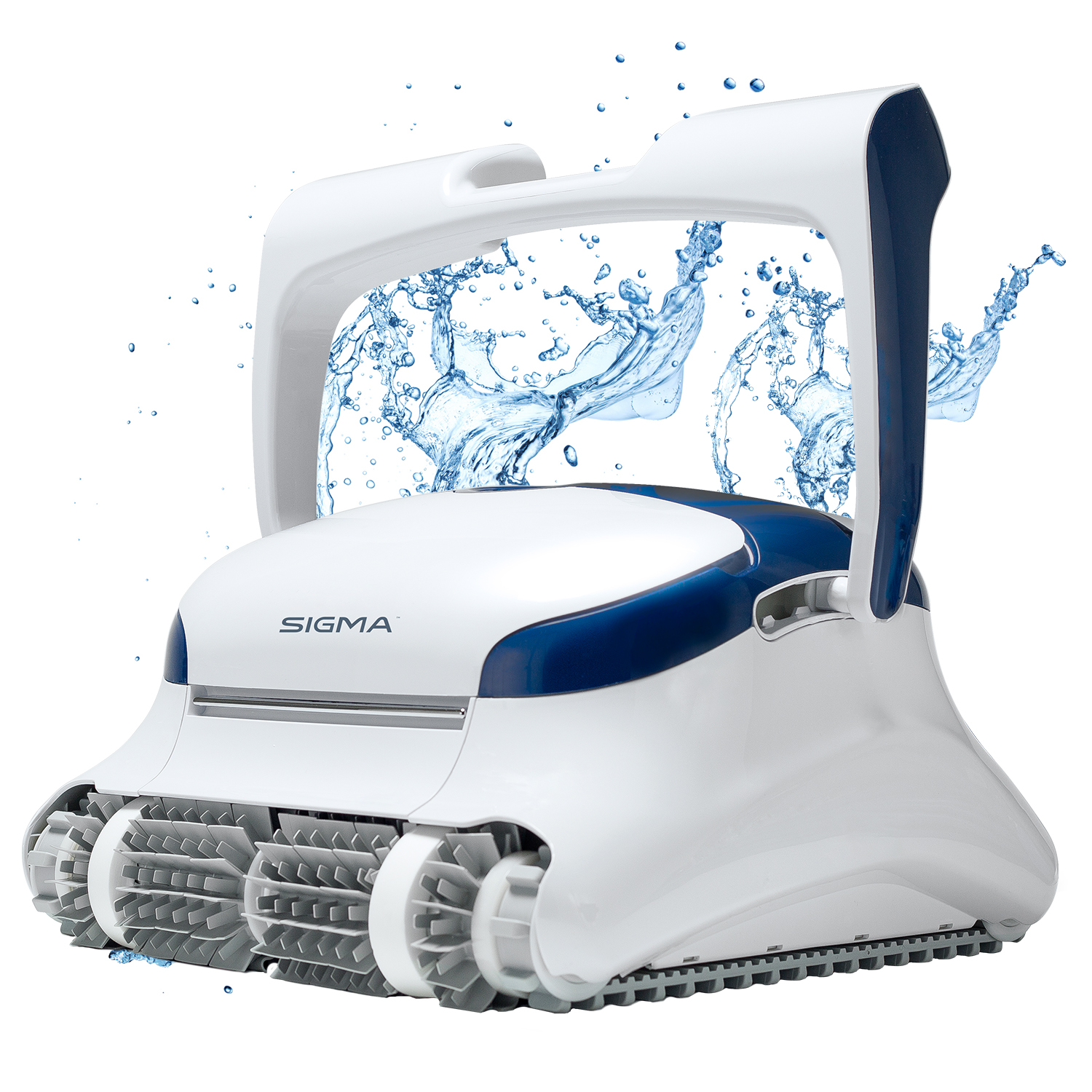
Dolphin Sigma
Irregular pools knock robots off their line. The Sigma is the one built to get back on it: SmartNav 3.0 uses an onboard gyroscope, so after a peninsula or the leg of a T turns it, it knows where it was pointed. That counts for more here than on any simple shape. Its 55 ft cable swivels through 360 degrees to shed the twist from detours, quad scrubbing brushes work floor, walls and waterline, and the weekly scheduler in the myDolphin Plus app sets cycles by day and time. It is rated to 50 ft.
- Best for
- T-shapes, peninsulas and islands in pools up to 50 ft.
- Keep in mind
- At 24.6 lb it is the heaviest pick to carry between separate zones, and the highest-priced. It will not cross dividers either.
- 2
 $1599
$1799Save $200Temporarily out of stock
Senses ladders and drains, easy to move
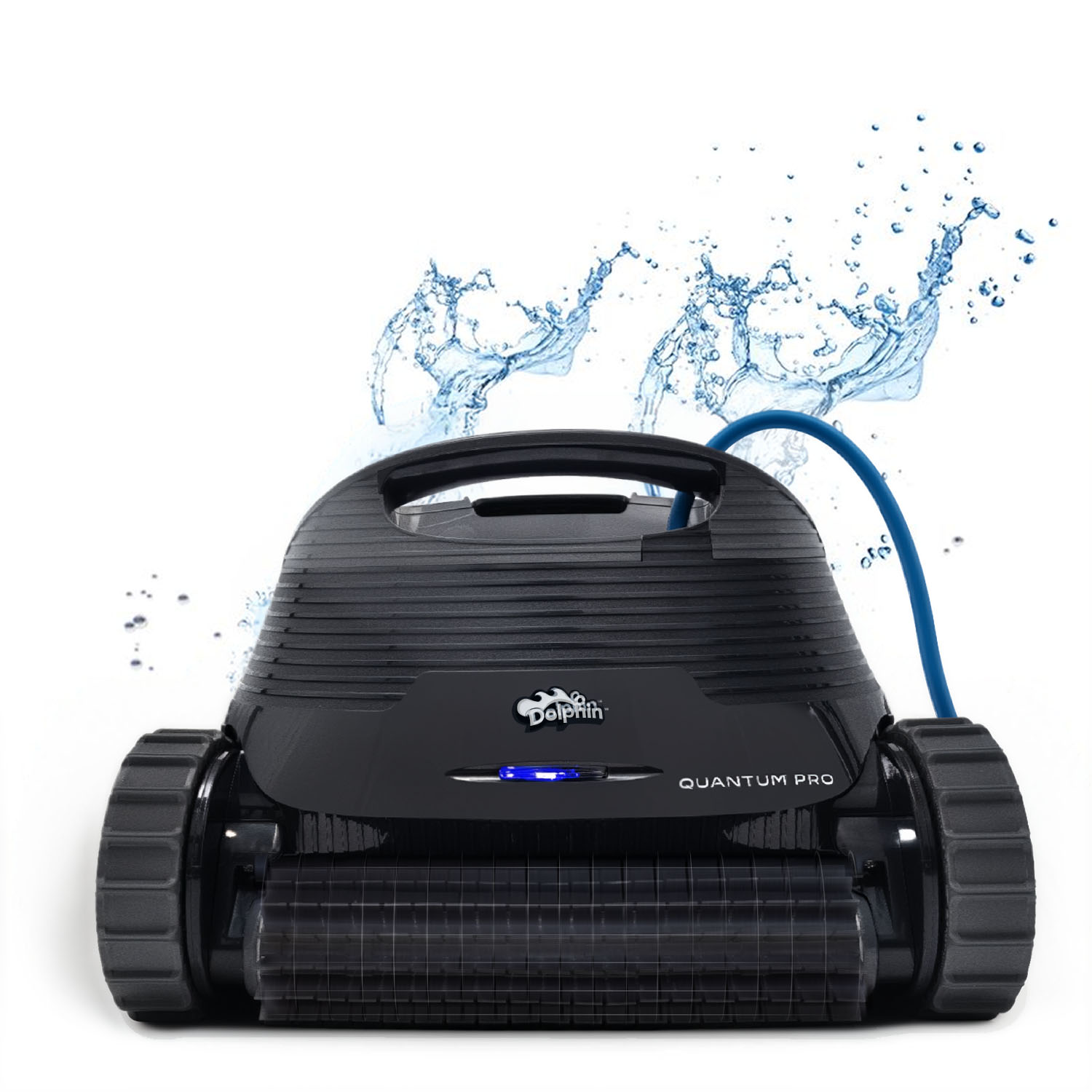
Dolphin Quantum
The Quantum earns second place on three counts that belong to awkward pools. Its SmartNav 2.0 senses ladders and drains. Its published coverage names stairs, sun shelves and Baja ledges, the features that split a floor into levels. And at 18.3 lb it is the lightest of the three 50 ft picks, which you will notice when the pool has two zones and the robot is carried between them. Its cable is 55 ft with an anti-tangle swivel, and no 50 ft robot here is priced lower.
- Best for
- Pools with steps, shelves or two zones to clean in turn, up to 50 ft.
- Keep in mind
- After an island it leans on scanning and repetition, not heading control. Two-hour cycle and a 2-year warranty.
- 3
 $1949
$2499Save $550Temporarily out of stock
Longest cycle, and L-shapes on its list
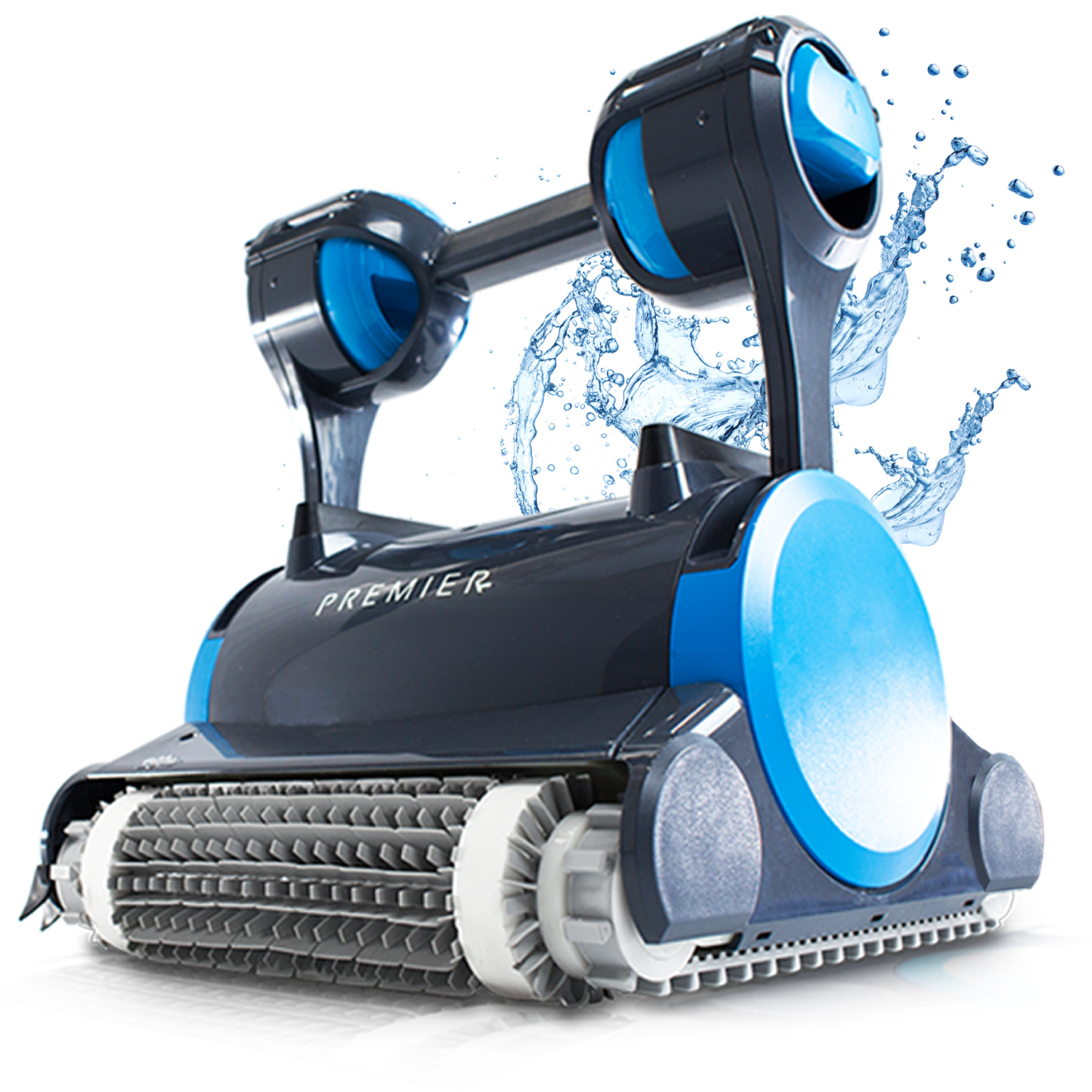
Dolphin Premier
The Premier's published shape list is the only one here that names an irregular outline: L-shaped pools, alongside rectangle, oval and freeform. Its case for odd pools is time. A 3-hour cycle, the longest of the four, gives SmartNav 2.0 scanning more passes at the corners an obstacle hides. Its cable, 55 ft on a 360-degree anti-tangle swivel, copes with the detours, the timer on the power supply has daily, 2-day and 3-day settings, and the Multi-Media system includes a leaf bag for the dead corners where debris gathers.
- Best for
- L-shapes and cut-out pools up to 50 ft, and owners who want set-and-leave timing.
- Keep in mind
- At 20.3 lb it is a heavier carry than the Quantum, and it also navigates by scanning.
- 4
 $1049
$1299Save $250Temporarily out of stock
Small irregular pools, light to lift
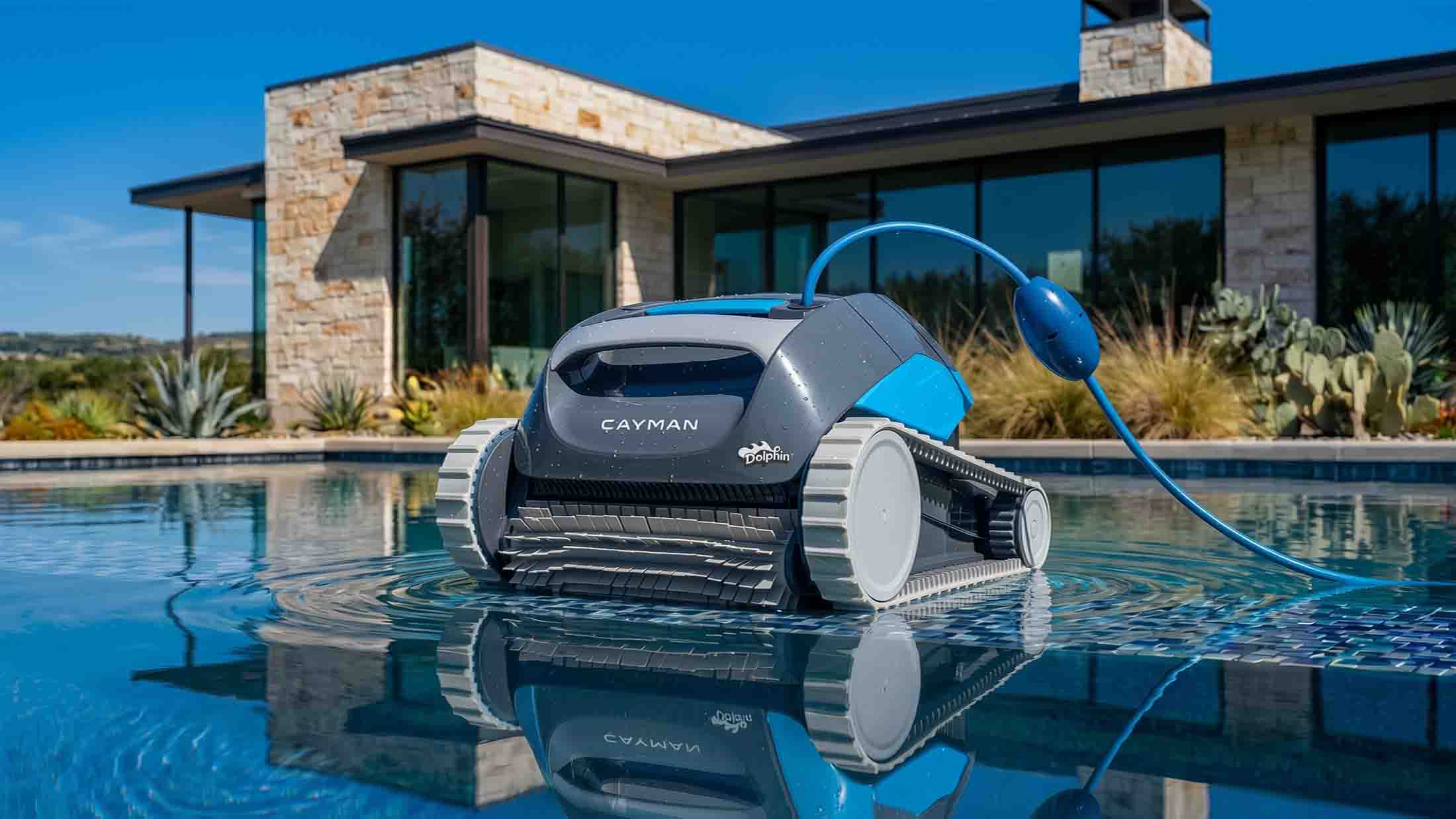
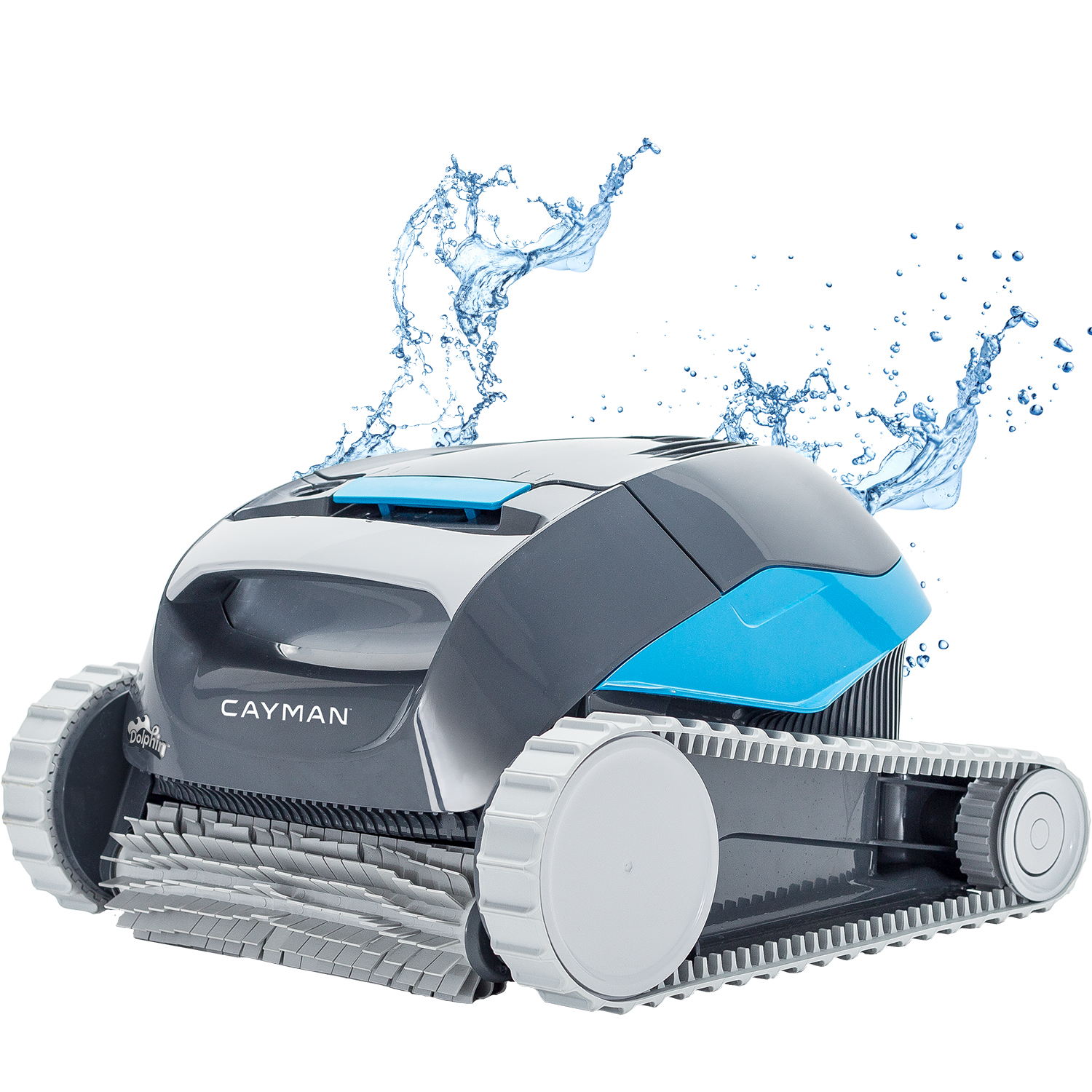
Dolphin Cayman
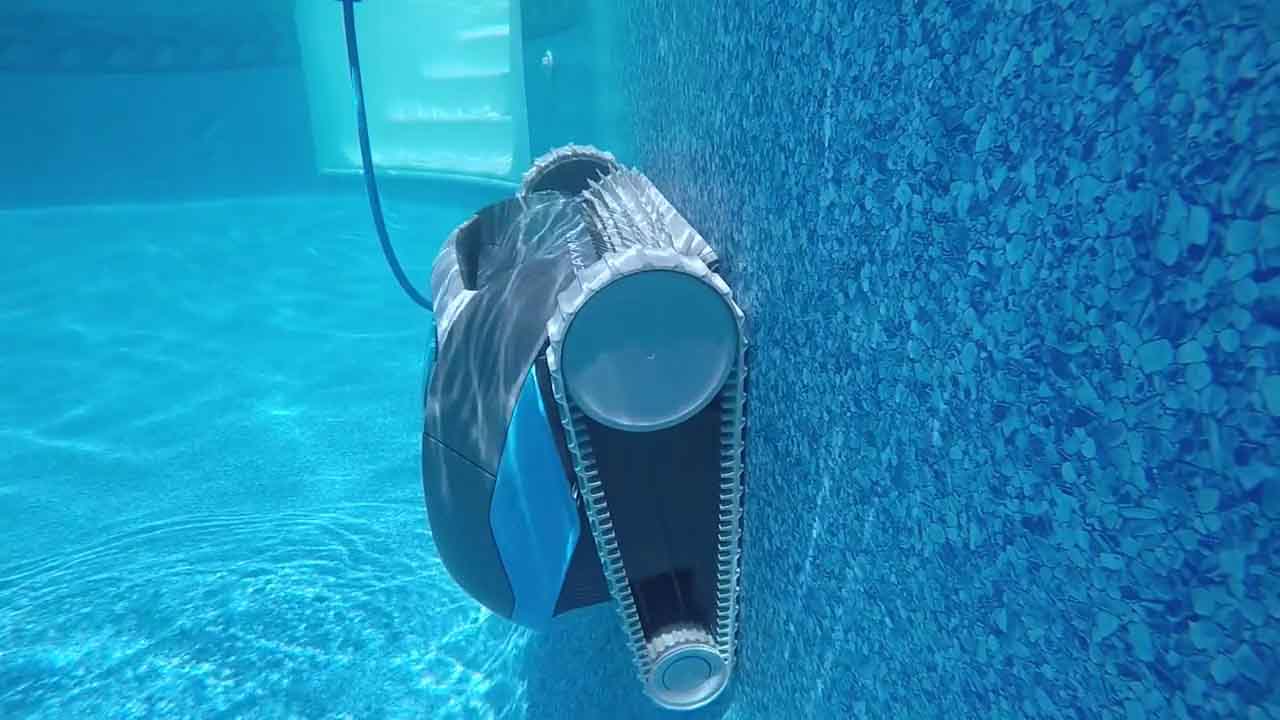
On a small irregular pool, 33 ft or less at its longest, the Cayman does the floor and walls in a 2-hour cycle and runs on its timer every day. Its strength here is weight: 14.6 lb, the lightest of the four picks, so lifting it from one zone into another is no chore. Its weakness is the cable. Fifty feet of plain cable is fine in open water, but around a peninsula or island it twists and can wrap, and you will be the one to undo it.
- Best for
- Compact T-shapes and cut-out pools 33 ft or less, in-ground or above-ground.
- Keep in mind
- No swivel, no waterline scrubbing and a 33 ft rating. With an island in the pool, choose a swivel-cable pick.


How to judge a robot for this
What an obstacle changes.
- 1
Recovery after a turn
An island or peninsula turns the robot where it did not expect a wall. What matters is what it does next. The Sigma's gyroscope tells it which way it was heading, so it can pick the line back up. Robots without one rely on scanning and repeated passes, which works but uses more of the cycle.
- 2
Cable around the obstacle
A cable follows the robot. Around a peninsula it drags across the tip. Around an island it can wrap. A swivel, on the Sigma, Quantum and Premier, takes out the twist those detours build. It cannot unwrap a cable from an island, so power supply position still matters.
- 3
Zones that do not join up
A raised divider, a spillway, a dam wall between spa and pool: a robot treats each as the end of the pool. Count your separate bodies of water. Each is its own job, and the robot's weight decides how much you mind moving it.
- 4
The narrowest passage
A robot needs room to turn. In a connecting channel narrower than about 5 ft, any of these becomes marginal: it may enter and back out, or never enter at all. If the channel is short, a brush is quicker than fighting it.
Side by side
How the four compare.
| Specification | Dolphin Sigma | Dolphin Quantum | Dolphin Premier | Dolphin Cayman |
|---|---|---|---|---|
| Price today | $2349 | $1599 | $1949 | $1049 |
| Navigation | SmartNav 3.0 with gyroscope | SmartNav 2.0 | SmartNav 2.0 | SmartNav 2.0 |
| Cable | 55 ft with 360° anti-tangle swivel | 55 ft with anti-tangle swivel | 55 ft with 360° anti-tangle swivel | 50 ft |
| Pool length | Up to 50 ft | Up to 50 ft | Up to 50 ft | Up to 33 ft |
| Cleans | Floor, walls and waterline | Floor, walls, waterline, sun shelves and stairs | Floor, walls and waterline | Floor and walls |
| Cycle time | 2.5 hours | 2 hours | 3 hours | 2 hours |
| Scheduling | Weekly scheduler by day and time | Weekly timer: every day, every 2 days or every 3 days | Weekly timer: every day, every 2 days or every 3 days | Timer: every day |
| Warranty | 3 years | 2 years | 3 years | 2 years |
Map the pool into zones first.
Sketch the pool from above and mark every place a robot cannot pass: a raised divider, a spillway, a gap too narrow to turn in. What is left is one or more zones. Measure the longest straight run of the largest zone. That figure goes against the length rating. Then decide where the power supply would sit for each zone, because the cable has to reach that zone's far floor without being dragged around a corner.
A T-shaped pool is a single zone. Measure the top bar end to end, then the stem from its foot to the far wall of the bar, and use the longer figure.
Islands and peninsulas: where the cable goes.
A peninsula is the easier of the two. Set the power supply so the cable fans out to both sides of it, from the deck opposite the tip or from the peninsula itself if it is deep enough for the setback in your manual.
An island is harder. A robot that circles it carries the cable around with it, and no swivel undoes a full wrap. Watch the first few cycles. If the cable wraps, lift it clear and try the power supply somewhere else before the next run. A swivel still earns its place: it removes the twist, and twist is what turns a wrap into a knot.
What no robot here will do.
Better to read this list now than to learn it on the first cycle.
- Cross a raised divider, spillway or dam wall. The zones on either side are cleaned one at a time.
- Reliably work a channel too narrow to turn around in.
- Treat a split-level floor as one surface. The riser between levels is a wall to the robot. It may climb onto the upper level or turn back, so start it up there every other run.
- Replace sanitizer, skimming, or brushing during an algae treatment.
Setting up around an obstacle.
- Lower the robot in on a different side of the obstacle on alternate runs so no area is always last.
- After each of the first three cycles, look at how the cable lies. If it has crossed the tip of a peninsula or circled an island, change the power supply position.
- Take loose items out of the water before a cycle: toys, floating dispensers, thermometer lines. Each one is another obstacle.
- Brush tight cut-outs and narrow channels toward open floor first, so the robot collects what it cannot reach.
Questions, answered
Questions about awkward pools.
Can a robot clean around an island in the pool?
Yes, it will clean the floor and walls around an island, but watch the cable. A robot that laps the island carries the cable with it. A swivel removes twist, not a full wrap, so position the power supply to keep the island out of the cable's path and check the first few runs.
Will a robot cross from one section of my pool to another?
Only if the sections share open water wide and deep enough to drive through. It will not cross a raised divider or go over a spillway. Pools split that way are cleaned one zone at a time: run a cycle, lift the robot, move the power supply if the cable will not reach, and run again.
How do I size the best robotic pool cleaner for irregular-shaped pools?
By the longest straight run of water in the largest zone, not by the overall footprint or the gallons. Up to 33 ft, the Cayman is rated for it. From there to 50 ft you need the Sigma, Quantum or Premier. Then check, as a separate step, that the cable reaches the farthest floor from where the power supply will sit.
Does a robot work on a pool floor with two levels?
It works on each level. The step between them is the question. A robot climbs a riser the way it climbs a wall and may or may not carry on across the upper level, so the smaller level can get less attention. The Quantum, which lists stairs and shelves, is the pick best suited to this.
The verdict
The short version.
Count the zones and measure the longest run. One zone up to 50 ft with a peninsula, island or T: the Sigma, because it recovers its heading. Steps, shelves or two zones to carry between: the Quantum. A plain L or cut-out in a leafy yard: the Premier. A small irregular pool of 33 ft or less with no island: the Cayman. If your sketch has a channel or divider you are unsure about, ask a Dolphin expert before you order.
Keep reading