


By pool type and installation
Best robotic pool cleaner for natural pools: what works, and where it must not go.
Top pick: Dolphin Premier
Live prices · Free shipping · 30 Day Trial
The short answer
A robot can keep the lined swimming zone of a natural pool clear of sediment and leaf litter. It cannot go near the plants, and no maker says otherwise.
With that limit understood, the Dolphin Premier is our first choice for a natural pool's swimming zone: NanoFilters for fine sediment, a leaf bag for plant litter and a timer for frequent runs are all in the box. Choose the Dolphin Sigma if you want four brushes on wall biofilm and scheduling from your phone. Neither belongs anywhere near the plants.
None of the robots on this page is published as approved for natural swimming pools. In practice a robot can clean a smooth, lined swimming zone. It must stay out of the planted regeneration zone, gravel beds and any loose substrate. Ask your pool's builder before you buy.
The best robotic pool cleaner for natural pools is a harder question than it sounds. A natural swimming pool cleans its water with plants, gravel and the microbes that live on them. There is no sanitizer for a robot to work alongside, and the living filter you paid for sits a few feet from the water you swim in.
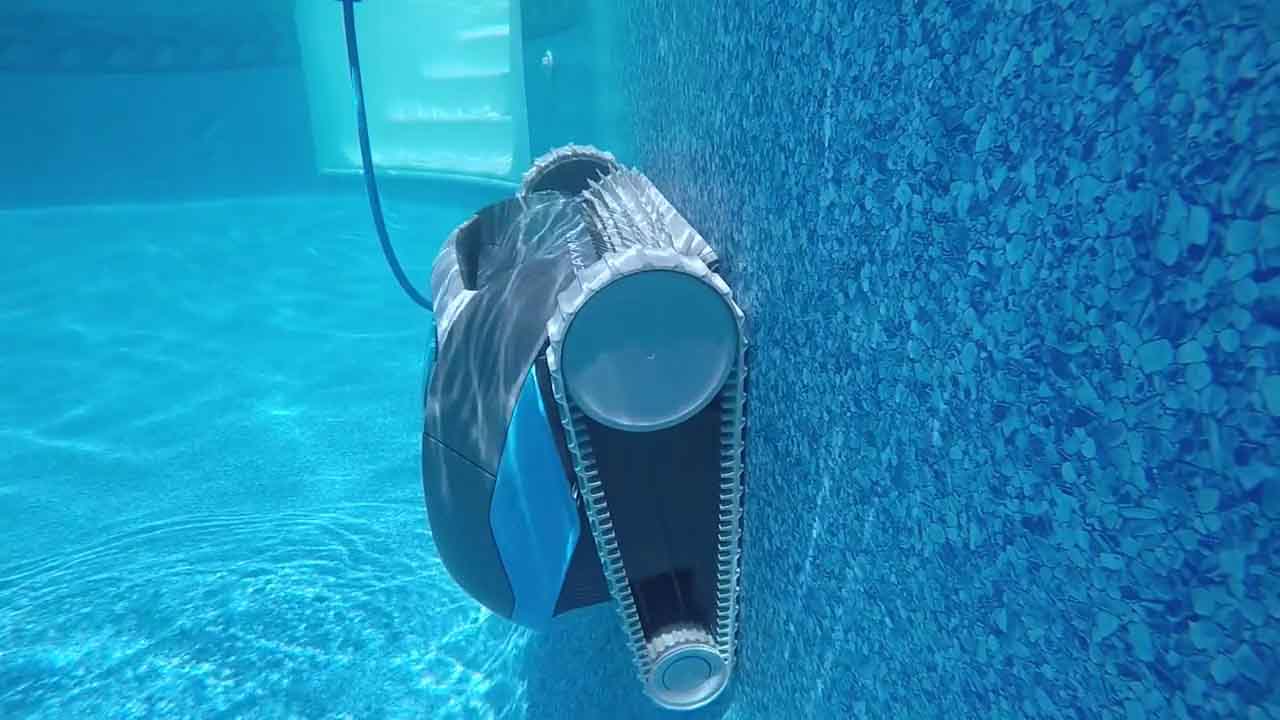
So the honest answer has two parts. The published ratings for every Dolphin in these guides describe conventional pools. And the lined swimming zone still gives a robot ordinary work: sediment, leaf litter and a slick of biofilm on a smooth floor. This page ranks four robots for that work, the Dolphin Cayman and Dolphin Quantum among them, and sets the rules that protect the planted side.
Our picks, in order
Four robots for the swimming zone, ranked.
- 1
 $1949
$2499Save $550Temporarily out of stock
Best match for sediment and plant litter
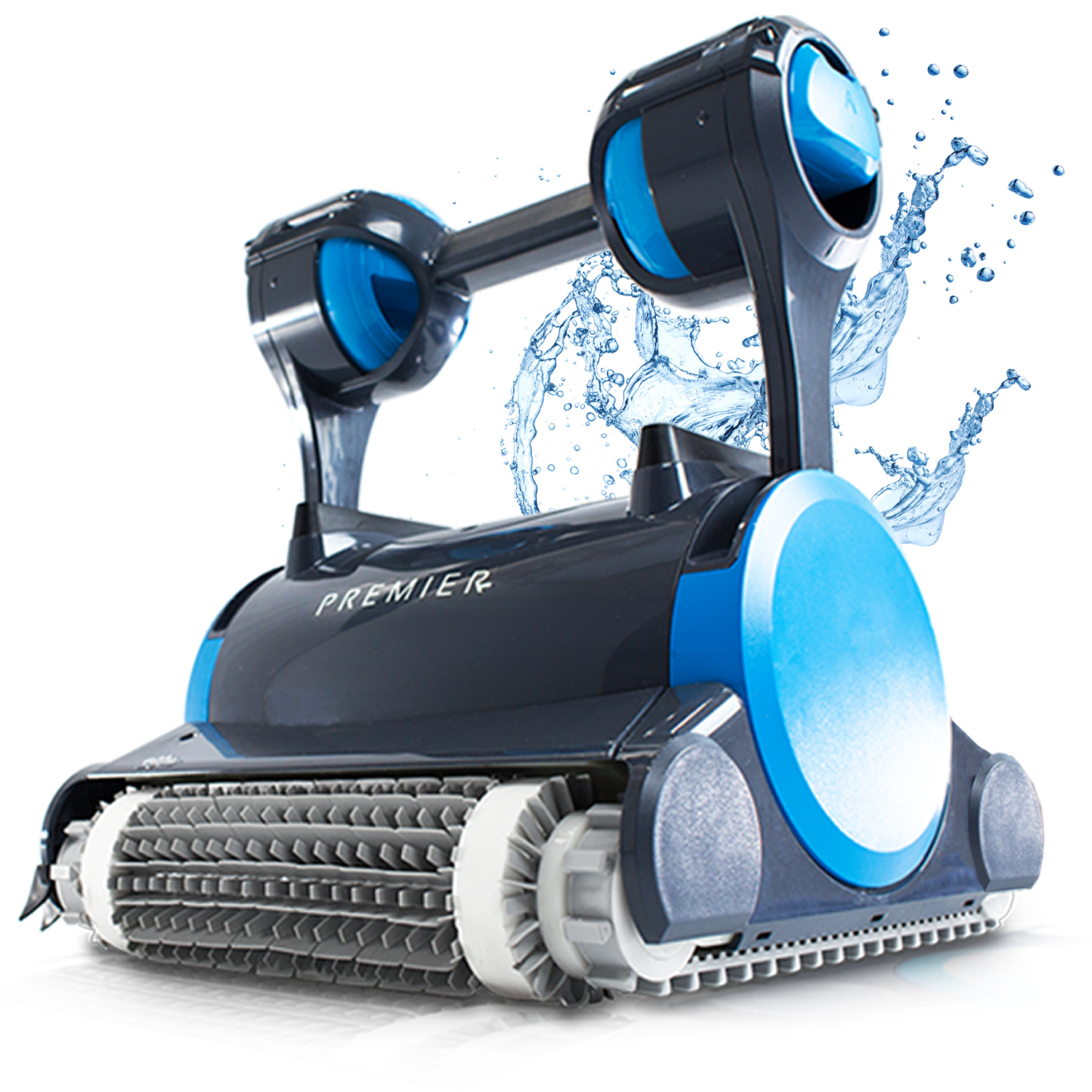
Dolphin Premier
A natural pool sheds two kinds of debris into the swimming zone: fine sediment that drifts across from the planted side, and leaves, stems and seed heads from the plants themselves. The Premier's Multi-Media system covers both from the box: NanoFilters for the fine material, the oversized leaf bag for the litter.
Its weekly timer sits on the power supply and runs every day, every 2 days or every 3 days, which suits a film that comes back fast. It scrubs floor, walls and waterline in a 3-hour cycle, reaches 50 ft and carries a 3-year warranty.
- Best for
- Lined or concrete swimming zones up to 50 ft with both fine sediment and plant litter.
- Keep in mind
- Natural pools are not on its published list, and at 20.3 lb it is a real lift each time it comes out to be washed.
- 2
 $2349
$2999Save $650Temporarily out of stock
Most scrubbing for wall biofilm
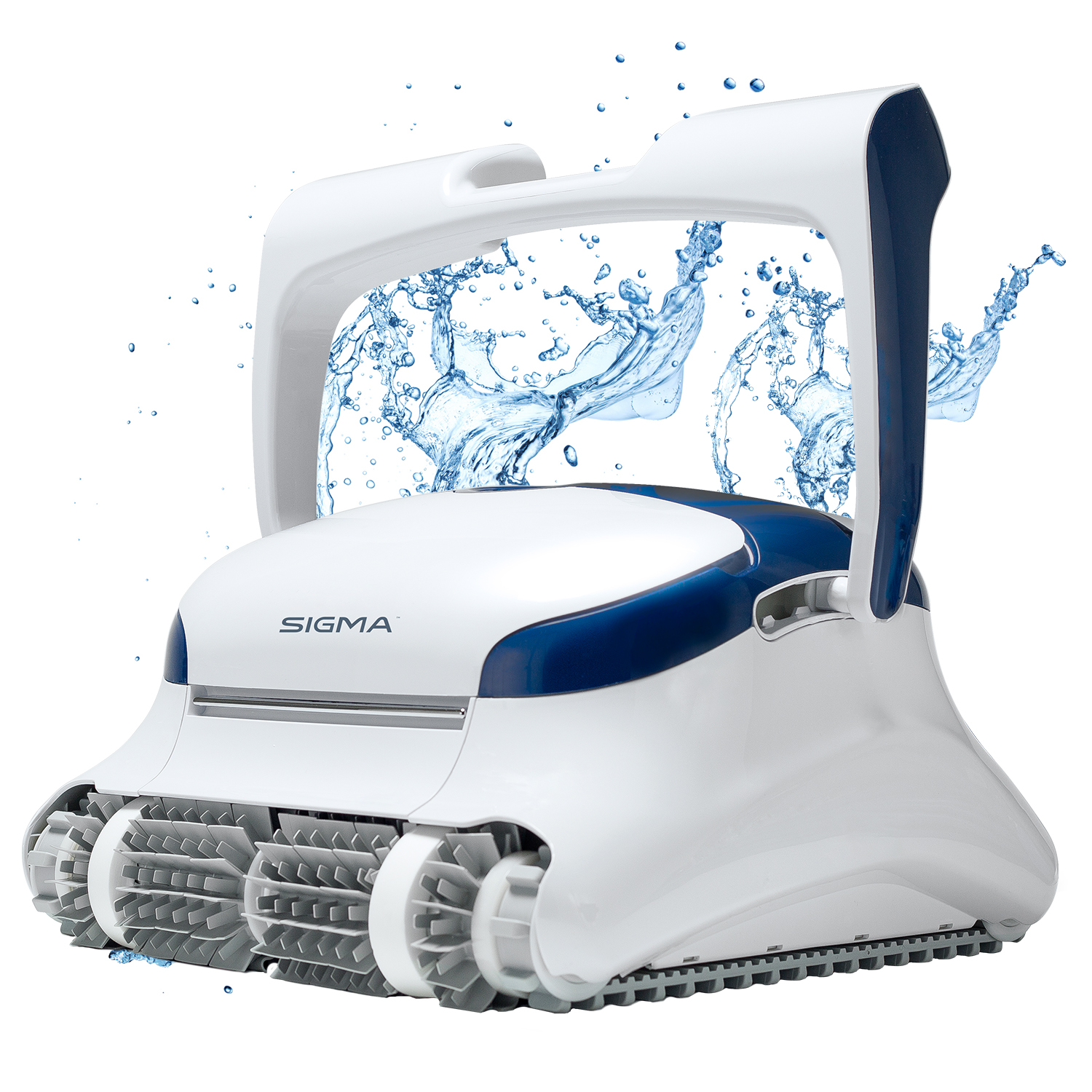
Dolphin Sigma
Biofilm is the daily problem in water without chlorine, and it is a scrubbing problem more than a suction one. The Sigma puts quad scrubbing brushes on the floor, walls and waterline, where the other picks have one or two. NanoFilters and standard filter cartridges are included for the sediment.
The myDolphin Plus app schedules runs by day and time. It is second to the Premier because there is no leaf bag for plant litter and it is the highest-priced pick.
- Best for
- Swimming zones up to 50 ft where slippery walls and a film at the water's edge are the main complaint.
- Keep in mind
- No leaf bag, the highest price here, and at 24.6 lb the heaviest pick to lift out and rinse.
- 3
 $1049
$1299Save $250Temporarily out of stock
For swimming zones up to 33 ft, run daily
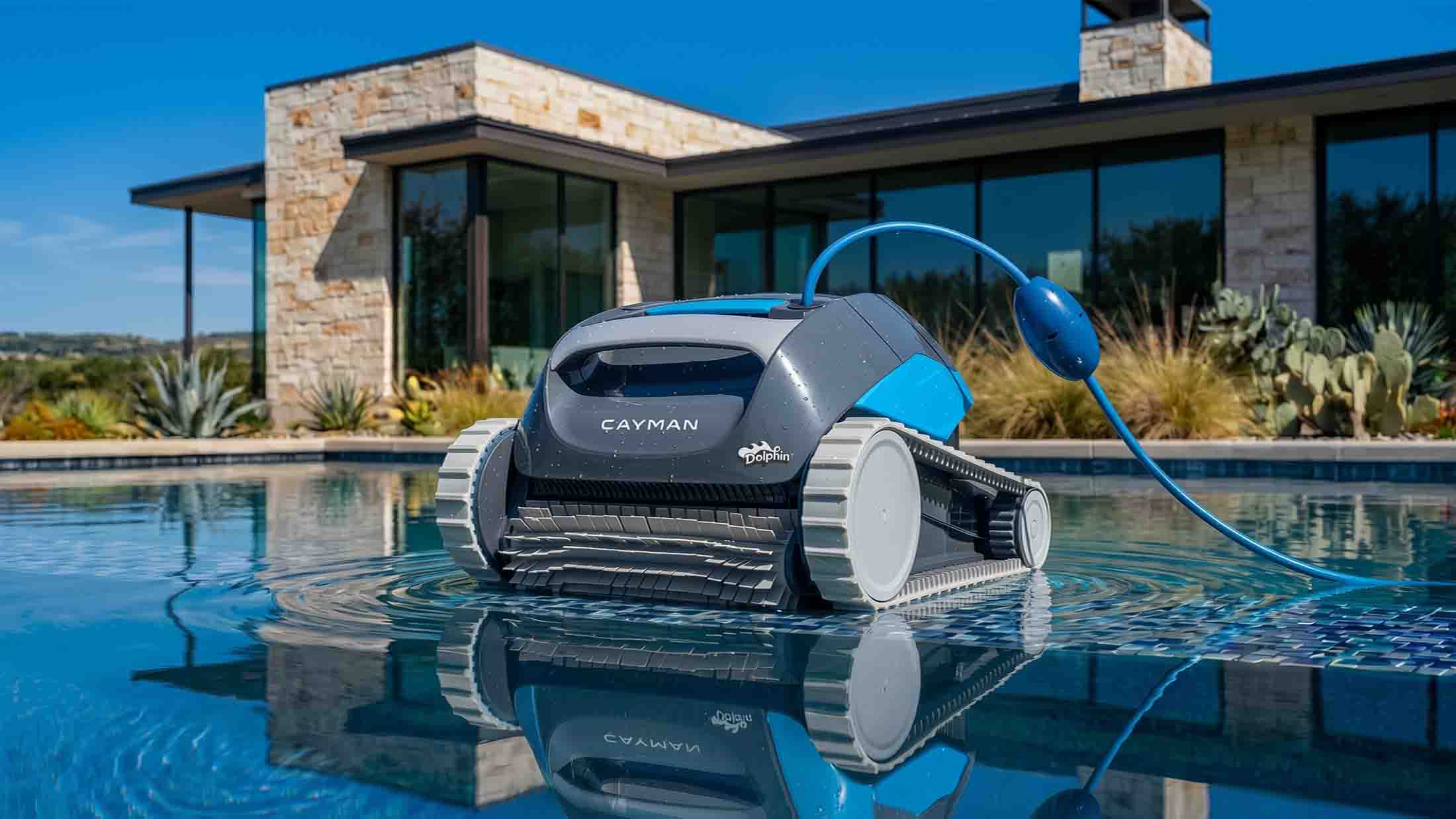
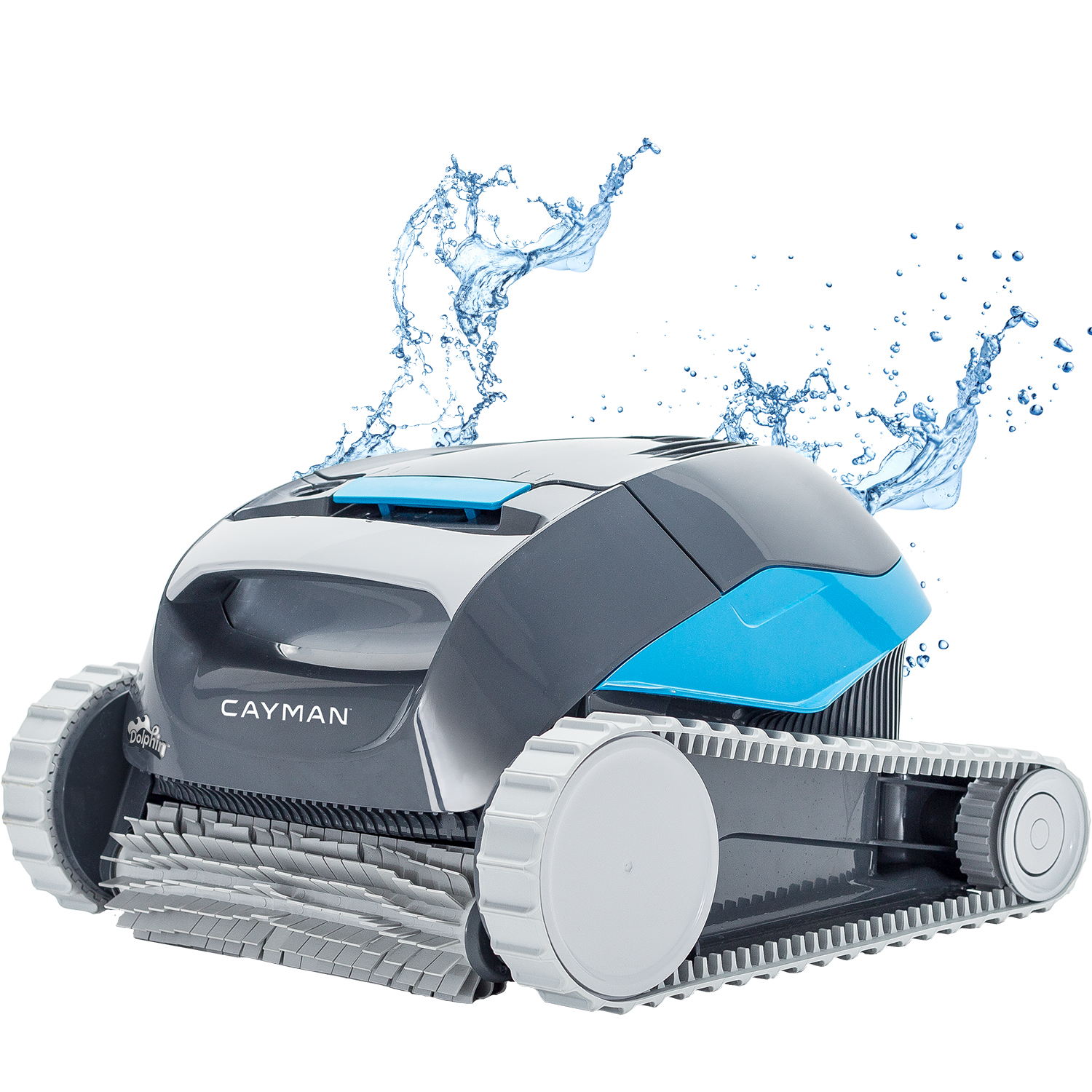
Dolphin Cayman
The swimming zone is often smaller than the whole pond suggests, because the planted side takes much of the footprint. If yours is 33 ft or shorter, the Cayman is enough robot. It cleans the floor and walls in a 2-hour cycle with a HyperBrush that spins at twice the speed of a standard Dolphin brush, and its timer runs every day, the right rhythm for biofilm.
It weighs 14.6 lb, the lightest of the four, and that counts here because the robot comes out often to be rinsed. It is third because the NanoFilter panels that fine sediment calls for are an optional add-on.
- Best for
- Swimming zones up to 33 ft on vinyl liner or concrete, where a daily floor-and-wall pass is the plan.
- Keep in mind
- Budget for the optional NanoFilter panels. The film at the water's edge is yours to wipe, and natural pools are not on its published list.
- 4
 $1599
$1799Save $200Temporarily out of stock
Large basket and NanoFilter panels at a lower price
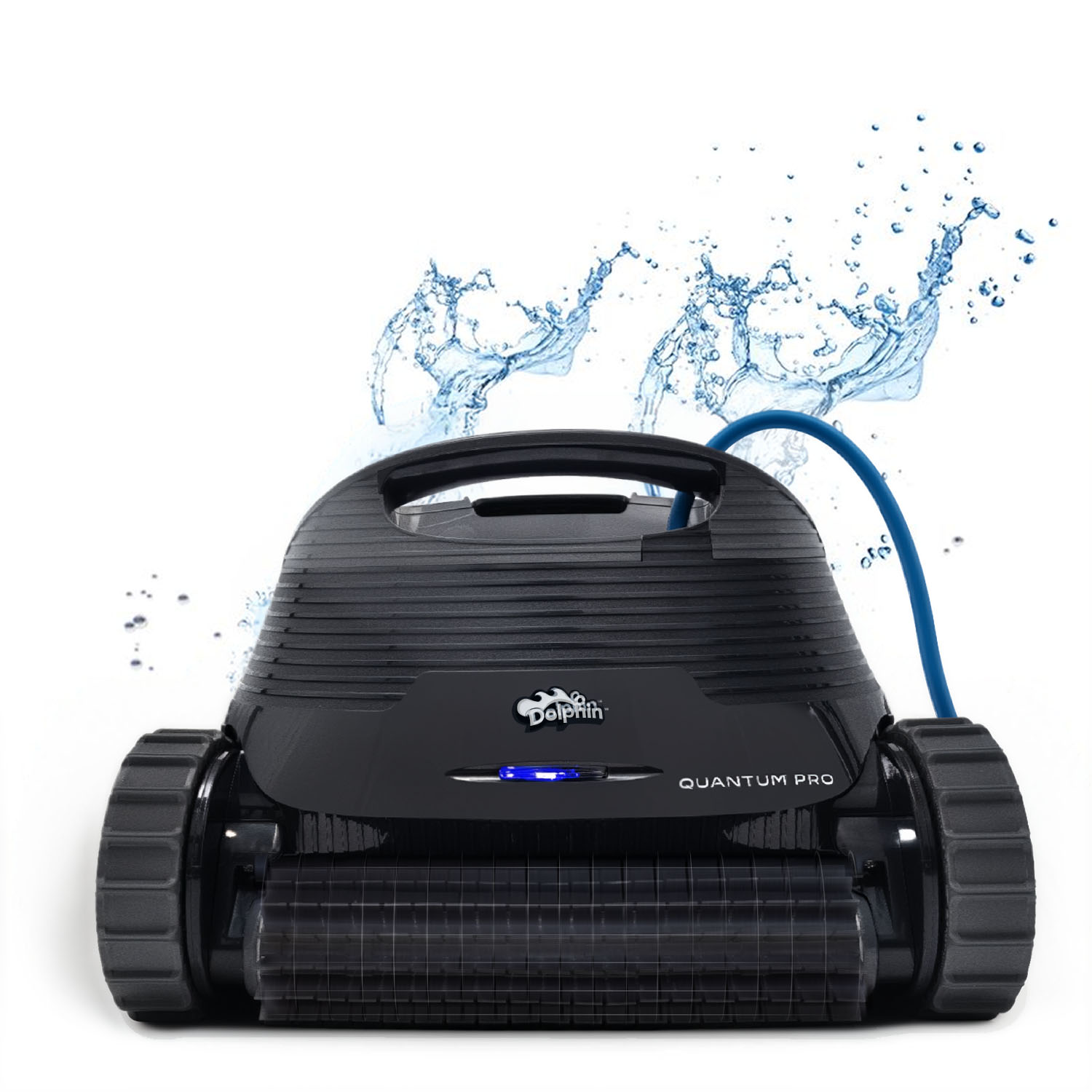
Dolphin Quantum
The Quantum brings the two things a natural pool asks for at the lowest price of the three 50 ft robots: a full set of NanoFilter panels in the box, and an XXL MaxBin basket with over 400 sq in of filter area for plant litter. Dual HyperBrushes scrub floor, walls and waterline in a 2-hour cycle, and the weekly timer handles frequent runs.
It sits fourth for a reason specific to these pools. The Quantum is made to clean sun shelves and Baja ledges. Beside a planted shelf that reach is no advantage, so check the divider between the zones with extra care.
- Best for
- Walled-off swimming zones up to 50 ft with heavy plant litter, bought on value.
- Keep in mind
- A 2-year warranty, and its shelf-cleaning reach means the planted margin must be physically closed off, not just shallower.


How to judge a robot for this
What matters in a natural pool.
- 1
A hard edge between the zones
The robot needs a swimming zone it cannot leave. A wall or divider between the swimming water and the planted regeneration zone is what makes a robot possible at all. If the two blend through a shallow gravel margin, no robot here is the right tool.
- 2
A smooth surface
Vinyl liner is on every pick's published surface list, and so is concrete or gunite. EPDM rubber is not named on any of them, though it is a smooth sheet in the same way. Gravel, sand, clay and planted shelves are out for every robot.
- 3
Fine filtration
Natural pool sediment is fine: silt, dust and decayed plant matter. It slips through a coarse filter and clouds the water again. NanoFilters come with the Premier and Sigma, NanoFilter panels come with the Quantum, and they are an optional add-on for the Cayman.
- 4
Frequent runs
With no chlorine in the water, biofilm returns to the walls and floor quickly. A robot that runs often on a timer keeps the film thin. A robot that runs now and then is always starting over.
Side by side
Specs for the four picks.
| Specification | Dolphin Premier | Dolphin Sigma | Dolphin Cayman | Dolphin Quantum |
|---|---|---|---|---|
| Price today | $1949 | $2349 | $1049 | $1599 |
| Pool type | In-ground | In-ground | In-ground and above-ground | In-ground |
| Pool length | Up to 50 ft | Up to 50 ft | Up to 33 ft | Up to 50 ft |
| Cleans | Floor, walls and waterline | Floor, walls and waterline | Floor and walls | Floor, walls, waterline, sun shelves and stairs |
| Cable | 55 ft with 360° anti-tangle swivel | 55 ft with 360° anti-tangle swivel | 50 ft | 55 ft with anti-tangle swivel |
| Filtration | Multi-Media: NanoFilters, oversized leaf bag and standard fine filters | NanoFilters and standard filter cartridges | MaxBin basket with fine panels; NanoFilter panels optional | XXL MaxBin basket with standard and NanoFilter panels |
| Robot weight | 20.3 lb | 24.6 lb | 14.6 lb | 18.3 lb |
| Warranty | 3 years | 3 years | 2 years | 2 years |
Keep the robot out of the planted zone.
The regeneration zone is the pool's filter. Its gravel, roots and the microbes living on them do the work chlorine does elsewhere. A robot in there would churn the substrate, pull gravel into its intake, wrap roots around its brush and stir settled nutrients back into the water. So the rule has no exceptions: the robot works the swimming zone and nothing else.
What enforces the rule is the pool's construction. These robots climb walls. A divider that rises to the surface keeps a robot in. A divider that stops well below the surface may not, so watch the first full cycles from the deck before you trust a timer.
Wash it before it goes in.
A natural pool has no tolerance for pool chemicals. Chlorine, algaecide or clarifier carried in on a robot can set back the biology the pool depends on. If the robot has ever run in a treated pool, rinse it thoroughly with fresh water first: body, brush, tracks, filter and cable.
After each run, hose out the filter and skip the detergent. What comes out is nutrient-rich sludge. Empty it onto a garden bed well away from the pool, so the nutrients you just removed do not wash back in.
What a robot will not fix here.
It will not clear green or cloudy water. In a natural pool that is a biology and nutrient question for your builder. It will not skim floating leaves, clean the planted shelves or replace cutting back the plants in fall.
And because natural pools sit outside the published ratings, ask the builder whether your liner and layout suit a robot before you ask us which one. We would rather lose the sale than see a robot in a gravel bed.
Running a robot in the swimming zone.
- Watch the first two or three cycles from start to finish to confirm the robot stays inside the swimming zone.
- Fit the finest filter you have and expect to rinse it after every cycle at first.
- Net out floating leaves and stems before a cycle, and look over the swimming zone for frogs and other wildlife.
Questions, answered
Natural pool questions.
Can you use a robotic pool cleaner in a natural swimming pool at all?
In the lined swimming zone, yes, with care. None of the robots in these guides is published as approved for natural pools, so you are working outside the stated ratings. On a smooth liner or concrete floor with a firm divider from the planted zone, a robot does the job it does anywhere: sediment, litter and surface film.
Will a robot harm the plants or the biological filter?
Not if it never reaches them. Kept to the swimming zone, it removes sediment and litter that would otherwise decay there. The harm comes from a robot entering the regeneration zone, or from chemicals carried in on an unwashed robot. Some builders also have a view on how much biofilm to leave, so ask yours how often to run it.
Does the best robotic pool cleaner for natural pools work on an EPDM rubber liner?
EPDM is not named on the published surface lists, which cover vinyl liner, concrete, tile and fiberglass among others. It is a smooth sheet like vinyl, so the practical issue is folds. EPDM is often folded at corners, and a heavy fold can catch a robot. Watch the first runs and check with the liner's installer.
How often should a robot run in a natural pool?
More often than in a chlorine pool. With no sanitizer, film returns quickly to the walls and floor, and settled sediment feeds algae if it sits. Daily or every second day through the swimming season is a reasonable starting point.
The verdict
The decision rule.
Start with the pool, not the robot. If a solid divider keeps the swimming zone separate and the surface is smooth liner or concrete, a robot can work there: the Premier for sediment plus litter, the Sigma for wall film, the Cayman for zones up to 33 ft with daily runs, the Quantum when price leads. If the zones blend through gravel or planting, do not buy a robot for it. Either way, the builder's opinion comes before ours.
Keep reading