


By pool type and installation
Best robotic pool cleaner for soft-sided pools, and when a robot is worth it.
Top pick: Dolphin Escape
Live prices · Free shipping · 30 Day Trial
The short answer
Thin liner, flexible walls, ground you prepared yourself. Two robots suit a soft-sided pool, and some soft-sided pools should not have a robot at all.
The Dolphin Escape is the match for most soft-sided pools: rated for above-ground use, 14.2 lb, a 1.5-hour cycle and a 40 ft cable sized for backyard frame pools. Choose the Dolphin Cayman for the largest frame pools, where its 50 ft cable reaches further, or if you want a built-in timer that runs every day. On a small, shallow ring pool, skip the robot.
A soft-sided pool is a liner held up by water pressure and either an inflatable ring or a tubular frame. The floor is a thin sheet of PVC lying on whatever ground you prepared. The walls flex when you lean on them. That is nothing like a concrete shell, and it changes what the best robotic pool cleaner for soft-sided pools has to be.
It has to be rated for above-ground pools. It has to be light, because you lift it over a soft wall instead of walking it down steps. And it should cost a sensible fraction of the pool it cleans. That leaves two of the five Dolphins in these guides, and one honest question first: is your pool big enough, deep enough and used enough to justify either?
Our picks, in order
Two robots for soft-sided pools.
- 1
 $659
$959Save $300Temporarily out of stock
The match for frame pools and larger ring pools
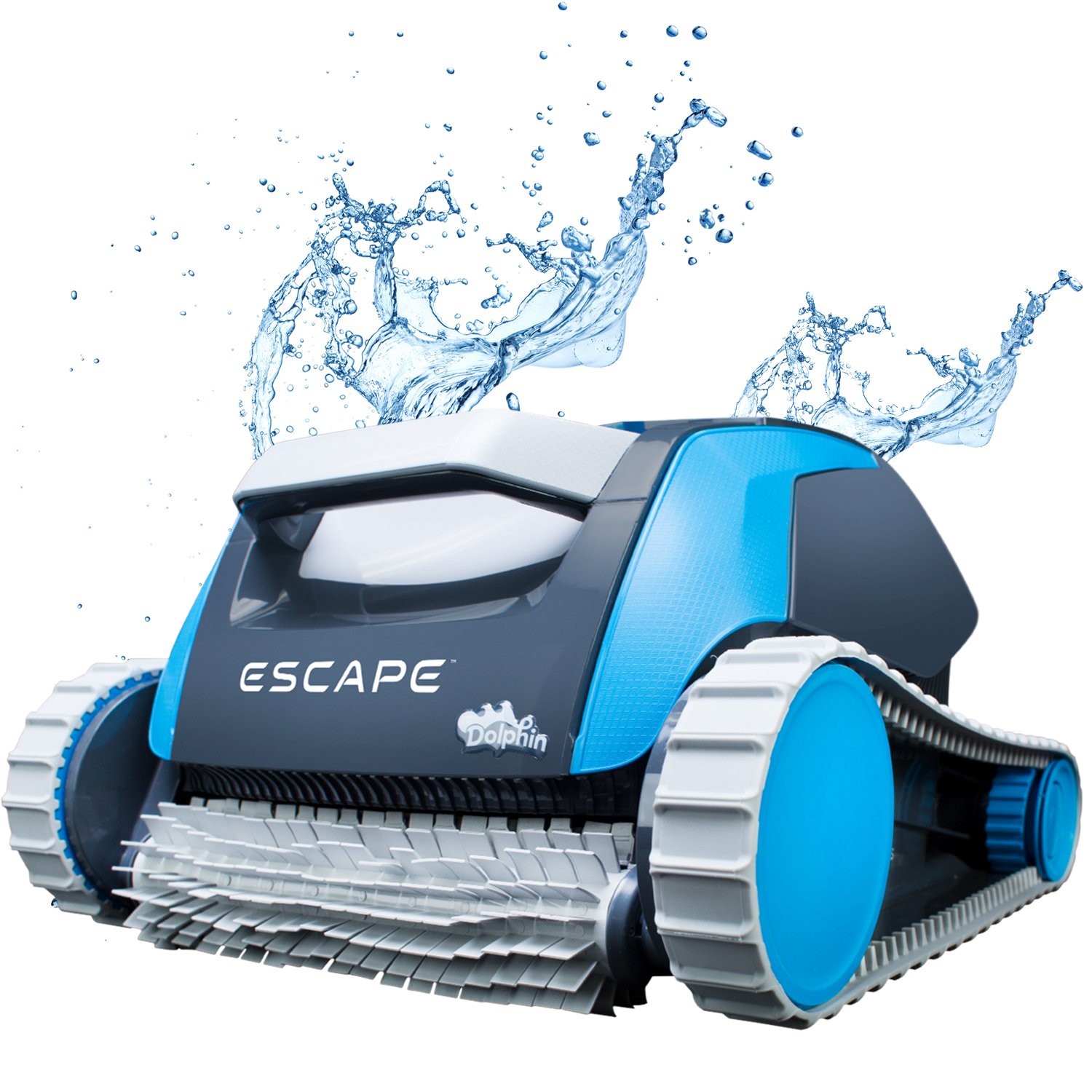
Dolphin Escape
The Escape is rated for above-ground pools and lists round pools among its published shapes, the shape most soft-sided pools are. At 14.2 lb it is the lightest of the five Dolphins we compare, which you notice every time it goes over a flexible wall. Its 1.5-hour cycle is the shortest too, handy for a pool you clean in the morning before anyone gets in.
It cleans the floor and as much wall as the wall allows, with a HyperBrush spinning at twice the speed of a standard Dolphin brush and HyperGrip tracks. The top-load MaxBin basket is 50% larger than standard Dolphin filters, and vinyl liner is a published surface. The 40 ft cable fits typical backyard frame pools, and it is the lower-priced pick.
- Best for
- Frame pools from about 15 ft up, and deeper ring pools, used through the whole summer.
- Keep in mind
- You start each cycle yourself unless you add the optional Automation Timer power supply. On rounds over about 24 ft, measure the cable run first.
- 2
 $1049
$1299Save $250Temporarily out of stock
For the biggest frame pools and daily automatic runs
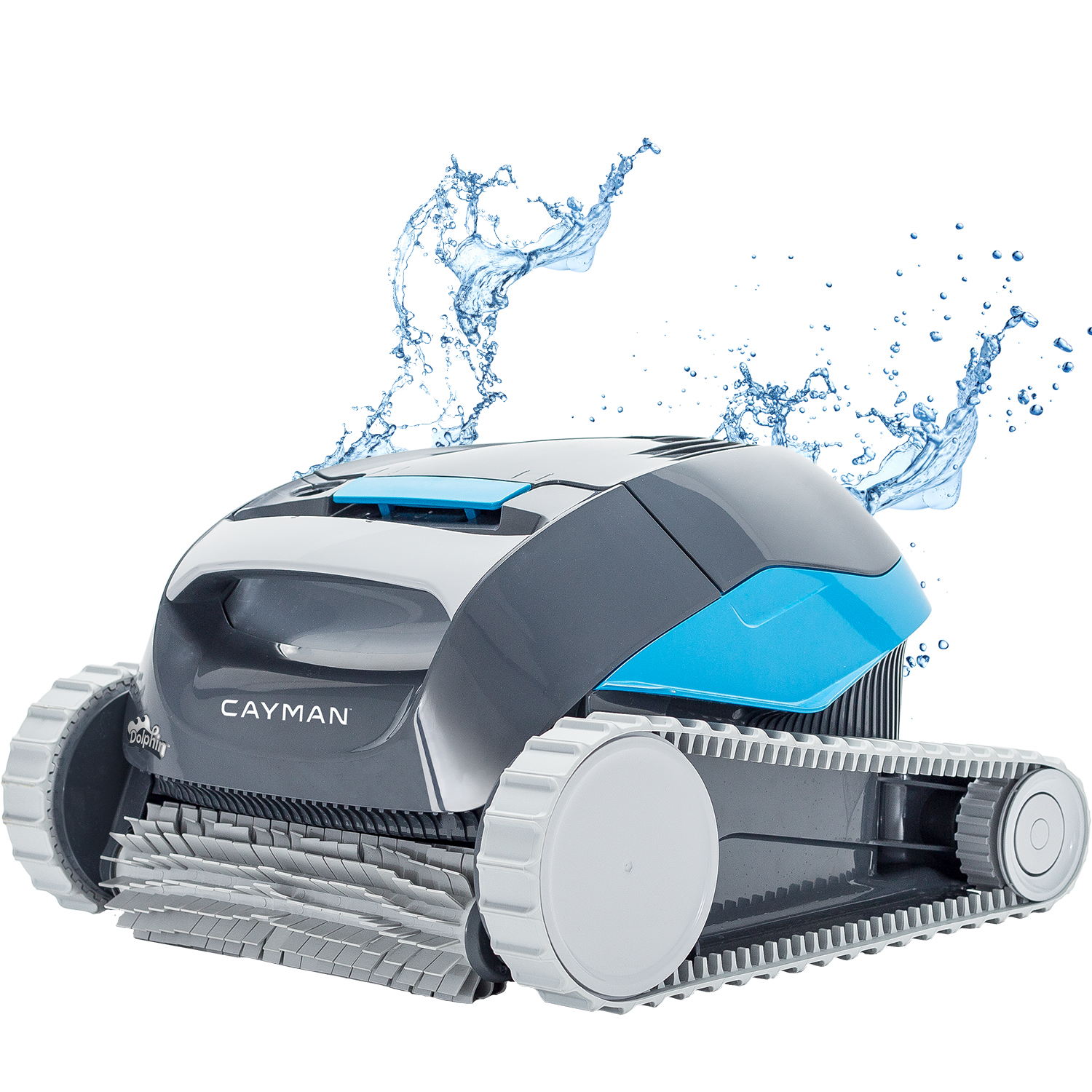
Dolphin Cayman
The Cayman is the step up when the soft-sided pool is large or the outlet is far away. Its cable is 50 ft, ten more than the Escape's, which can be the difference between reaching the far corner of a long rectangular frame pool and stopping short. It carries the same above-ground rating and weighs 14.6 lb, so it is no harder to lift.
Two more things come with it. A timer that runs a cycle every day is built in, so a pool under a tree gets cleaned whether or not anyone remembers. And its published obstacle list includes ladders and steps, where the Escape publishes none, worth knowing when an A-frame ladder stands in the water.
- Best for
- Large rectangular and oval frame pools, long cable runs, and owners who want a hands-off daily clean.
- Keep in mind
- It costs more, its cycle is 2 hours, and on a mid-size frame pool the extra cable and daily schedule may go unused.


How to judge a robot for this
What a soft-sided pool needs from a robot.
- 1
An above-ground rating
Of the five Dolphins we compare, the Escape and the Cayman are the two rated for above-ground pools. The Premier, Sigma and Quantum are in-ground robots, heavier and built for rigid walls. They are not for soft-sided pools.
- 2
Low weight
You lift the robot over a wall that gives under load, often while standing on a ladder. The Escape weighs 14.2 lb and the Cayman 14.6 lb. Let the water drain out at the surface before you swing either one over the top rail or ring.
- 3
Enough water
Soft-sided pools hold roughly 30 to 52 inches of water. A deep frame pool keeps a robot fully submerged. A shallow ring pool may not, and a robot that breaks the surface loses suction and grip. Check the minimum depth in the manual against your fill line.
- 4
Cable reach from a real outlet
Temporary pools are often set up well away from the house. Measure from where the power supply will sit to the far side of the pool floor. One robot has 40 ft of cable and the other has 50 ft. Neither has a swivel, so lay the cable out straight.
Side by side
Escape and Cayman, spec for spec.
| Specification | Dolphin Escape | Dolphin Cayman |
|---|---|---|
| Price today | $659 | $1049 |
| Pool type | Above-ground and in-ground | In-ground and above-ground |
| Pool length | Up to 33 ft | Up to 33 ft |
| Cleans | Floor and walls | Floor and walls |
| Cable | 40 ft | 50 ft |
| Filtration | MaxBin basket; NanoFilter panels optional | MaxBin basket with fine panels; NanoFilter panels optional |
| Robot weight | 14.2 lb | 14.6 lb |
| Warranty | 2 years | 2 years |
Ring pool or frame pool: it changes the answer.
Soft-sided pools come in two builds. A ring pool has an inflatable collar at the top and walls that slope inward. A frame pool hangs its liner from steel or resin tubes, with straighter walls and usually more depth.
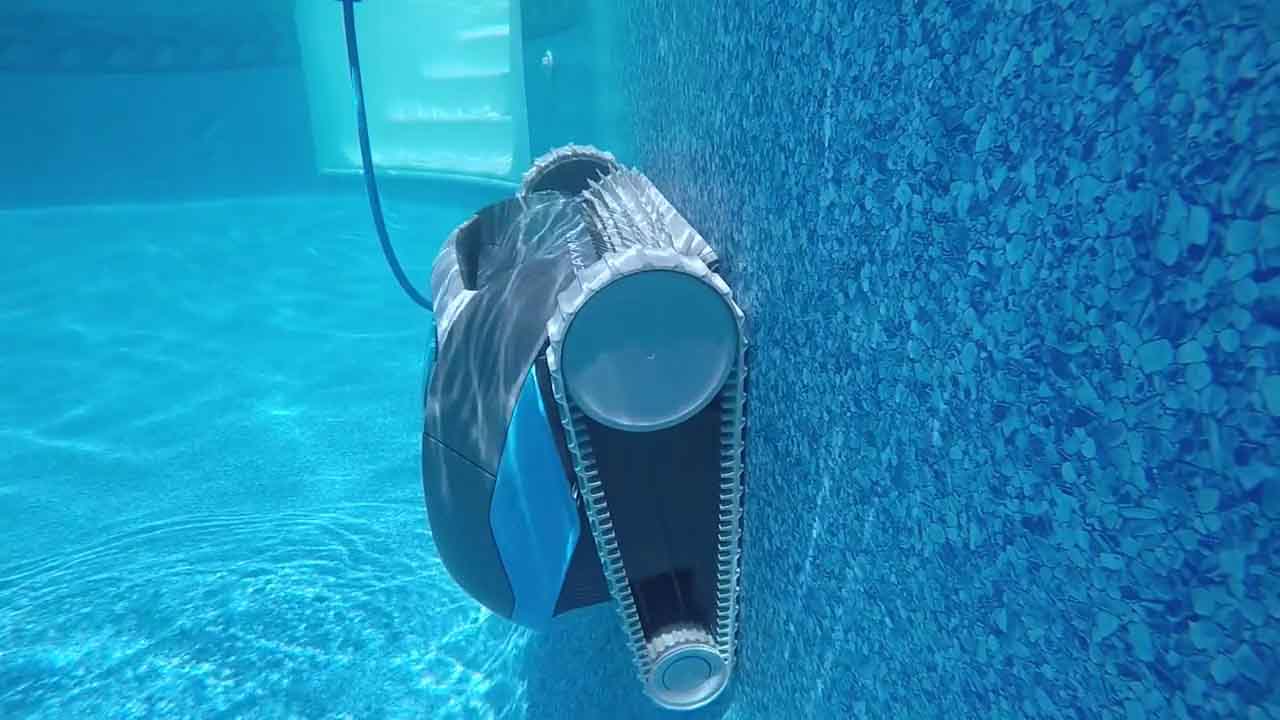
For a robot, the frame pool is the easier home. The walls are closer to vertical, the water is deeper and the sizes run larger. A robot will clean the floor well and climb part of the wall, as far as the flex in the liner lets its tracks grip. No robot climbs a soft wall the way it climbs concrete.
Ring pools are harder. The sloped wall and shallow water of the small ones can leave a robot half out of the water at the edge. On a large, deep ring pool a robot can work the floor. On a small one, a hand vacuum is the honest recommendation.
What is under the liner matters more than the liner.
The floor of a soft-sided pool is only as smooth as the ground beneath it. Tracks ride over small ripples, but a deep wrinkle can fold under a track and stop the robot, and debris hides in the crease where the brush cannot reach. Before the first run, get in and push the wrinkles outward toward the wall with your feet while the liner is warm and soft.
Lumps matter too. A stone, root or heel dent under a thin liner is a pressure point for anything that crosses it, swimmers included. A ground cloth and a foam pad help, and they are far easier to add before filling than after.
When a robot is worth it, and when it is not.
Here is the uncomfortable arithmetic. A small ring pool can cost less than either robot on this page. Spending more on the cleaner than on the pool makes sense only if the cleaner outlasts the pool. It may: both robots are also rated for in-ground pools, so the robot can move on with you.
As a rule of thumb, a robot earns its keep on a frame pool of about 15 ft or more that stays up and in use all summer, especially near trees. It is hard to justify on a pool that is small, shallow or drained after a few weeks. For those, a net, a hand vacuum and the pool's own filter pump are enough. Check the live price on each card and weigh it against your pool.
Power, cable and the filter pump.
The robot is a separate machine from the pool's filter pump. It plugs into a household outlet through its own power supply and carries its own filter. Keep running the pump as usual: it circulates the water, and the robot does not.
The power supply sits back from the water by the distance the manual gives. As an example only, take a setback of roughly 12 ft and an 18 ft round pool. The cable must cover 12 ft to the wall, 18 ft across and a few feet down: comfortably inside 40 ft. Stretch the pool to 24 ft and the same sum reaches the limit. At that size, use the figure from your own manual, measure, and consider the longer cable.
Before the first run in a soft-sided pool.
- Smooth the floor wrinkles by foot on a warm day, working from the center out to the wall.
- Lower the robot in gently and let the air escape until it sinks and sits flat. Then start it.
- Take the ladder out for the cycle if it lifts out easily. It is one less thing for the cable to wrap around.
Questions, answered
Soft-sided pool questions.
Will a robotic cleaner damage a thin soft-sided liner?
Vinyl liner is a published surface for both robots, and they move on tracks with a spinning brush. The risk to a thin liner usually comes from below: a stone or root under the floor that anything crossing it presses against. Clear and pad the ground and smooth the wrinkles.
Is a soft-sided pool deep enough for a robot?
Deeper frame pools are. Soft-sided pools hold about 30 to 52 inches of water, and the upper end of that keeps a robot fully under. On small, shallow ring pools a robot may not stay submerged as it reaches the wall. The manual gives the minimum depth, so compare it with your water level before you buy.
Can a robot climb flexible pool walls?
Partway. A robot climbs by gripping the wall with its tracks, and a wall that flexes gives less to grip than a rigid one. Expect the floor and the lower wall to be cleaned, with results that vary by pool. Neither robot here scrubs the waterline, so the ring at the top needs a cloth or sponge.
Is an in-ground robot ever the best robotic pool cleaner for soft-sided pools?
No. The Premier, Sigma and Quantum are in-ground robots, heavier, and not rated for this kind of pool. If the robot you already own is a Cayman or an Escape, use it. Both are rated for above-ground and in-ground pools, so one robot can serve both.
The verdict
The rule for soft-sided pools.
First decide whether the pool warrants a robot: a frame pool of about 15 ft or more, deep enough to keep it submerged, up all summer. If yes, buy the Escape. Move to the Cayman only for a long cable run, a very large pool, or a clean every day without pressing start. If it is a small ring pool, keep your money and use a hand vacuum. We sell robots, and that is still our advice.
Keep reading