


By pool type and installation
Best robotic pool cleaner for above-ground pools: two robots rated for the job
Top pick: Dolphin Cayman
Live prices · Free shipping · 30 Day Trial
The short answer
Two of the five Dolphins compared in these guides are rated for above-ground pools. Here is how the Cayman and Escape differ, and how to set either one up on a liner floor.
The Dolphin Cayman is our pick for above-ground pools: rated for pools up to 33 ft, with a 50 ft cable, a 2-hour cycle and a timer that runs every day as standard. The Dolphin Escape is the runner-up and the lower-priced choice, designed for above-ground pools first, with a 1.5-hour cycle and a 40 ft cable. Choose it for smaller pools you start by hand.
An above-ground pool is a different job from an in-ground one. The floor is a liner over sand or foam, not concrete. The walls are thinner and, on soft-sided pools, flexible. The pool is usually round or oval, flat-bottomed and about four feet deep. The best robotic pool cleaner for above-ground pools is one rated for exactly that: light enough to lift over a top rail and sized for a smaller body of water.
That rating matters. Of the five Dolphins compared in these guides, two carry it: the Cayman and the Escape. The Premier, Sigma and Quantum are in-ground robots, heavier and built for rigid walls and longer pools, and we do not recommend them here. So this page compares two robots, then covers the setup questions above-ground owners ask most.
Our picks, in order
The two robots rated for above-ground pools.
- 1
 $1049
$1299Save $250Temporarily out of stock
Best all-round: 50 ft cable and a daily timer
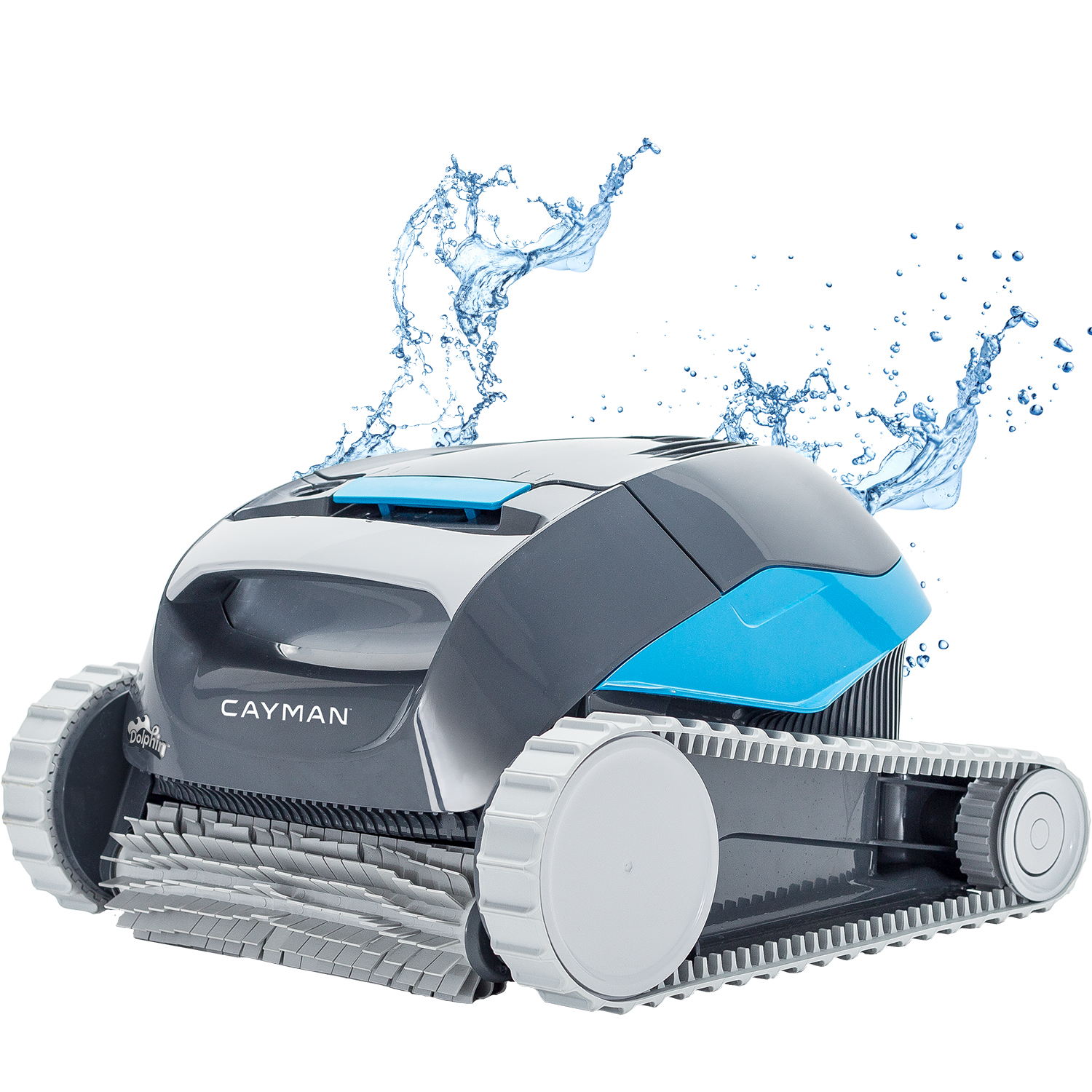
Dolphin Cayman
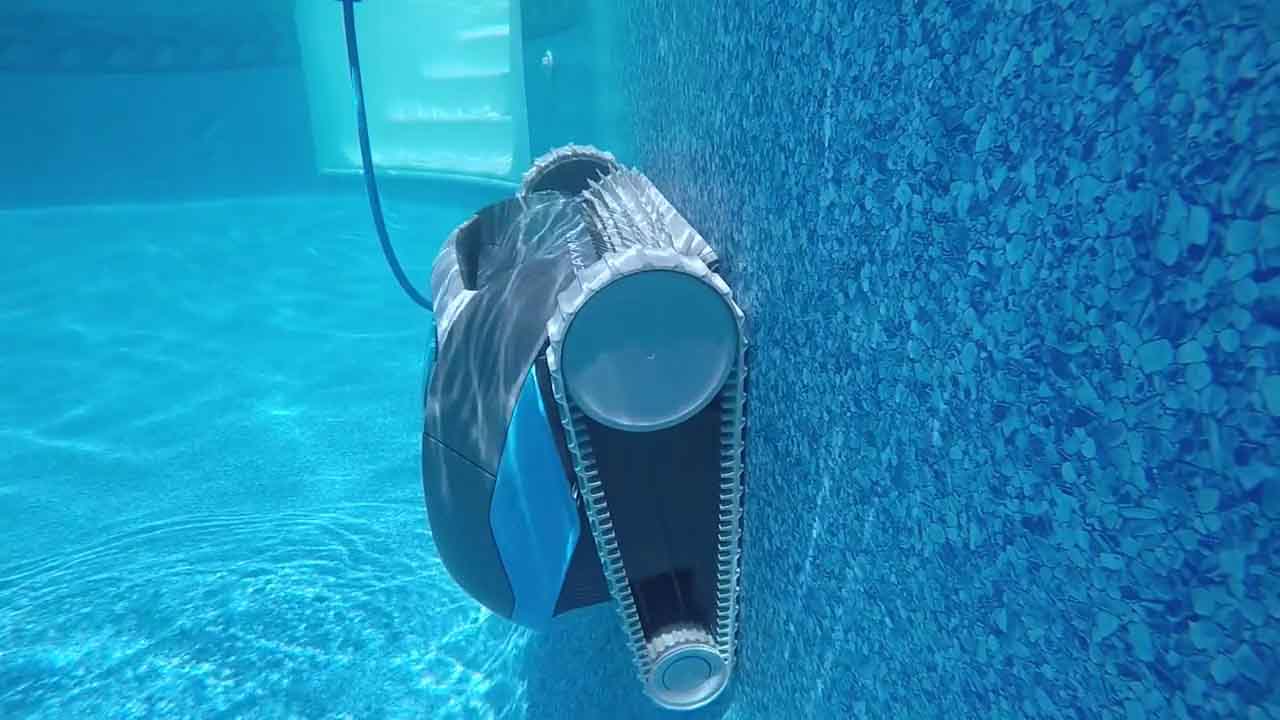
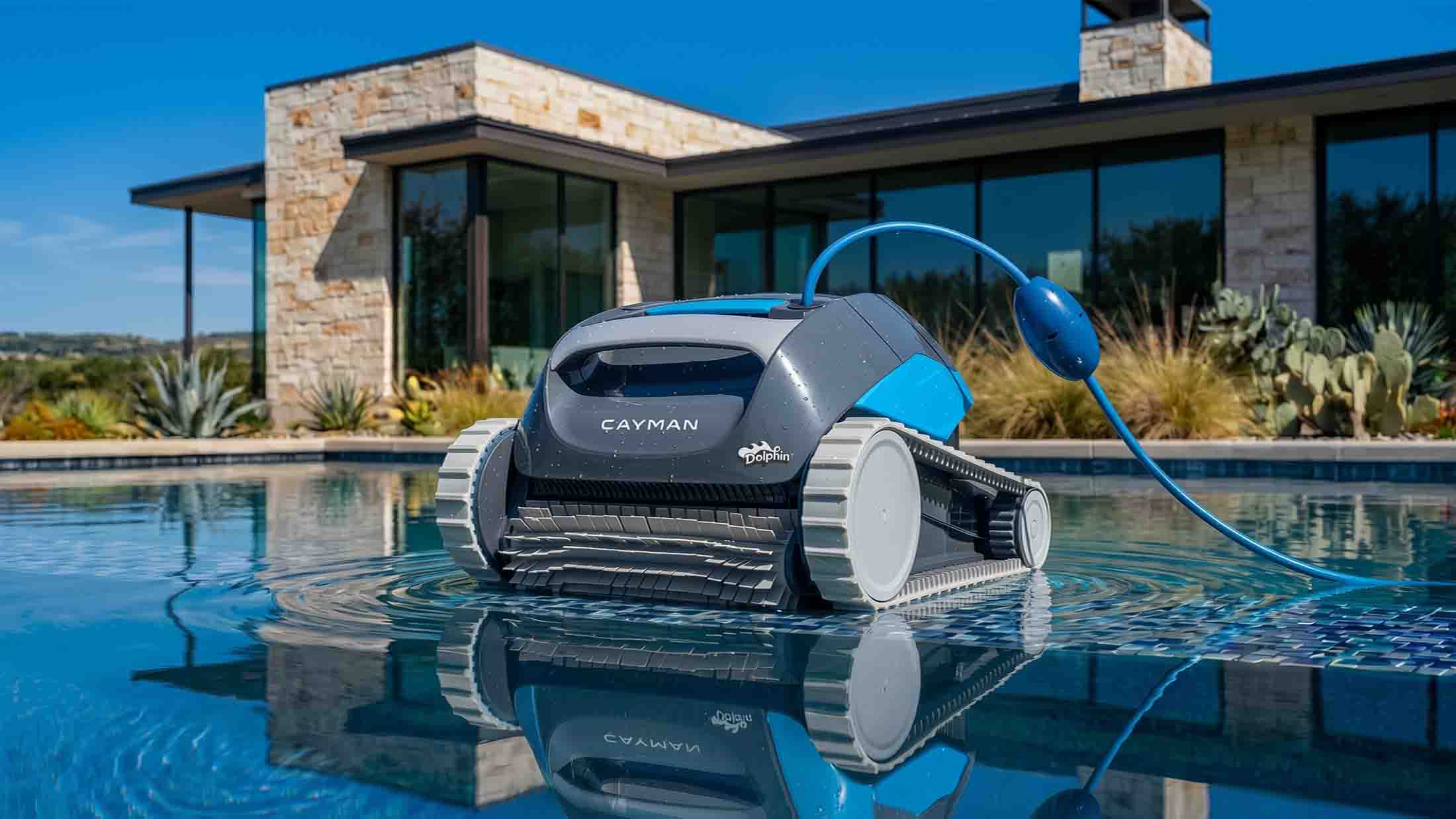
The Cayman is rated for above-ground and in-ground pools up to 33 ft, and three details put it ahead for most above-ground owners. Its 50 ft cable covers the run over the wall and across a large round or oval. Its timer runs every day from the power supply, so the pool is cleaned without anyone remembering to start it. And its 2-hour cycle gives a bigger pool more passes.
The hardware is serious for the size: dual 24-volt DC motors moving over 4,000 GPH, a HyperBrush at twice the speed of standard Dolphin brushes, HyperGrip tracks and SmartNav 2.0. Its MaxBin basket, 50% larger than standard Dolphin filters, lifts out through a top hatch.
- Best for
- Above-ground pools from mid-size to 33 ft, and owners who want daily cleaning on a timer.
- Keep in mind
- It costs more than the Escape, its cable has no swivel, and it cleans floor and walls but not the waterline.
- 2
 $659
$959Save $300Temporarily out of stock
Lowest-priced pick, built for above-ground first
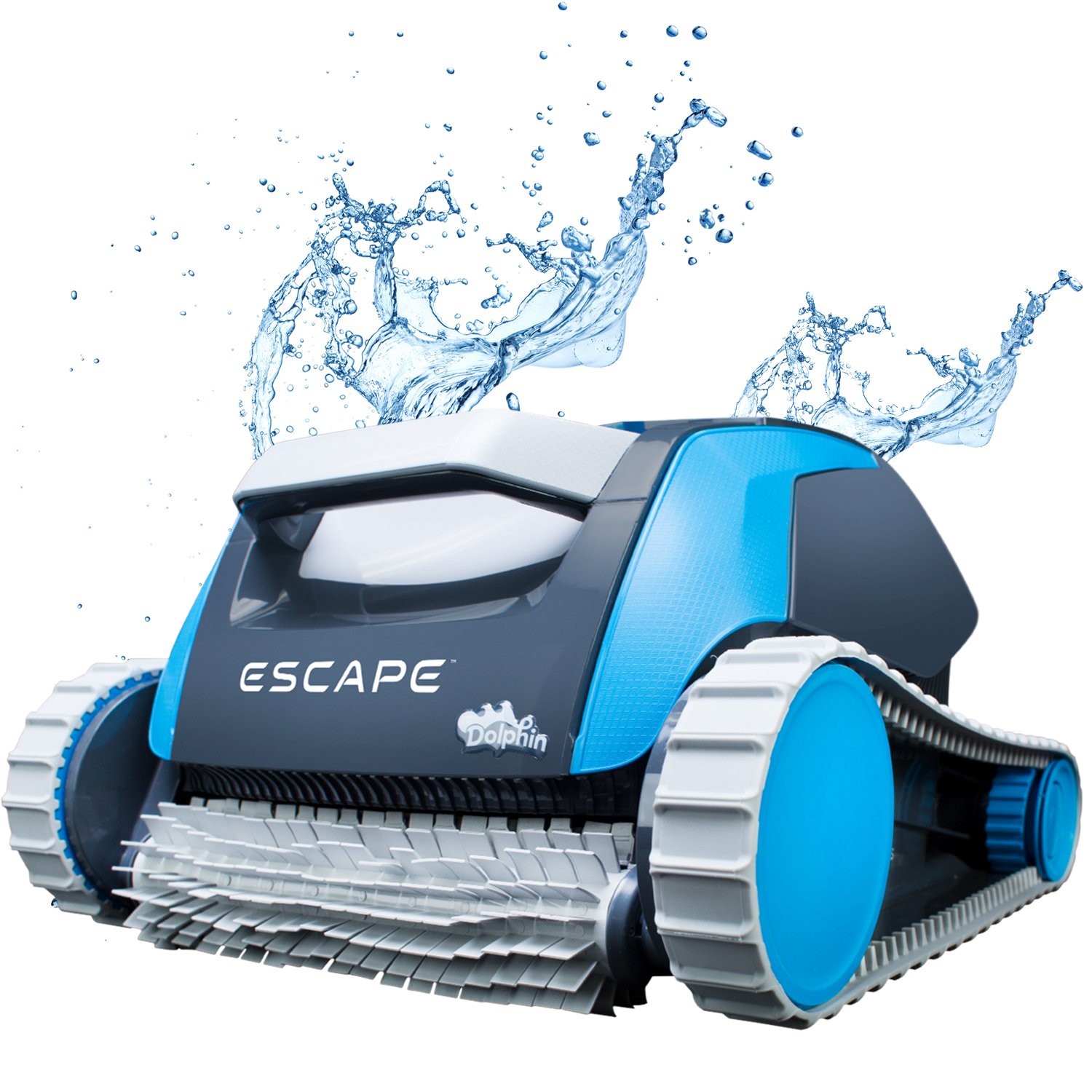
Dolphin Escape
The Escape is designed around above-ground pools: round is on its published shape list along with oval, rectangle and freeform, it weighs 14.2 lb, and its 1.5-hour cycle suits the smaller pools it is usually bought for. It shares the Cayman's core hardware: the same pair of 24-volt DC motors and over 4,000 GPH of flow, one HyperBrush, HyperGrip tracks, SmartNav 2.0 and a top-load MaxBin basket.
Where it gives ground is reach and automation. The cable is 40 ft, worth measuring on rounds larger than about 24 ft. There is no timer as standard, so each cycle starts with a button press unless you add the optional Automation Timer power supply. It is the lowest-priced of the robots in this guide.
- Best for
- Small and mid-size above-ground pools where you are happy to press start yourself.
- Keep in mind
- The 40 ft cable limits it on large rounds, and scheduled cleaning needs the optional Automation Timer. No waterline scrubbing.


How to judge a robot for this
What an above-ground pool needs from a robot.
- 1
An above-ground rating
A robot rated only for in-ground pools is built around rigid walls and heavier construction. Use one whose rating names above-ground pools. Among the Dolphins compared here that means the Cayman and the Escape. Both are rated for both pool types, and the Escape is designed for above-ground first.
- 2
Weight you can lift over the rail
Most above-ground pools have no deck-level edge. You lift the robot, wet and draining, over a top rail at chest height. The Escape weighs 14.2 lb and the Cayman 14.6 lb, the two lightest of the five Dolphins compared in these guides.
- 3
Cable for the real run
Cable travels from the power supply on the ground, up and over the wall, and across the water to the opposite side. The Cayman has 50 ft and the Escape 40 ft. On round pools larger than about 24 ft, measure that run before choosing the Escape.
- 4
A cycle sized for the pool
A 15 to 24 ft pool does not need a 3-hour cycle. The Escape finishes in 1.5 hours and the Cayman in 2. Both clean the floor and climb the walls, and neither scrubs the waterline.
- 5
Whether it runs itself
The Cayman's power supply has a timer that runs a cycle every day. The Escape has no timer as standard: you press start, or you add the optional Automation Timer power supply, which runs every 24, 48 or 72 hours.
Side by side
Cayman and Escape side by side.
| Specification | Dolphin Cayman | Dolphin Escape |
|---|---|---|
| Price today | $1049 | $659 |
| Pool type | In-ground and above-ground | Above-ground and in-ground |
| Pool length | Up to 33 ft | Up to 33 ft |
| Cleans | Floor and walls | Floor and walls |
| Cable | 50 ft | 40 ft |
| Filtration | MaxBin basket with fine panels; NanoFilter panels optional | MaxBin basket; NanoFilter panels optional |
| Robot weight | 14.6 lb | 14.2 lb |
| Warranty | 2 years | 2 years |
Measure the cable run, not just the pool.
An above-ground pool uses cable in a way an in-ground pool does not. The power supply sits on the ground, back from the pool by the distance the manual gives. From there the cable climbs the outside of the wall, crosses the top rail and only then starts across the water. So the run to measure is power supply to wall, plus up and over, plus the full width of the pool. Past about 24 ft across, the Escape's 40 ft cable deserves a tape measure before you order, and the Cayman's 50 ft is the safer choice when the run is long.
Ladders and step units.
An A-frame ladder or a drop-in step unit is the main obstacle in an above-ground pool. You can lift it out before the cycle, which gives the robot a clear floor and lets it clean the patch underneath. Or you can leave it in and let the robot work around it. The Cayman's published obstacle list includes steps and ladders. The Escape publishes no obstacle list, so with it we lean toward lifting the ladder out. Weighted step units trap debris behind and beneath them whichever robot you own, so move them every week or two and brush the liner there.
Footprints, wrinkles and a sand base.
A liner laid on sand records everything. Heel marks, low spots and wrinkles are normal in an above-ground floor, and a tracked robot rides over the shallow ones without trouble. Deep divots are different. Debris settles in them below the reach of the brush, and a sharp wrinkle can turn a light robot aside. Smooth wrinkles toward the wall with your feet on a warm day, when the liner is soft. For a pocket the brush cannot touch, a pass with a hand brush lifts the dirt out for the next cycle.
Between cycles.
Where the robot waits depends on which one you buy. The Cayman's timer runs every day, and a robot on a schedule is made to stay in the water between scheduled cycles. Lift it out at least once a week to empty and rinse the basket, and always before you shock the pool or add chemicals. The Escape has no schedule to wait for unless you add the optional timer, so the natural habit is to lift it out when the cycle ends and rinse the basket. Store either robot out of the water and out of direct sun when the pool will sit unused for a long stretch.
Setting up a robot in an above-ground pool.
- Stretch the cable out straight on the lawn before the first run. Neither robot has a swivel, and a relaxed cable tangles far less.
- Set the power supply on dry ground, the manual's distance back from the wall, on the side that gives the cable its shortest run.
- Lower the robot in slowly and hold it under until the bubbles stop, so trapped air does not float it up the wall.
- Lift the ladder or steps out for the cycle when you can, and brush the liner where they stood.
- Rinse the basket after each use. Fine panels clog with dust and pollen, and a clogged filter weakens wall climbing.
Questions, answered
Above-ground pool robot questions.
Can I use an in-ground robot in my above-ground pool?
We advise against it. The Premier, Sigma and Quantum are in-ground robots: heavier, built for rigid walls and longer pools, and not rated for above-ground use. Use a robot in the pool type its rating names. The Cayman and the Escape are rated for both, so either can move with you from an above-ground pool to an in-ground one.
Will a robotic pool cleaner climb the walls of an above-ground pool?
On a rigid-wall pool, whether steel, aluminum or resin, yes: both picks are floor-and-wall robots. On soft-sided and inflatable-ring pools the wall flexes, so expect a clean floor and wall base and less consistent climbing higher up. Neither robot scrubs the waterline, so wipe that band with a soft cloth when it shows.
Is a 40 ft cable long enough for a 24 ft round pool?
Often, but measure. The Escape is rated for pools up to 33 ft, and that rating stands. The cable is the practical limit, because it also has to climb over the wall. On rounds larger than about 24 ft, measure the path from the power supply first. If it is tight, the Cayman's 50 ft cable is the safer choice.
Do I have to take the robot out after every cycle?
Not with a timer. The Cayman can wait in the pool from one daily cycle to the next; it still comes out once a week or so for a basket rinse, and whenever you treat the water. The Escape has no timer as standard, so lifting it out when the cycle ends is the sensible routine.
Will a robot work on a liner over a sand base?
Yes. Vinyl liner is a published surface for both the Cayman and the Escape. Footprints and gentle dips are not a problem. Deep hollows hold debris the brush cannot reach, and sharp wrinkles can turn the robot aside. Smoothing the floor where you can improves the result more than changing robots would.
The verdict
Two robots, one question.
Ask how you want the pool cleaned. If you want it done every day without touching a button, in a pool of any size up to 33 ft, buy the Cayman: longer cable, longer cycle, timer included. If the pool is small, the budget is tight and pressing start a few times a week suits you, the Escape does the same floor-and-wall job for less. Do not stretch to an in-ground robot for an above-ground pool.
Keep reading