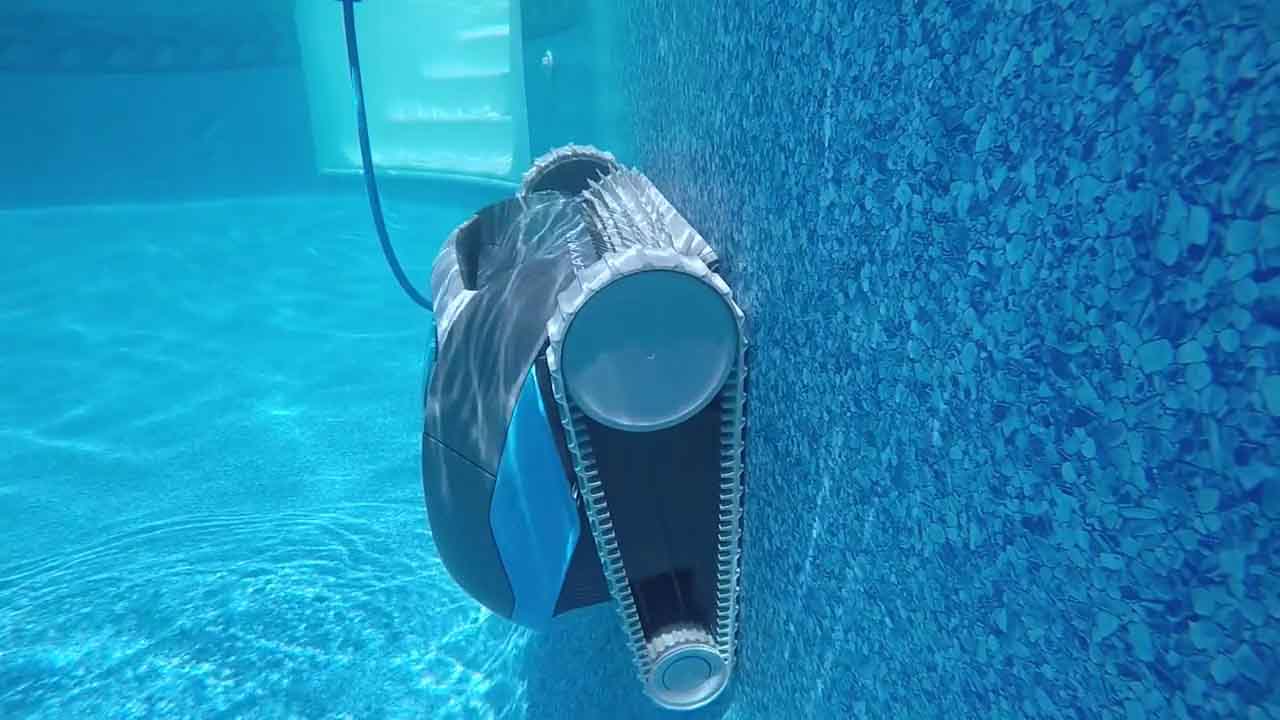



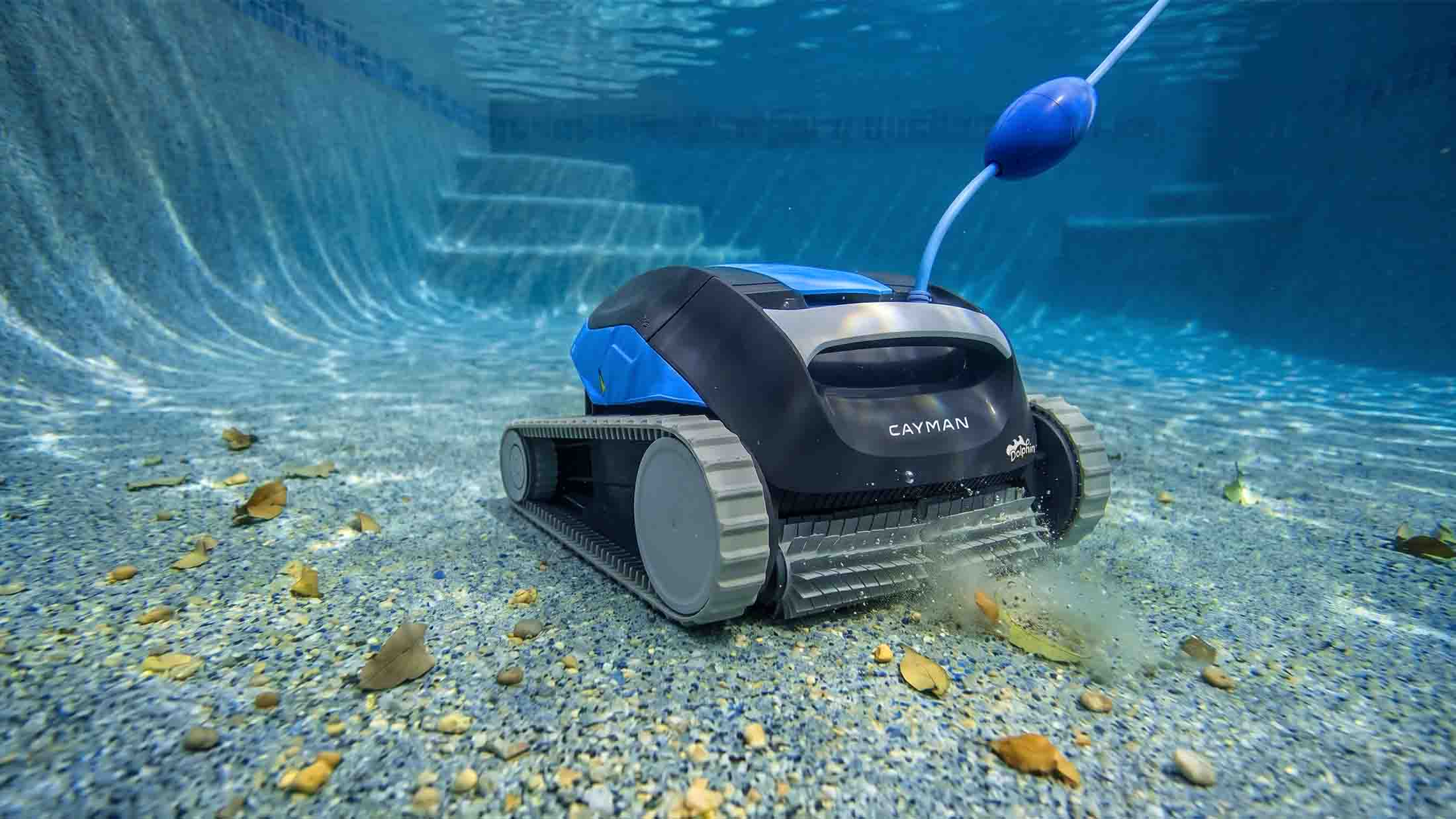
By pool surface
Best robotic pool cleaner for above-ground vinyl pools: two that are rated for it.
Top pick: Dolphin Cayman
Live prices · Free shipping · 30 Day Trial
The short answer
A thin liner over a sand base needs a light robot built for above-ground use. Two of the five Dolphins in these guides qualify, and this page explains how to choose between them.
Buy the Cayman if you want the pool cleaned without thinking about it: its timer runs a 2-hour cycle every day as standard, and its 50 ft cable reaches most outlets. Buy the Escape if price comes first or your pool is round: it is the lowest-priced robot in these guides, built for above-ground pools first, and done in 1.5 hours.
An above-ground vinyl pool is a liner thinner than a credit card, stretched over a floor of packed sand or foam and held up by a steel or resin wall. That construction sets the rules for a robot. It has to be rated for above-ground use, light enough not to press dents into the base, and gentle where the floor curves up into the wall.
Of the five Dolphins in these guides, two meet the first rule. The Cayman is rated for in-ground and above-ground pools. The Escape is rated for above-ground pools first and in-ground second. Both cover pools up to 33 ft. The Premier, Sigma and Quantum are in-ground machines only, and we do not recommend them here. So the best robotic pool cleaner for above-ground vinyl pools comes down to a choice of two, and the differences between them are practical ones.
Our picks, in order
The two robots rated for above-ground vinyl.
- 1
 $1049
$1299Save $250Temporarily out of stock
Daily cleaning as standard, with the longer cable
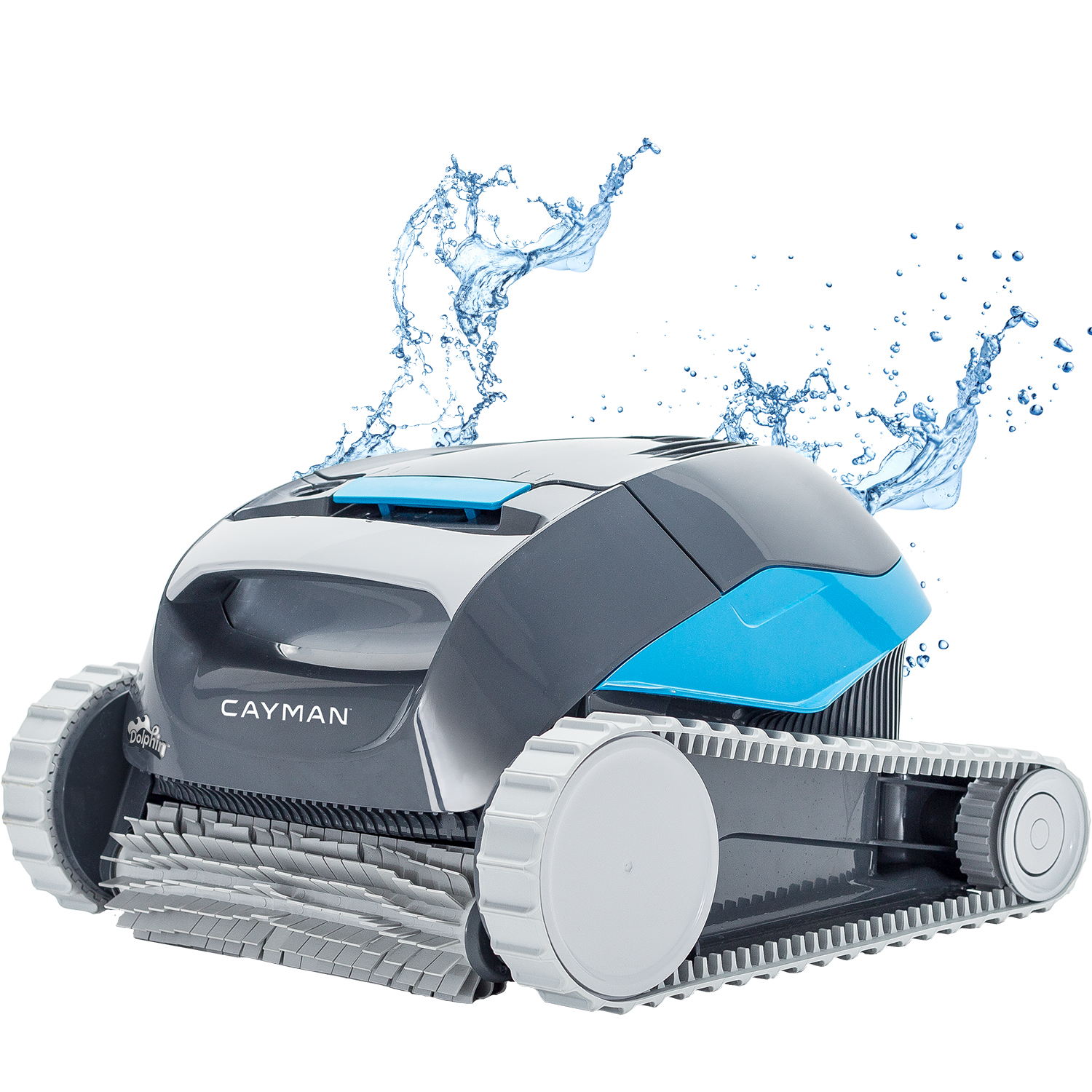
Dolphin Cayman
The Cayman leads this ranking for one reason above the others: the timer. Out of the box it runs a 2-hour cycle every day, so the liner is brushed before dirt can settle into wrinkles or the cove. Its 50 ft cable gives 10 ft more reach than the Escape's, which often decides whether the power supply can sit by an existing outlet. At 14.6 lb it is easy on a sand base and easy to lift over the wall.
A single HyperBrush scrubs while HyperGrip tracks carry it across the floor and up the walls. Vinyl liner is on its published surface list, and the MaxBin basket empties through a top hatch with one tab.
- Best for
- Above-ground vinyl pools up to 33 ft whose owners want the robot to run itself every day.
- Keep in mind
- It costs more than the Escape, and its published shapes are rectangle, oval and freeform. For a round pool, the Escape is the one that names round.
- 2
 $659
$959Save $300Temporarily out of stock
Lowest price, built for above-ground first
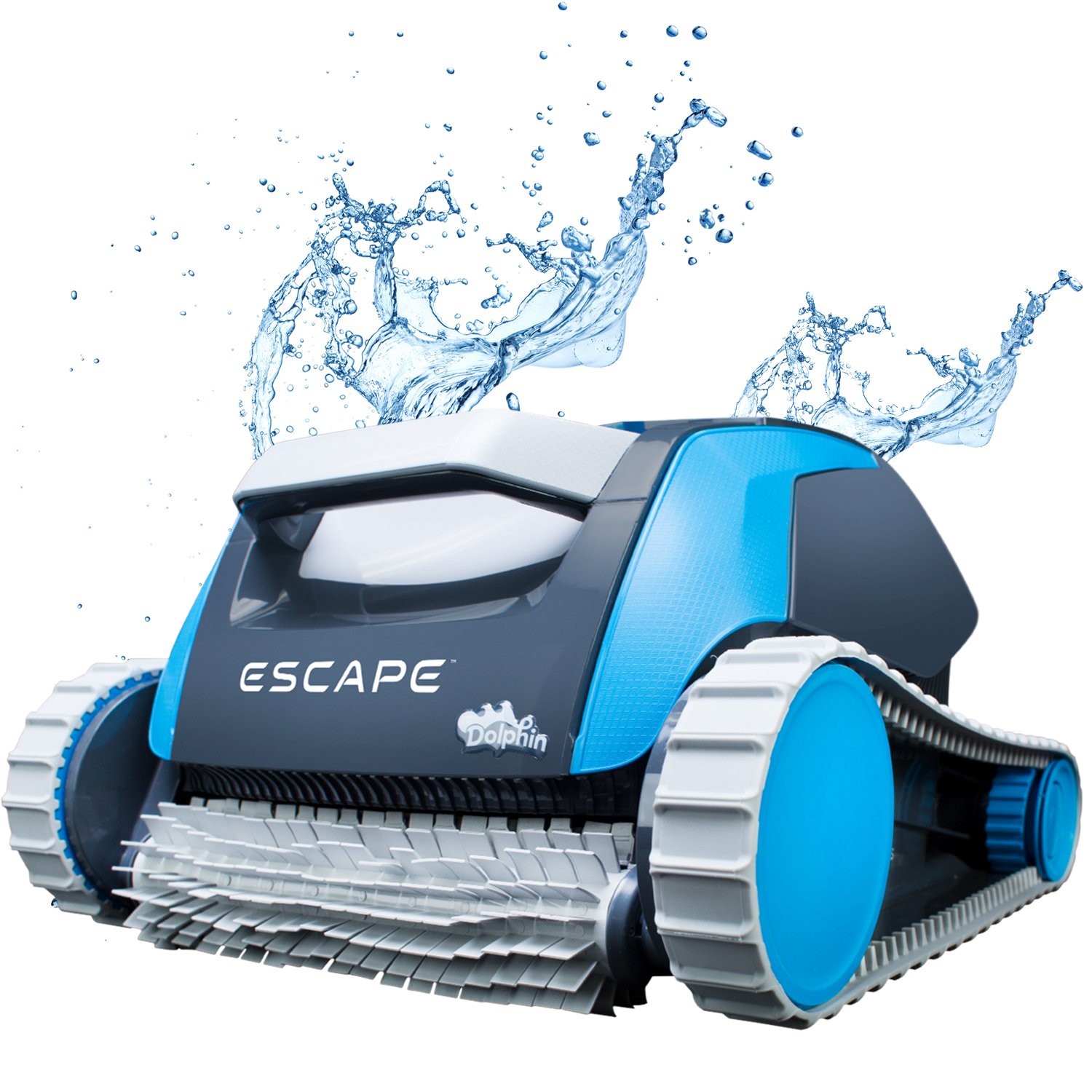
Dolphin Escape
The Escape is the above-ground specialist and the lowest-priced of the five robots in these guides, and for many liner pools it is all the robot you need. Its published shapes include round, a very common above-ground shape, along with oval, rectangle and freeform, and vinyl liner heads its surface list. It is the lightest robot here at 14.2 lb and the quickest, finishing floor and walls in 1.5 hours.
The cleaning hardware matches the Cayman's: one HyperBrush, HyperGrip tracks, a top-load MaxBin basket and dual 24-volt DC motors moving over 4,000 GPH. It sits second on this site because scheduling costs extra and the cable is 40 ft.
- Best for
- Round and oval above-ground pools up to 33 ft, and buyers who want the lowest price.
- Keep in mind
- No timer in the box: you start each cycle yourself unless you add the optional Automation Timer power supply. Check that 40 ft of cable reaches.


How to judge a robot for this
What a liner pool needs from a robot.
- 1
An above-ground rating
This is the pass or fail test. A robot designed only for in-ground pools is heavier and expects rigid walls. The Escape lists above-ground pools first. The Cayman lists both pool types. None of the other three Dolphins in these guides is rated for a pool that stands on the lawn.
- 2
Low weight on a soft floor
The floor under your liner is sand or foam, and it records pressure. That is where heel dents come from. The Escape weighs 14.2 lb and the Cayman 14.6 lb, the two lightest of the five. Light also matters when you lift the robot over a chest-high wall.
- 3
A cycle sized to the pool
An 18 ft round pool does not need three hours of cleaning. The Escape runs 1.5 hours and the Cayman 2. Either is enough for a small floor and its walls, and short enough that the robot is done before the afternoon swim.
- 4
Cable reach to the outlet
Above-ground pools rarely have an outlet beside them, and the power supply has to sit back from the water. The Cayman's cable is 50 ft and the Escape's is 40 ft. Measure from the outlet to the far side of the pool before choosing. Neither has a swivel.
- 5
Scheduling
Small pools show dirt fast, and a robot that runs daily keeps up. The Cayman's timer runs every day as standard. The Escape has no timer in the box; an optional Automation Timer power supply adds a run every 24, 48 or 72 hours.
Side by side
Cayman and Escape, spec for spec.
| Specification | Dolphin Cayman | Dolphin Escape |
|---|---|---|
| Price today | $1049 | $659 |
| Brushes | HyperBrush | HyperBrush |
| Cleans | Floor and walls | Floor and walls |
| Traction | HyperGrip tracks | HyperGrip tracks |
| Pool length | Up to 33 ft | Up to 33 ft |
| Filtration | MaxBin basket with fine panels; NanoFilter panels optional | MaxBin basket; NanoFilter panels optional |
| Robot weight | 14.6 lb | 14.2 lb |
| Warranty | 2 years | 2 years |
Footprints, wrinkles and the cove.
Three features of a liner floor affect how any robot cleans it. Footprints are shallow dents in the sand base. Dirt collects in them, and a deep one may keep a little dust until the next cycle. Wrinkles are folds in the liner. A tall, firm wrinkle can turn a robot aside or hold a line of dirt in its crease, so smooth out what you can while the water is warm and the vinyl is soft.
The cove is the curved wedge of sand or foam where the floor meets the wall, and it is the part a flat vacuum head cleans worst. A tracked robot rides through the curve on its way up the wall, brushing as it goes. Neither robot here scrubs the waterline, so the ring at the top of the liner is still a job for a soft cloth.
Why the 50 ft robots are the wrong tool.
It is tempting to assume the bigger, more expensive robots must be better everywhere. On a liner pool they are not. The Premier, Sigma and Quantum are rated for in-ground pools only. They weigh between 18.3 and 24.6 lb, their cycles run 2 to 3 hours, and their cables and navigation are sized for pools up to 50 ft. None of that helps in an 18 ft round pool, and the weight works against you on a sand floor and at the top of a ladder.
Put the money toward the Cayman or the Escape instead, and if there is budget left, toward NanoFilter panels, an optional add-on for both that helps with the fine dust small pools show quickly.
Getting it in and out over the wall.
Above-ground pools have no steps to stand on and no deck at water level unless you have built one. Lower the robot in by its handle from the ladder or deck and let it sink. When it is time to take it out, lift it by the handle and hold it over the pool for a few seconds while the water drains out.
Set the power supply on the ground well back from the wall and run the cable over the top rail at one point. Check the manual for the minimum distance from the water and the minimum water depth before the first run. Neither robot includes a caddy, though one is available separately, so decide where it will sit when it is out of the pool: in the shade, out of direct sun. On its every-day schedule the Cayman can wait in the water between cycles, with a lift-out and rinse at least weekly.
Liner-friendly habits.
- Check the floor for stones, hairpins and twigs before each run. A sharp object pressed under anything can mark a liner.
- Take the pool ladder out, or tie it up, during the cycle if the robot keeps nosing into its legs.
- Empty the basket at least weekly, and after every cycle at first. Small pools near lawns fill it with grass and bugs faster than you would guess.
- Take the robot out before you shock the pool, and store it in the shade whenever it is out of the water.
Questions, answered
Above-ground liner questions.
Can a robotic cleaner tear a vinyl liner?
The robots themselves are liner-safe: a soft PVC brush, rubber tracks, and vinyl liner on the published surface list of both the Cayman and the Escape. Liner damage usually comes from sharp debris on the floor or from vinyl that has gone brittle with age. Clear sharp objects first, and inspect an old liner before running any cleaner.
Will a robot climb the walls of an above-ground pool?
Both the Cayman and the Escape are built to clean floor and walls. On an above-ground pool the walls flex a little and the cove is soft, so how high the robot climbs can vary from pool to pool. Expect the floor and cove to be cleaned on every cycle, and watch wall coverage on the first few runs.
Is the best robotic pool cleaner for above-ground vinyl pools different if the pool is round?
It can be. The Escape is the one whose published shape list names round pools. The Cayman lists rectangle, oval and freeform. Both use SmartNav 2.0 navigation and are rated to 33 ft. If you want the robot whose specifications name a round pool, choose the Escape, and call us if you are deciding between the two.
Do I need to run my pool pump while the robot works?
No. These robots are self-contained: they plug into a standard outlet through their own power supply, drive themselves and filter into their own basket. That is a real advantage on above-ground pools, where the pump and filter are often small. The robot takes the floor debris, and your filter has less to do.
How small a pool can these robots clean?
The rating that matters is the maximum, 33 ft, and typical 15 to 24 ft above-ground pools sit well inside it. What to check is water depth. A very shallow pool may not cover the robot properly, so look up the minimum depth in the manual before buying for a wading-depth pool.
The verdict
Cayman or Escape: the rule.
Both are rated for the job, and the other three Dolphins in these guides are not. Choose the Cayman if you want cleaning to happen every day without you, or if the outlet is more than 40 ft of cable from the far side of the pool. Choose the Escape if your pool is round, the outlet is near and you would rather save money than have scheduling built in. Either way, keep sharp things off the floor and rinse the basket at least weekly. The Cayman can wait in the water between its scheduled cycles; the Escape comes out when its cycle ends.
Keep reading