


By feature
Robotic pool cleaner with automatic waterline parking: the closest picks
Top pick: Dolphin Cayman
Live prices · Free shipping · 30 Day Trial
The short answer
None of these robots parks itself at the waterline, so this guide ranks the ones that are easiest to bring up and lift out by hand.
No robot here parks at the waterline. What that feature really buys is an easy lift, so choose by weight. The Dolphin Cayman is 14.6 lb and runs from an every-day timer, which means fewer lifts. The Escape is lighter still at 14.2 lb, with a shorter 40 ft cable. For pools over 33 ft, the Quantum is the lightest 50 ft robot in this guide at 18.3 lb.
None of the robots on this page lists automatic waterline parking. A cycle ends with the robot stopped in the pool, usually on the floor, and you bring it up with the cable. If a self-parking robot is a must-have, none of these is it. The picks below are the easiest to retrieve by hand.
Automatic waterline parking is a feature where the robot ends its cycle by climbing a wall and waiting at the surface, so you can lift it out without reaching for it. If you are looking for the best robotic pool cleaner with automatic waterline parking, here is the straight answer: none of the five Dolphins in these guides lists it.
It is mostly a cordless feature, and there is a reason. A cordless robot has no cable, so without parking it would sit on the floor out of reach. Every robot here is corded. The cable is the retrieval line: a gentle pull brings the robot to the surface, and you lift it by the handle. So the honest version of this page ranks robots by how easy that lift is.
Our picks, in order
The closest picks, ranked by ease of retrieval.
- 1
 $1049
$1299Save $250Temporarily out of stock
Easiest all-round robot to lift out
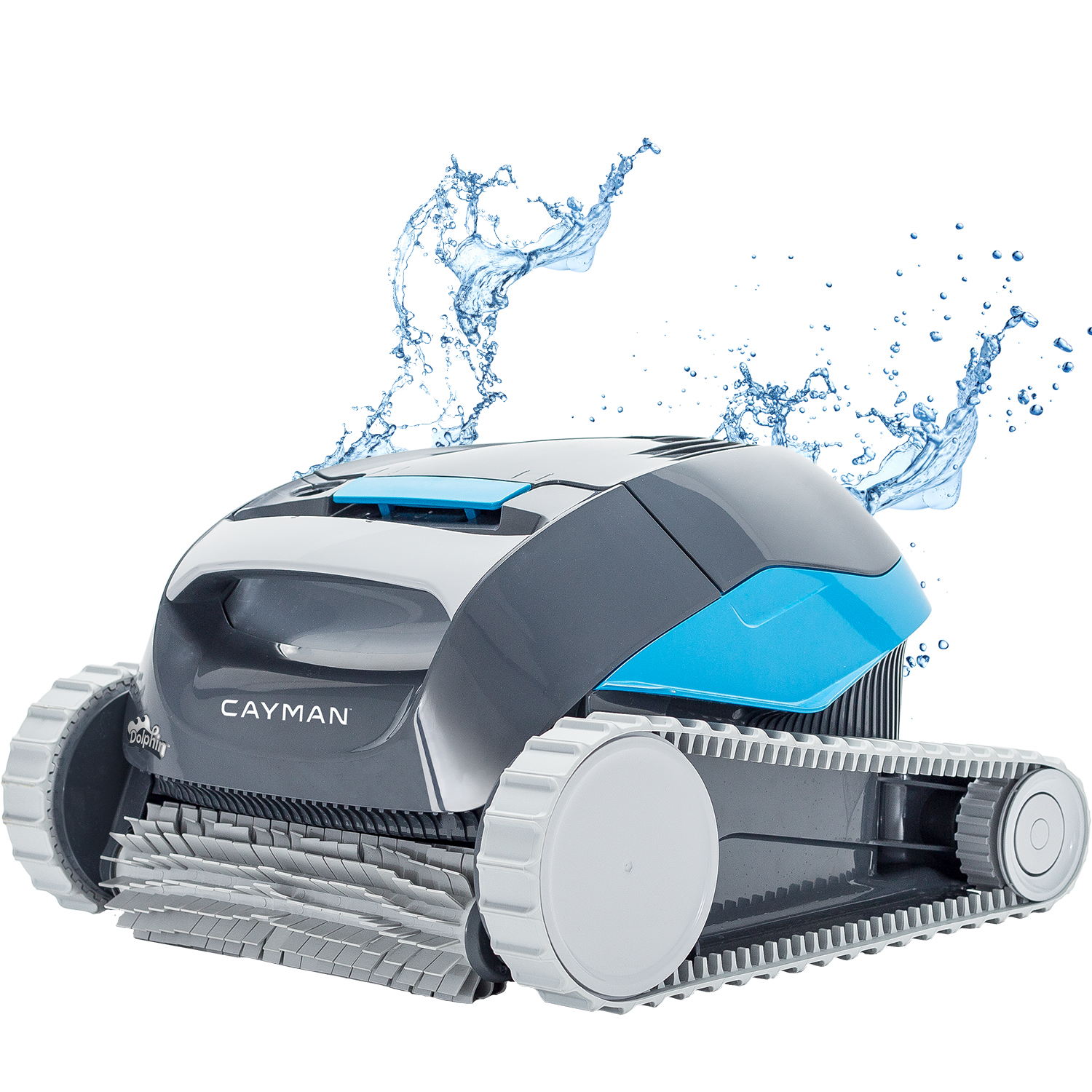
Dolphin Cayman
The Cayman does not park itself, at the waterline or anywhere else. It leads because it removes most of what makes retrieval a chore. It weighs 14.6 lb, less than half a pound more than the lightest robot here. Its 50 ft cable gives you slack to draw it to wherever you are standing.
Its timer runs every day, so the robot is made to stay in the water between scheduled cycles. You lift it to rinse the filter, not after each clean. When you do, the top hatch opens with one tab. It suits in-ground and above-ground pools up to 33 ft.
- Best for
- Owners of pools up to 33 ft who want the fewest and lightest lifts, with a timer doing the daily work.
- Keep in mind
- No parking feature and no waterline cleaning: it cleans floor and walls. The cable has no swivel, so lay it out straight before use.
- 2
 $659
$959Save $300Temporarily out of stock
Lightest lift of the picks
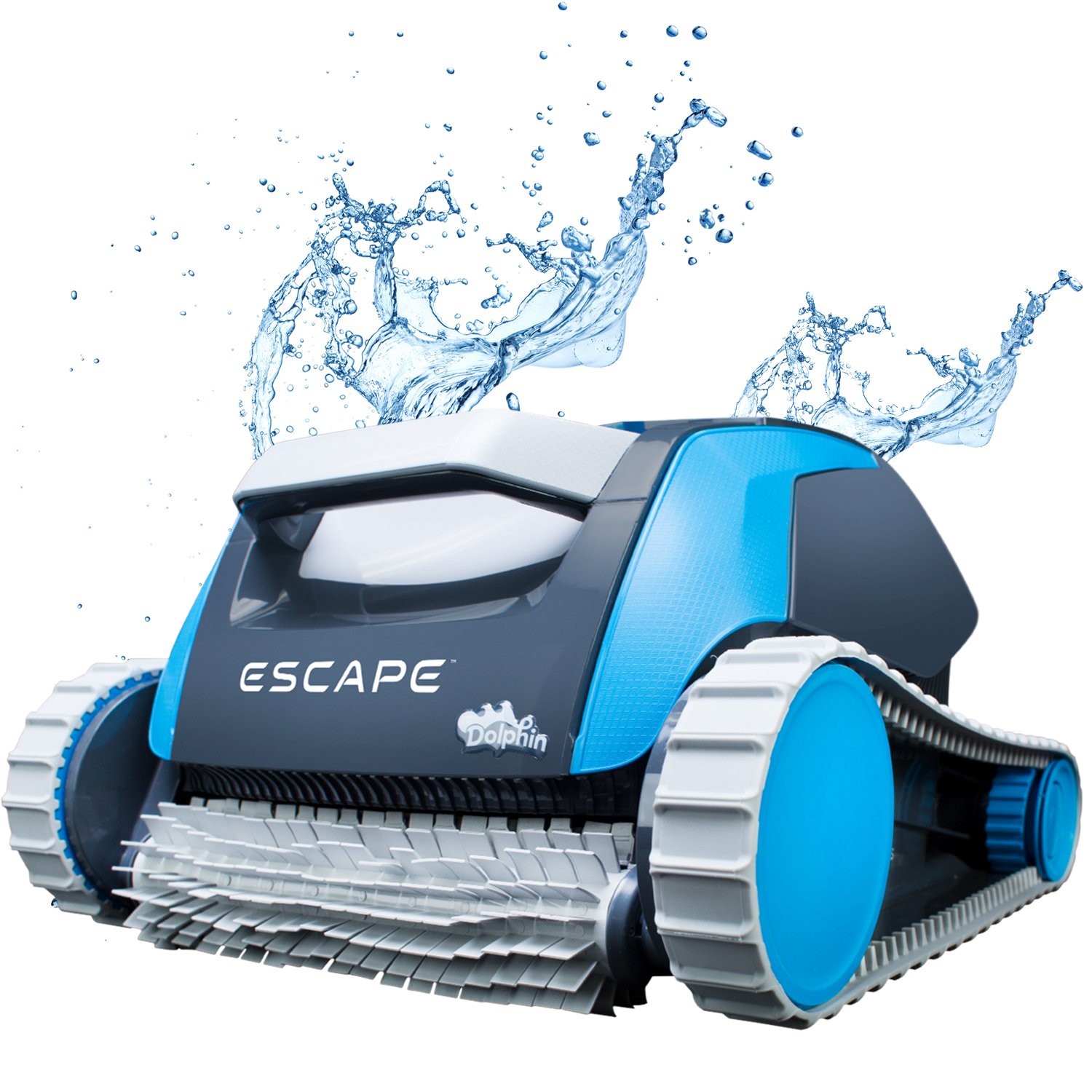
Dolphin Escape
At 14.2 lb the Escape is the lightest robot in this guide, and its top-load basket empties without flipping it over. On weight alone it would be first.
It sits second for two reasons. Its cable is 40 ft, which leaves less slack for pulling the robot to a comfortable spot. On above-ground rounds larger than about 24 ft, measure the cable run from where the power supply will sit before you choose it. And it has no timer as standard, so you start each cycle by hand. The optional Automation Timer power supply changes that.
- Best for
- Above-ground and smaller in-ground pools up to 33 ft where the lightest possible lift comes first.
- Keep in mind
- The 40 ft cable is the practical limit, and it lists no parking feature. If the cable run is long, choose the Cayman and its 50 ft cable.
- 3
 $1599
$1799Save $200Temporarily out of stock
Lightest of the 50 ft robots compared here
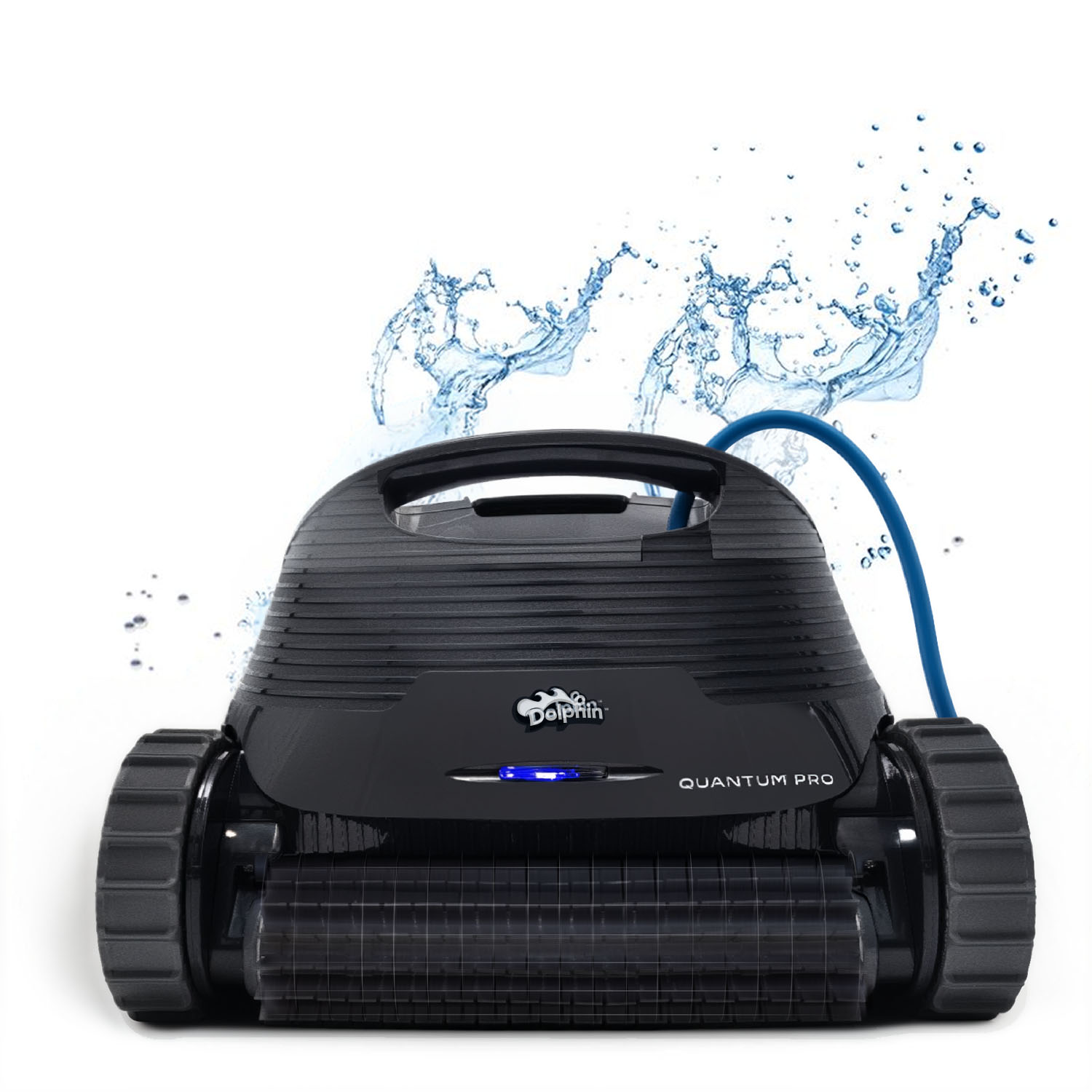
Dolphin Quantum
For a pool beyond 33 ft, or one where the tile line needs scrubbing, the two robots above are out and the Quantum is the one to look at. At 18.3 lb it is the lightest of the three 50 ft Dolphins: 2 lb under the Premier and more than 6 lb under the Sigma.
Its 55 ft cable has an anti-tangle swivel, so the cable you pull on comes in clean. The timer and the myDolphin Plus app both schedule cycles, which lets the robot stay in the water between them, and the top-load basket opens with one click.
- Best for
- In-ground pools from 33 to 50 ft, or any in-ground pool where waterline cleaning is wanted.
- Keep in mind
- At 18.3 lb it is a two-hand lift for many people, and it lists no parking feature. A caddy helps once it is out.


How to judge a robot for this
What makes a robot easy to get out.
- 1
Weight at the lift
You lift the robot at the pool edge, bending or kneeling, with water still draining from it. The listed weight is the dry weight, so the first seconds feel heavier. A 14 lb robot is a far easier lift than one of 20 lb or more.
- 2
Cable to pull on
On a corded robot the floating cable does the job that parking does on a cordless one. You need enough slack to stand where the lift is easiest and draw the robot to you. The Cayman has 50 ft, the Escape 40 ft and the Quantum 55 ft.
- 3
How often you lift
The easiest retrieval is the one you skip. A robot on a timer or app schedule is made to stay in the water between scheduled cycles, so you lift it to rinse the filter, at least weekly, instead of after every run.
- 4
What happens after the lift
Once the robot is out, you empty the filter and put it away. A basket that opens from the top empties at the pool edge without turning the robot over. All three picks open from the top.
Side by side
Weight, cable and filter access compared.
| Specification | Dolphin Cayman | Dolphin Escape | Dolphin Quantum |
|---|---|---|---|
| Price today | $1049 | $659 | $1599 |
| Cleans | Floor and walls | Floor and walls | Floor, walls, waterline, sun shelves and stairs |
| Scheduling | Timer: every day | Optional Automation Timer: every 24, 48 or 72 hours | Weekly timer: every day, every 2 days or every 3 days |
| App | No app; controls on the power supply | No app | myDolphin Plus (Wi-Fi) |
| Filtration | MaxBin basket with fine panels; NanoFilter panels optional | MaxBin basket; NanoFilter panels optional | XXL MaxBin basket with standard and NanoFilter panels |
| Brushes | HyperBrush | HyperBrush | Dual HyperBrush |
| Navigation | SmartNav 2.0 | SmartNav 2.0 | SmartNav 2.0 |
| Cable | 50 ft | 40 ft | 55 ft with anti-tangle swivel |
| Warranty | 2 years | 2 years | 2 years |
Why corded robots skip the parking trick.
Parking solves a cordless problem. With no cable, a robot that stops on the floor has to be fished out with a hook on a pole, so those robots are built to climb to the surface and wait. A corded robot is always attached to the deck. Its cable floats, and it leads straight to the robot.
That is why none of the five Dolphins compared here lists a parking feature, from the 14.2 lb Escape to the 24.6 lb Sigma. The Sigma and the 20.3 lb Premier are the heaviest lifts of the five, which is why they are not picks on this page.
How to bring a corded robot up.
Wait for the cycle to finish. Then work through these in order.
- Stand where the lift is easiest for you: a low edge, the top step, or the deck beside an above-ground pool.
- Take up the cable hand over hand with a slow, steady pull. The robot rises and comes toward you. Do not jerk it.
- When the handle breaks the surface, let go of the cable and take the handle.
- Hold the robot at the surface for a few seconds while the water runs out, then lift it clear. Never hoist it out of the pool by the cable alone.
- Set it down, open the top and empty the filter.
Lift it less often.
A scheduled robot is the corded answer to parking: it starts itself, and you are not at the pool edge every day. Lift it out at least weekly to empty and rinse the filter. Take it out before you shock the pool or add chemicals. When the pool will sit unused for a long stretch, store the robot dry and out of direct sun. The Cayman's timer does this with one setting. The Escape needs the optional Automation Timer to do the same.
Small things that make the lift easier.
- Put the power supply near the spot where you prefer to lift, at the setback your manual gives, so the cable leads the robot to you.
- Kneel or squat at the edge instead of bending from the waist, and keep the robot close to your body as it clears the water.
- Let the robot drain at the surface before you lift. Water trapped inside is weight you do not need to carry.
- If carrying the robot to storage is the hard part, a caddy rolls it there. It does nothing for the lift itself.
Questions, answered
Questions about parking and retrieval.
Is there a Dolphin robotic pool cleaner with automatic waterline parking in these guides?
No. None of the five Dolphins here lists that feature: not the Cayman, Escape, Quantum, Premier or Sigma. Each is corded, and the cable is how you bring the robot up. For the easiest retrieval, choose by weight.
Is it OK to pull a pool robot up by its cable?
Yes, gently, to bring it to the surface. Use a slow, steady pull and stop once you can reach the handle. What you should not do is haul the robot's full weight out of the water by the cable. Take the handle for the lift.
Where does the robot stop when its cycle ends?
Wherever it happens to be, which is usually on the pool floor. None of these robots lists a mode that returns it to a set spot or holds it at the surface. The floating cable shows you which way it lies, and a steady pull brings it up.
How heavy is a robot when it comes out of the water?
Heavier than its listed weight for the first few seconds, because the body is full of water. The published figures are dry weights: 14.6 lb, 14.2 lb and 18.3 lb for the three picks. Let it drain at the surface and what you lift is close to that figure, plus whatever is in the filter.
Can I leave the robot in so I do not have to lift it after every clean?
Between scheduled cycles, yes. Robots with a timer or an app schedule are made for that. The robot still has to come out at least weekly so you can rinse the filter, and before you shock the pool or add chemicals. It is not meant to live in the water indefinitely.
The verdict
The rule if you wanted parking.
Decide whether you need the feature or the result. If you need a robot that waits at the surface, none of these does it. If you need a robot that is easy to get out, pick by weight and pool size: the Cayman for pools up to 33 ft, the Escape if the lightest lift matters most and its 40 ft cable reaches, the Quantum for longer in-ground pools. Then put it on a schedule, so you lift it weekly instead of daily.
Keep reading