


By steps, ledges and tricky features
Best robotic pool cleaner for swim-outs and the alcove corners around them
Top pick: Dolphin Quantum
Live prices · Free shipping · 30 Day Trial
The short answer
Swim-outs sit in a recess where circulation is weak and robots rarely stop. Here is which Dolphin gives the seat a chance and how the others handle the alcove.
The Dolphin Quantum leads for swim-outs because stairs, sun shelves and Baja ledges are in its published coverage, so it is the pick most likely to mount the seat and its step. The Dolphin Sigma is second: its gyroscope keeps it working around the alcove without stalling, and it scrubs the waterline inside the recess. Expect to brush the seat itself on any robot.
A swim-out is a seat built into a corner or alcove of the pool wall, most often in the deep end, usually with a step or two below it so you can climb out without a ladder. The recess sits out of the main circulation, so leaves and fine debris drift in and stay. Anyone hunting for the best robotic pool cleaner for swim-outs has likely found a tidy pool with one dirty pocket.
Robots struggle here for two reasons. The seat is a small horizontal surface partway up the wall, cleaned only if the robot climbs on. And the alcove is a tight three-sided space a robot has to enter, turn in and leave. So this page ranks on both: which robot might reach the seat, and which work the pocket around it.
Our picks, in order
The four picks for pools with a swim-out.
- 1
 $1599
$1799Save $200Temporarily out of stock
Most likely to mount the seat and step
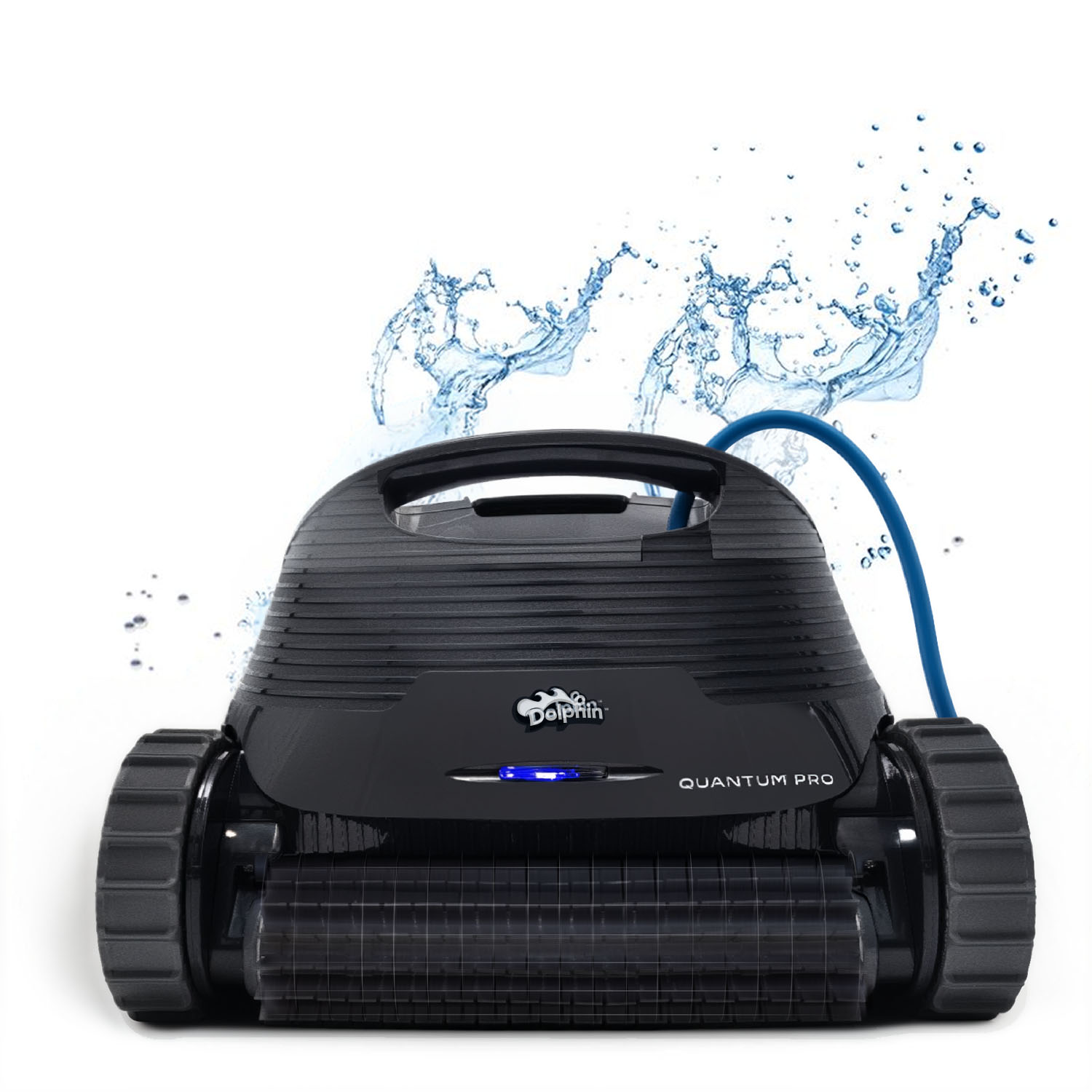
Dolphin Quantum
A swim-out is a seat plus a step, and the Quantum is the only one of these four robots that lists stairs and shelves in its published coverage. HyperGrip continuous rubber tracks carry it over a tread edge, and its twin HyperBrushes, spinning at double the standard speed, go to work on the seat if it gets there. Its XXL MaxBin basket, at over 400 square inches of filter area, is bigger than any other basket in this guide, which suits the leaf pile an alcove corner builds. Small or oddly shaped swim-outs can still be missed, so keep a brush handy.
- Best for
- Pools up to 50 ft where the swim-out has a wide seat and a full-width step.
- Keep in mind
- It is the best bet for the seat, not a promise: small corner swim-outs can be missed. The warranty is 2 years.
- 2
 $2349
$2999Save $650Temporarily out of stock
Gyroscope keeps it moving through the alcove
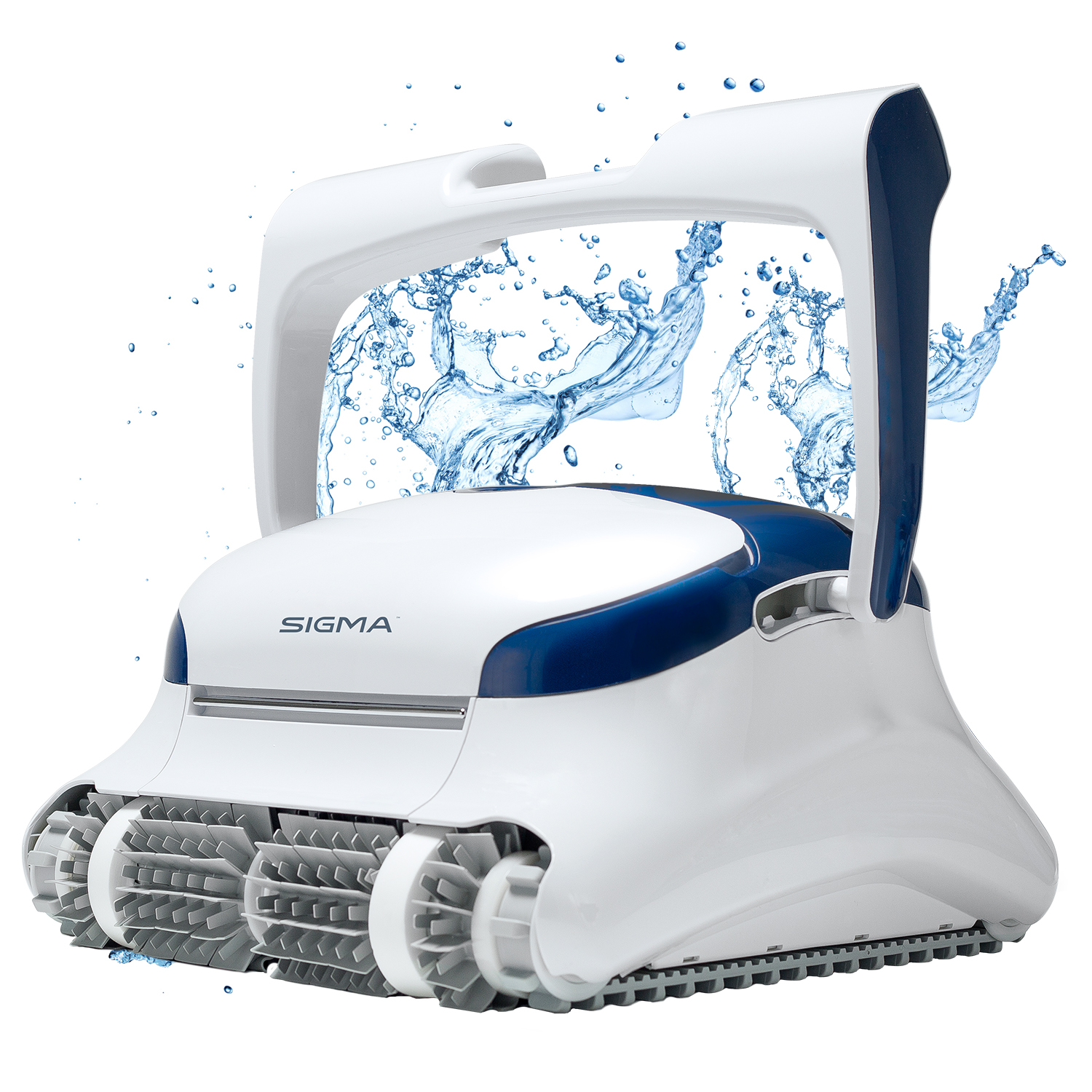
Dolphin Sigma
The Sigma does not list steps or shelves in its coverage, so do not buy it expecting the seat to be cleaned. It ranks second for how it handles the recess. SmartNav 3.0 with an onboard gyroscope tracks the robot's heading through the tight turns an alcove forces, which helps it work the pocket and leave without stalling. Four scrubbing brushes clean the alcove walls and the waterline inside it, a strip that is hard to reach with a pole from the deck.
- Best for
- Pools up to 50 ft with a deep-end swim-out plus other obstacles to work around.
- Keep in mind
- The seat and its step are a brush job. It is the highest-priced pick, and its filters are cartridges.
- 3
 $1049
$1299Save $250Temporarily out of stock
Collects what the alcove sheds, in pools to 33 ft
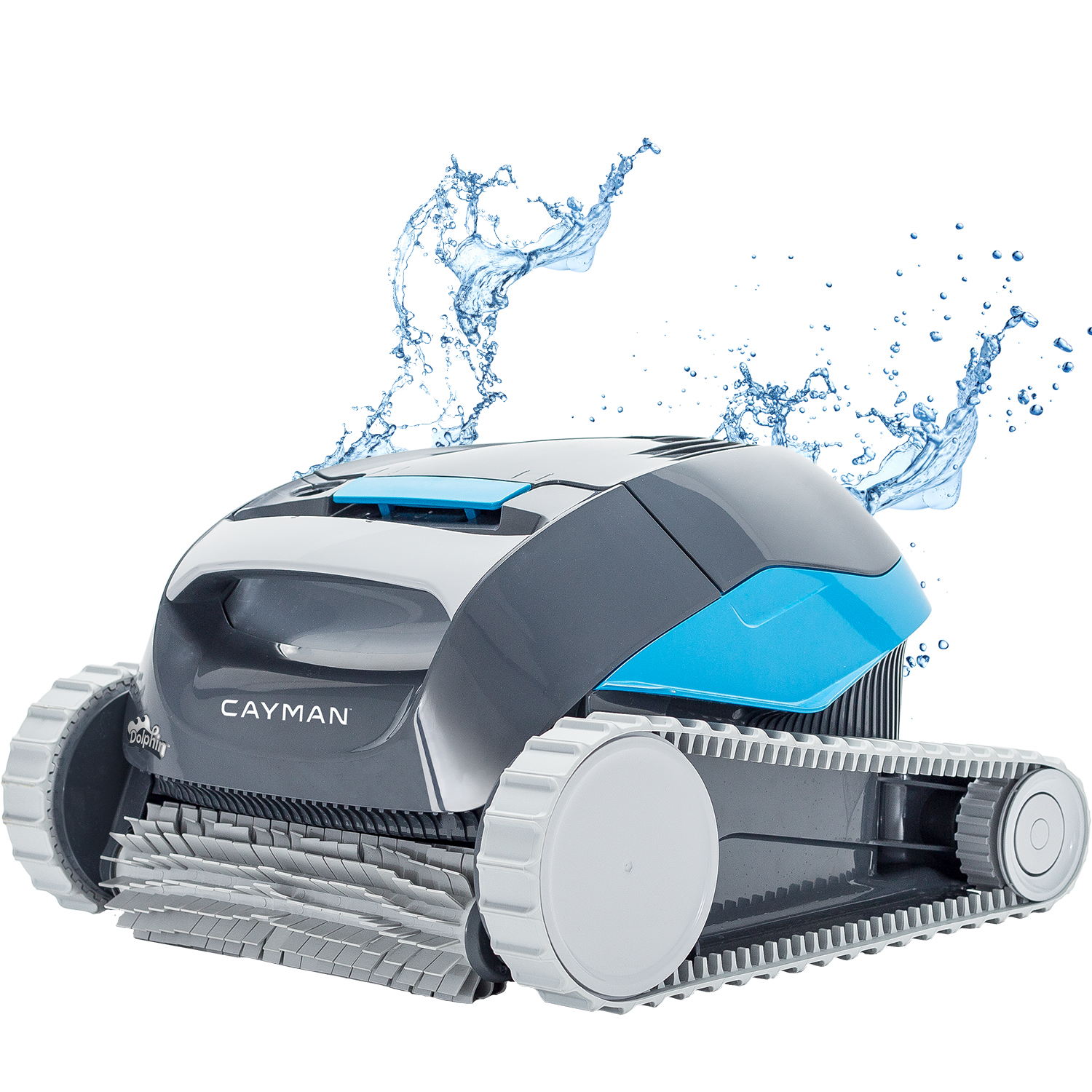
Dolphin Cayman
The Cayman cleans the floor and walls, which in a swim-out pool means the alcove's side walls and the floor at its foot. It will not climb onto the seat. It is third because, for pools up to 33 ft, it handles the real workload a swim-out creates: leaves and silt that drift into the pocket, get brushed out and need collecting. The MaxBin basket is 50% larger than standard Dolphin filters and empties through a top hatch with one tab. Its timer runs every day, so the pile does not sit for a week.
- Best for
- Pools 33 ft and under where the swim-out mainly means extra leaves.
- Keep in mind
- No seat cleaning, no waterline scrubbing and a fixed cable. Over 33 ft, choose one of the other three.
- 4
 $1949
$2499Save $550Temporarily out of stock
Leaf bag and a long cycle for the area around it
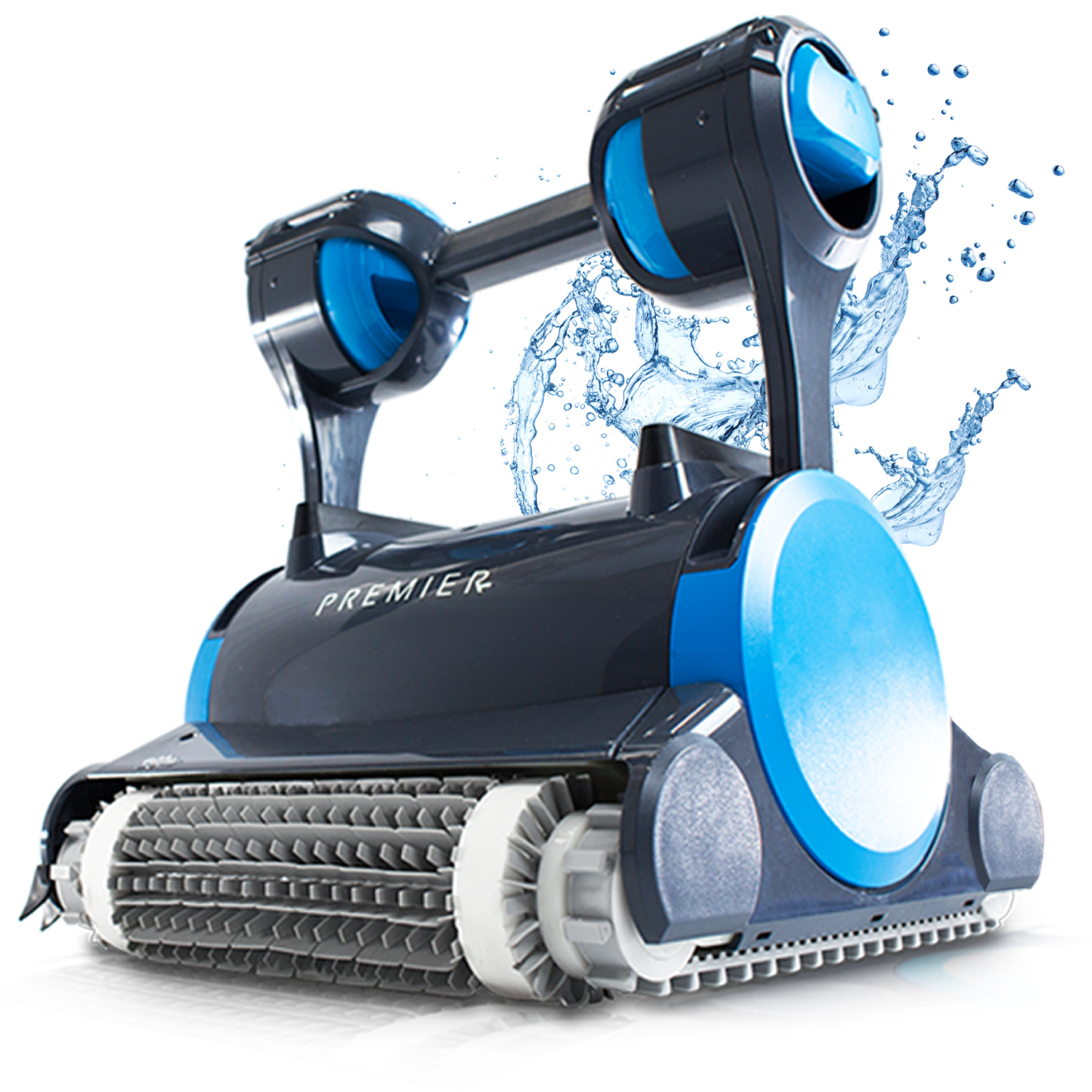
Dolphin Premier
The Premier scrubs the walls and waterline around a swim-out with dual brushes and 4,500 GPH, and its 3-hour cycle gives it the most time of any pick to revisit the alcove. Its real advantage is the oversized leaf bag in the Multi-Media set. When the pocket has collected a heap of leaves, the bag takes them without clogging a fine filter, and you can swap back to NanoFilters in seconds for silt. It is fourth because nothing in its coverage or navigation helps with the seat or the tight turns.
- Best for
- Leafy pools over 33 ft where the swim-out corner is a debris trap.
- Keep in mind
- It treats the swim-out as wall and passes the seat by. No tilt sensing and no phone control.


How to judge a robot for this
What matters around a swim-out.
- 1
Coverage that includes steps and shelves
The seat and the step below it are the same kind of surface as a stair tread or a sun shelf. A robot whose published coverage stops at floor, walls and waterline will climb past them. The Quantum's goes further, to stairs, sun shelves and Baja ledges.
- 2
Navigation in a recess
An alcove puts walls on three sides at close range. Heading control decides whether a robot enters, climbs and leaves cleanly or wastes part of the cycle there. The Sigma's onboard gyroscope is the strongest answer among these four.
- 3
Cable reach to the deep end
Swim-outs are usually at the deep end, often the farthest point from the outlet. The cable has to cover the distance along the surface and then the drop to the floor. The Sigma, Premier and Quantum carry 55 ft of cable, the Cayman 50 ft.
- 4
Leaf capacity
Because the alcove corner collects leaves, a robot working near a swim-out fills faster than the pool's size suggests. Basket or bag volume, and how easily it empties, matter more than usual.
Side by side
Coverage, cable and basket compared.
| Specification | Dolphin Quantum | Dolphin Sigma | Dolphin Cayman | Dolphin Premier |
|---|---|---|---|---|
| Price today | $1599 | $2349 | $1049 | $1949 |
| Cleans | Floor, walls, waterline, sun shelves and stairs | Floor, walls and waterline | Floor and walls | Floor, walls and waterline |
| Traction | HyperGrip tracks | HyperGrip tracks | HyperGrip tracks | HyperGrip tracks |
| Navigation | SmartNav 2.0 | SmartNav 3.0 with gyroscope | SmartNav 2.0 | SmartNav 2.0 |
| Cable | 55 ft with anti-tangle swivel | 55 ft with 360° anti-tangle swivel | 50 ft | 55 ft with 360° anti-tangle swivel |
| Robot weight | 18.3 lb | 24.6 lb | 14.6 lb | 20.3 lb |
| Warranty | 2 years | 3 years | 2 years | 3 years |
Why the alcove fills with leaves.
Return jets set up a slow rotation around the pool. A swim-out is a pocket off to the side of that flow, and anything the current carries past the opening tends to drop out inside it, the way leaves collect in a doorway on a windy street. The deep end adds to it, because debris that sinks there has farther to travel to a skimmer or drain. The result is a wedge of leaves in the back corner of the step and a film of silt on the seat. No robot changes the circulation, but an adjustable return fitting angled across the mouth of the alcove reduces how much settles.
How a robot behaves in a swim-out.
Coming along the floor, the robot meets the step first. A floor-and-wall robot treats the riser as a short wall: it climbs, tips at the tread edge and comes back. Climbing the wall beside the alcove, it scrubs up to its limit and never turns into the recess. A robot with stair coverage has the chance to crest the tread and drive along it, then up to the seat. Corner swim-outs are harder than straight ones, because the seat is often a quarter-circle with little room to stand.
Reaching the deep end.
A deep-end swim-out tests cable length more than any other feature. Start at the spot the power supply will occupy and measure to the far corner of the alcove, then add the depth of the water there, since the cable has to drop to the floor. If the total is close to the cable length, move the power supply along the deck toward the swim-out. A cable pulled tight holds the robot short of the alcove, and it looks like a navigation fault when it is a placement one.
Keeping a swim-out clean with a robot.
- Brush the seat, then the step, toward the open floor before the cycle. Work the back corner of the step, where leaves wedge.
- Scoop a heavy leaf pile out of the alcove with a net first. A robot is for what remains, not a bucketful at once.
- Check the filter after the first cycle of the week. Alcove debris can fill it sooner than you expect.
- Place the power supply so the cable reaches the swim-out corner with slack to spare.
- Angle an adjustable return fitting to sweep water across the alcove opening, so less debris settles inside.
Questions, answered
Swim-out questions.
What is a swim-out in a pool?
A seat recessed into the pool wall, often in a deep-end corner, usually with one or two steps beneath it. For cleaning purposes it is a small shelf in a pocket of still water, which is why robots tend to miss it.
Will a robotic pool cleaner clean swim-outs on its own?
Sometimes, and only certain robots. The Quantum lists stairs, sun shelves and Baja ledges in its coverage, so it has a fair chance on a wide seat with a full step. The Sigma, Premier and Cayman clean the walls and floor around the alcove and leave the seat. A quick brush before the cycle is the reliable method.
Can a robot get trapped inside a swim-out alcove?
It is uncommon. All four picks publish steps and ledges among the obstacles they handle, and a robot that enters the recess normally climbs, turns and leaves. Stalls are more likely when a handrail sits in the alcove or when a short cable holds the robot there.
Does the robot clean the step under the swim-out?
The riser, yes: most robots climb it like a short wall. The tread is the same story as the seat. A robot with stairs in its coverage, the Quantum among these four, may drive along it. The others tip back at the edge. Brush the tread when you brush the seat.
Does a deep-end swim-out change which robot I need?
It changes the cable math more than the robot. All four picks climb walls from the deep-end floor. Check that the cable covers the run to the swim-out plus the drop to the bottom. For a Dolphin's maximum working depth, check the manual; it is not a figure we will guess at.
The verdict
One robot with a chance at the seat, three for the surroundings.
If cleaning the seat and step without a brush is the goal, the Quantum is the only pick with coverage that points that way. If the swim-out is one obstacle among several and you want the robot least likely to stall around it, choose the Sigma. For pools up to 33 ft where the swim-out mostly means leaves, the Cayman collects them daily at a lower price. Take the Premier when the pool is larger and the leaves are heavier.
Keep reading