


By steps, ledges and tricky features
Best robotic pool cleaner for beach entry pools, and where every robot turns back
Top pick: Dolphin Quantum
Live prices · Free shipping · 30 Day Trial
The short answer
A zero-entry slope runs out of water before a robot runs out of slope. Here is how far each Dolphin can be expected to go, and what to do about the rest.
The Dolphin Quantum is the pick for beach-entry pools: sun shelves and stairs are in its published coverage, so it works in the shallowest water of the four. The Dolphin Sigma is second, with a gyroscope that senses the incline. Neither cleans the top of the entry. The Dolphin Premier and the Cayman clean the swimming area and the lower slope.
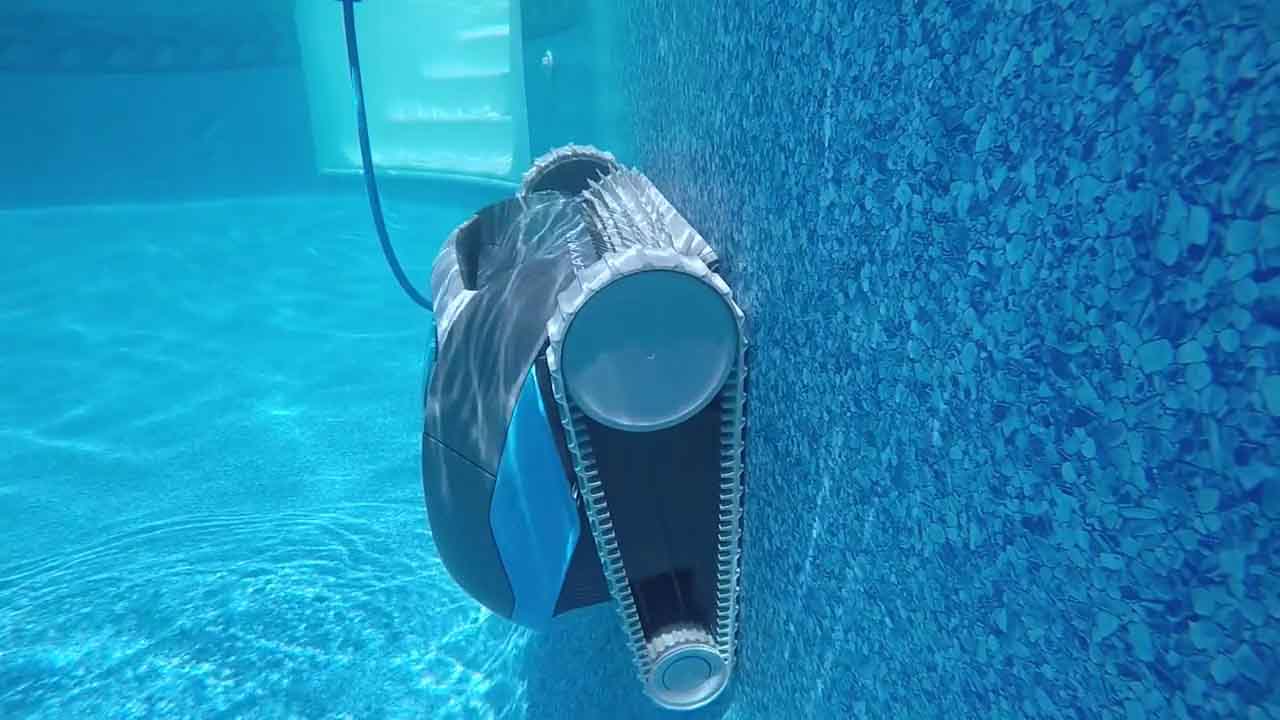
No robotic cleaner cleans a beach entry all the way up. A robot climbs the slope until the water is too shallow to keep it submerged, then turns back, and on some pools it can run far enough up to draw air and stop. The top few feet of the entry need a brush or a hose-down, whichever robot you buy.
A beach entry, also called a zero entry, is a floor that rises from swimming depth to nothing, so you walk into the pool the way you walk into the sea. It is the most demanding shape there is for a robot, and the search for the best robotic pool cleaner for beach entry pools should start with what none of them can do.
A pool robot has to be under water to work. Its pump pulls water through the filter, and that flow helps hold it to the surface. As it drives up the entry, the water above it thins out until the robot has to turn back. What you are choosing is how high the clean line sits.
Our picks, in order
Four picks for beach-entry pools, ranked.
- 1
 $1599
$1799Save $200Temporarily out of stock
Works in the shallowest water of the four
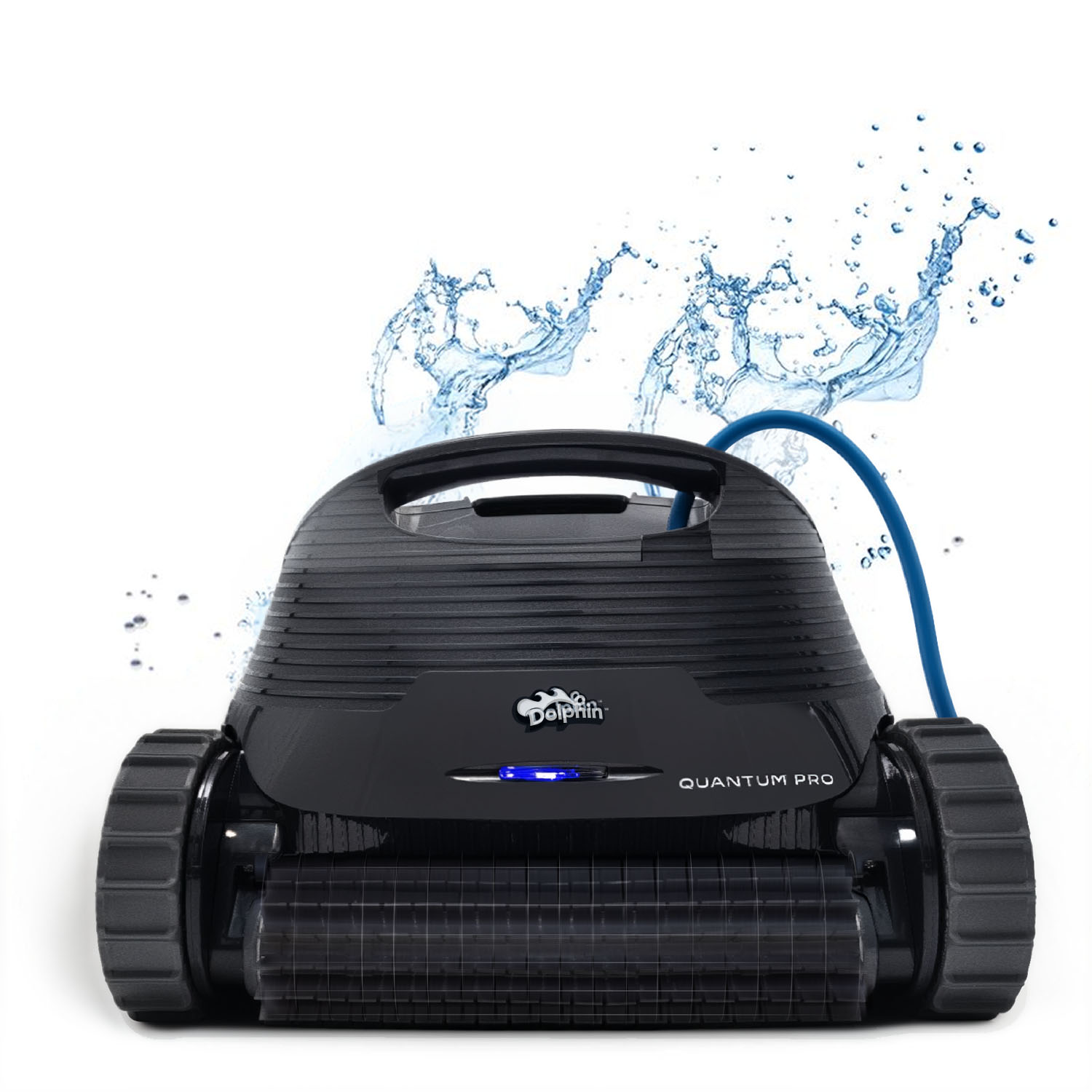
Dolphin Quantum
The Quantum is first because its published coverage reaches the shallow surfaces the others leave out: sun shelves, Baja ledges and stairs, alongside floor, walls and waterline. On a beach entry that means a clean line that sits higher up the slope. HyperGrip continuous rubber tracks hold a textured ramp, and the dual HyperBrush, turning twice as fast as a standard brush, scrubs the film that forms in warm, shallow water. It ships with a complete set of NanoFilter panels for the sand an entry collects.
- Best for
- Beach-entry pools up to 50 ft, especially with a sun shelf or steps beside the entry.
- Keep in mind
- It does not clean to the dry edge. If it runs up far enough to draw air, it stops and needs restarting in deeper water.
- 2
 $2349
$2999Save $650Temporarily out of stock
Gyroscope that senses the slope
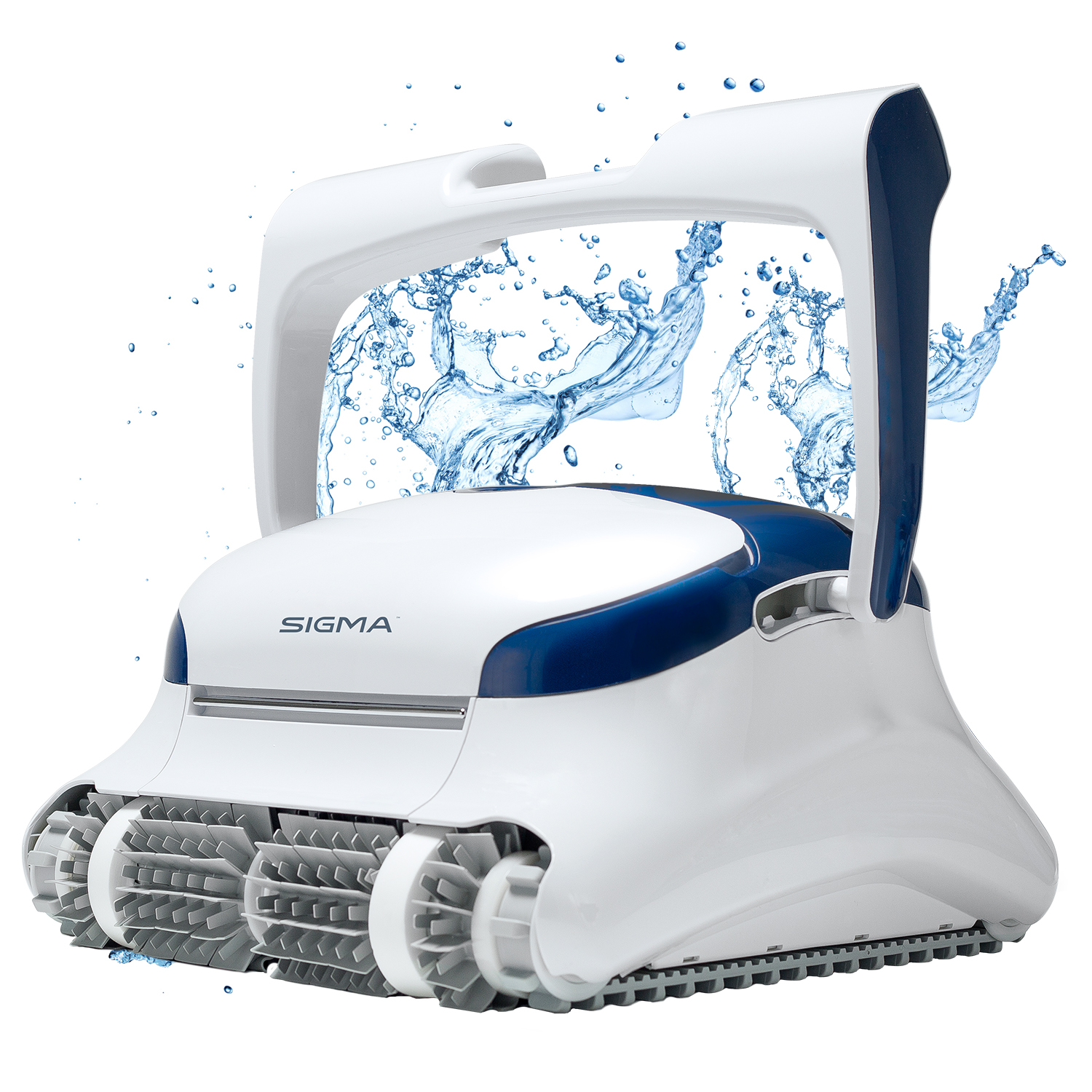
Dolphin Sigma
The Sigma's SmartNav 3.0 includes an onboard gyroscope, so the robot can tell it is on an incline and not a level floor. On a long ramp with no wall at the end, that matters for a clean turn-back. Four scrubbing brushes give the lower entry the most brush contact of the four, backed by 4,500 GPH from three ProLine motors, and the included NanoFilters hold fine sand. It sits behind the Quantum only because shallow shelves and stairs are not in its published coverage.
- Best for
- Large beach-entry pools where the entry is long and gentle and stalls are the worry.
- Keep in mind
- Highest price here. Expect it to leave more of the upper slope than the Quantum, and the top of the entry for a brush.
- 3
 $1949
$2499Save $550Temporarily out of stock
Sand and leaf filtration for the swimming area
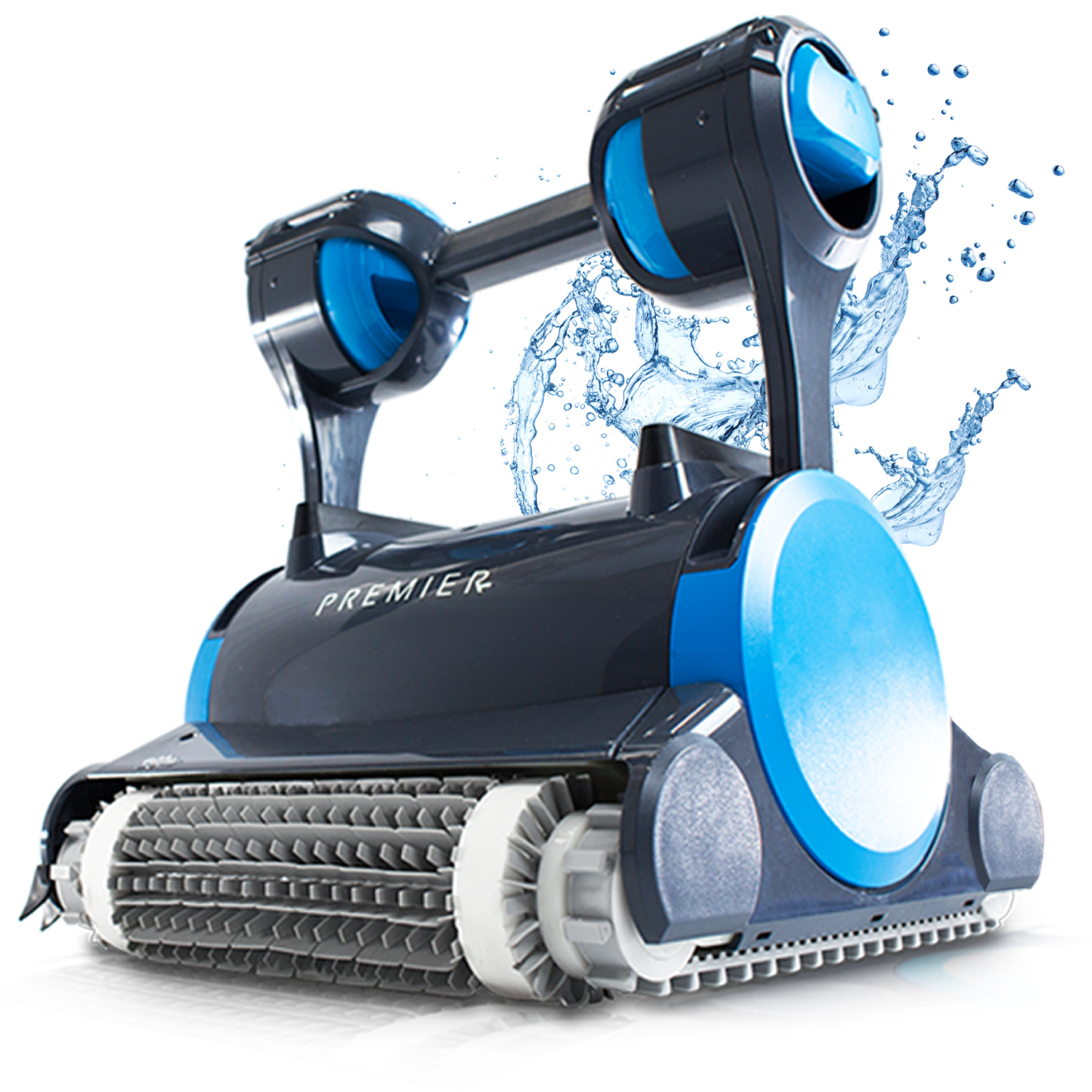
Dolphin Premier
Third place goes to the Premier for what it does with the debris a beach entry feeds into the rest of the pool. Sand walked in at the entry ends up on the main floor, and Multi-Media filtration answers it with included NanoFilters, then swaps in seconds to the oversized leaf bag when leaves are the problem. On the entry itself it has no special tools: it cleans the lower slope as an extension of the floor and turns back where the water thins.
- Best for
- Pools up to 50 ft where sand and leaves in the main pool matter more than the entry.
- Keep in mind
- Nothing in its published coverage addresses shallow water, and it has no tilt sensing. The top of the entry is left for a hand brush.
- 4
 $1049
$1299Save $250Temporarily out of stock
Lower-cost choice for small entries to 33 ft
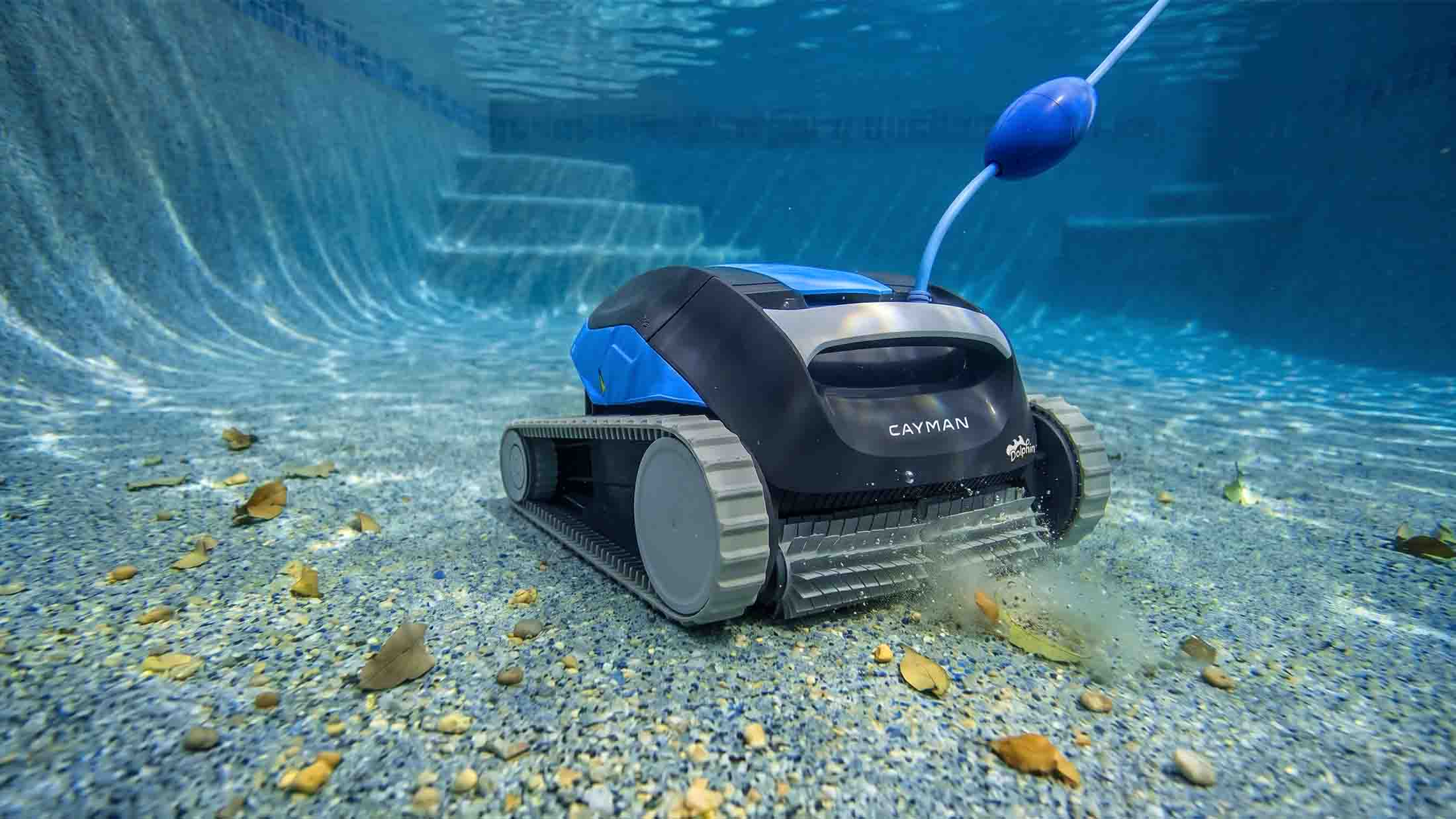
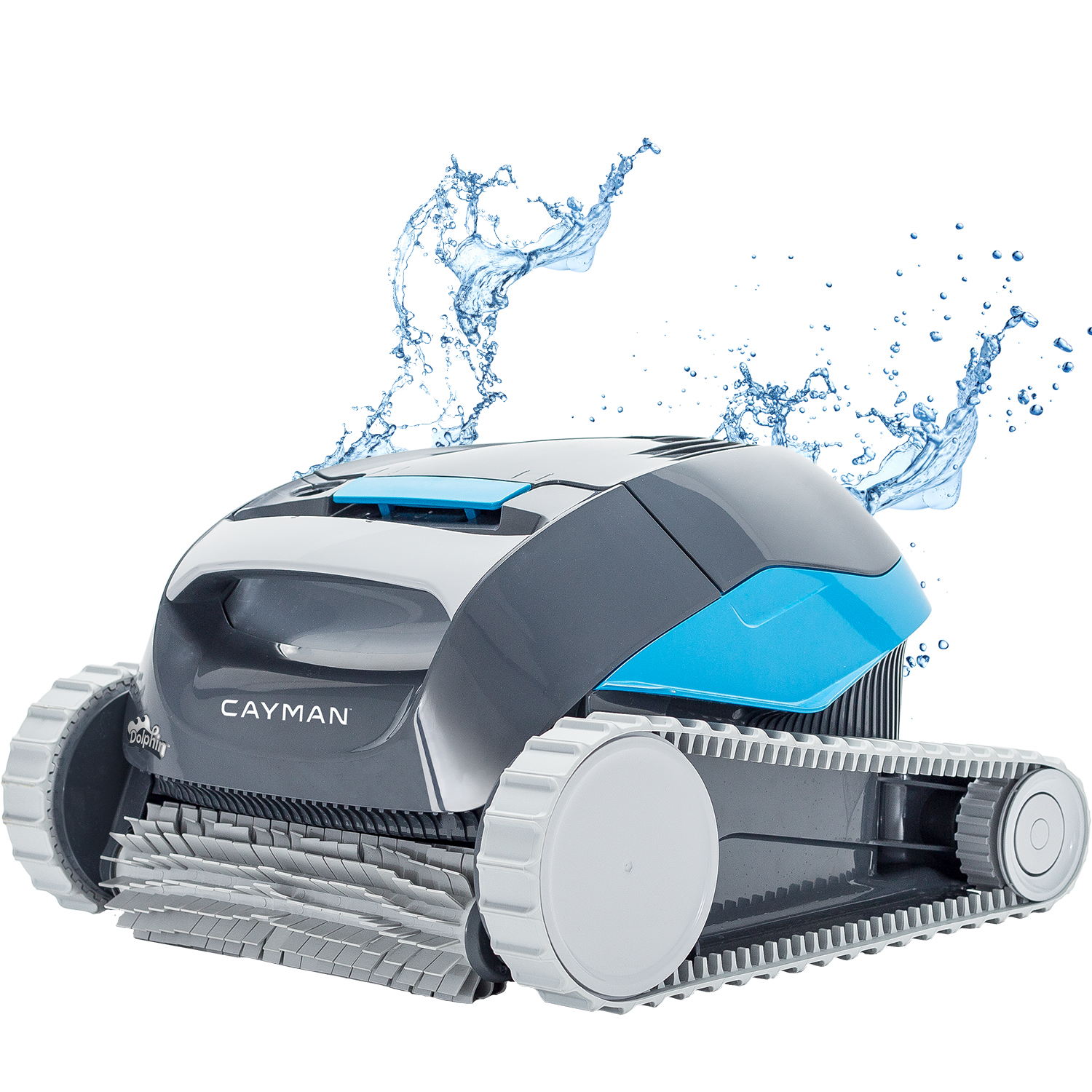
Dolphin Cayman
The Cayman is fourth, and on many beach-entry pools it is not a candidate at all, because the pool is longer than its 33 ft rating once the entry is counted. Where the pool does fit, it cleans the swimming floor, the walls and the lower slope on HyperGrip tracks, and its timer runs every day, which keeps tracked-in sand from building up. Fine sand is the catch: the MaxBin basket ships with fine panels, and NanoFilter panels are an optional add-on worth buying for a textured entry.
- Best for
- Compact beach-entry pools of 33 ft or less, measured from the top of the entry.
- Keep in mind
- No shallow-surface coverage, no tilt sensing, no waterline scrubbing. Many zero-entry pools exceed 33 ft, so measure before you buy.


How to judge a robot for this
What matters on a zero-entry slope.
- 1
How shallow the robot keeps working
Every robot has a minimum depth, and it is in the manual, not a figure we can quote. What can be compared is published coverage. The Quantum's includes sun shelves, Baja ledges and stairs, all shallow surfaces. The other three list floor and walls, plus waterline on the Premier and Sigma.
- 2
Sensing the incline
A long, gentle ramp gives a robot no wall to bump and no clear signal to turn. A robot that senses its own tilt knows it is climbing. The Sigma's onboard gyroscope does this. The other picks use SmartNav 2.0 scanning.
- 3
Fine filtration
Beach entries are usually finished in pebble or a textured surface for footing, and texture holds the fine sand bare feet carry in. NanoFilters are included with the Quantum, Sigma and Premier and are an optional add-on for the Cayman.
- 4
Pool length
Beach-entry pools are often large, and the entry adds to the run. Measure the longest straight line of water, from the top of the entry to the far wall. Over 33 ft rules out the Cayman. Over 50 ft is beyond the rating of every robot on this page.
Side by side
Coverage, filtration and length rating compared.
| Specification | Dolphin Quantum | Dolphin Sigma | Dolphin Premier | Dolphin Cayman |
|---|---|---|---|---|
| Price today | $1599 | $2349 | $1949 | $1049 |
| Cleans | Floor, walls, waterline, sun shelves and stairs | Floor, walls and waterline | Floor, walls and waterline | Floor and walls |
| Traction | HyperGrip tracks | HyperGrip tracks | HyperGrip tracks | HyperGrip tracks |
| Navigation | SmartNav 2.0 | SmartNav 3.0 with gyroscope | SmartNav 2.0 | SmartNav 2.0 |
| Cable | 55 ft with anti-tangle swivel | 55 ft with 360° anti-tangle swivel | 55 ft with 360° anti-tangle swivel | 50 ft |
| Robot weight | 18.3 lb | 24.6 lb | 20.3 lb | 14.6 lb |
| Warranty | 2 years | 3 years | 3 years | 2 years |
Where the robot turns back, and why.
Picture the slope in three bands. In the lowest, the robot is fully covered and cleans exactly as it does on the main floor. In the middle band it is submerged but only just, and this is where shallow-surface coverage makes the difference. The top band has less water than the robot is tall, and no robot works there. If one enters that band, its intake pulls air and the robot stops until someone moves it. A steep entry has a short middle band and the robot turns back cleanly. A long, gentle one has yards of marginal water, and that is where stalls happen.
Cleaning the part the robot cannot.
The top of the entry is the easiest part of the pool to reach by hand, which is the good news. Use a pool brush to push sand and film down the slope into deeper water shortly before a cycle, and the robot collects it. At the deck edge, a gentle hose-down toward the pool does the same. The waterline here is not on a wall: it is a band across the slope that moves as the water level changes, and it often shows scale or scum. Brush it weekly. No robot here does that for you.
Sand and textured finishes.
A beach entry invites bare feet, and bare feet bring sand. A pebble or textured finish grips it in every hollow. Two things follow. Fast or multiple brushes lift sand out of texture that a slow pass would ride over. And the filter must be fine enough to keep what is lifted, because sand that passes through a coarse panel goes straight back into the pool. Fit the finest media you have and rinse it after each cycle, since fine media loads quickly.
Running a robot in a zero-entry pool.
- Start the robot in the deep area, never on the slope, and sink it until the air has bubbled out.
- Brush the top of the entry down into deeper water shortly before each cycle.
- Keep the water at its normal mark. A low pool widens the band too shallow for the robot and makes stalls more likely.
- Use fine filters for sand, and rinse them after every cycle on a textured entry.
- Watch the first two cycles. If the robot runs up the ramp and stops, note where and ask us.
Questions, answered
Beach-entry questions.
How far up a beach entry will a robot clean?
Up to the point where the water is too shallow to keep it submerged. That depends on the robot's minimum depth, given in its manual, and on how steep your entry is. Expect the swimming floor and the lower slope to be cleaned and the top few feet to be left.
Can a robotic pool cleaner drive out of a beach entry pool?
It should not, and normally it turns back well before the edge. On a long, gentle entry a robot can climb into water too shallow for its pump, draw air and stop partway up the slope. It will sit there until you put it back in deeper water. A robot that senses the incline, such as the Sigma, is less prone to this.
Is the entry included when I measure pool length for a robot?
Yes. The length rating applies to the pool's longest straight run of water, and on a beach-entry pool that run starts at the top of the entry. A 30 ft swimming area with a 10 ft entry is a 40 ft pool for rating purposes: beyond the Cayman, within the Quantum, Sigma and Premier.
Does a robot clean the waterline on a zero-entry slope?
No. Waterline cleaning means scrubbing the band at the surface as the robot climbs a wall. On a beach entry the waterline lies across a gentle slope in water too shallow for any robot, so brush it by hand. The Quantum, Sigma and Premier still scrub the waterline on the pool's regular walls.
The verdict
Buy for the slope you have.
Accept first that the top of the entry is yours to brush. The Quantum cleans highest up the slope and is the pick for most beach-entry pools. Choose the Sigma if the entry is long and gentle and you want tilt sensing. Choose the Premier when sand and leaves in the main pool are the bigger job. Consider the Cayman only if the pool, entry included, measures 33 ft or less.
Keep reading