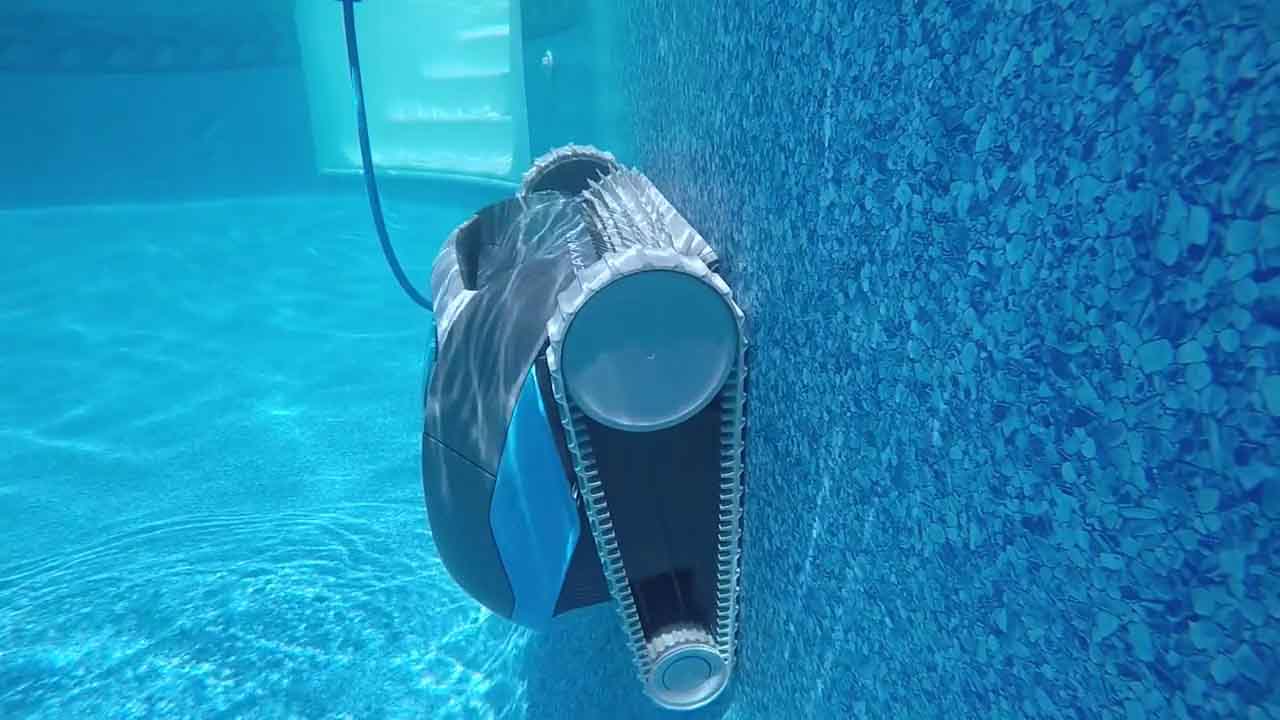



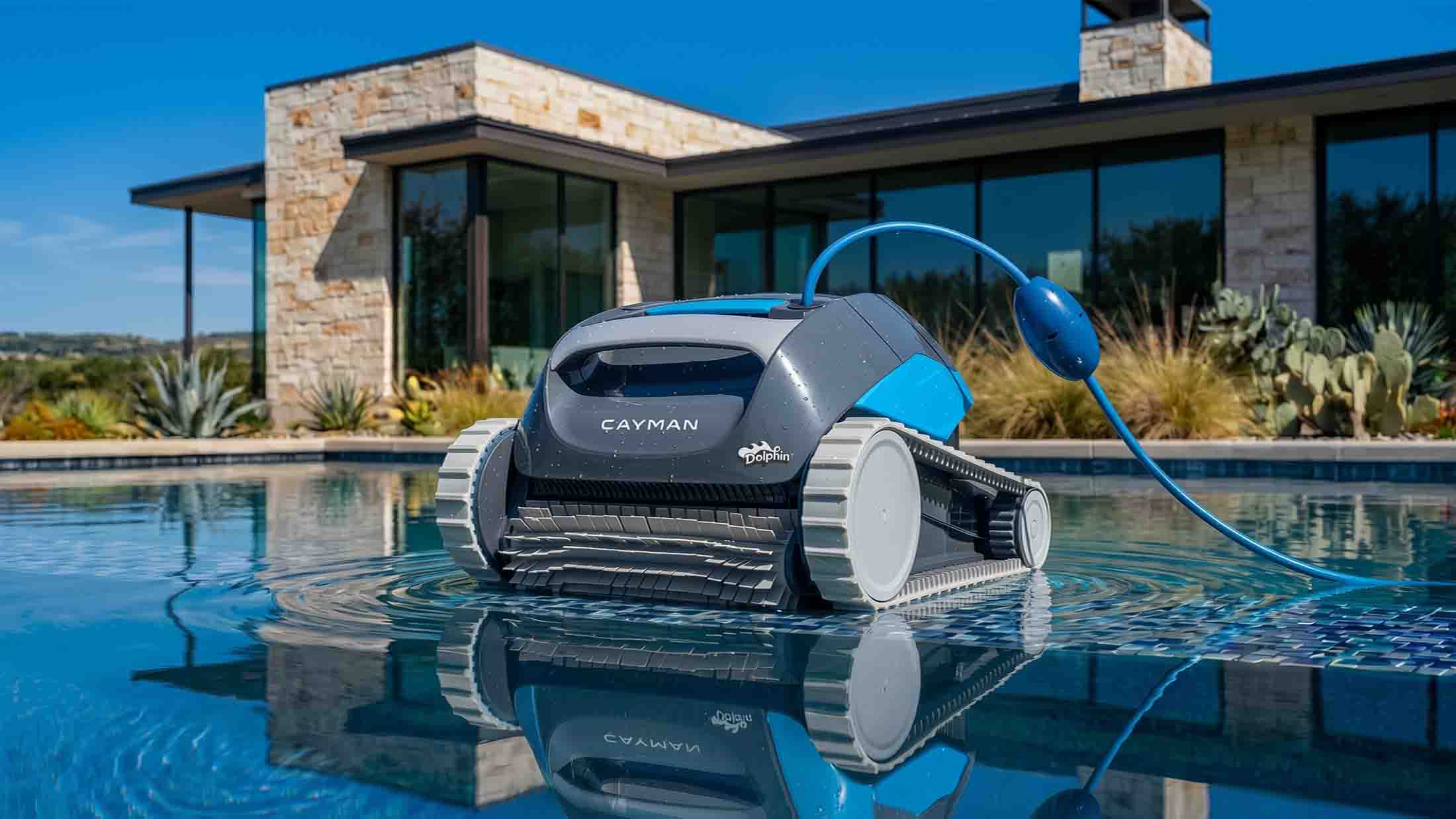
Commercial and specialty pools
Best robotic pool cleaner for pool service companies and route techs
Top pick: Dolphin Cayman
Live prices · Free shipping · 30 Day Trial
The short answer
For a route tech a robot is a second pair of hands. Here is which Dolphin earns a place on the truck, and which accounts each one is for.
The Dolphin Cayman is the first robot to put on the truck: 14.6 lb, a 2-hour cycle, a top hatch that empties with one tab, and published for in-ground and above-ground pools up to 33 ft. Add a Dolphin Quantum for accounts from 34 to 50 ft and for tile lines, and a Dolphin Premier for green-to-clean jobs. The Dolphin Escape is the light, quick unit for small above-ground stops.
These are residential robots. Warranty terms for commercial or service use must be checked before you buy, and we will not promise coverage for a robot that works a route. Rinse the robot and its filter between pools so you do not carry algae from one account to the next.
On a service route, time is what you sell. A robot earns its place on the truck when it does the vacuuming while you test water, empty baskets and brush, or when it stays behind at an account that will not hold. The best robotic pool cleaner for pool service companies is the one a tech can carry from the truck in one trip, drop in, pull and rinse without adding minutes to the stop.
That changes what matters. Reach and app features count for less. Weight, cycle length, how fast the basket empties, and whether one cable suits most of your pools count for more. So does the warranty: these are residential robots, and route work is not what their standard terms describe.
Our picks, in order
Four robots for the truck, ranked.
- 1
 $1049
$1299Save $250Temporarily out of stock
First robot on the truck for pools to 33 ft
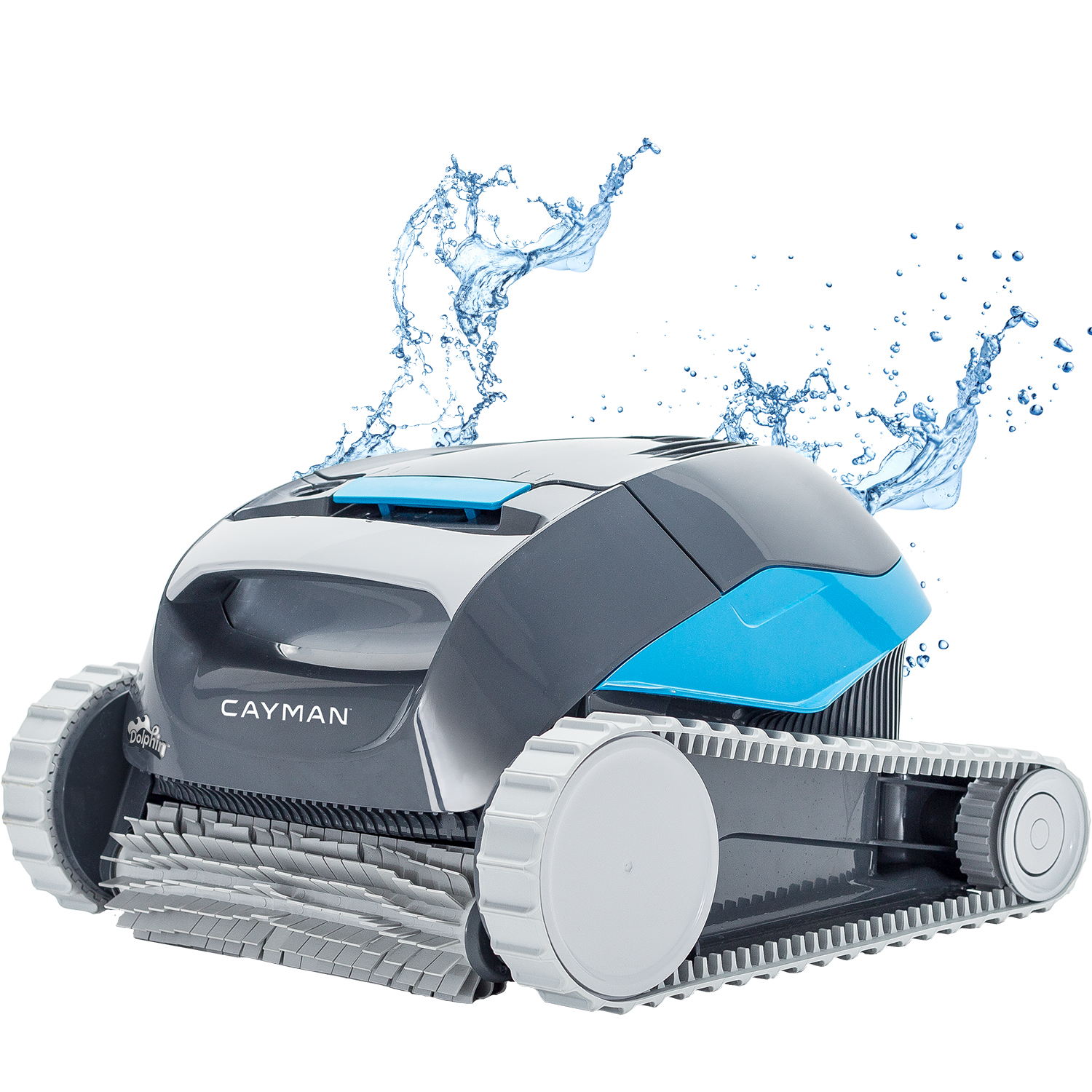
Dolphin Cayman
A route robot is lifted far more often than a homeowner's, and the Cayman weighs 14.6 lb. Its MaxBin basket comes out through a top hatch with one tab, so emptying and rinsing takes moments, and the 2-hour cycle suits a drop-and-collect loop. It is published for in-ground and above-ground pools up to 33 ft, so one machine covers a large share of ordinary backyard accounts.
Left at a problem account, its timer runs it every day with nothing to set. It also sits in the lower price tier, which matters when you are buying more than one.
- Best for
- Routes made up mostly of small and mid-size backyard pools, and leave-behind duty at a problem account.
- Keep in mind
- Its rating stops at 33 ft, and the waterline is not scrubbed. The cable has no swivel, so lay it out straight at each stop.
- 2
 $1599
$1799Save $200Temporarily out of stock
All-route unit for in-ground pools to 50 ft
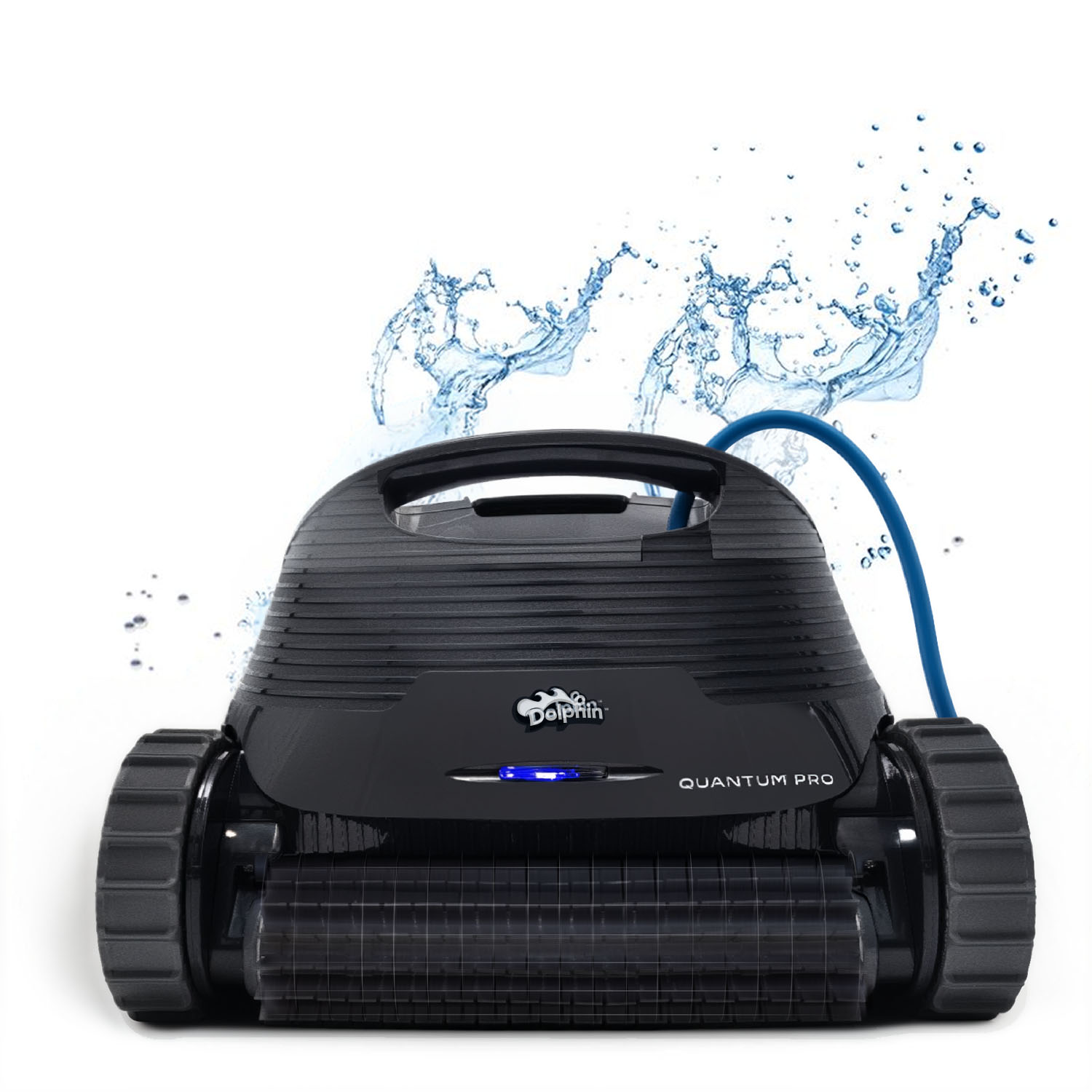
Dolphin Quantum
If the route sheet is full of 18 x 36 and 20 x 40 ft pools, the Quantum is the robot that fits them. It is rated to 50 ft, runs a 2-hour cycle and, at 18.3 lb, is the lightest of the 50 ft robots here. Its top-load XXL MaxBin basket opens with one click, and a 55 ft cable with an anti-tangle swivel saves untwisting at each stop.
It scrubs the waterline, and its published coverage includes stairs and shelves, so one robot handles the tile line too. It is second on weight and price.
- Best for
- Routes with larger in-ground pools, tile lines to keep clean, or steps and shelves that collect debris.
- Keep in mind
- In-ground pools only, and nearly 4 lb heavier than the first pick. Check the warranty position for route use before buying.
- 3
 $1949
$2499Save $550Temporarily out of stock
The green-to-clean and neglected-pool robot
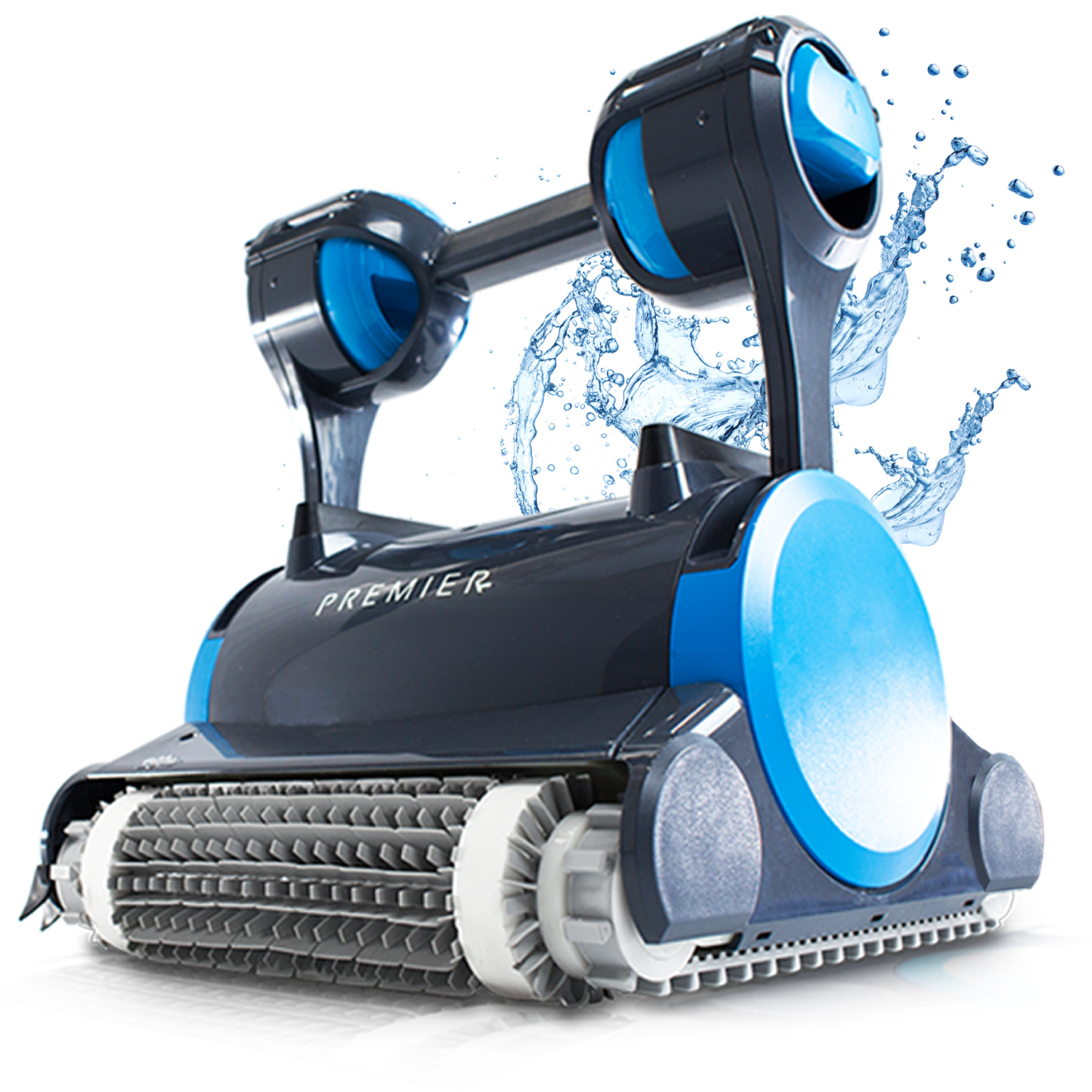
Dolphin Premier
The Premier is the one you bring to the swamp. Its Multi-Media system comes with an oversized leaf bag for the first passes through a neglected pool, standard fine filters, and NanoFilters for the dead algae and silt that follow. Optional disposable debris bags are the fourth choice, and on a route they have a second use: the mess from a green pool goes in the trash instead of riding to the next account.
It is third because a 3-hour cycle and 20.3 lb make it a leave-for-the-afternoon robot, not an every-stop one.
- Best for
- Cleanups, pool openings and accounts under heavy trees, on in-ground pools up to 50 ft.
- Keep in mind
- A robot does not replace brushing during an algae treatment, and fine filters will need rinsing several times on a green pool.
- 4
 $659
$959Save $300Temporarily out of stock
Lightest and quickest for small above-ground stops
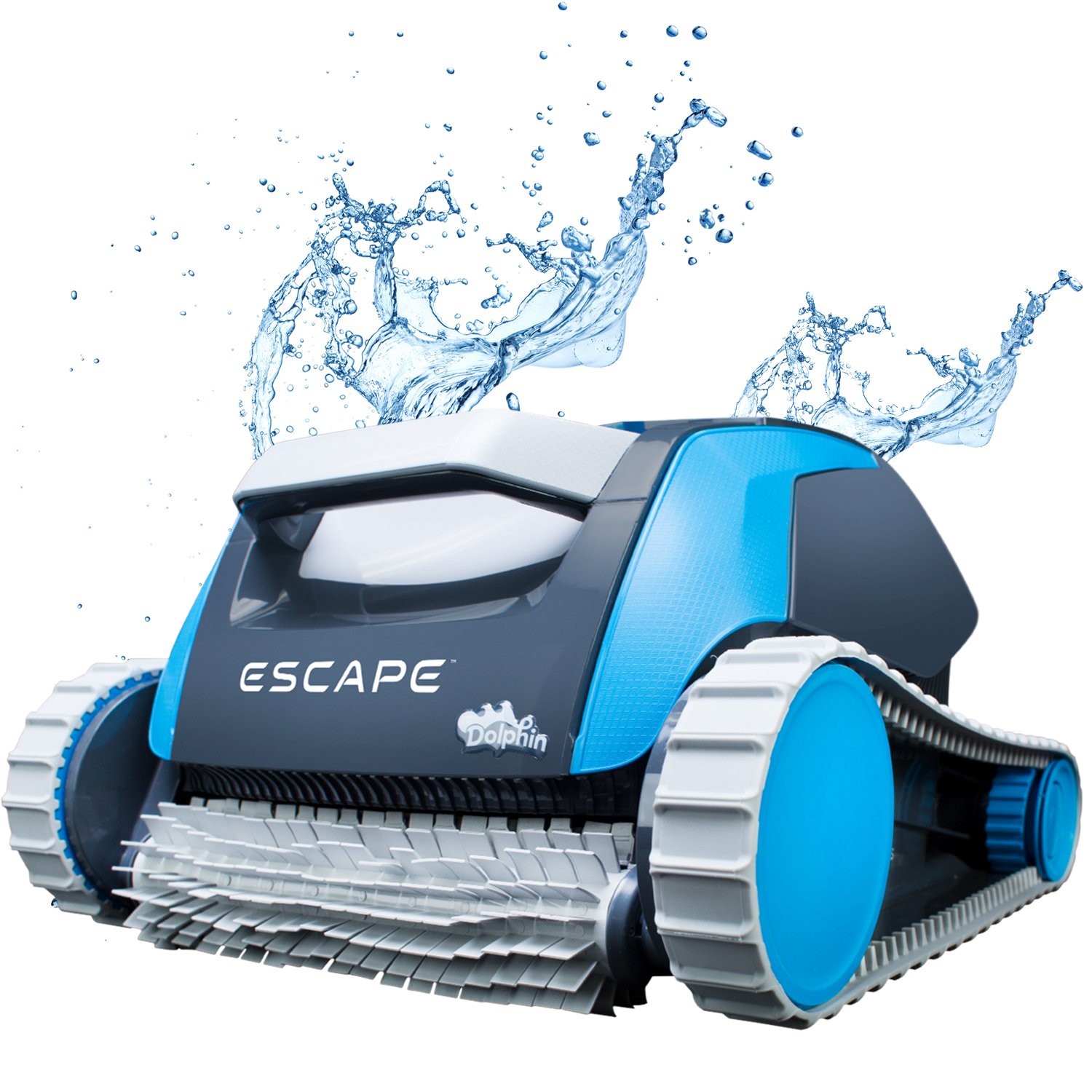
Dolphin Escape
The Escape has the shortest cycle here, 1.5 hours, and the lowest weight, 14.2 lb. On a route with above-ground pools and small in-ground ones, that makes it the unit you can drop at one stop and collect two stops later. It is published for both pool types up to 33 ft and is the lowest-priced pick on this page, so a second unit is easier to justify.
It ranks fourth for two reasons. The cable is 40 ft, so on larger pools measure the run from the outlet before relying on it. And it has no timer as standard, which limits it as a leave-behind.
- Best for
- Above-ground accounts and small pools where a 1.5-hour cycle fits the loop.
- Keep in mind
- The 40 ft cable is the limit on bigger pools, and there is no timer unless you buy the Automation Timer power supply.


How to judge a robot for this
What a route robot has to do.
- 1
Weight, lifted all day
A homeowner lifts a robot once a week. A tech lifts it in, out and back onto the truck at every stop it works. The four picks run from 14.2 lb to 20.3 lb, and that gap is felt by the tenth pool of the day.
- 2
Cycle length against stop length
No cycle here is shorter than 1.5 hours, and few stops last that long. A robot therefore runs a partial cycle, gets collected later in the loop, or stays behind on a timer. Shorter cycles make the middle option practical.
- 3
A basket that empties in seconds
Filters get emptied and rinsed at every account, usually with the customer's hose. Top-opening baskets with large panels come out, dump and rinse fastest. Fine media is slower to rinse and is best saved for the pools that need it.
- 4
One cable for most accounts
Match length ratings to your route sheet. Pools up to 33 ft take the Cayman or Escape, in-ground or above-ground. Longer in-ground pools, up to 50 ft, take the Quantum or Premier, whose 55 ft cables have anti-tangle swivels.
Side by side
The four route robots compared.
| Specification | Dolphin Cayman | Dolphin Quantum | Dolphin Premier | Dolphin Escape |
|---|---|---|---|---|
| Price today | $1049 | $1599 | $1949 | $659 |
| Pool length | Up to 33 ft | Up to 50 ft | Up to 50 ft | Up to 33 ft |
| Cable | 50 ft | 55 ft with anti-tangle swivel | 55 ft with 360° anti-tangle swivel | 40 ft |
| Cycle time | 2 hours | 2 hours | 3 hours | 1.5 hours |
| Filtration | MaxBin basket with fine panels; NanoFilter panels optional | XXL MaxBin basket with standard and NanoFilter panels | Multi-Media: NanoFilters, oversized leaf bag and standard fine filters | MaxBin basket; NanoFilter panels optional |
| Scheduling | Timer: every day | Weekly timer: every day, every 2 days or every 3 days | Weekly timer: every day, every 2 days or every 3 days | Optional Automation Timer: every 24, 48 or 72 hours |
| Robot weight | 14.6 lb | 18.3 lb | 20.3 lb | 14.2 lb |
| Warranty | 2 years | 2 years | 3 years | 2 years |
Three ways to work a robot into a stop.
Run it while you are there. Start the robot when you arrive and pull it as you leave. You get part of a cycle, which picks up some of what is on the floor but is not full coverage, so do not describe it to the customer as one.
Drop and collect. Leave the robot running at the first stop in a cluster and pick it up on the way back. That needs an outlet, gate access and a cycle of 1.5 to 2 hours.
Leave it behind. At an account that keeps slipping, a robot on a timer cleans between visits. The Premier and Quantum timers repeat every day, every 2 days or every 3 days. The Cayman's timer has one setting, every day. Agree with the customer who empties the basket.
Rinse between pools, every time.
A robot that has just worked an algae pool carries some of it in the filter, the brushes and the tracks. Put it straight into the next customer's pool and you have delivered a problem. Empty the basket at the account it came from, then hose the filter panels, brushes, tracks and body with fresh water before the robot goes back on the truck.
Keep a separate set of filter panels for green pools. Beyond that, treat the robot like your poles and vac heads: whatever your company does to keep those from carrying algae between accounts applies here too. Check the manual before soaking a robot in anything stronger than water.
Settle the warranty before you build a fleet.
The warranties on all four picks are described as not prorated, with no cycle limit. That description is written for a homeowner. A robot that works six pools a day is a different case, and we will not tell you it is covered. Ask a Dolphin expert how service use is treated and get the answer in writing.
Until you have it, cost each robot as a tool with a working life. Route use is harder on brushes, tracks and cables than home use, so look them over weekly. For a second or third unit, certified open-box robots are worth a look.
Working a robot from the truck.
- Net heavy leaf loads before the robot goes in. A basket that fills early stops collecting while you are busy with the chemistry.
- Pull the robot before you add chemicals, not after. It should be out of the water for any shock or heavy dose.
- Set the power supply back from the water by the distance in the manual, and check the manual before using an extension cord at a customer's outlet.
- Coil the cable in wide, loose loops in a tote. Tight wraps around the power supply put twists in the cable that show up as tangles in the next pool.
Questions, answered
Route questions.
Will one robot cover both in-ground and above-ground accounts?
Yes, if it is a Cayman or an Escape. Both are published for in-ground and above-ground pools up to 33 ft. The Quantum and Premier are published for in-ground pools only, so keep them off above-ground accounts, whatever the pool's size.
Which robot should I leave at a problem account?
For a pool up to 33 ft, the Cayman: its timer runs it every day with no setup. For a larger in-ground pool, the Quantum or Premier, whose timers can also space cleanings further apart. The Escape needs its optional Automation Timer power supply first.
What makes a robotic pool cleaner for pool service companies different from a homeowner's robot?
Nothing in the hardware: these are the same residential robots a homeowner buys. On a route, light weight, a short cycle and a basket that empties fast matter more than apps and long reach, and the warranty has to be confirmed for service use.
Why is the Sigma not on the route list?
It would do the work on in-ground pools up to 50 ft, and it cleans very well. But at 24.6 lb it is the heaviest Dolphin mentioned on this page, it carries the highest price of the robots discussed here, and its app scheduling is of little use at a customer's pool. For route work the Quantum covers the same pools with less to lift.
The verdict
The route rule.
Buy for the lifting and the loop, not the feature list. Start with the Cayman for pools up to 33 ft, in-ground or above-ground. Add the Quantum when the route has in-ground pools from 34 to 50 ft or tile lines to scrub. Keep a Premier for cleanups, and an Escape where a 1.5-hour cycle on small pools pays. Confirm the warranty position for service use first, and rinse between every account.
Keep reading