


By feature
Robotic pool cleaners with dual brushes: three that scrub in both directions
Top pick: Dolphin Sigma
Live prices · Free shipping · 30 Day Trial
The short answer
Suction only collects what is already loose. A second brush is what loosens the rest, and three of the Dolphins on this site carry at least two.
The Dolphin Sigma goes past dual with quad scrubbing brushes, the most brush contact of the Dolphins in this guide. The Dolphin Premier is the straightforward two-brush choice, with a longer 3-hour cycle. Pick the Dolphin Quantum if you want two HyperBrushes spinning at twice the speed of standard brushes, or if your pool has ledges and stairs. The Cayman has one brush, so it is not on this list.
A pool robot does two jobs at once. Its pump pulls water through a filter, and its brushes scrub the surface underneath. Owners looking for the best robotic pool cleaner with dual brushes have usually worked out that the second job is the one their old cleaner skipped: the floor looked vacuumed, but a film stayed on the walls and the dirt line was back within days.
Brushing does what suction cannot. It breaks the grip of algae film, biofilm and stuck dirt so the flow can carry them into the filter. Two brushes do that on the forward pass and again on the return, and they put more bristle against a wall during a climb. This site is built around the Dolphin Cayman, which has a single brush, so we will be straight with you: none of the three picks below is the Cayman.
Our picks, in order
Three robots with two brushes or more.
- 1
 $2349
$2999Save $650Temporarily out of stock
Quad brushes: the most scrubbing contact here
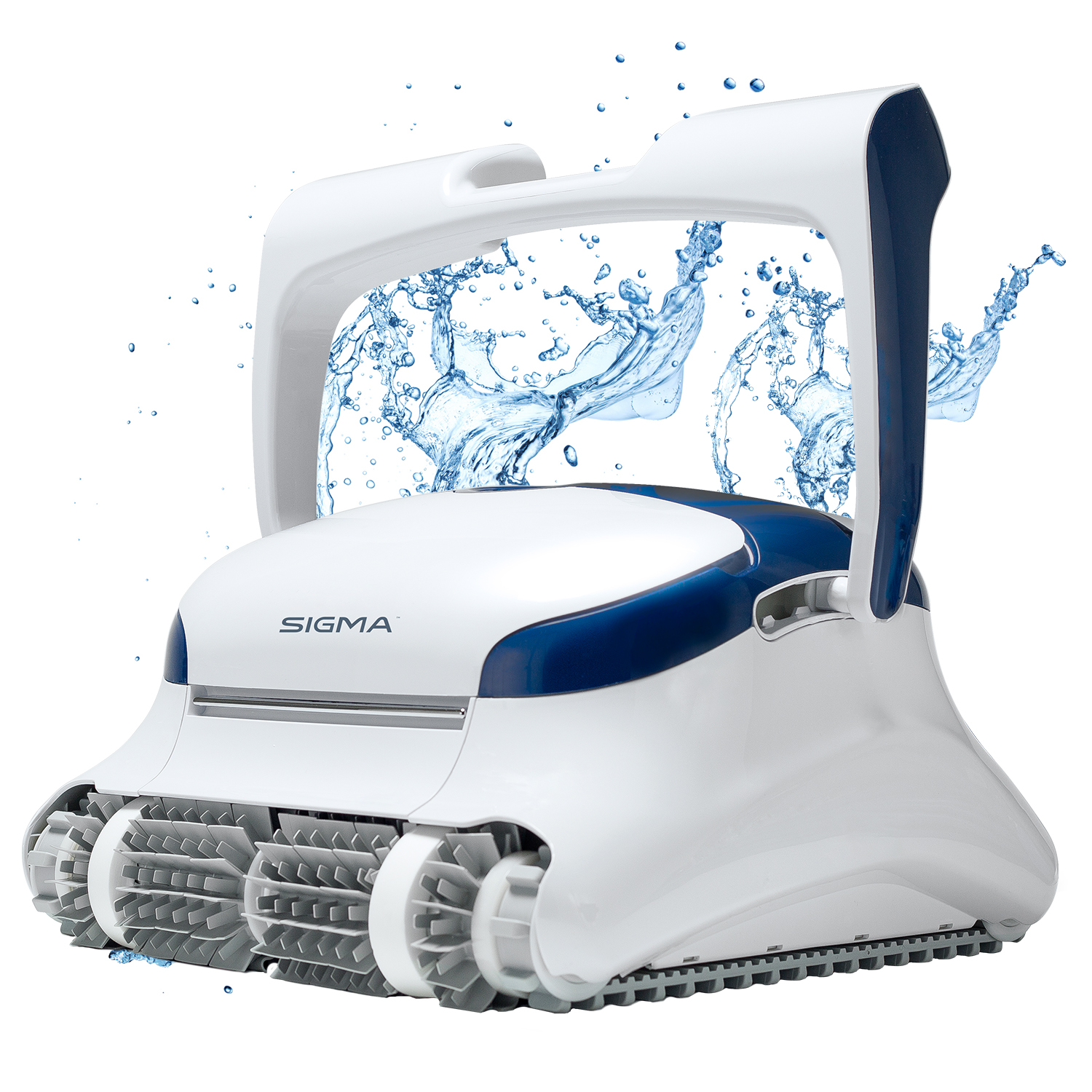
Dolphin Sigma
Asked for two brushes, the Sigma brings four. Its quad scrubbing brushes put the most bristle on the surface of any Dolphin in this guide, and three commercial-grade ProLine motors move 4,500 GPH to carry off what the brushes lift. That pairing matters: film that is loosened but not collected simply settles again.
SmartNav 3.0 with an onboard gyroscope keeps its passes orderly, so the scrubbing is spread across the pool instead of piled onto one strip. It cleans floor, walls and waterline in a 2.5-hour cycle, in in-ground pools up to 50 ft.
- Best for
- In-ground pools up to 50 ft where the walls film over quickly and you want the most brush on them.
- Keep in mind
- The highest-priced pick and, at 24.6 lb, the heaviest to lift out. Its schedule is set in the app, so it suits owners comfortable with a phone.
- 2
 $1949
$2499Save $550Temporarily out of stock
The plain two-brush workhorse
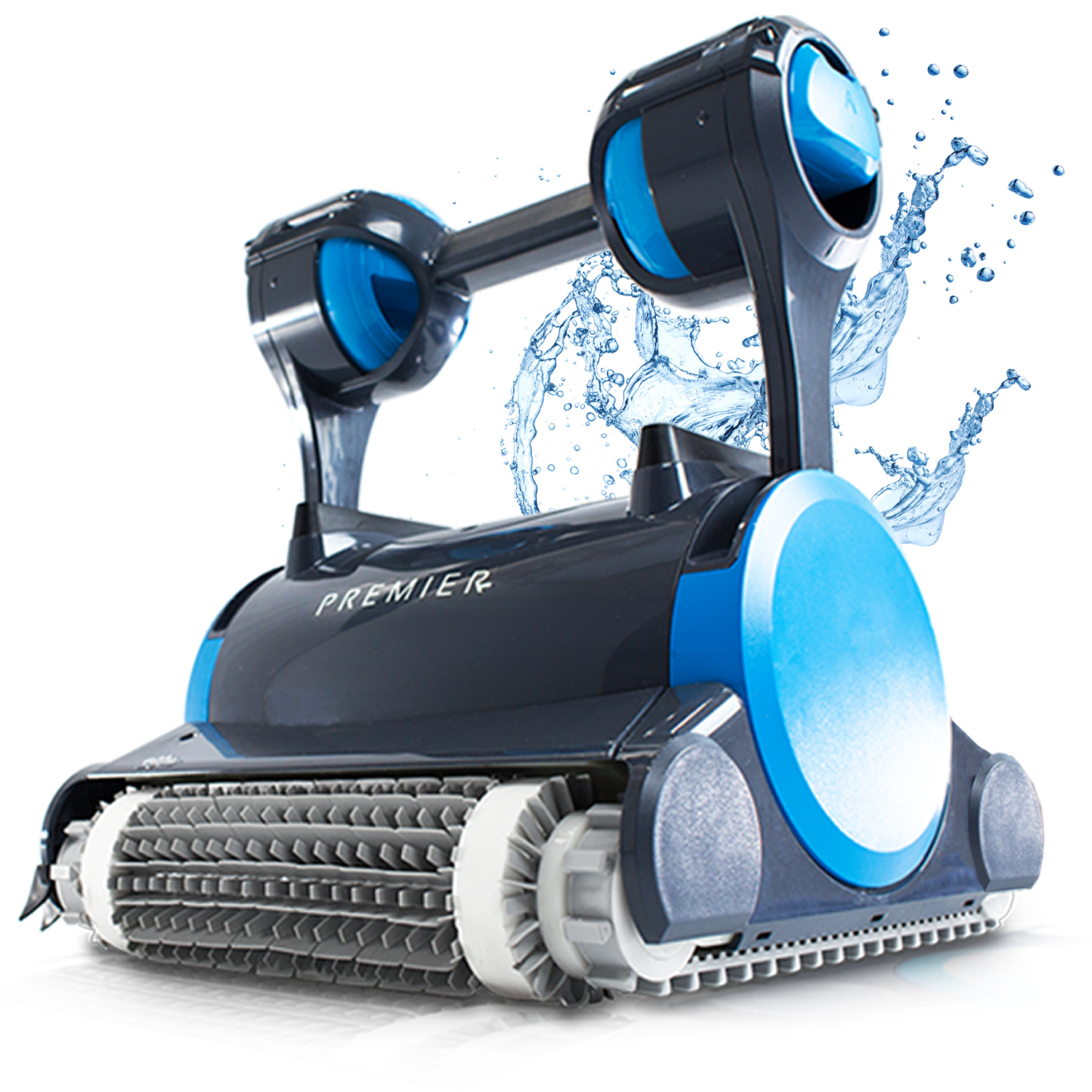
Dolphin Premier
The Premier is the literal answer to the search: dual scrubbing brushes, one leading in each direction, on a robot with nothing to configure. Dual commercial-grade ProLine motors move 4,500 GPH, matching the Sigma's flow, and its 3-hour cycle is the longest of the three picks. More time in the water means more brush passes over every wall and along the waterline.
That cycle length, a 3-year warranty and Multi-Media filtration put it ahead of the Quantum on this page. Once the brushes have lifted fine material, the included NanoFilters are there to hold it. The weekly timer is set on the power supply.
- Best for
- Owners of in-ground pools up to 50 ft who want two brushes, long cycles and simple controls.
- Keep in mind
- Its brushes are scrubbing brushes, not the faster HyperBrush, and it weighs 20.3 lb. For faster brushes or ledge coverage, look at the Quantum.
- 3
 $1599
$1799Save $200Temporarily out of stock
Dual HyperBrush at twice the brush speed
Dolphin Quantum
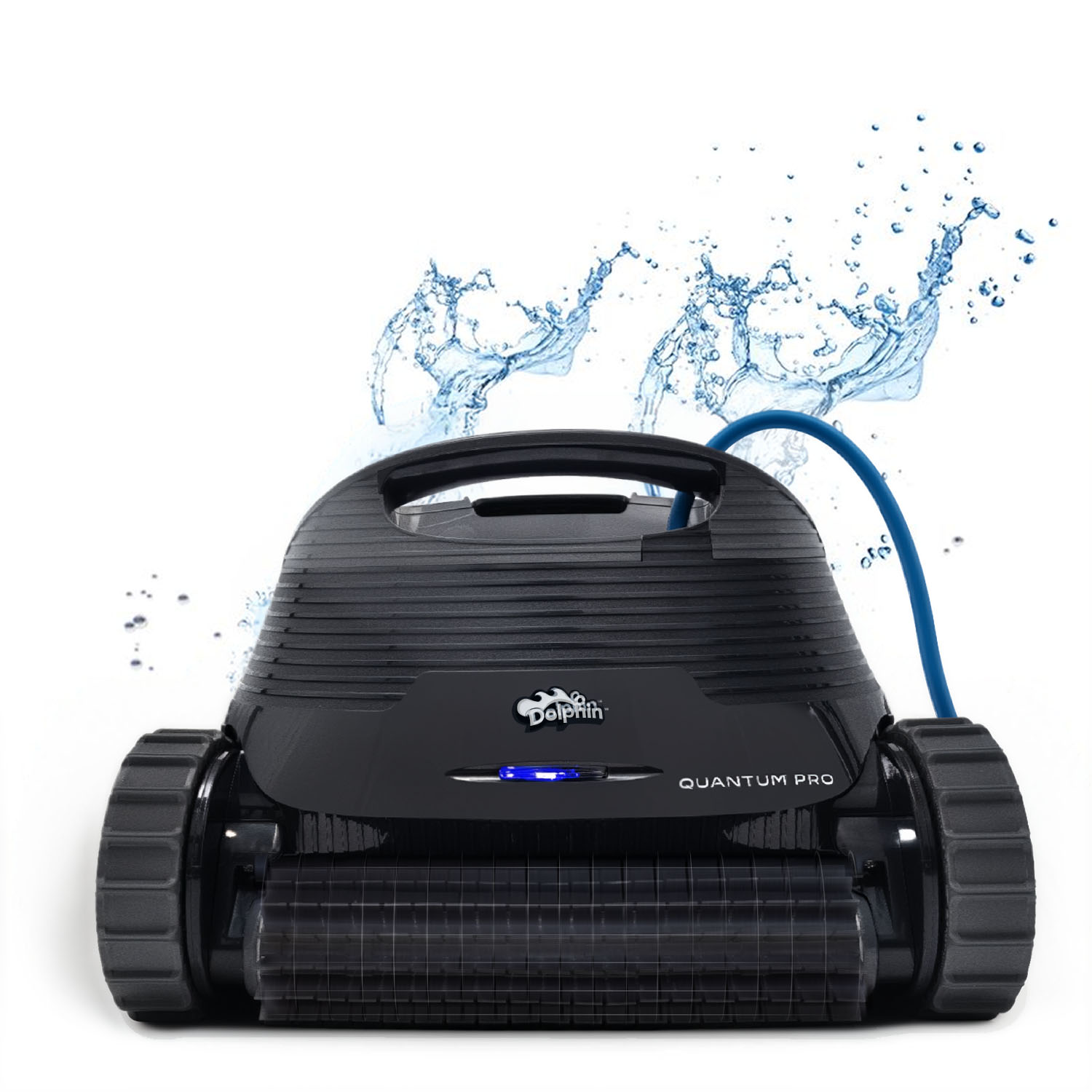
The Quantum takes a different route to the same result. It has two brushes, like the Premier, but both are HyperBrushes spinning at twice the speed of standard brushes, so each pass is a faster wipe across the surface. On textured finishes and along the waterline, that speed helps the bristles work at what a slow roll would ride over.
It is third on this list, not third-rate. Its flow is 4,000 GPH against 4,500 for the other two, and its cycle is 2 hours. In return it is the lowest-priced of the three, the lightest at 18.3 lb, and the one that lists sun shelves, Baja ledges and stairs.
- Best for
- In-ground pools up to 50 ft with ledges, stairs or textured finishes, and buyers watching the price.
- Keep in mind
- A shorter cycle and a 2-year warranty, against 3 years on the other two picks. Heavy wall film may need a second cycle.


How to judge a robot for this
What to look for in a dual-brush robot.
- 1
How many brushes, and where
Count them and note where they sit. A brush at each end means one is always leading, whichever way the robot travels, so a surface is scrubbed on the way out and again on the way back. Four brushes put more bristle down with every pass.
- 2
How fast they turn
A brush that turns at travel speed mostly rolls. A brush driven faster wipes across the surface as it goes. The Quantum's HyperBrushes spin at twice the speed of standard brushes. The Sigma and Premier rely on brush count and scrubbing contact instead.
- 3
Time on the surface
Scrubbing adds up. A longer cycle means more passes over the same wall. The Premier runs 3 hours, the Sigma 2.5 and the Quantum 2. In a pool near the 50 ft rating, the longer cycles leave more of that time for walls.
- 4
Where the robot can reach
Brushes only clean what the robot drives over. All three picks cover floor, walls and waterline, and the Quantum also lists sun shelves, Baja ledges and stairs. No robot works a tight corner or the back of a ladder the way a hand brush does.
Side by side
Brushes, flow and cycle time compared.
| Specification | Dolphin Sigma | Dolphin Premier | Dolphin Quantum |
|---|---|---|---|
| Price today | $2349 | $1949 | $1599 |
| Cleans | Floor, walls and waterline | Floor, walls and waterline | Floor, walls, waterline, sun shelves and stairs |
| Scheduling | Weekly scheduler by day and time | Weekly timer: every day, every 2 days or every 3 days | Weekly timer: every day, every 2 days or every 3 days |
| App | myDolphin Plus (Wi-Fi and Bluetooth) | No app; controls on the power supply | myDolphin Plus (Wi-Fi) |
| Filtration | NanoFilters and standard filter cartridges | Multi-Media: NanoFilters, oversized leaf bag and standard fine filters | XXL MaxBin basket with standard and NanoFilter panels |
| Brushes | Quad scrubbing brushes | Dual scrubbing brushes | Dual HyperBrush |
| Navigation | SmartNav 3.0 with gyroscope | SmartNav 2.0 | SmartNav 2.0 |
| Cable | 55 ft with 360° anti-tangle swivel | 55 ft with 360° anti-tangle swivel | 55 ft with anti-tangle swivel |
| Warranty | 3 years | 3 years | 2 years |
What brushing does that suction cannot.
Suction is a current of water. It carries away whatever is loose enough to move: sand, leaves, settled dust. It has no hold on things that are attached. The slippery film on a wall, the gray line at the water's edge and the first haze of algae are all stuck to the surface, and water flowing past leaves them where they are.
A brush supplies the mechanical part. Bristles break the film's grip and push it into the water, where the intake can catch it before it resettles. That is why brush and pump work as a pair. Strong flow with weak brushing leaves film behind. Strong brushing with a clogged filter only moves it around.
What a second brush changes.
A single-brush robot has its brush at one end. Add a brush at the other end and one is always in front, so the surface is scrubbed on the forward pass and again on the return. On a wall, both brushes bear on the surface during the climb, which is where film is hardest to shift.
Does that make a one-brush robot a poor cleaner? No. It makes it a robot that needs more passes to do the same scrubbing. In a small pool with clean walls you may never see the difference. In a pool that films over between cleanings, the extra brush is what you are paying for.
Where brushes stop.
No brush count changes what a robot can reach. Tight inside corners, the top step and the back of a ladder still need a hand brush now and then. The Quantum's coverage of sun shelves, Baja ledges and stairs shortens that list. It does not erase it.
Brushes do not treat algae either. During a treatment you still brush the pool by hand and keep the sanitizer where it should be, and the robot's part is collecting what comes loose, with fine filters fitted. Brushes are also wear parts. When they look flattened and the robot leaves a film it used to remove, replace them.
Help the brushes do their work.
- Brush corners, steps and behind the ladder by hand first, then start the robot so it collects what you knocked loose.
- Clean the filter before a scrubbing run. Loosened film only leaves the pool if there is enough flow to carry it into the filter.
- Fit the NanoFilters when the target is wall film or a fine haze. What brushes lift from a wall is small enough to pass through a coarser filter.
- Each time you rinse the filter, look over the brushes. Pull off wrapped hair and string, and check for flattened or torn sections.
Questions, answered
Dual-brush questions, answered.
Are two brushes really better than one on a pool robot?
For scrubbing, yes. A robotic pool cleaner with dual brushes has one leading in each direction, so the surface is scrubbed on both the forward and return pass, and more bristle meets the wall on a climb. For picking up loose leaves and sand, brush count matters far less than flow and filter capacity.
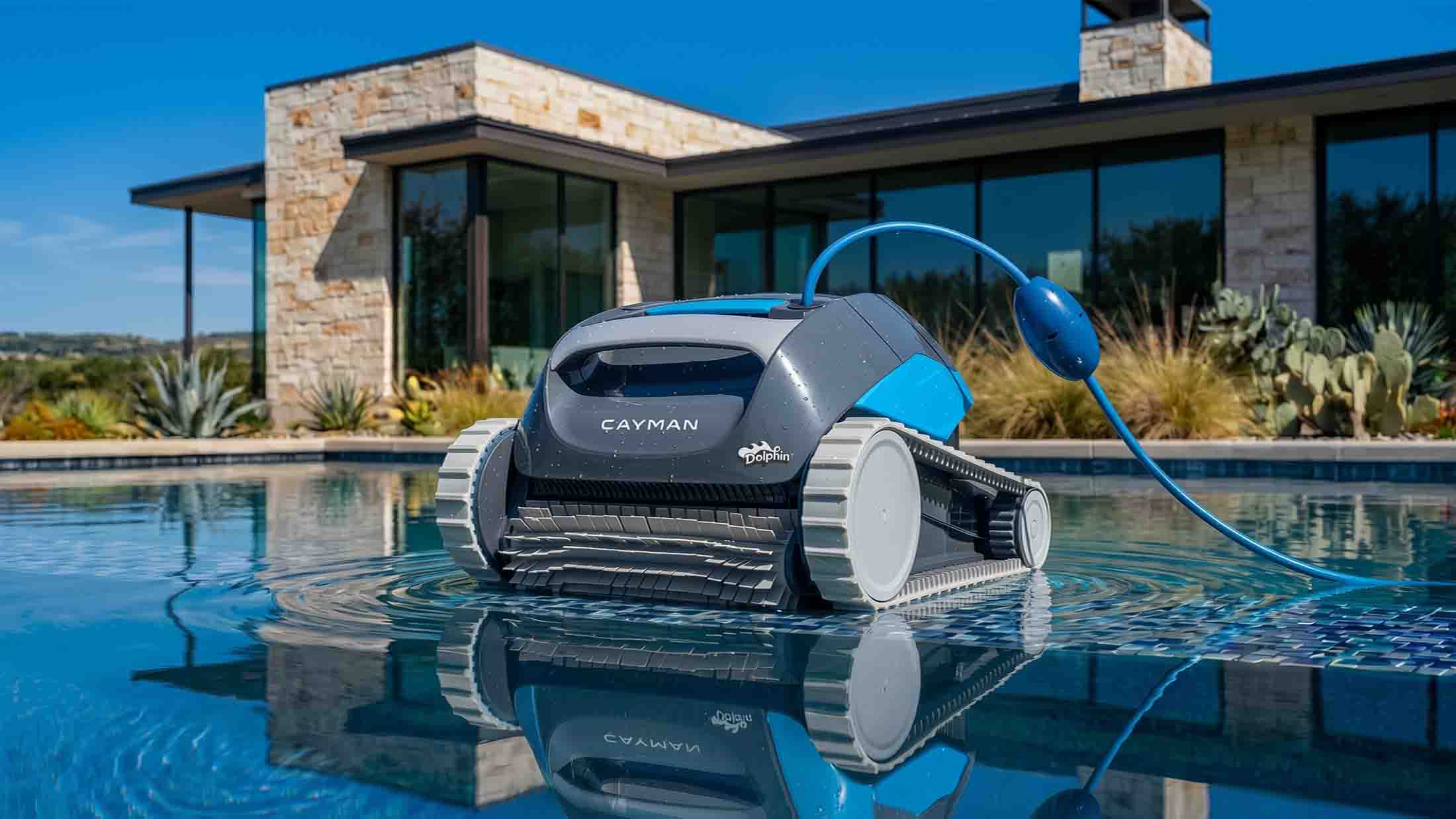
Does the Dolphin Cayman have dual brushes?
No. The Cayman has one HyperBrush, which spins at twice the speed of standard Dolphin brushes, and the Escape also has a single HyperBrush. Both scrub floor and walls, but neither is a dual-brush robot. That is why this page recommends the Sigma, Premier and Quantum instead.
Will dual brushes get rid of algae?
They help, and they do not do it alone. Brushes lift algae film off the surface so the filter can catch it. They do not kill anything. A bloom still needs the right chemical treatment and hand brushing, and a robot does not replace sanitizer. Treat the robot as the cleanup crew before and after, not the cure.
Are dual brushes safe on vinyl liners and fiberglass?
The Sigma, Premier and Quantum all list vinyl liner and fiberglass among their published surfaces, along with gunite, plaster, pebble and tile. Keep the brushes free of trapped grit, because a pebble caught in a brush is not something you want dragged across a liner, and check the manual if your liner is old or brittle.
How do I know when the brushes need replacing?
Look at them when you rinse the filter. Worn brushes look flattened, smooth or torn, and the robot starts leaving a film it used to remove or slipping on walls it used to climb. Rough finishes such as pebble wear brushes faster than vinyl does. They are replaceable parts, so ask a Dolphin expert for the right set.
The verdict
Which one to buy.
If scrubbing is the whole point and price is not, buy the Sigma for its four brushes. If you want two brushes, the longest cycle and a timer on the power supply, buy the Premier. If you want the faster HyperBrush pair, ledge and stair coverage, or the lowest price of the three, buy the Quantum. And if your pool is 33 ft or under and one fast brush will do, the Cayman is still here: see the Dolphin Cayman.
Keep reading