


By budget
The best robotic pool cleaner under $800 is the Escape with its timer upgrade.
Top pick: Dolphin Escape
Live prices · Free shipping · 30 Day Trial
The short answer
At this budget the Escape comes with the upgrade that matters most, a power supply that starts a cycle every 24, 48 or 72 hours without you.
Under $800 the pick is still the Dolphin Escape, and this budget covers the version with the optional Automation Timer power supply, which runs a cycle every 24, 48 or 72 hours. It suits above-ground pools and in-ground pools up to 33 ft. In-ground owners who want a longer cable and a timer as standard should save a little longer for the Cayman. There is no waterline cleaning at this price.
Stretch the budget from $700 to $800 and the robot does not change, but the way you own it does. The best robotic pool cleaner under $800 in these guides is the Dolphin Escape fitted with the optional Automation Timer power supply. Same machine, different power supply, and a different week.
A robot without a timer cleans when you remember to start it. A robot with one cleans whether you remember or not, and stays in the water between scheduled cycles. That is the difference between a pool that is clean on the days you made the effort and a pool that is simply clean. So if your budget reaches $800, we point you to the timer version first and treat everything else as detail. The limits of the robot itself do not change: floor and walls, pools up to 33 ft, a 40 ft cable.
Our picks, in order
The pick under $800.
- 1
 $659
$959Save $300Temporarily out of stock
Best under $800: the Escape that runs itself
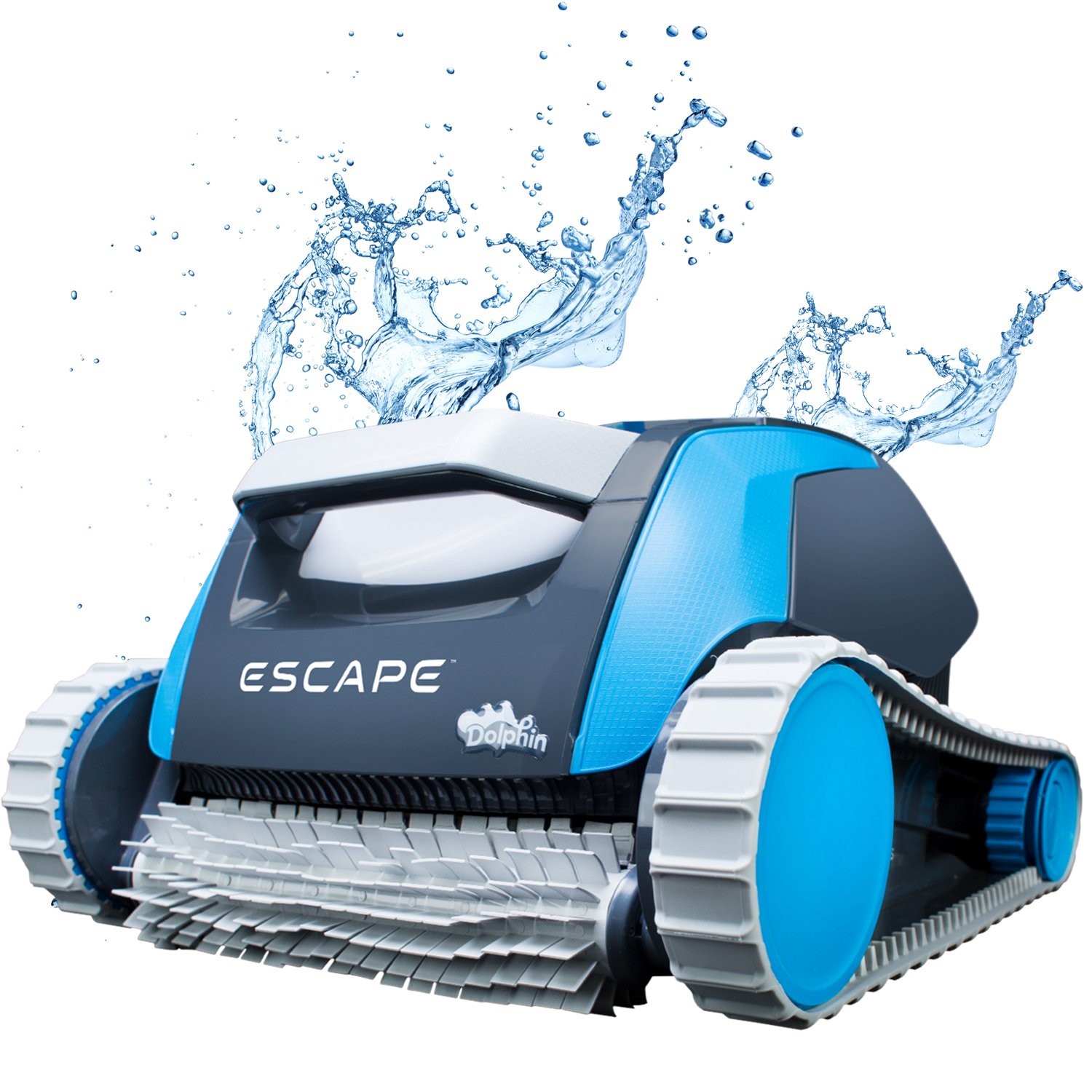
Dolphin Escape
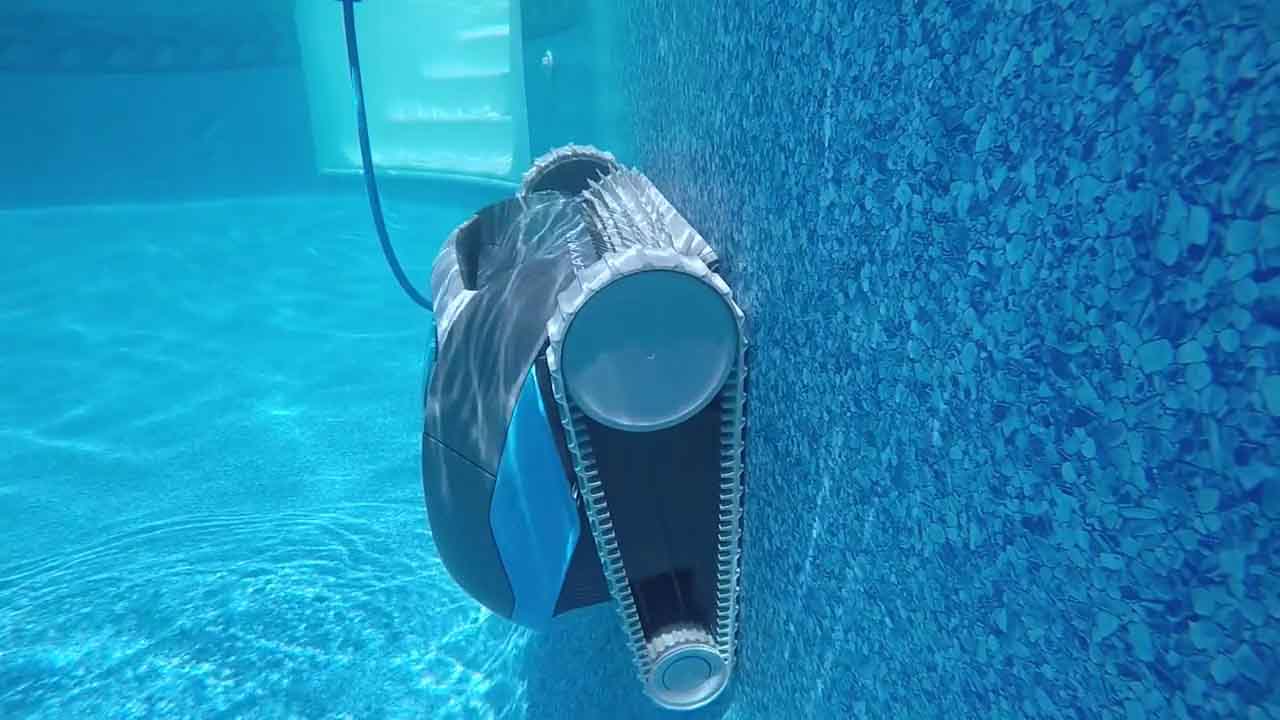
With the optional Automation Timer power supply, the Escape stops being a robot you operate and becomes one you maintain. Choose a cycle every 24, 48 or 72 hours and it starts by itself, cleans the floor and walls for 1.5 hours, and waits in the water for the next one. Your part shrinks to lifting it out about once a week, rinsing the top-load MaxBin basket and laying the cable straight again. The robot is unchanged: HyperGrip tracks, a HyperBrush at twice the speed of standard Dolphin brushes, dual 24-volt DC motors moving over 4,000 GPH, and a 2-year warranty.
- Best for
- Above-ground pools and in-ground pools up to 33 ft whose owners want cleaning on a schedule.
- Keep in mind
- The timer does not add waterline cleaning, an app or a swivel. In-ground owners with a long cable run should look at the Cayman.

How to judge a robot for this
What matters between $700 and $800.
- 1
How often the pool needs a cycle
The Automation Timer offers three intervals: every 24, 48 or 72 hours. A pool under trees or in daily use wants the shortest. A screened or covered pool with light use can go longer. The choice of interval is what you are paying for.
- 2
Whether the robot can stay in the water
A scheduled robot is designed to remain in the pool between cycles, which removes the daily carry and lift. It still comes out weekly for a filter rinse, and ahead of any shock or chemical dose.
- 3
Pool type and length
The Escape is rated for above-ground and in-ground pools up to 33 ft. Above-ground owners are its natural fit. In-ground owners should check the longest run and think about steps and ledges, since it publishes no obstacle list.
- 4
Cable route
The cable is 40 ft with no swivel. A robot that runs by itself should start each week with its cable laid out straight and the power supply placed so the cable reaches the far side. On rounds larger than about 24 ft, measure first.
What the Automation Timer changes.
The Automation Timer is a power supply, not a part inside the robot. Its job is a repeating schedule: a cycle every 24 hours, every 48 or every 72. Once set, it starts the robot at that interval until you change it.
The effect on your week is larger than the feature sounds. The robot waits in the pool between scheduled cycles instead of traveling to and from storage. Debris is picked up before it has days to break down on the floor. And the job you are left with is a weekly basket rinse.
Staying in the water is not the same as being forgotten there. Lift the robot out at least weekly for a rinse. It also comes out ahead of a shock treatment or any chemical dose, and for any long spell when the pool is closed it should be kept dry and out of direct sun.
Choosing 24, 48 or 72 hours.
Start with the shortest interval your pool's debris justifies, then lengthen it if the basket keeps coming up nearly empty. A cycle is 1.5 hours whichever interval you choose, so a shorter interval means more total cleaning, not longer cycles. If you are unsure, begin at 24 hours. Within a week or two you will learn how much the pool collects in a day, and you can step down from there. Change the setting with the seasons: what suits midsummer rarely suits the weeks when leaves fall.
| Setting | Suits | Watch for |
|---|---|---|
| Every 24 hours | Pools under trees, pools in daily use, windy or dusty yards | Rinse the basket more than once a week in leaf season |
| Every 48 hours | Open yards with moderate debris and regular swimming | Shorten the interval for a few days after a storm |
| Every 72 hours | Screened or covered pools and lightly used pools | Fine dust settling between cycles; shorten the interval if you see it |
Who should save for the Cayman instead.
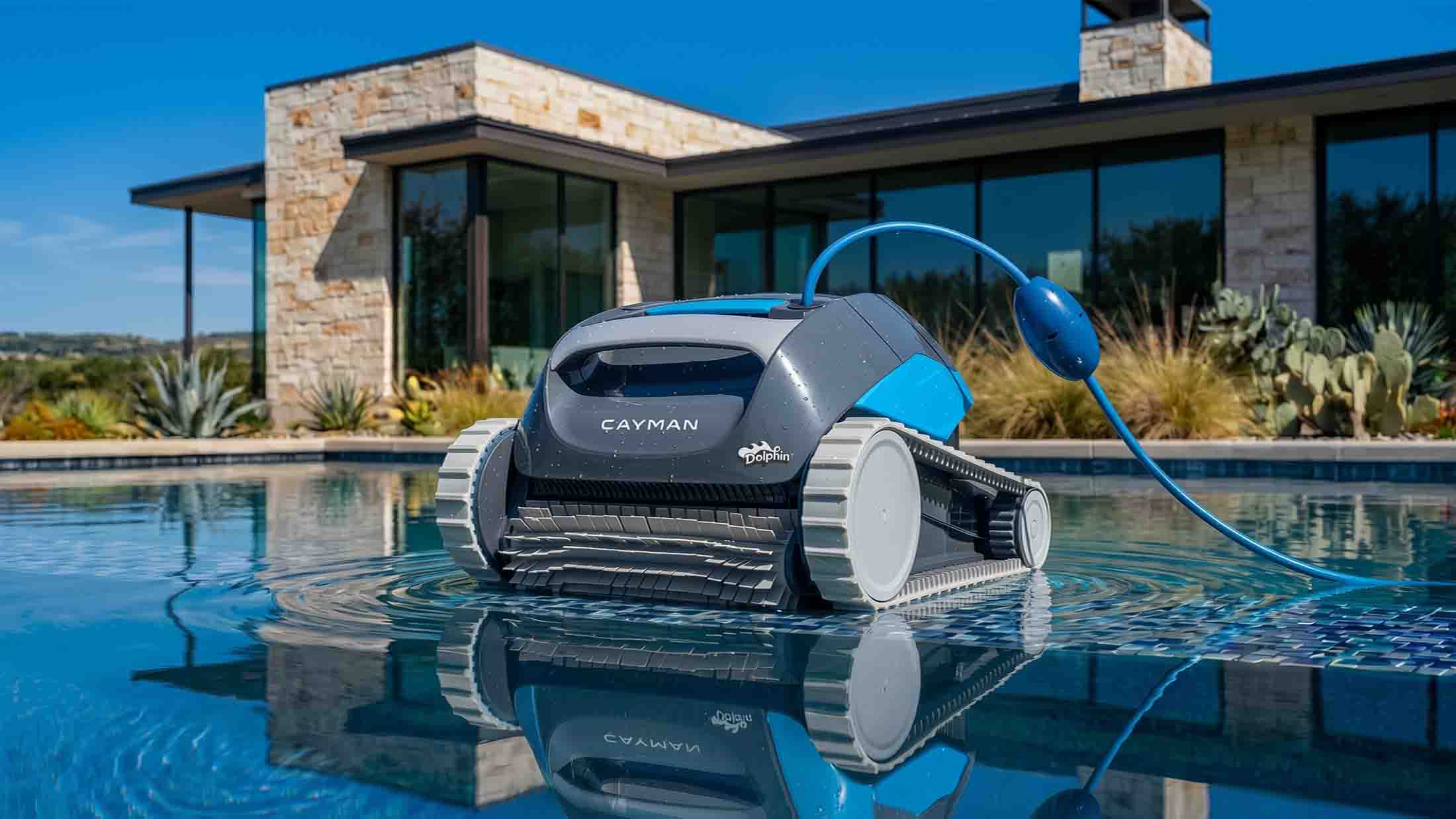
Three kinds of owner are better served by waiting. The first has an in-ground pool where the cable run from the power supply to the far end is long: the Cayman's cable is 50 ft, 10 ft more than the Escape's. The second has an in-ground pool with steps, ladders, drain covers or ledges and wants a robot that publishes handling for them. The third wants the timer built in and has no use for interval choices, since the Cayman's timer runs every day and nothing else.
If none of those is you, do not wait. The Escape with the optional Automation Timer cleans the same two zones, floor and walls, in pools of the same 33 ft rating, and it costs less. Neither robot cleans the waterline; for that you would be looking at a different class of robot and a different budget.
Setting up a timed Escape.
- Place the power supply first, back from the water as the manual states, then set the interval.
- Feed in only the cable the robot needs. With no swivel, extra cable in the water is extra cable to twist.
- Start on the 24-hour setting, look in the basket at each weekly rinse, and lengthen the interval only if it keeps coming up light.
- Pick a fixed day for the weekly lift: rinse the MaxBin basket, straighten the cable, lower the robot back in.
- Nobody should swim while the robot is running, so tell the household when cycles happen.
Questions, answered
Questions about the $800 budget.
What does the Automation Timer do?
It is a power supply that starts a cleaning cycle by itself every 24, 48 or 72 hours, whichever you select. The robot stays in the pool between those cycles. It is an optional upgrade for the Escape, and choosing it is what moves the price from the under-$700 bracket into this one.
Is a timed Escape the same as a Cayman?
No. The two share floor-and-walls coverage and the 33 ft rating, and differ in the details. The Cayman's timer is standard and has one setting, every day. It has a 50 ft cable, a 2-hour cycle and a top hatch with one-tab emptying. The Escape's optional timer gives three intervals, its cable is 40 ft, and its cycle is 1.5 hours.
Does a robotic pool cleaner under $800 clean the waterline?
Not among the robots we recommend. At this budget the Escape works the floor and climbs the walls, but it turns back short of the waterline. Waterline cleaning begins with the Quantum, a higher-priced in-ground robot rated for pools up to 50 ft. Plan to wipe the waterline by hand every week or two.
Can a robot on a timer stay in the pool all season?
It can stay in between scheduled cycles, which is what the timer is for, but not untouched. A weekly lift to empty and rinse the basket is the minimum, with more in leaf season. The robot also comes out before shocking or adding chemicals, and whenever the pool will go unused for a long stretch.
Is the timer worth paying for on a small above-ground pool?
Usually, yes. A small pool collects debris every day just as a large one does, and the timer removes the carrying that makes a robot easy to skip. If you already enjoy the routine of dropping it in, the standard Escape under $700 cleans exactly as well.
The verdict
Spend the extra on the timer.
If your budget reaches $800 and your pool is 33 ft or under, buy the Escape with its optional Automation Timer and set it to the shortest interval the pool needs. The timer is the upgrade that changes how the robot fits into your week. Save a little longer for the Cayman only if you have an in-ground pool with a long cable run or want a timer as standard. Either way the tile line stays a job for a hand brush.
Keep reading